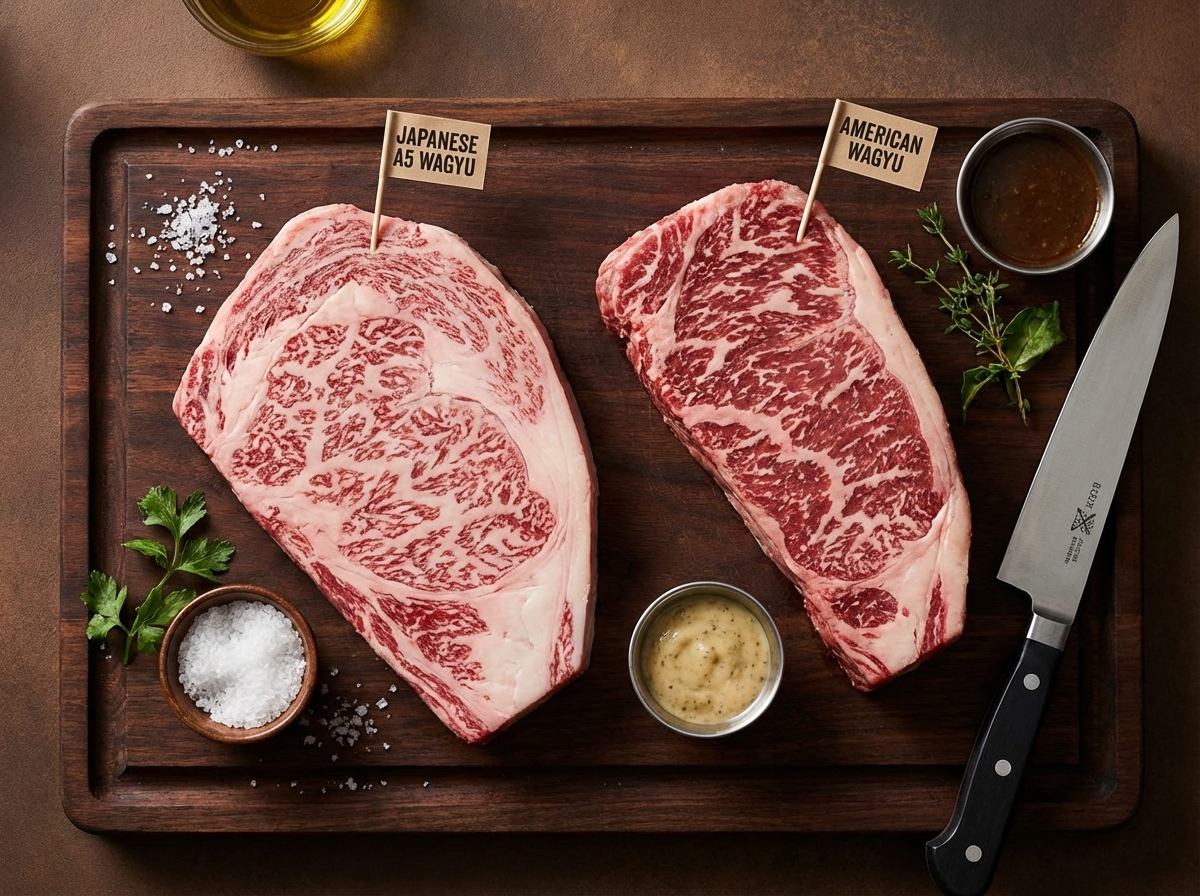
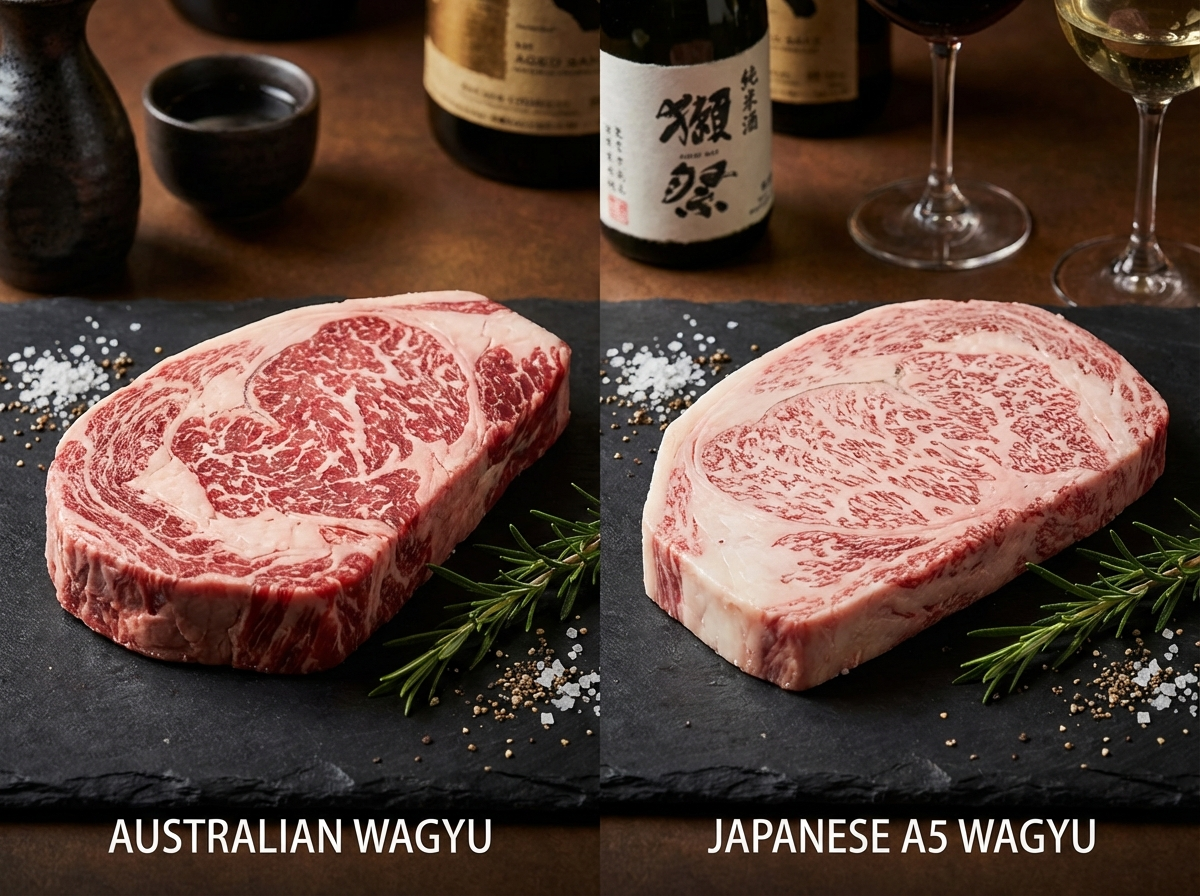
Fullblood vs Purebred vs Crossbred Wagyu: What's the Difference?
Understanding Wagyu genetics — F1, F2, Purebred, and Fullblood. How genetics affect marbling, price, and quality.
Wagyu Genetics 101
Outside Japan, Wagyu cattle exist on a spectrum of genetic purity. Understanding these terms helps you know what you're actually buying.
The Categories
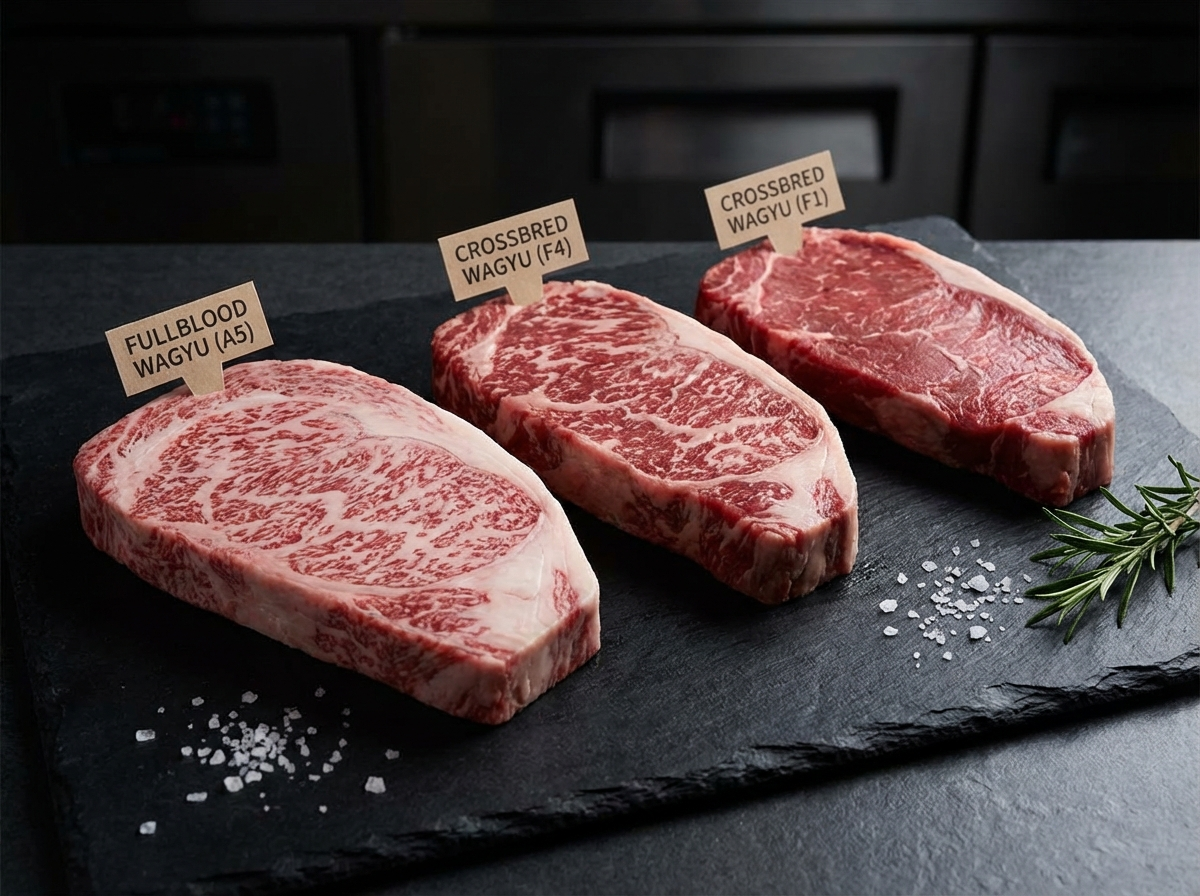
Fullblood Wagyu (100%)
- Definition: Both parents are registered 100% Wagyu with traceable Japanese lineage
- Genetics: 100% Wagyu DNA
- Marbling potential: Maximum (BMS 9-12 achievable)
- Price: Highest tier
- Availability: Rare outside Japan
Purebred Wagyu (93.75%+)
- Definition: At least 15/16ths Wagyu genetics (F4 generation or higher)
- Genetics: 93.75-99% Wagyu DNA
- Marbling potential: Very high (BMS 7-10 typical)
- Price: Second tier
- Availability: Available from premium producers
F3 Wagyu (87.5%)
- Definition: 7/8ths Wagyu (third generation cross)
- Genetics: 87.5% Wagyu DNA
- Marbling potential: High (BMS 6-9 typical)
- Price: Mid-premium
- Availability: Common in premium market
F2 Wagyu (75%)
- Definition: 3/4ths Wagyu (second generation cross)
- Genetics: 75% Wagyu DNA
- Marbling potential: Good (BMS 5-7 typical)
- Price: Moderate premium
- Availability: Common
F1 Wagyu (50%)
- Definition: First generation cross (Wagyu × Angus typically)
- Genetics: 50% Wagyu DNA
- Marbling potential: Above average (BMS 4-6 typical)
- Price: Entry-level Wagyu
- Availability: Most common "American Wagyu"
Why Genetics Matter
Marbling is highly heritable. The Wagyu genetics that produce extreme intramuscular fat have been selected for over 100 years. When you dilute those genetics with Angus (bred for size and growth rate), you reduce marbling potential.
| Genetic Level | BMS Potential | Comparable To |
| Fullblood | 9-12 | Japanese A5 |
| Purebred | 7-10 | High-end Japanese |
| F3 (87.5%) | 6-9 | Good A4-A5 |
| F2 (75%) | 5-7 | Australian crossbred |
| F1 (50%) | 4-6 | Above Prime |
The Business Reality
Why don't more producers raise Fullblood Wagyu?
- Cost: Fullblood genetics are expensive
- Time: Wagyu mature slowly (30+ months)
- Yield: Fullblood carcasses are smaller
- Demand: Most consumers can't distinguish or afford the premium
- ROI: F1 crosses offer better economics for most operations
For producers, F1 Wagyu × Angus offers the best balance: faster growth, larger carcasses, and "Wagyu" marketing — at a fraction of the cost.
What to Look For
If you want the best:
- Look for "Fullblood" or "100% Wagyu"
- Ask about genetics and lineage
- Expect to pay premium prices
- Producers: Snake River Farms (purebred), Blackmore (Australian Fullblood)
If you want good value:
- F1 "American Wagyu" offers above-Prime quality
- Don't overpay for F1 marketed as "premium Wagyu"
- $40-60/lb is reasonable for F1 ribeye
Red flags:
- "Wagyu" with no genetic information
- "Kobe-style" or "Wagyu-style"
- Prices too good for the claims
The Bottom Line
Genetics set the ceiling for quality. Fullblood Wagyu can achieve Japanese A5 levels; F1 cannot, regardless of feeding program. Know what you're buying, and pay accordingly.
Frequently Asked Questions
What is the difference between Fullblood and Purebred Wagyu?
Fullblood Wagyu is 100% Japanese Wagyu genetics with documented lineage tracing back to Japan — no crossbreeding at any point. Purebred Wagyu is 93.75%+ Wagyu genetics (at least 4 generations of breeding up from a crossbred base). Both produce excellent beef, but Fullblood consistently achieves higher marbling scores (BMS 9-12) than Purebred (BMS 7-10).
What does F1 Wagyu mean?
F1 Wagyu is the first-generation cross between a purebred Wagyu bull and a non-Wagyu cow (typically Angus). F1 cattle are 50% Wagyu genetics. F2 is the next generation (75% Wagyu), F3 is 87.5%, and F4 reaches 93.75% (qualifying as 'Purebred'). Most 'American Wagyu' sold in stores is F1 or F2.
Is Fullblood Wagyu worth the extra cost?
Fullblood Wagyu commands a 50-100% premium over F1 crossbred Wagyu. The difference is most noticeable in marbling intensity and fat quality — Fullblood has finer, more evenly distributed marbling with higher oleic acid content (the 'good' monounsaturated fat). For wagyu enthusiasts seeking the closest experience to Japanese A5 from domestic producers, Fullblood is worth the premium.