Japanese Wagyu vs American Wagyu: Complete Comparison
The definitive guide to understanding how Japanese A5 differs from American Wagyu in genetics, grading, taste, and price.
The Short Answer
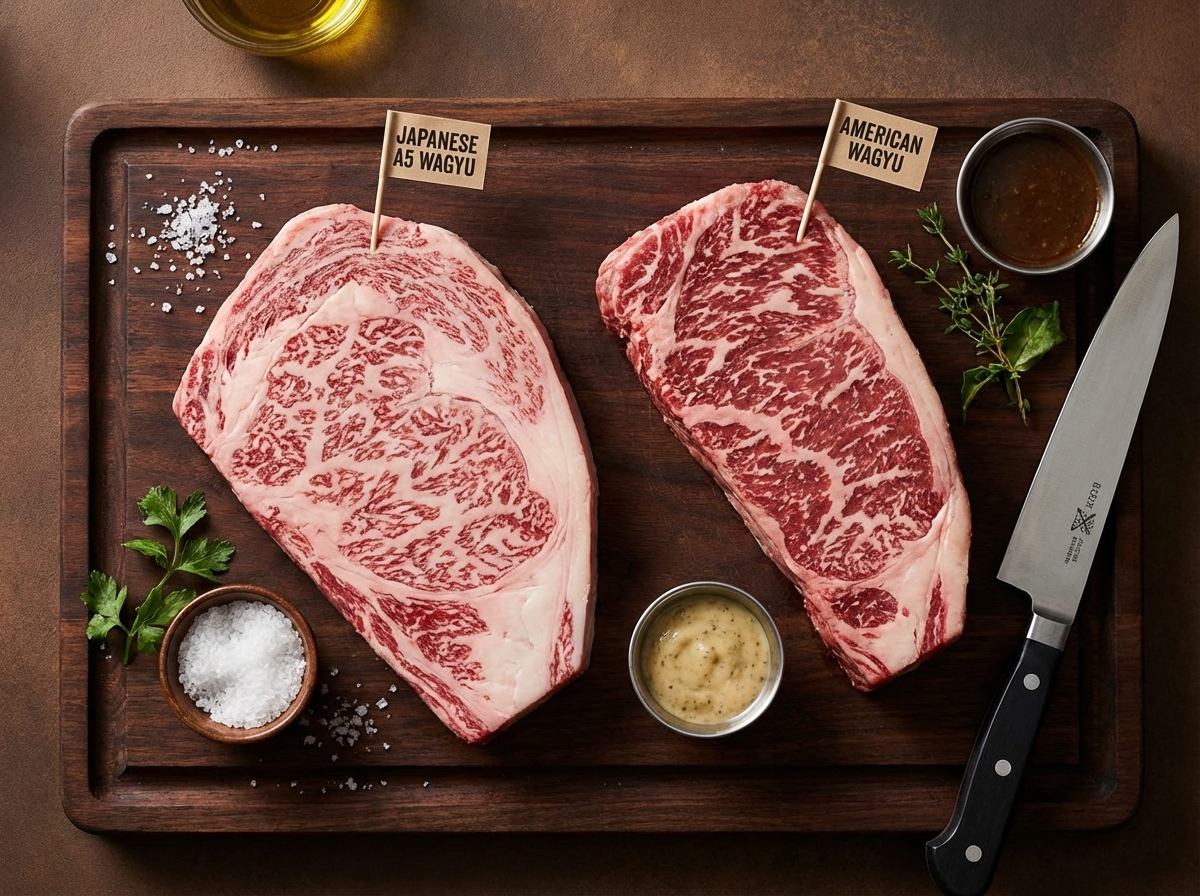
Japanese Wagyu and American Wagyu are fundamentally different products. Japanese Wagyu comes from purebred Wagyu cattle (100% Wagyu genetics) raised in Japan under strict regulations. American Wagyu is typically a crossbreed — usually 50% Wagyu crossed with Angus — raised in the United States with no standardized grading.
Genetics: Purebred vs Crossbred
Japanese Wagyu: 100% purebred from four native Japanese breeds (Japanese Black, Japanese Brown, Japanese Shorthorn, Japanese Polled). Bloodlines are tracked for generations. The genetics have been isolated and refined for over 100 years.
American Wagyu: Most commonly 50% Wagyu × 50% Angus (F1 cross). Some producers raise "Fullblood" American Wagyu (100% genetics), but this is rare and expensive. The Angus genetics reduce marbling potential but increase yield and growth rate.
Grading Systems
Japanese Grading (JMGA):
- Yield grade: A, B, or C
- Quality grade: 1-5
- BMS (Beef Marbling Score): 1-12
- A5 with BMS 10-12 is the highest tier
American Grading (USDA):
- Prime, Choice, Select (same as regular beef)
- No wagyu-specific grading
- "American Wagyu" is a marketing term, not a grade
This is crucial: An "American Wagyu" steak has no official quality standard. It could be minimally marbled or heavily marbled — you're trusting the producer.
Marbling & Taste
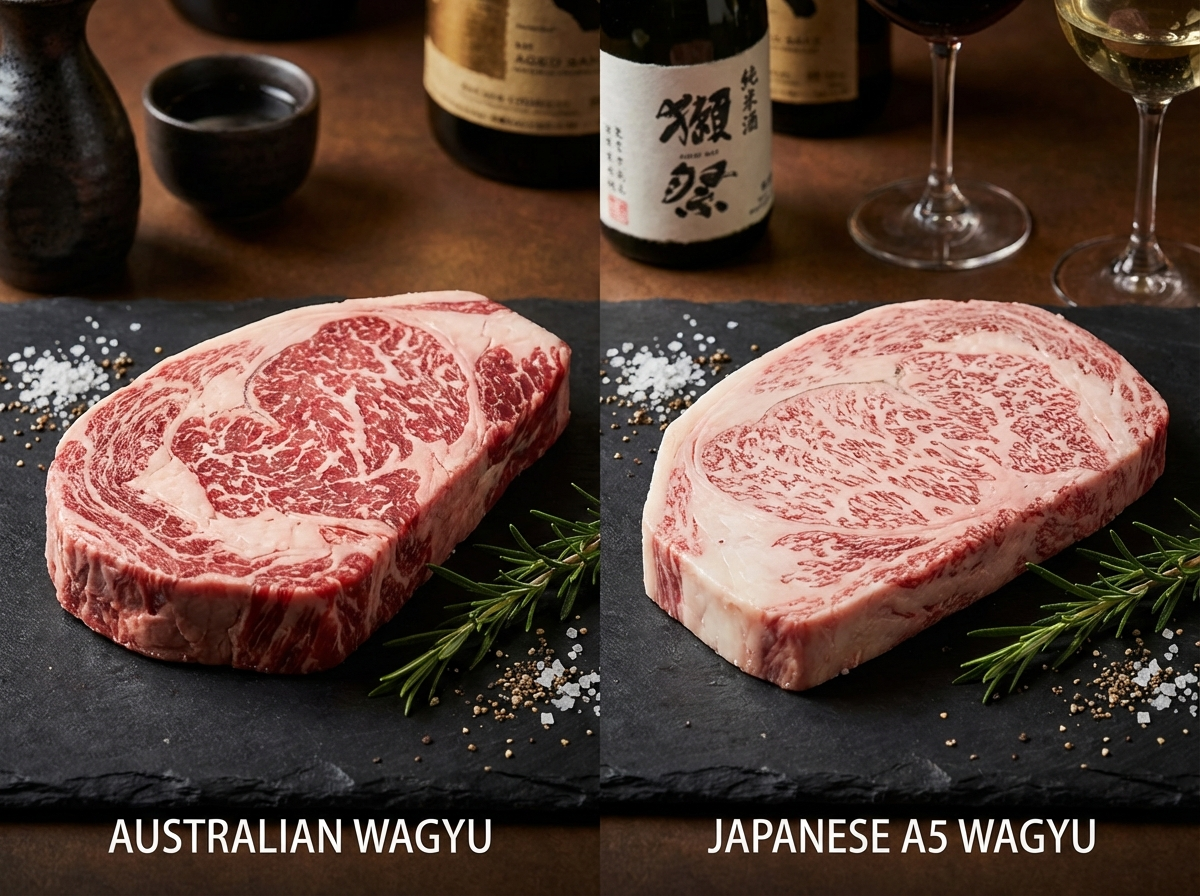
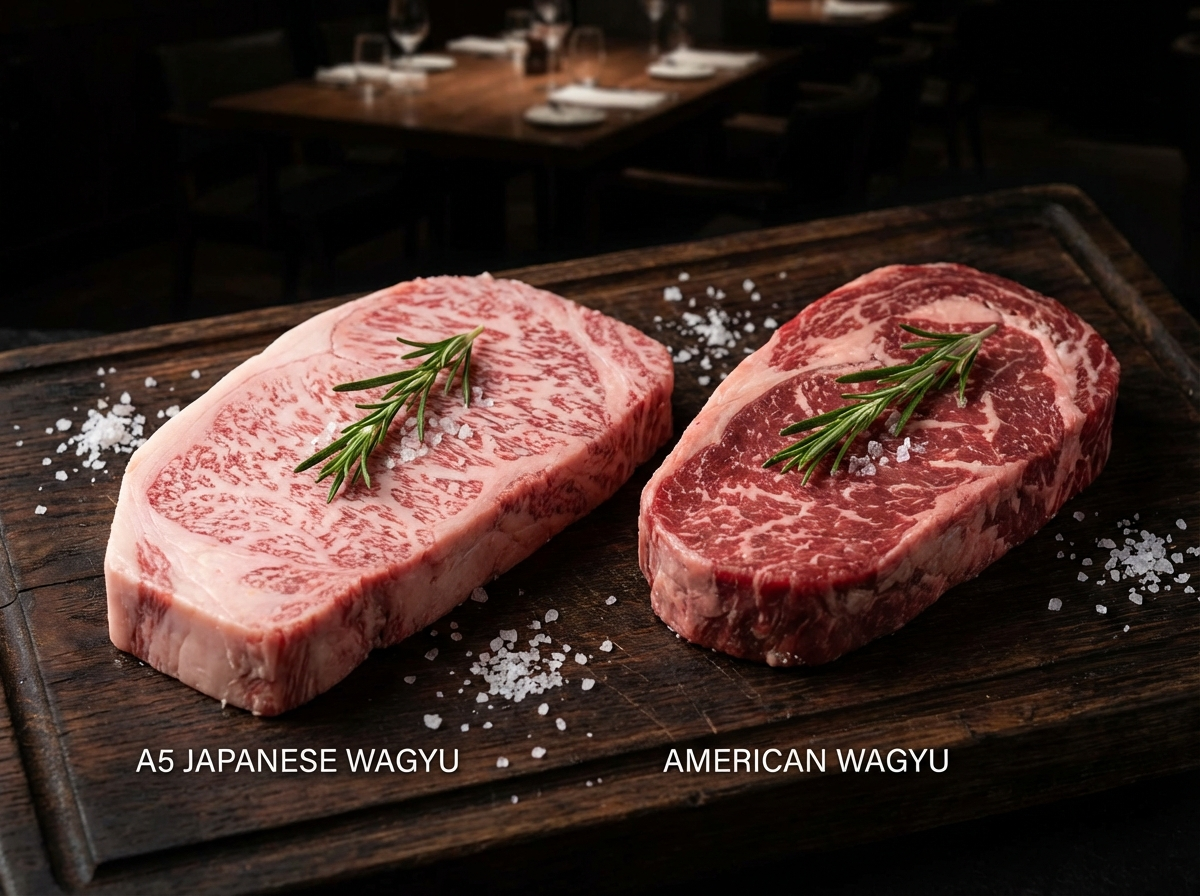
Japanese A5 Wagyu:
- BMS 8-12 marbling
- Fat melts at lower temperature (more unsaturated fats)
- Intensely rich, buttery, almost sweet
- Best in small portions (2-4 oz)
- Fat content can exceed 50%
American Wagyu:
- Typically BMS 4-7 equivalent
- More familiar "beefy" flavor
- Better for larger portions (8-16 oz steaks)
- Closer to Prime beef experience with extra marbling
- Fat content typically 25-35%
Price Comparison
| Product | Price per lb (avg) |
| Japanese A5 Ribeye | $150-250 |
| Japanese A5 Striploin | $120-200 |
| American Wagyu Ribeye | $40-80 |
| American Wagyu Striploin | $35-70 |
| USDA Prime Ribeye | $25-40 |
Japanese Wagyu costs 3-5x more than American Wagyu for good reason — it's a completely different eating experience.
Which Should You Buy?
Choose Japanese A5 when:
- You want the authentic, ultra-premium experience
- Serving small portions as a special occasion
- You appreciate extreme marbling and rich flavor
- Budget isn't the primary concern
Choose American Wagyu when:
- You want enhanced marbling without the extreme richness
- Serving full-size steaks (12-16 oz)
- You prefer a more traditional steak experience
- Better value for everyday premium dining
The Bottom Line
Don't think of American Wagyu as "cheaper Japanese Wagyu" — they're different products for different purposes. Japanese A5 is a delicacy best enjoyed in moderation. American Wagyu is an elevated steak that works for traditional steak dinners. Both have their place.
Frequently Asked Questions
What is the difference between Japanese Wagyu and American Wagyu?
Japanese Wagyu comes from purebred Japanese Black cattle raised in Japan, graded on the BMS 1-12 scale, with A5 representing the highest marbling. American Wagyu is typically a crossbreed of Japanese genetics with Angus cattle, graded on the USDA scale. Japanese A5 has significantly more intramuscular fat (BMS 8-12) compared to American Wagyu (typically BMS 6-8 equivalent).
Is American Wagyu real Wagyu?
Yes, American Wagyu contains genuine Japanese Wagyu genetics, but most American Wagyu is crossbred (50-75% Wagyu, 25-50% Angus). Only a small percentage of American Wagyu is 'Fullblood' (100% Japanese genetics). The crossbreeding creates a different product — more marbled than USDA Prime but less than Japanese A5.
Why is Japanese Wagyu so much more expensive than American Wagyu?
Japanese A5 Wagyu costs $100-250+ per pound compared to $40-80 for American Wagyu due to: stricter breeding regulations, longer feeding periods (28-32 months vs 18-22), smaller herd sizes, higher labor costs in Japan, import tariffs, and limited export quotas. The extreme marbling level (BMS 10-12) is also much harder to achieve consistently.
Which tastes better: Japanese or American Wagyu?
They offer different experiences rather than one being 'better.' Japanese A5 has an intensely rich, buttery flavor with a melt-in-your-mouth texture — best enjoyed in small 3-4 oz portions. American Wagyu has a beefier, more familiar steak flavor with enhanced marbling, suited for traditional 8-16 oz steak servings. Most experts recommend trying both.
How do you cook Japanese Wagyu vs American Wagyu?
Japanese A5 Wagyu should be sliced thin (¼ inch) and seared very briefly at high heat — 30-45 seconds per side. Its extreme fat content means it renders quickly. American Wagyu can be cooked like a premium steak: sear at high heat then finish to medium-rare (130°F). Never cook Japanese A5 past medium-rare, and serve in small portions due to richness.