A5 Wagyu: Complete Guide to Japan's Highest Grade Beef
A5 wagyu represents the absolute pinnacle of Japanese beef — the highest grade, extreme marbling, and astronomical prices. Here is everything you need to know about what makes it special, what you should pay, and whether it is worth it.
What Is A5 Wagyu?
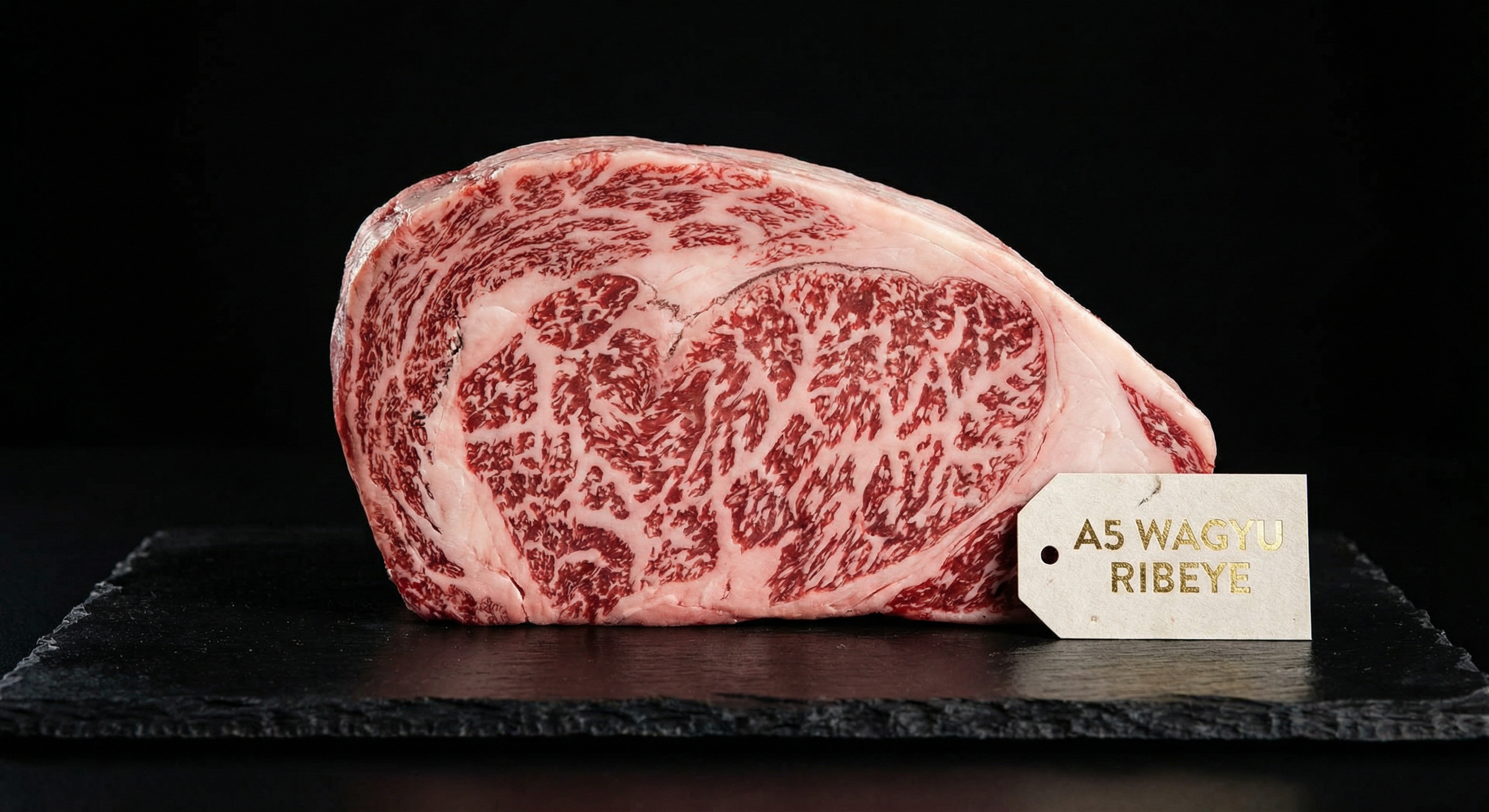
A5 wagyu represents the absolute pinnacle of Japanese beef grading — the highest possible quality designation in Japan's strict meat classification system. The "A" denotes the highest yield grade (how much usable meat comes from the carcass), while "5" represents the top tier for meat quality factors including marbling, color, firmness, and fat quality.
To earn an A5 rating, wagyu must achieve a Beef Marbling Score (BMS) of 8-12 (on a 12-point scale), exceptional meat color and brightness, superior firmness and texture, and pristine white fat color and luster. Only about 3-5% of all Japanese wagyu qualifies for the A5 designation, making it one of the world's rarest and most expensive beef products.
The grading is performed by certified assessors from the Japan Meat Grading Association (JMGA) within 48 hours of slaughter. Every ribeye cross-section is photographed and evaluated against strict national standards. This rigorous system ensures consistency and justifies the premium pricing — authentic A5 wagyu typically costs $150-300 per pound at retail, with some ultra-premium regional brands (like Kobe or Matsusaka) reaching $400+ per pound.
The Japanese Beef Grading System Explained
Japan's beef grading system operates on two axes: yield grade (A, B, or C) and meat quality score (1-5). The yield grade measures carcass efficiency — how much usable meat the processor can extract relative to the animal's weight. "A" grade indicates 72%+ yield, "B" is 69-72%, and "C" is below 69%. Most premium wagyu achieves A-grade status.
The quality score (1-5) evaluates four critical factors:
Marbling (BMS 1-12): The density and distribution of intramuscular fat. A5 requires BMS 8-12, with BMS 12 representing extraordinary snowflake-like marbling covering the entire muscle.
Meat color and brightness: Scored 1-7, with higher numbers indicating better color. A5 beef shows vibrant, cherry-red coloring with excellent brightness.
Firmness and texture: Scored 1-5 based on muscle fiber tightness and overall texture. A5 wagyu has exceptionally fine muscle fibers that create a butter-soft texture.
Fat quality: Scored 1-5 based on fat color, luster, and quality. A5 fat is pure white with a glossy sheen and melts at lower temperatures than conventional beef fat (starting around 77°F/25°C).
The final letter-number combination (A5, A4, B3, etc.) tells the complete story: an A5 ribeye delivers maximum yield with perfect scores across all quality metrics. Lower grades like A3 or B4 might have good marbling but fail on color or texture consistency.
A5 vs Other Wagyu Grades: Real Differences
The gap between A5 and lower grades isn't subtle — it's transformative.
A5 vs A4 wagyu: A4 beef typically scores BMS 6-7, showing significant marbling but with larger gaps between fat deposits. The eating experience is rich but lacks the complete melt-in-your-mouth dissolution of A5. A4 costs roughly 30-40% less than A5, making it the "value" option for wagyu enthusiasts who want luxury without ultra-premium pricing.
A5 vs A3 wagyu: A3 (BMS 5) shows moderate marbling comparable to USDA Prime beef. It's tender and flavorful but doesn't deliver the transformative fatty richness that defines true luxury wagyu. Many restaurants market A3 as "wagyu" without clarification, charging premium prices for what's essentially very good — but not exceptional — beef.
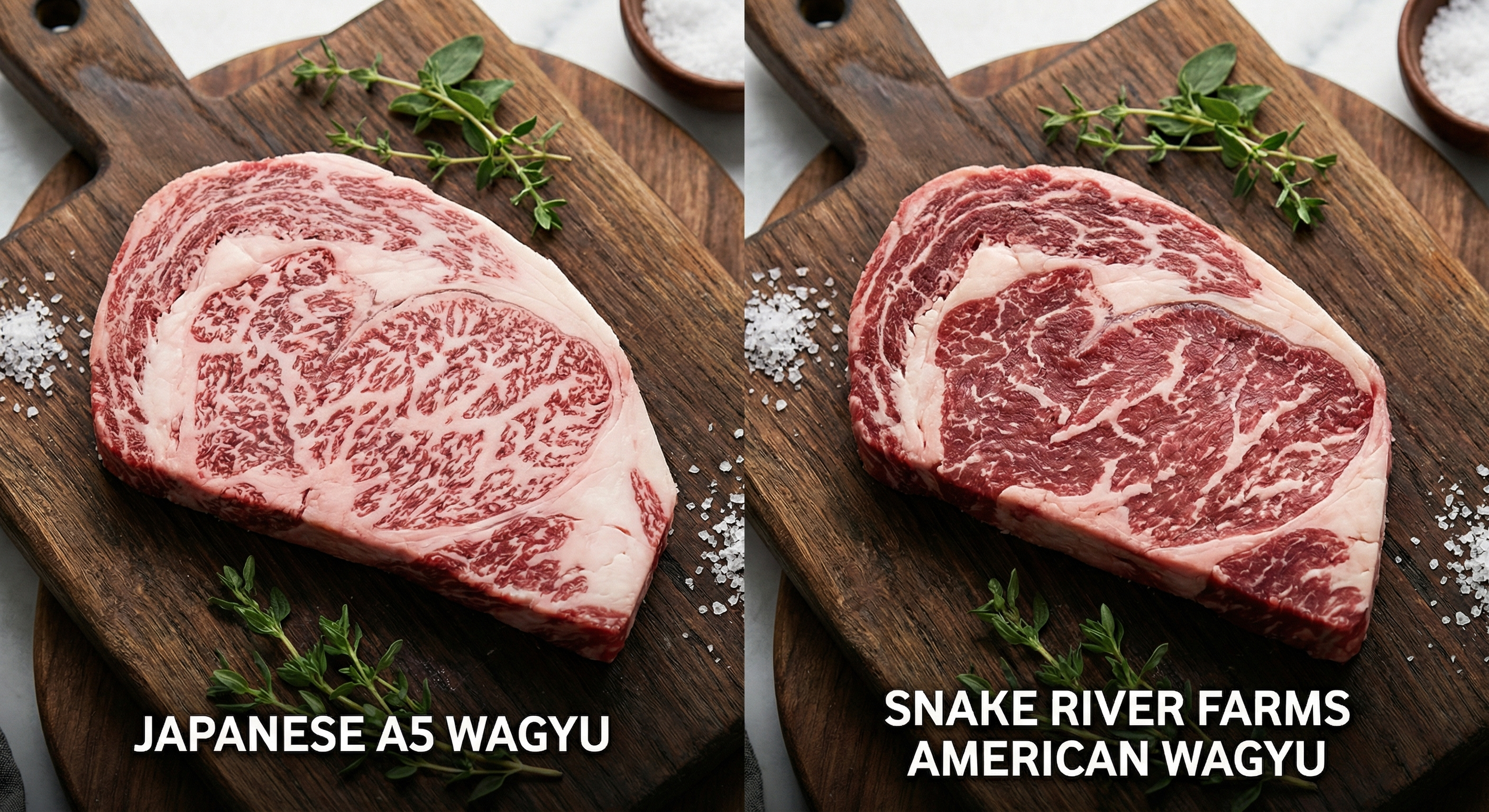
A5 vs American wagyu: American wagyu (often Angus-wagyu crossbreeds) typically scores equivalent to A3-A4 Japanese grades. The marbling is impressive by American standards but falls short of authentic A5 density. American wagyu costs $50-100/lb retail versus $150-300/lb for A5 imports.
A5 vs A2 or A1 wagyu: These lower grades (BMS 2-4) have minimal marbling and shouldn't command significant price premiums over high-quality conventional beef. A2/A1 wagyu marketed at premium prices represents poor value — you're paying for the "wagyu" label without the quality that justifies it.
The most common trap: restaurants serving A3-A4 wagyu while implying or claiming A5 quality. Always ask for the specific grade and prefecture of origin before ordering "wagyu" at premium prices.
Why Is A5 Wagyu So Expensive?
A5 wagyu's astronomical pricing ($150-300+ per pound) stems from extreme scarcity, intensive production costs, and import economics.
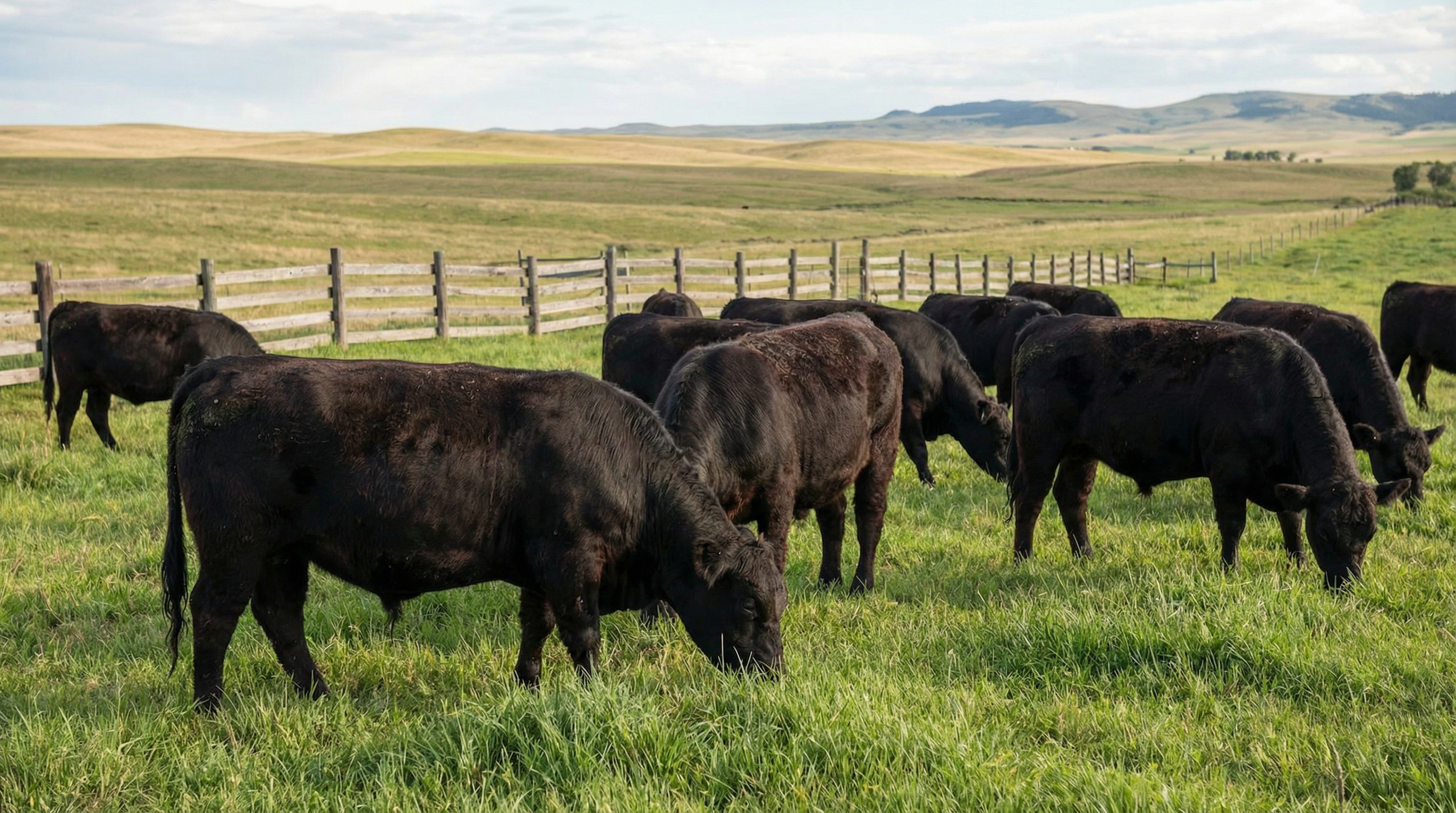
Japanese wagyu cattle require 28-36 months of highly specialized raising (versus 18-20 months for American cattle). Each animal receives individual attention, stress-minimization protocols, and carefully calibrated feed rations designed to maximize intramuscular fat development without compromising meat quality.
Production costs: Wagyu calves cost $5,000-10,000 (compared to $500-800 for conventional cattle). Feed costs run $10-15 per day over 28+ months, totaling $10,000-16,000 per animal in feed alone. Labor-intensive individual care, massage, and stress reduction add thousands more. By slaughter, each wagyu represents $30,000-50,000 in total production investment.
Yield scarcity: Only 3-5% of Japanese wagyu achieves A5 grade. A 1,400-pound steer yields about 600 pounds of retail cuts. If 4% of production is A5, that's just 24 pounds of A5 beef per animal — and prime cuts like ribeye or striploin represent only 30-40% of that yield. Effectively, you get 7-10 pounds of A5 ribeye from a single $40,000 production investment.
Import costs: U.S. tariffs, shipping, cold chain logistics, and USDA inspection add 30-40% to the landed cost. Japanese export controls limit volume, creating artificial supply constraints that support high pricing.
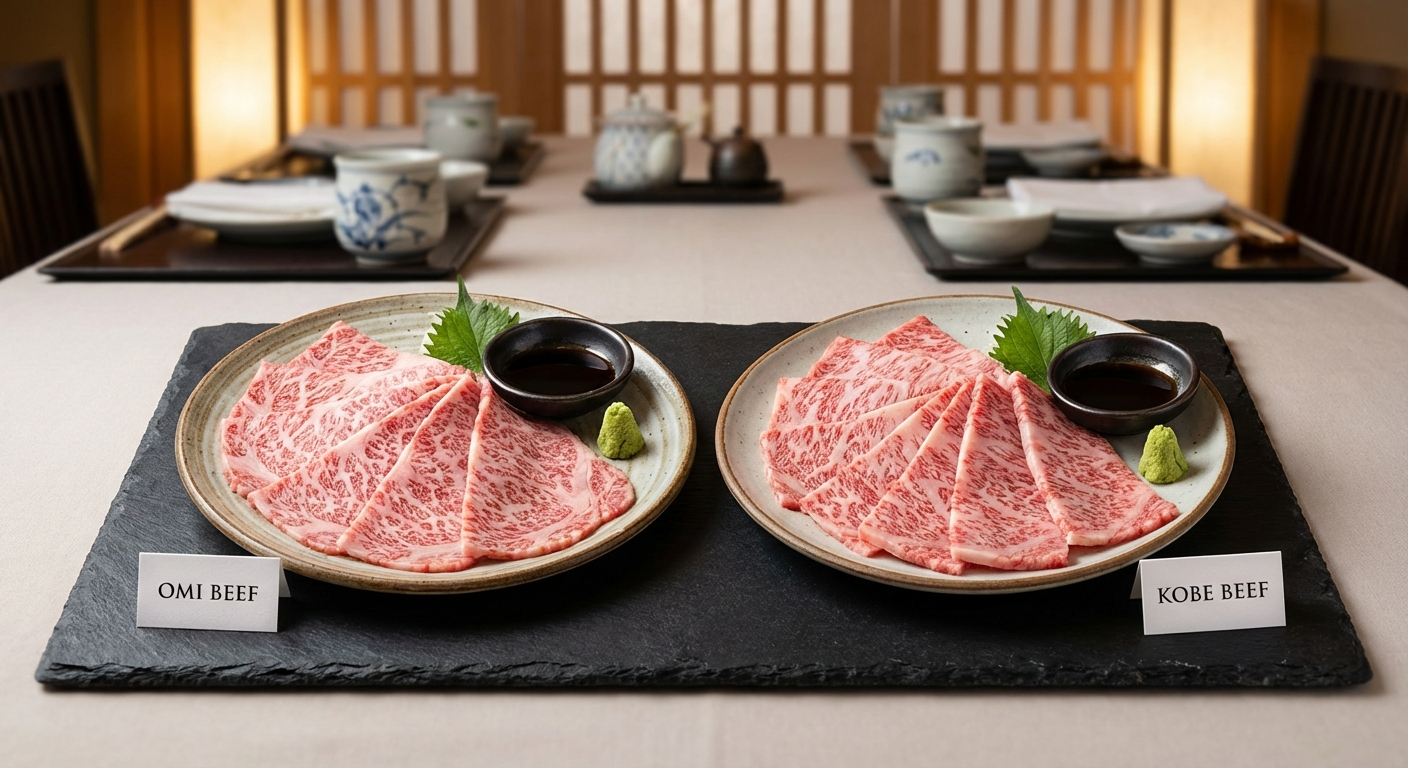
Brand premiums: Regional A5 brands command massive premiums — Kobe beef (from Hyogo prefecture's Tajima cattle) costs 50-100% more than generic A5, while ultra-rare Matsusaka or Omi beef can double Kobe prices. These brands represent <1% of total wagyu production but capture much of the international luxury market.
The result: authentic A5 wagyu is one of the world's most expensive foods by weight, exceeding Ibérico ham, white truffles, and most caviar on a per-pound basis.
Where to Buy Authentic A5 Wagyu
Sourcing genuine A5 wagyu requires vigilance — the market is flooded with mislabeled, lower-grade, or fraudulent products.
Verified importers: Buy from USDA-inspected importers with direct Japanese partnerships. Holy Grail Steaks, Crowd Cow, and Snake River Farms maintain transparent grading documentation and prefecture sourcing.
Certification requirements: Demand photos of the actual JMGA grade stamp on your specific cut's carcass tag. Reputable sellers provide certificate numbers traceable to Japan's beef traceability system. Each animal has a unique 10-digit identification number linked to birth records, feeding history, and slaughter date.
Red flags for fake A5: Prices below $120/lb for ribeye (suggests lower grade or mislabeling). Sellers who won't specify prefecture of origin (Kagoshima, Miyazaki, Hyogo, etc.). Claims of "USDA graded A5" (USDA doesn't grade wagyu by Japanese standards). Generic "Japanese wagyu" labels without grade specification. Online marketplaces like Amazon/eBay without seller verification.
Restaurant verification: High-end steakhouses usually display certificates and prefecture information. Ask servers for the specific farm or prefecture. Be suspicious of "wagyu" menu items priced similarly to USDA Prime — real A5 commands 3-4x Prime pricing in restaurant settings ($200-400 for an 8oz A5 ribeye vs $70-100 for Prime).
Retail vs restaurant pricing: Retail A5 ribeye: $150-250/lb. Restaurant: $25-40 per ounce ($400-640 for a 16oz steak). The 100-150% markup reflects preparation, ambiance, and wine service — but knowledgeable buyers often prefer cooking A5 at home, where they control portioning and cooking technique.
Storage and handling: A5 wagyu ships frozen (flash-frozen at -40°F within hours of cutting). Thaw slowly in the refrigerator over 24-48 hours. Never microwave-thaw — it destroys the fat structure. Once thawed, cook within 48 hours for peak quality.
How to Cook A5 Wagyu (Without Ruining It)
A5 wagyu requires a completely different cooking approach than conventional steaks — the extreme fat content (40-50% intramuscular fat by weight) demands gentle, fat-respecting techniques.
Portioning: Cut A5 into 2-3 oz portions, not 8-12 oz steaks. The richness is overwhelming in large servings. Many Japanese restaurants serve A5 as thin-sliced shabu-shabu or yakiniku (small grilled pieces) rather than thick steaks.
Room temperature rest: Critical. A5 fat begins melting around 77°F, so letting the meat rest at room temperature for 45-60 minutes ensures even fat distribution during cooking. Cold A5 won't render properly, leaving solid fat pockets.
Minimal seasoning: Salt only, applied just before cooking. A5's fat is the star — butter, garlic, herbs, or marinades obscure the subtle sweetness and umami. Use flaky sea salt (Maldon) rather than fine salt to avoid over-salting the rich meat.
Cooking methods:
Cast iron sear (recommended for home): Screaming hot dry pan (no oil — A5 renders its own fat). Sear 45-60 seconds per side for 1-inch thickness, targeting 125°F internal (medium-rare). The fat self-bastes as it melts. Rest 5 minutes before serving.
Japanese yakiniku (charcoal grill): Cut into ¼-inch strips. Grill 20-30 seconds per side over binchotan charcoal. The thin cuts allow fat to render without flare-ups while developing char flavor.
Sous vide + sear: 129°F for 1 hour, then ice bath to stop cooking. Sear 30 seconds per side in screaming hot cast iron. This method gives perfect doneness control and maximum fat rendering.
What NOT to do: Don't cook A5 past medium-rare (130°F max). The fat solidifies as it cools, creating an unpleasant waxy texture. Don't grill thick cuts over high heat — the exterior chars before the interior fat renders, leaving raw fat pockets. Don't add butter or oil — it dilutes A5's flavor and makes it greasy. Don't overcrowd the pan — moisture prevents proper searing.
Serving: Slice against the grain into ½-inch pieces. Serve immediately on pre-warmed plates (the fat solidifies below 100°F). Pair with simple accompaniments: steamed rice, pickled vegetables, light soy-based dipping sauce. Heavy sides overwhelm A5's delicate flavor profile.
A5 Wagyu Regional Brands and Differences
Not all A5 wagyu is equal — regional branding, cattle genetics, and feed programs create distinct flavor profiles and prestige hierarchies.
Kobe beef (Hyogo Prefecture): The most famous A5 brand globally. Must come from purebred Tajima-gyu cattle born, raised, and processed in Hyogo Prefecture. Strict selection requires BMS 6+ (most Kobe is BMS 9-12), specific marbling patterns, and carcass weight limits. Kobe's fame drives 50-100% price premiums over generic A5. Estimated 3,000 cattle certified annually.
Matsusaka beef (Mie Prefecture): Often called "the wagyu of wagyu" — even more exclusive than Kobe. Must be virgin female cattle raised in Matsusaka city for 900+ days with strict feeding protocols. The virgin requirement (believed to improve meat tenderness) and extended finishing create intense marbling and subtle sweetness. Annual production: ~2,500 cattle. Retail prices often exceed $300/lb.
Kagoshima wagyu: Japan's largest A5 producer (20-25% of national A5 volume). High-quality consistent beef with slightly less international prestige than Kobe/Matsusaka, resulting in better value ($120-180/lb). Feed programs emphasize sweet potato and grain blends that create mild, sweet fat flavor.
Miyazaki beef: Winner of the "Wagyu Olympics" (2007, 2017), Miyazaki produces intensely marbled A5 with exceptional fat quality. Limited export availability creates scarcity. Retail $180-250/lb.
Omi beef (Shiga Prefecture): Japan's oldest wagyu brand (400+ year history). Smaller production (5,000-6,000 cattle annually) emphasizes traditional raising methods and minimal stress. Known for exceptionally fine-grained marbling and delicate flavor. Premium pricing similar to Kobe.
Practical implications: For most buyers, generic "Kagoshima A5" or "Miyazaki A5" offers the true A5 experience at relatively accessible prices ($150-180/lb). Regional luxury brands (Kobe, Matsusaka, Omi) provide prestige and subtly different flavor profiles but command 40-100% premiums. Blind taste tests show that even experienced eaters struggle to distinguish between different A5 regional brands — the differences are real but subtle.
Is A5 Wagyu Worth the Price?
Whether A5 justifies $150-300/lb depends entirely on your priorities, budget, and expectations.
Value proposition analysis: A5 delivers an objectively unique eating experience — the combination of extreme marbling, umami intensity, and buttery texture doesn't exist in any other beef. If you're seeking a one-of-a-kind culinary experience for a special occasion, A5 delivers undeniable value for that purpose.
Diminishing returns: The gap between A4 ($100-130/lb) and A5 ($150-250/lb) is smaller than the gap between USDA Prime ($15-20/lb) and A4. For many eaters, A4 delivers 80-85% of the A5 experience at 60-70% of the cost. The incremental benefit of A5 over A4 may not justify the premium for budget-conscious buyers.
The honest answer: A5 is "worth it" if the experience, exclusivity, and education justify the premium to you personally. It's not "worth it" if you're expecting 10x better flavor than USDA Prime — the difference is profound but not proportional to the price gap.
For authentic Japanese A5 wagyu with full traceability and certification, check out The Meatery's Japanese A5 Wagyu Collection.