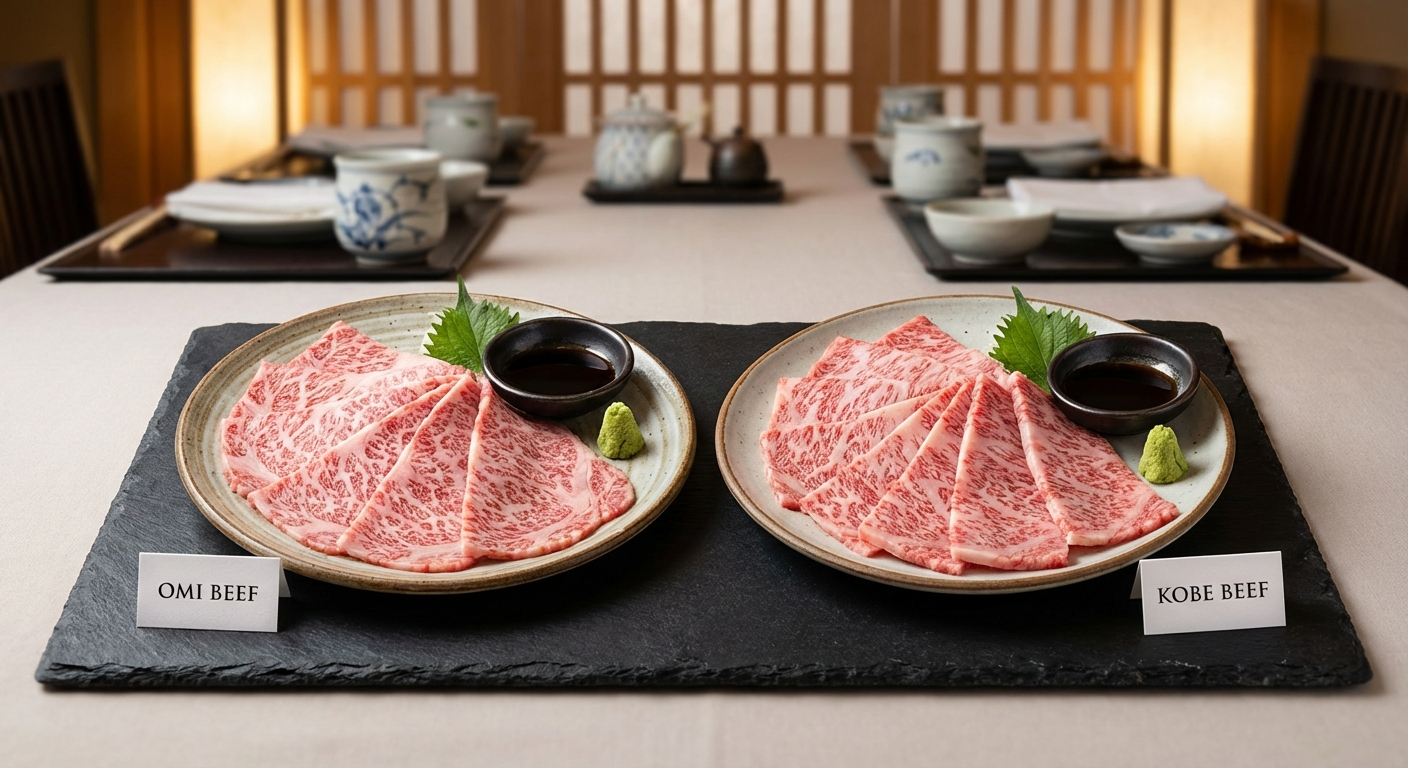
A5 Wagyu vs American Wagyu: The Complete Comparison
Japanese A5 and American wagyu share a name but deliver completely different eating experiences. Here's what actually separates them — from genetics to your plate.
Two Wagyu Worlds: What's Actually Different
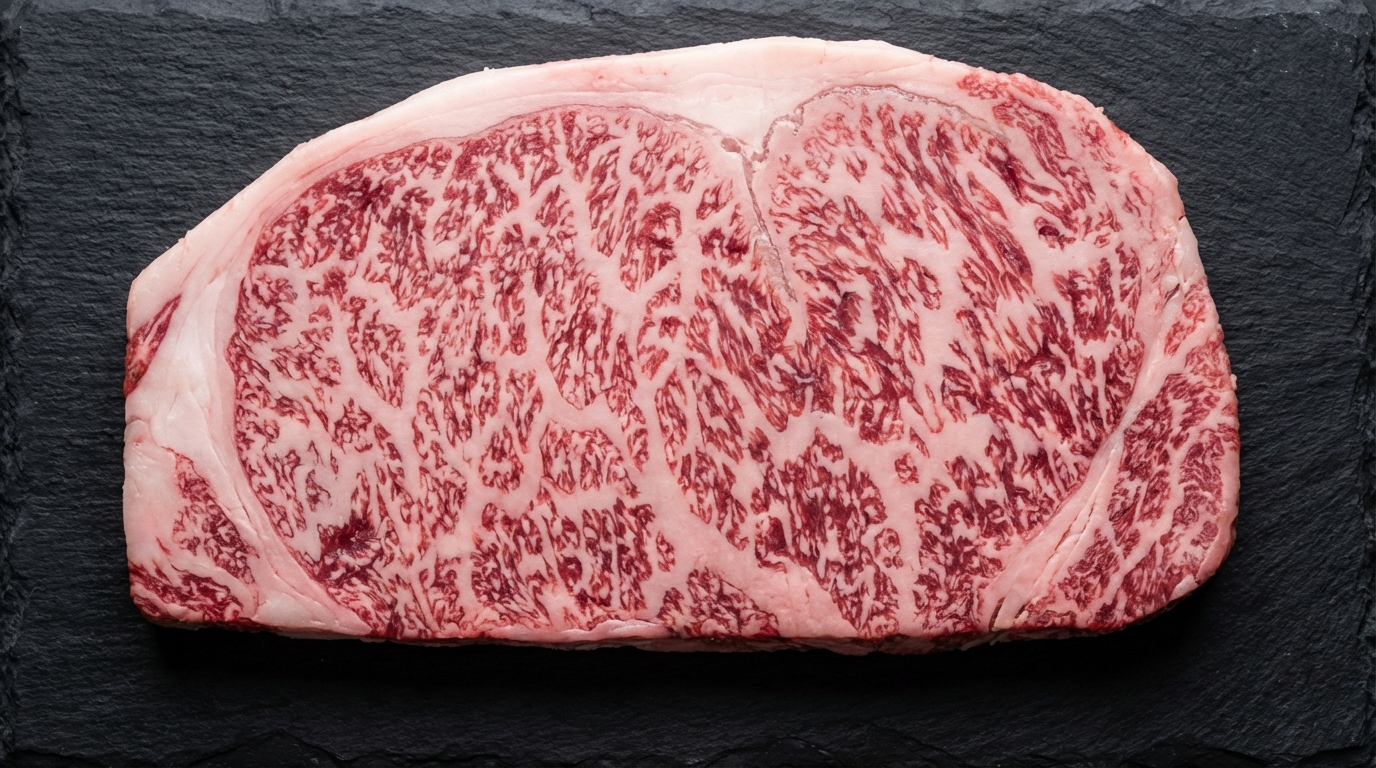
"A5 wagyu" and "American wagyu" sit on the same menu at premium steakhouses, but they're fundamentally different products. The price gap — often 4-8× — isn't arbitrary. It reflects distinct genetics, raising methods, grading systems, and eating experiences.
Understanding what separates them helps you decide which is worth your money for any given occasion. Neither is universally "better." They serve different purposes.
Genetics: The Foundation of Every Difference
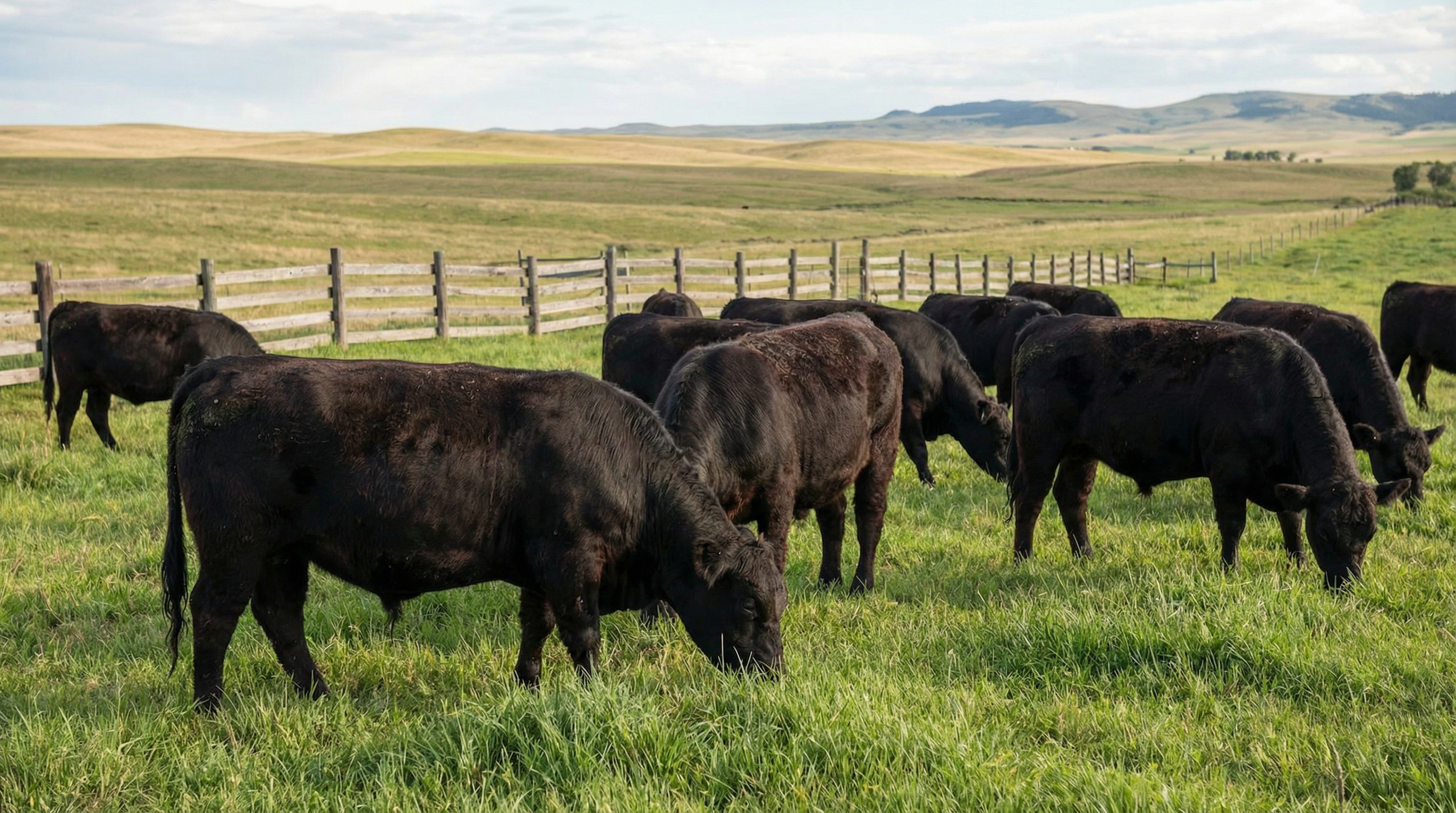
Japanese A5 wagyu comes exclusively from four native breeds, with Japanese Black (Kuroge Washu) accounting for over 90% of production. These cattle have been selectively bred for centuries to maximize intramuscular fat deposition — the marbling that defines the wagyu eating experience.
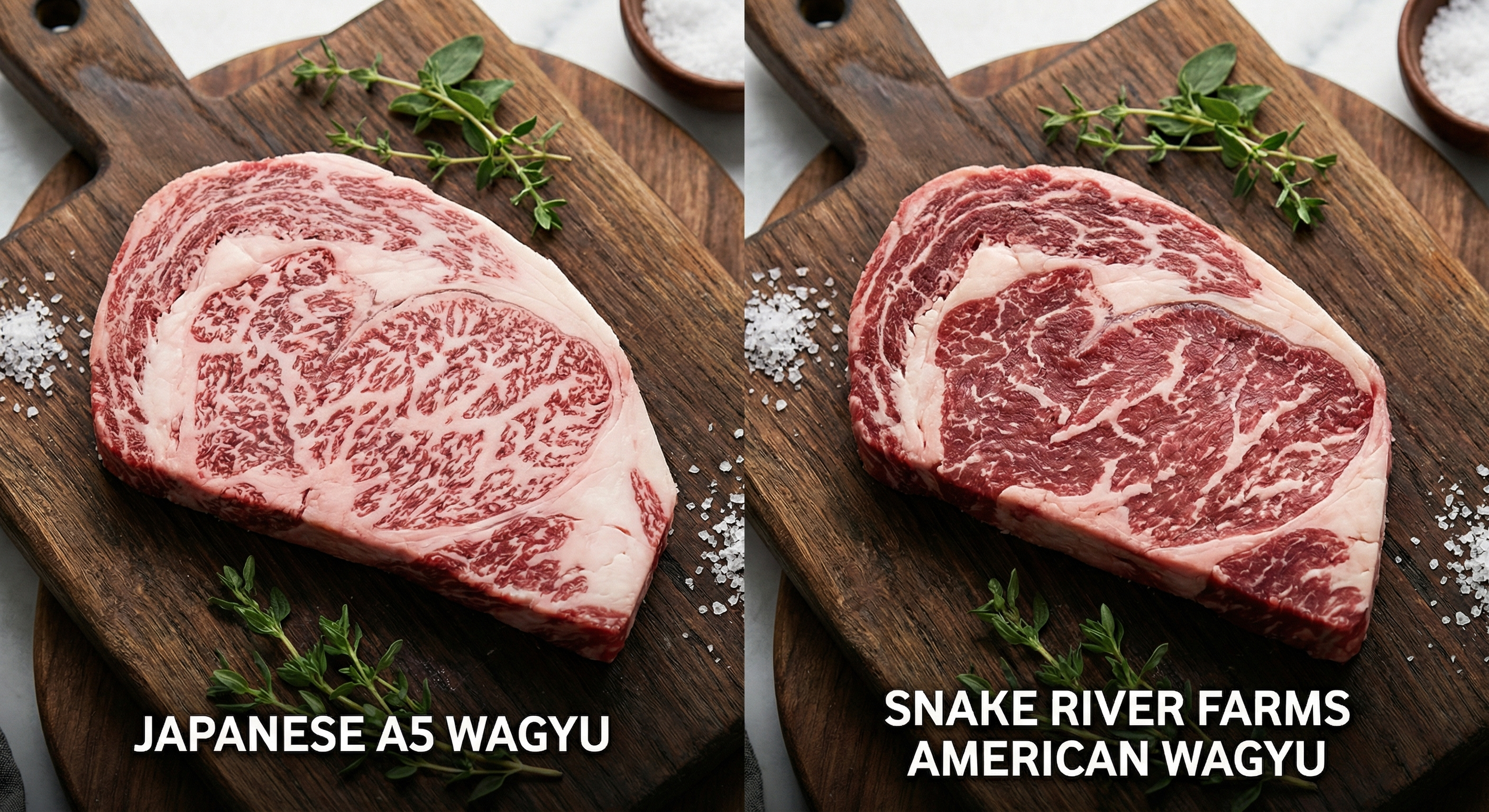
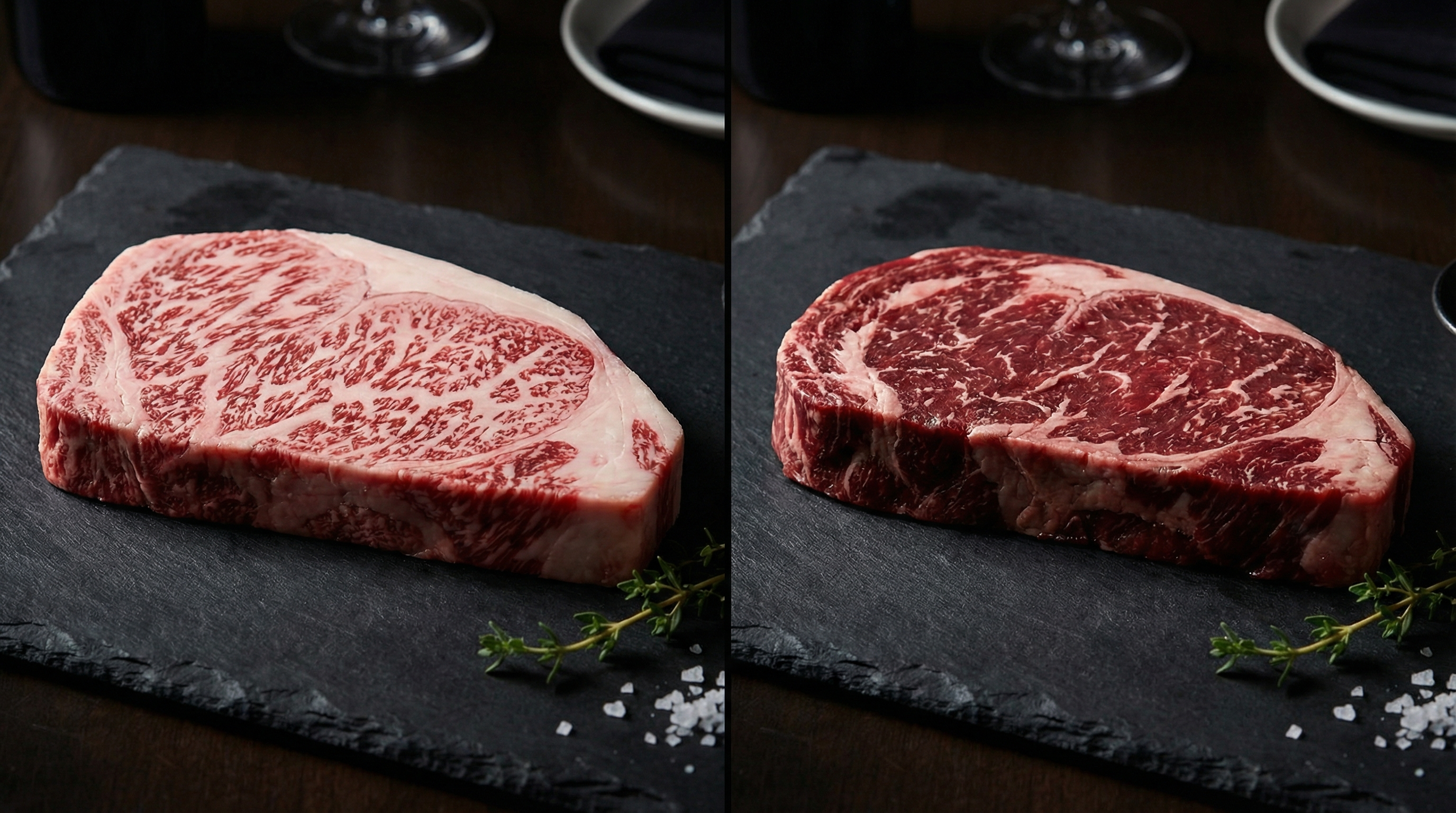
The result is a genetic capacity for marbling that no other cattle breed can match. Japanese Black cattle can achieve Beef Marbling Scores (BMS) of 8-12, with the fat distributed in fine, web-like patterns throughout the muscle fiber.
American wagyu is typically a crossbreed between Japanese Black and Black Angus, most commonly an F1 cross (50% wagyu, 50% Angus). Some producers raise F2 (75% wagyu) or even Fullblood (100% Japanese genetics) cattle in the US, but these represent a small fraction of the market.
This genetic dilution is the single biggest factor in the quality difference. An F1 crossbreed inherits some of the wagyu marbling genetics, but the Angus influence moderates it significantly. Most American wagyu achieves BMS 4-7 — exceptional by normal beef standards, but nowhere near true A5 territory.
The Fullblood Exception
A small number of American ranches raise 100% Fullblood wagyu from registered Japanese genetics. These animals can produce marbling comparable to Japanese A5, but they're rare and priced accordingly — often $120-200/lb, approaching Japanese import prices. When someone says "American wagyu," they almost never mean Fullblood.
Grading Systems: Why the Numbers Don't Translate
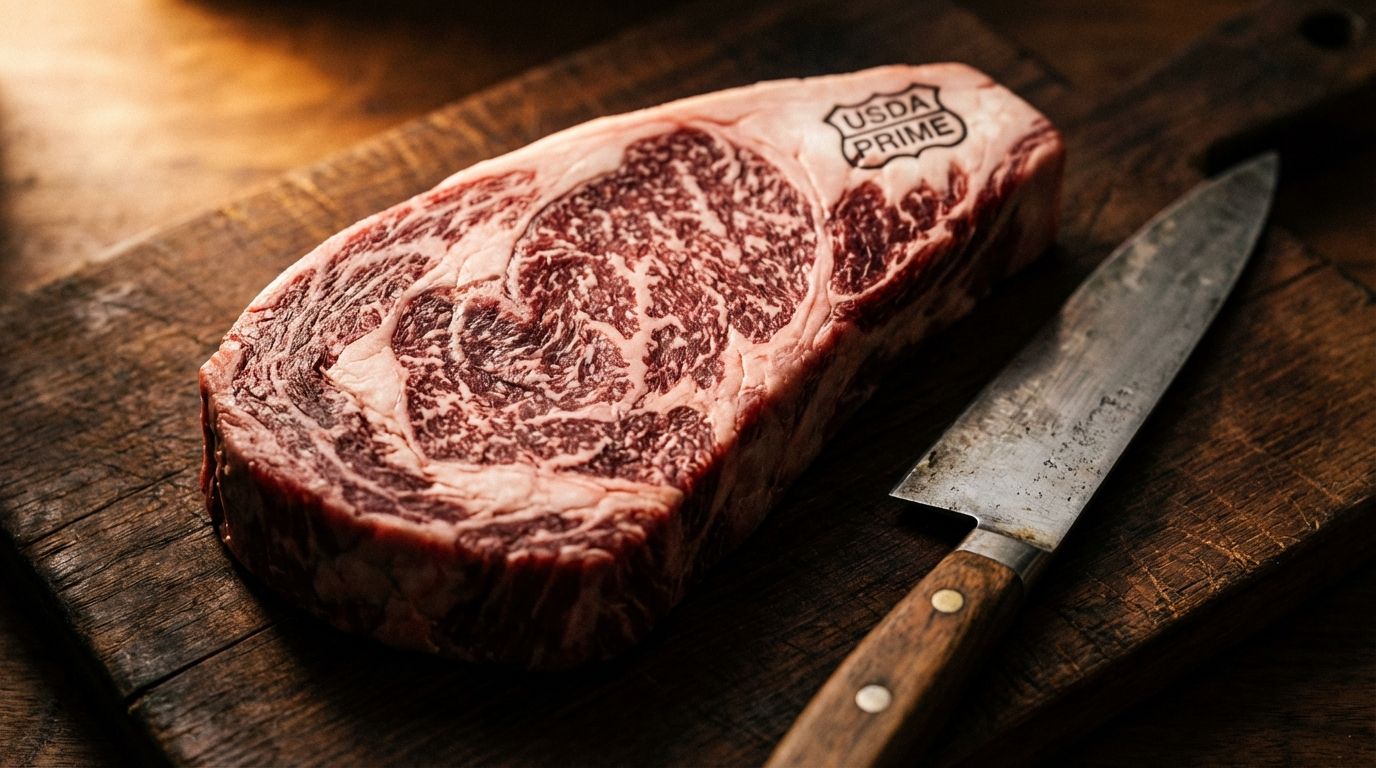
Japan and the US use completely different grading systems, and attempting to equate them causes most of the confusion around wagyu.
Japan's system evaluates yield (A, B, or C) and quality on a 1-5 scale across four criteria: marbling (BMS), meat color, fat color, and firmness/texture. A5 requires a BMS of 8 or higher plus passing marks in all other categories. The BMS scale runs from 1-12, giving fine-grained differentiation even within A5.
The USDA system grades beef as Select, Choice, or Prime based primarily on marbling at the ribeye. USDA Prime — the highest grade — corresponds to roughly BMS 5-6 on the Japanese scale. There is no USDA grade above Prime, so beef with BMS 7, 8, or 12 all receive the same "Prime" designation.
This means the best American wagyu (BMS 6-7) grades as USDA Prime, just like a well-marbled Angus steak at BMS 5. The USDA system literally cannot distinguish between "very good" and "extraordinary" marbling. Japanese A5 at BMS 10 is in a category that American grading doesn't even have a name for.
The BMS Translation Table
BMS 3-4: USDA Choice (standard American wagyu territory)
BMS 5-6: USDA Prime (good American wagyu, top Angus)
BMS 7: Above Prime (exceptional American wagyu, entry Japanese A4)
BMS 8-9: Japanese A5 entry level (no USDA equivalent)
BMS 10-12: Peak A5 (no USDA equivalent, ultra-rare)
Flavor and Texture: Completely Different Experiences
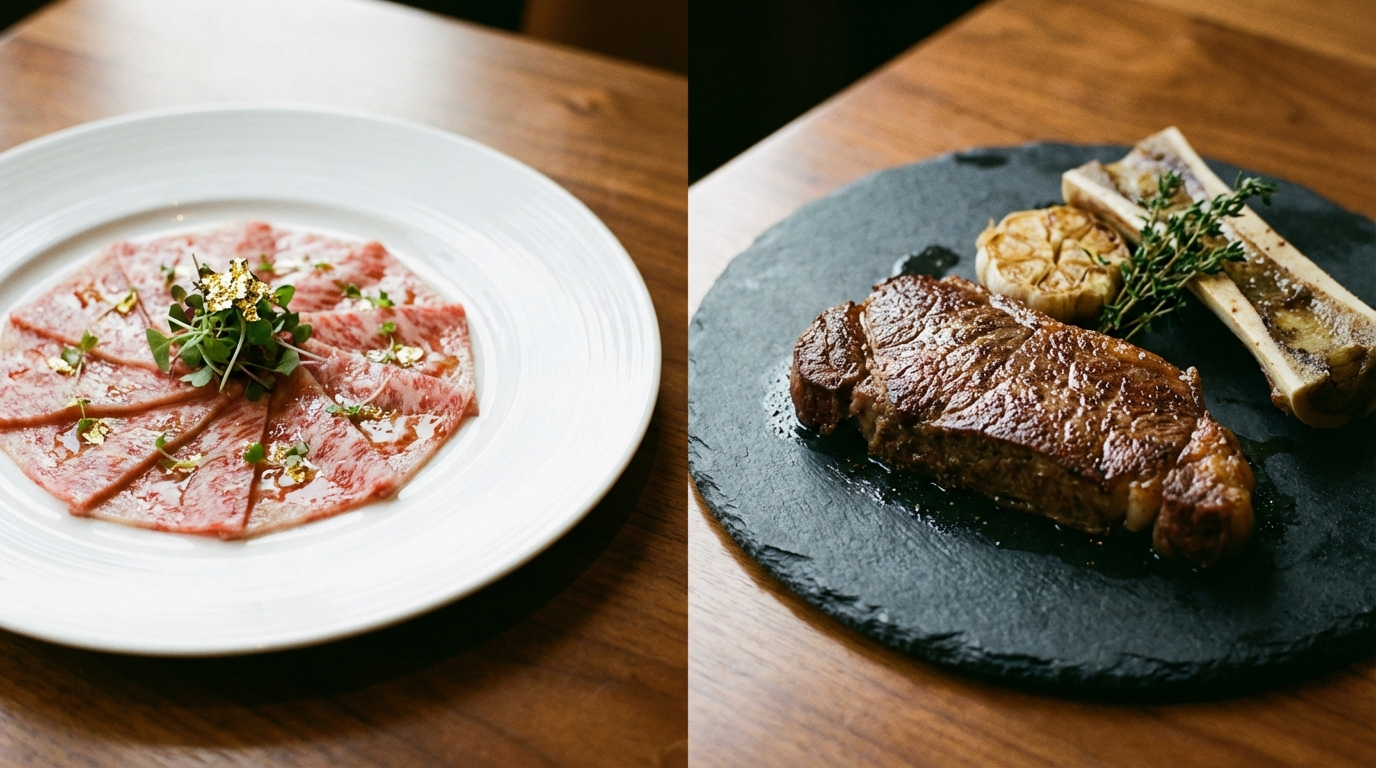
The eating experience is where these two products diverge most dramatically.
Japanese A5 wagyu is intensely rich — almost creamy. The intramuscular fat, comprising 40-50% of the muscle, melts at a lower temperature than regular beef fat (around 77°F vs 104°F for conventional tallow). This creates the signature "melts in your mouth" sensation that isn't just marketing — it's thermodynamics.
The flavor is sweet, subtly umami, and buttery. It doesn't taste like a steak in the traditional sense. Many first-time eaters compare it more to foie gras or a rich dessert than to beef. Portion sizes are necessarily small — 3-4 ounces is a full serving, because the fat content triggers satiety quickly.
American wagyu tastes like an exceptionally good steak. The Angus genetics contribute a robust, traditional beefy flavor, while the wagyu marbling adds juiciness and tenderness beyond what standard Prime beef achieves. It's rich, but not overwhelmingly so. You can eat a full 12-16oz American wagyu ribeye and feel satisfied, not defeated.
This isn't a quality difference — it's a category difference. Choosing between them is like choosing between truffle oil and really excellent olive oil. Both are premium; they just do different things.
Price Breakdown: What You're Actually Paying For
The price gap between Japanese A5 and American wagyu isn't just margin — it reflects fundamentally different production economics.
Japanese A5 Wagyu (typical retail prices):
Ribeye: $180-350/lb
Striploin: $150-280/lb
Tenderloin: $200-400/lb
Chuck/Shoulder: $80-120/lb
American Wagyu (typical retail prices):
Ribeye: $45-80/lb
Striploin: $35-65/lb
Tenderloin: $55-90/lb
Chuck/Shoulder: $20-35/lb
Japanese cattle are raised for 24-36 months on carefully managed diets, in a country where land and feed costs are among the world's highest. Export regulations, air freight, import duties, and the simple reality that Japan produces limited quantities all inflate the final price.
American wagyu cattle reach market weight in 14-18 months, benefit from lower land and feed costs, and face no international shipping overhead. The crossbreeding with Angus also improves feed efficiency compared to purebred Japanese cattle, further reducing production costs.
Cost Per Serving Tells a Different Story
Because A5 portions are smaller (3-4oz vs 12-16oz), the per-serving cost gap narrows:
A5 wagyu dinner (4oz ribeye): $45-87
American wagyu dinner (12oz ribeye): $34-60
The A5 experience is still more expensive, but not 4-8× more expensive when you account for serving size. For a special occasion, the gap between a memorable A5 course and a premium American wagyu steak might be $25-30.
When to Choose Each One
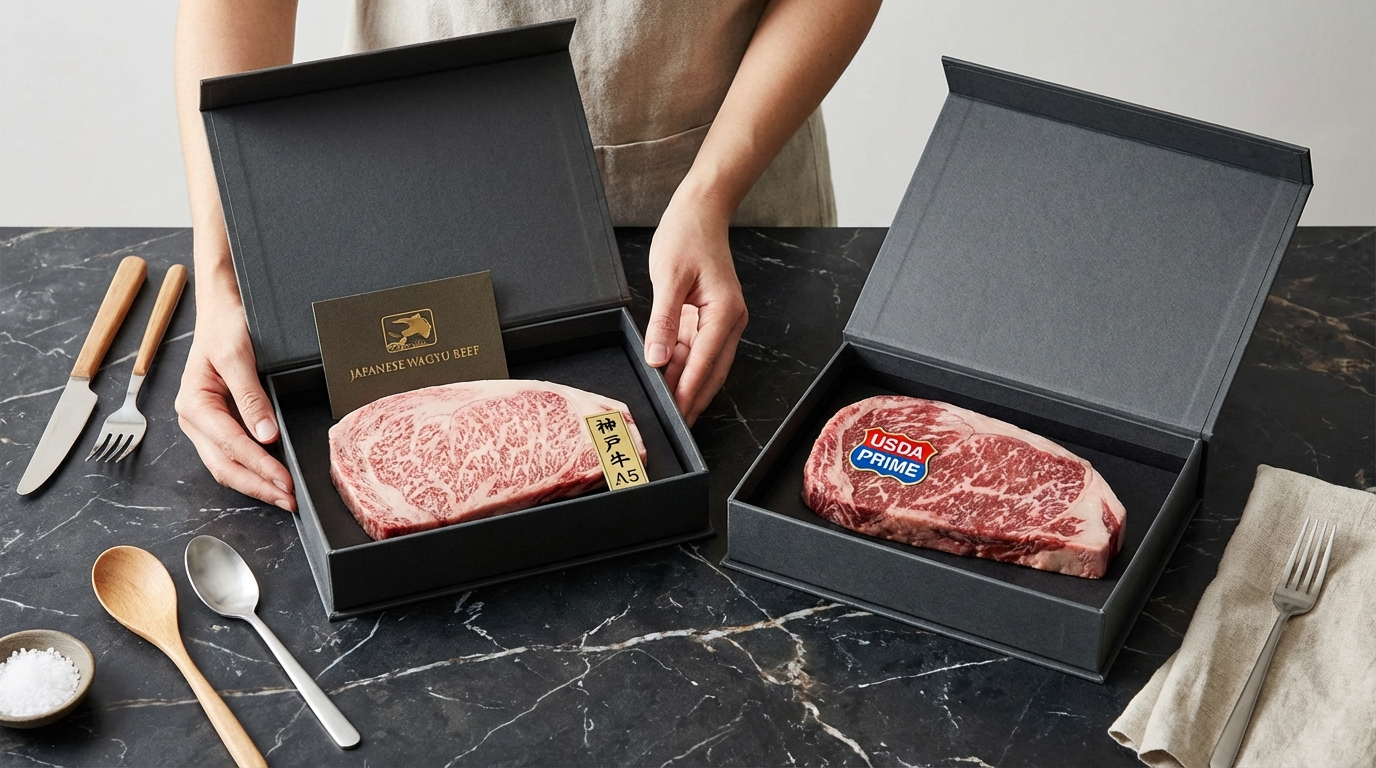
Choose Japanese A5 wagyu when:
• You want an extraordinary, once-in-a-while culinary experience
• You're serving small courses (appetizer, tasting, yakiniku-style)
• Fat richness and melt-in-your-mouth texture are the priority
• You're celebrating and want the genuine pinnacle of beef
• You appreciate the craftsmanship behind the product
Choose American wagyu when:
• You want a premium steak dinner with traditional portions
• Beefy flavor matters more than extreme richness
• You're grilling, reverse-searing, or doing a classic steakhouse preparation
• You want something noticeably above USDA Prime without the A5 price
• You're feeding a group and need to manage budget while impressing
Buying Smart: What to Look For
The "wagyu" label is unregulated in the United States. Any beef with any percentage of wagyu genetics can legally be sold as "American wagyu." This means quality varies enormously.
For Japanese A5: Look for the individual animal's nose print ID number, the specific prefecture of origin, and the BMS score (not just "A5"). Legitimate importers include this documentation. Be suspicious of A5 priced under $120/lb for premium cuts — it's likely mislabeled or not genuine Japanese origin.
For American wagyu: Look for the genetic percentage (F1 50%, F2 75%, or Fullblood 100%), the ranch or producer name, and ideally the BMS or marbling score. Brands like Snake River Farms, Mishima Reserve, and Morgan Ranch are reputable producers with consistent quality.
For both, buying from specialized retailers with verifiable sourcing beats generic "wagyu" labels at the supermarket. The Meatery's Japanese A5 collection ships with full certification and traceability, and their American wagyu selection comes from documented Fullblood and F1 programs.
The Bottom Line
Japanese A5 and American wagyu aren't competing products — they're different categories that happen to share a name. A5 is an ultra-premium delicacy meant for small portions and special moments. American wagyu is a step above Prime for people who want a better steak without an entirely different eating experience.
The best approach: try both, understand what each offers, and choose based on the occasion. A Tuesday night calls for American wagyu on the grill. An anniversary dinner might deserve a few perfect slices of A5.
Stop asking which is "better." Start asking which is right for tonight.