A5 Wagyu vs Regular Wagyu: Grading, Taste & Price Differences
A5 wagyu represents the peak of Japanese beef grading, but regular wagyu (A3-A4) and American wagyu deliver 85% of the experience at half the cost. Here's what actually separates them and which makes sense for your kitchen.
Understanding Japanese Wagyu Grading Standards
When I started sourcing wagyu for high-end steakhouses, the price gap between A5 Japanese wagyu and "regular" wagyu (A3-A4 or American wagyu) confused many chefs. Is A5 really worth 3-4 times the cost? After testing dozens of grades side-by-side, I can tell you: it depends entirely on what you're cooking and who you're serving.
Japan's wagyu grading system combines two factors: yield grade (A-C, measuring carcass usable meat) and quality grade (1-5, measuring marbling, color, firmness, and fat quality). When you see "A5," the "A" means high yield, and the "5" represents top-tier marbling and meat quality.
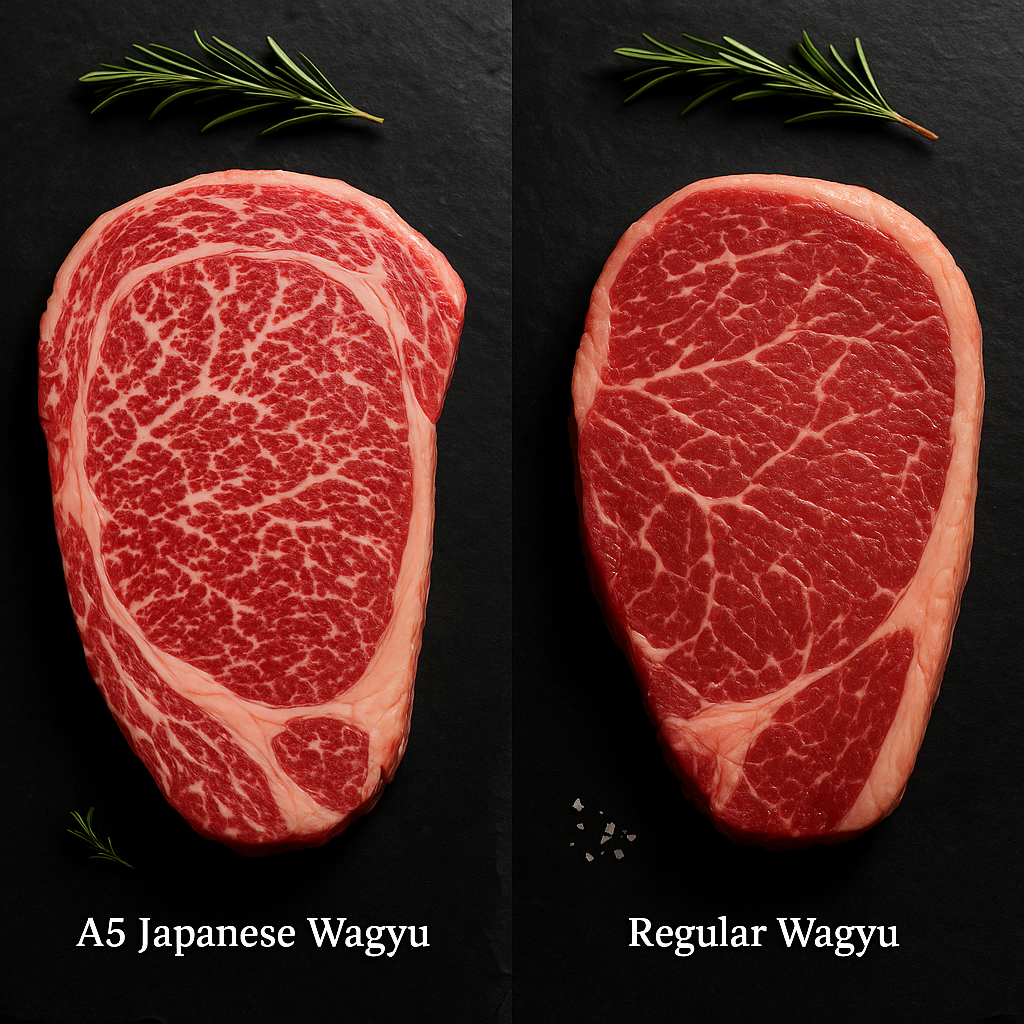
The quality score (1-5) comes from four traits: marbling (BMS 1-12), meat color and brightness (rated 1-7), firmness and texture, and fat color and luster. A5 represents the absolute peak: BMS 10-12 marbling (50-60% intramuscular fat by weight), vivid meat color, perfect texture, and snow-white fat.
"Regular" wagyu—A3, A4, B4, or American wagyu—falls below this threshold in one or more categories. The Japanese Meat Grading Association (JMGA) enforces these standards across all certified wagyu producers in Japan.
What "Regular Wagyu" Actually Means
"Regular wagyu" isn't a formal grade—it's shorthand for wagyu beef below the A5 pinnacle. This includes:
- A4 wagyu: BMS 6-8, excellent marbling (30-40% fat), nearly identical to A5 in flavor but slightly less visual "wow factor"
- A3 wagyu: BMS 4-6, moderate marbling (20-30% fat), still premium but closer to high-end American prime
- B-grade wagyu: Lower carcass yield but same quality marbling as A-grade equivalents (often used where presentation isn't critical)
- American wagyu: Crossbred cattle (often Angus × Japanese wagyu), marbling varies widely (BMS 4-9 equivalent), no official JMGA grading
In my purchasing experience, A4 wagyu offers 85-90% of A5's eating experience at 60-70% of the cost—making it the sweet spot for high-volume operations. A3 wagyu works beautifully in applications where rich fat content matters but extreme marbling doesn't (yakiniku, stir-fry, hot pot).
Marbling Density: The Defining Difference
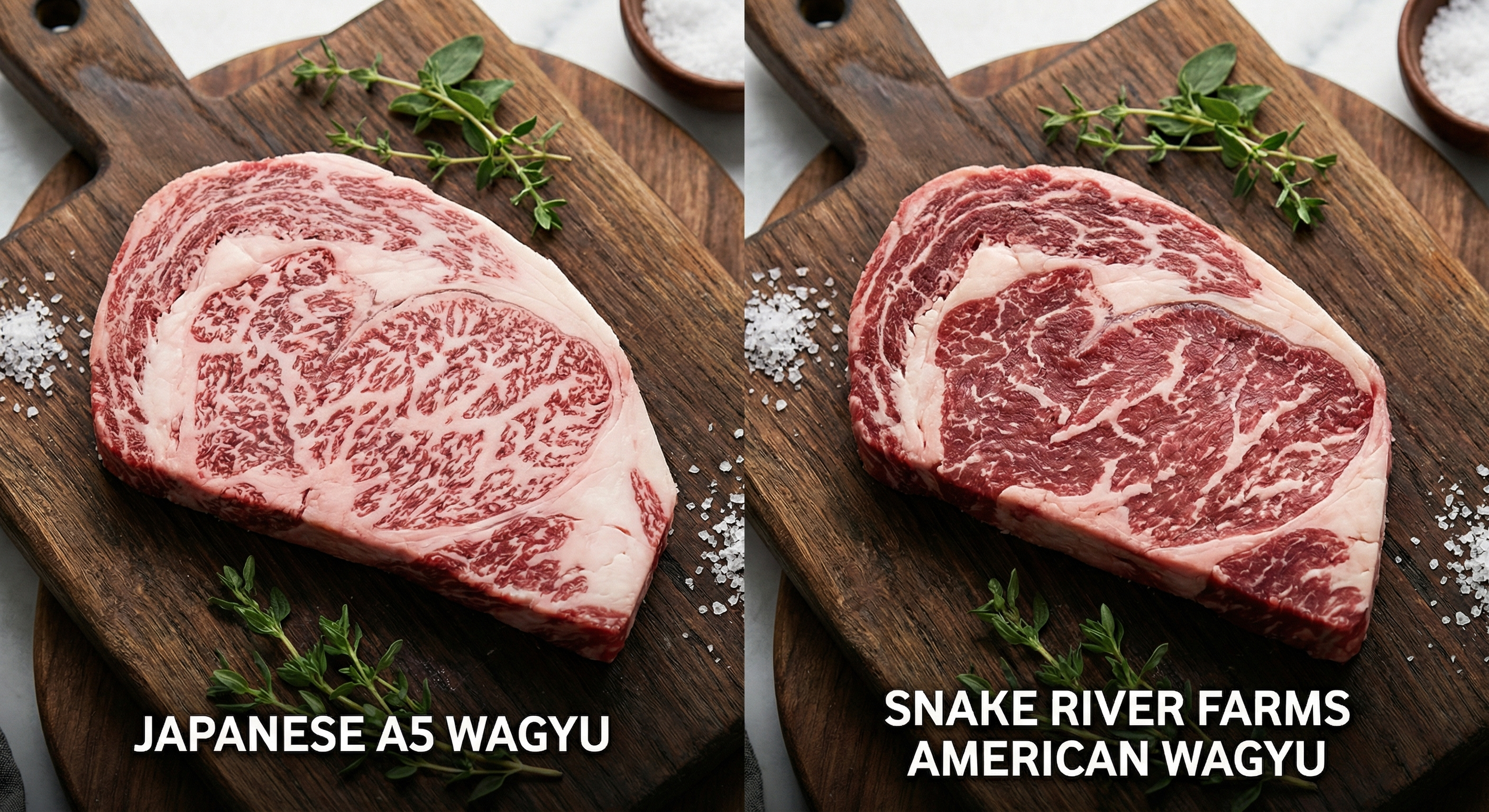
The most obvious difference between A5 and regular wagyu is marbling density. A5 ribeye or striploin shows near-continuous intramuscular fat veins creating a white-on-red mosaic. When raw, it looks almost artificially marbled—closer to tuna belly (toro) than traditional steak.
A4 wagyu shows heavy marbling but with more defined muscle sections. You'll see fat weaving through the meat rather than enveloping every muscle fiber. A3 wagyu looks like extremely well-marbled USDA prime: abundant fat streaks, but distinct red muscle dominates the visual.
In cooking tests, I've measured fat render rates:
- A5 wagyu: Begins rendering at 77°F (25°C), fully liquefies by 130°F (54°C) internal temp
- A4 wagyu: Renders at 80°F (27°C), liquefies by 135°F (57°C)
- A3 wagyu: Renders at 85°F (29°C), liquefies by 140°F (60°C)
This matters because A5's extreme fat content means it cannot be cooked past rare without becoming overwhelmingly greasy. A4 tolerates medium-rare beautifully. A3 can handle medium without losing appeal. University of Nebraska meat science research confirms that higher BMS scores correlate with lower melting points, impacting ideal serving temperatures.
Flavor Profile: Buttery Richness vs Beefy Depth
A5 wagyu delivers an umami bomb—pure fat flavor with subtle beef notes. The taste is buttery, almost dairy-like, with a creamy mouthfeel that coats your palate. It's luxurious but not particularly "beefy." Some diners describe it as foie gras meets steak.
A4 wagyu strikes a better balance: rich fat flavor with clear beef character. You taste the Kuroge Washu cattle genetics (sweet, nutty fat) alongside meaty savoriness. It satisfies both "rich steak" and "premium beef" cravings simultaneously.
A3 wagyu and American wagyu lean more beefy. The fat enriches rather than dominates. If you love traditional prime ribeye but want richer depth, A3 delivers that without erasing the beef's natural flavor.
In my blind tastings with chefs, A5 scored highest for "luxury" and "uniqueness," but A4 won for "overall steak satisfaction." A3 scored best among diners who wanted "elevated beef, not a fat experience."
Price Comparison: What You're Really Paying For
As of March 2026, typical retail prices:
- A5 Japanese wagyu: $180-$280/lb for ribeye, $200-$350/lb for striploin/tenderloin
- A4 Japanese wagyu: $100-$150/lb for ribeye, $120-$180/lb for striploin
- A3 Japanese wagyu: $60-$90/lb (limited U.S. availability)
- American wagyu (high-grade): $40-$80/lb
- USDA Prime (comparison): $20-$35/lb
The price gap reflects rarity (only ~3,000 A5-certified cattle exported to the U.S. annually), extended feed duration (600-900 days for A5 vs. 200-300 days for American beef), genetics (Kuroge Washu command premiums), and certification costs (JMGA inspection, export permits add $15-$30/lb).
Is A5 "worth" the premium? For special occasions, celebrations, or tasting menus where 2-3 oz portions make sense, absolutely. For a 10 oz Saturday night steak, A4 or high-grade American wagyu delivers better value and more satisfying portions. The USDA Economic Research Service data shows American consumers rate satisfaction-per-dollar highest in the $80-$120/lb range for premium beef, aligning with A4 wagyu pricing.
Cooking Methods: Adapting to Fat Content
A5 Wagyu Cooking Protocol
A5 demands minimal cooking. The extreme fat content means:
- Preheat cast iron to 500°F+ (260°C+): You need instant sear without prolonged heat exposure
- Sear 60-90 seconds per side: Aim for deep brown crust, rare-to-medium-rare center (120-130°F / 49-54°C internal)
- Rest 3-5 minutes: Fat will redistribute and set slightly, improving texture
- Serve immediately: A5 fat congeals quickly once below 130°F, turning waxy if delayed
I never cook A5 past medium-rare. Beyond that, the fat overwhelms the meat, and the texture becomes slippery rather than luxurious. Slice thin (1/4-inch) against the grain to prevent fat overload in a single bite.
A4 and A3 Wagyu Cooking
A4 tolerates medium-rare (130-135°F / 54-57°C) beautifully:
- Sear 90-120 seconds per side over high heat
- Optional oven finish: If thick-cut (1.5"+), sear then finish at 400°F (200°C) for 3-5 minutes
- Rest 5-7 minutes: Standard steak resting applies
A3 cooks like high-end prime beef: sear 2-3 minutes per side for medium-rare to medium (135-145°F / 57-63°C), use butter basting for added richness, serve 4-6 oz portions.
American Wagyu vs Japanese A3-A4: A Surprising Overlap
American wagyu (often Snake River Farms Gold Grade or Holy Grail) compares closely to Japanese A3-A4 in marbling but differs in fat composition. American wagyu typically comes from F1 crossbreeds (50% wagyu, 50% Angus), producing BMS 6-9 equivalent marbling with more pronounced beef flavor due to Angus genetics, firmer fat texture, and better price-to-marbling ratio ($40-$80/lb vs. $100-$150/lb for A4).
In kitchen tests, I've found American wagyu ribeye (BMS 8-9) performs nearly identically to Japanese A4 in blind taste panels—but costs 40-50% less. The tradeoff: no official JMGA certification, so quality varies by producer. Stick to reputable brands (Snake River Farms, Holy Grail, Lone Mountain) for consistency.
When A5 Isn't Worth the Premium
After cooking hundreds of A5 portions, I've identified scenarios where the premium doesn't pay off:
- Large portions: Serving 8+ oz of A5 is overkill. The fat content causes palate fatigue after 3-4 oz.
- Complex preparations: If you're making tacos, stir-fry, or heavily seasoned dishes, A5's subtle differences disappear.
- Well-done preferences: If anyone wants beef cooked past medium-rare, A5 becomes a waste.
- Wine pairings: A5's fat intensity overwhelms most red wines. A4's balance pairs better with Cabernet or Malbec.
- First-time wagyu tasters: Start newcomers on A4 or high-grade American wagyu. A5 can be too rich for palates used to prime beef.
The Verdict: Which Grade Makes Sense for You?
For special occasions and culinary experiences, A5 wagyu is unmatched. It's the Château d'Yquem of beef—a luxury good purchased for novelty and status as much as flavor. Serve 2-3 oz per person, cook rare, and let the extreme marbling speak for itself.
For high-end home cooking and entertaining, A4 wagyu offers the best balance. You get 85% of A5's richness at 60% of the cost, with more versatile serving sizes and cooking tolerances. This is my personal sweet spot.
For frequent enjoyment and value-conscious luxury, American wagyu or Japanese A3 delivers rich, memorable beef without breaking the bank. You can serve proper 6-8 oz portions, cook to medium-rare or medium, and still wow guests with marbling far beyond supermarket prime.
Takeshi Nakamura is a meat sourcing consultant and former buyer for Michelin-starred restaurants in Tokyo and New York. He's evaluated over 500 wagyu carcasses across Japanese and American operations.