Angus vs Wagyu Price: What You Actually Get for Your Money
Wagyu costs anywhere from 4-8x more than premium Angus beef. Understanding production economics, genetic differences, and market realities helps you decide when the premium is worth paying.
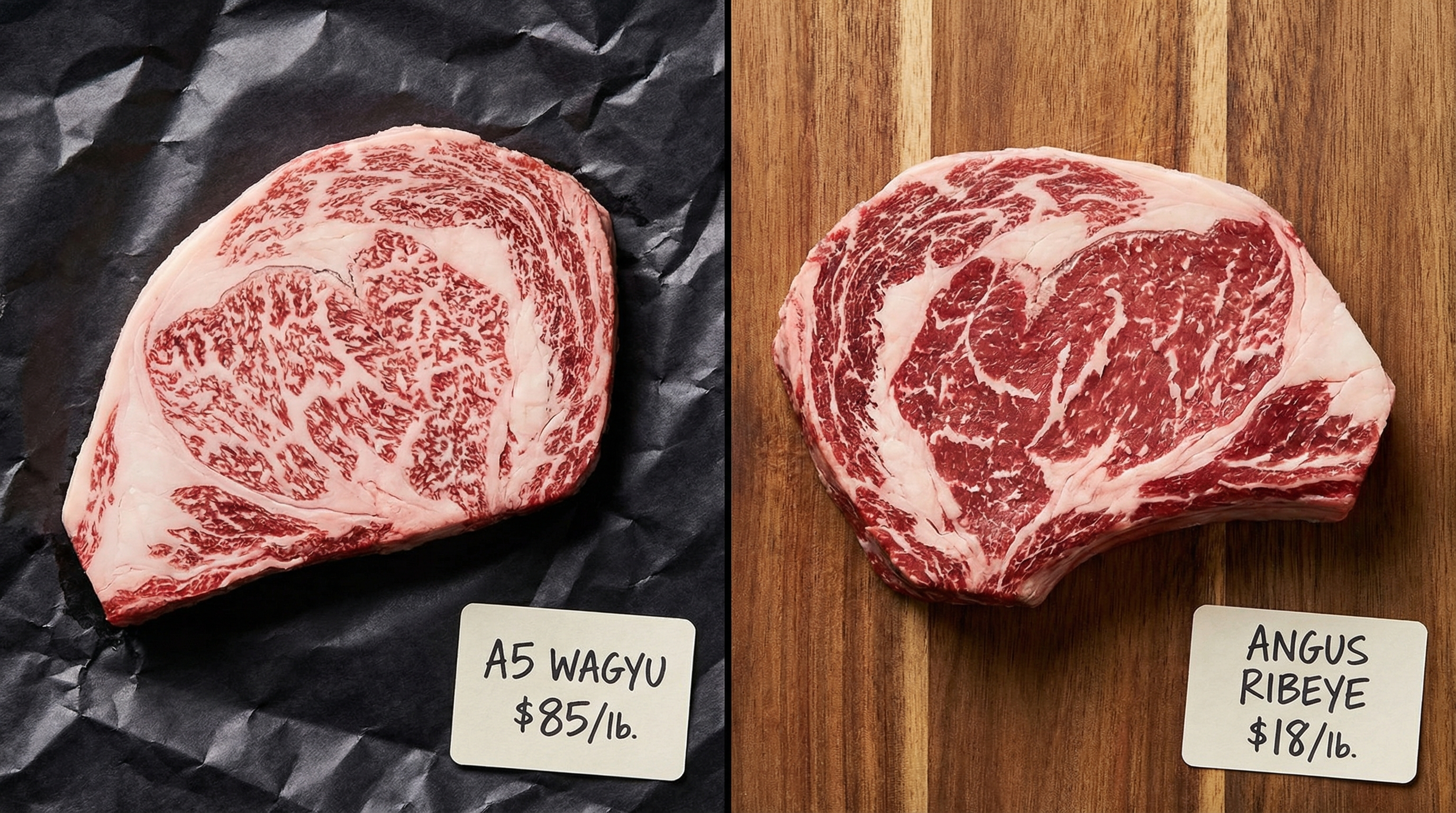
Walk into a butcher shop and you'll see the price difference immediately: USDA Prime Angus ribeye at $18-25/lb sitting next to American Wagyu at $60-80/lb, with Japanese A5 Wagyu pushing $150-250/lb. That's a 3-10x price gap for what looks like the same cut of beef.
So what are you actually paying for? Is it genetics, production costs, scarcity, or just marketing hype? After years of working with both premium Angus and multiple grades of Wagyu, I can tell you: the price difference is real, but understanding what drives it changes how you buy.
The Baseline: What Premium Angus Costs
Let's establish the Angus baseline first. When I say "Angus," I'm referring to premium Certified Angus Beef (CAB) or USDA Prime Angus — not commodity Select-grade meat from the grocery store discount bin.
Premium Angus ribeye typically runs $18-28/lb retail depending on your region and whether you're buying from a specialty butcher or Costco. Strip steak sits slightly lower at $16-24/lb. Ground Angus is $8-12/lb for 80/20 blends.
This pricing reflects a proven, efficient production system: Angus cattle reach market weight at 14-18 months, most of that on grass, with the final 120-150 days on a high-energy grain diet to develop marbling and finish weight. The USDA grading system provides standardized quality tiers, making Prime Angus a consistent, predictable product.
This is your benchmark. Everything else is measured against it.
Wagyu Pricing: Three Tiers, Three Different Products
Here's where it gets complicated: "Wagyu" covers a massive price range because it encompasses fundamentally different products.
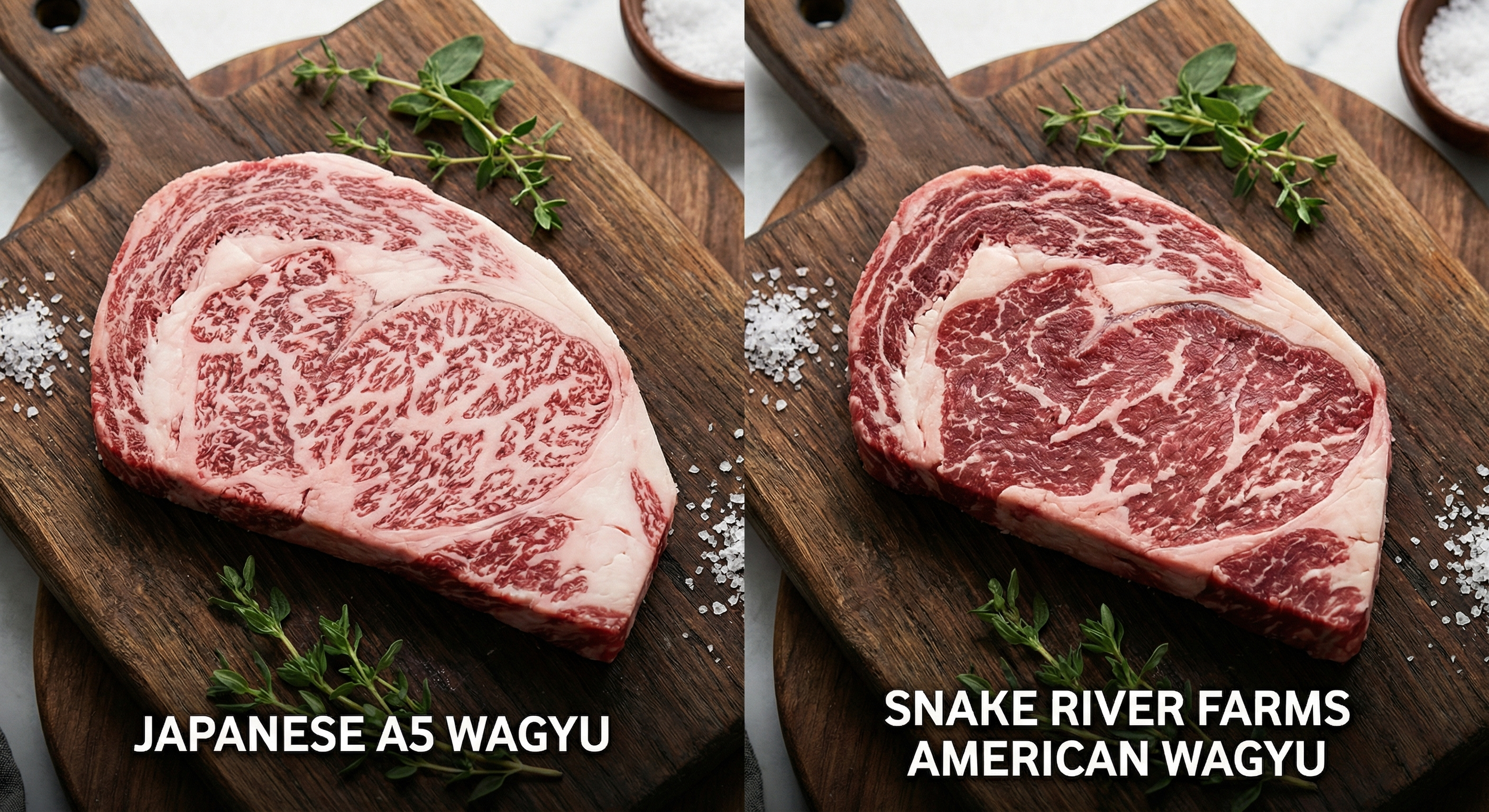
American F1 Wagyu (50% genetics): $40-70/lb for ribeye. This is a first-generation cross between a Japanese Wagyu bull and an American Angus cow. You get enhanced marbling over Prime Angus (typically BMS 4-6 equivalent), improved tenderness, but not the extreme marbling or melt-in-your-mouth texture of Japanese Wagyu. Production costs are 30-40% higher than Angus due to specialized genetics and extended feeding.
American Fullblood Wagyu (100% genetics): $80-140/lb for ribeye. Purebred Japanese genetics raised in the US with extended grain feeding (24-30+ months vs 14-18 for Angus). Marbling approaches Japanese levels (BMS 7-9), but import restrictions and limited herd sizes keep supply tight. This tier competes with Australian Wagyu in quality and price.
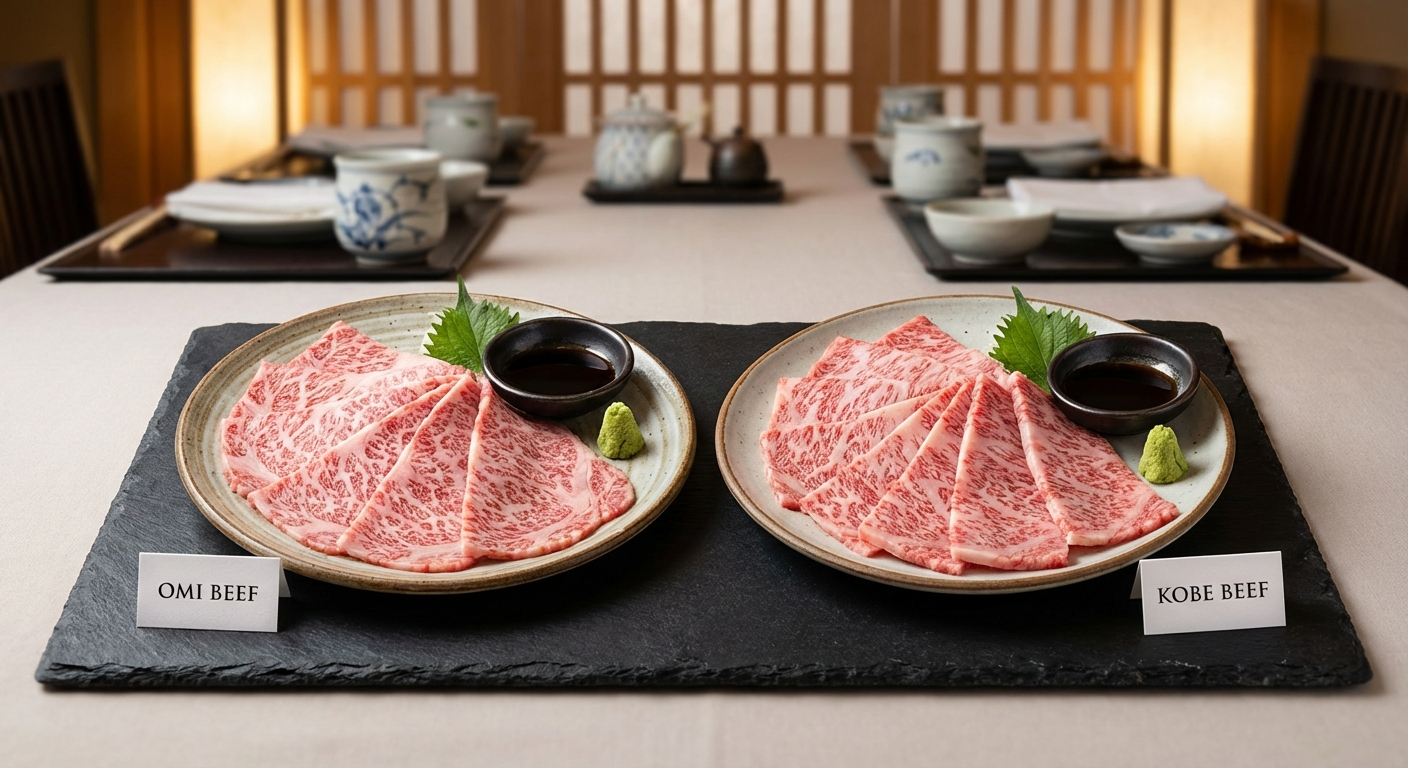
Japanese A5 Wagyu: $150-250/lb for ribeye, $300+/lb for ultra-premium cuts like Kobe tenderloin. This is the top of the pyramid — cattle raised 30-36 months on carefully controlled diets in Japan, graded by the Japan Meat Grading Association, and imported under strict quotas. Marbling reaches BMS 10-12. At this level, you're paying for peak genetics, extreme production costs, import overhead, and genuine scarcity.
The 4-8x price difference isn't linear — it's tiered. Each step up reflects compounding cost increases in genetics, feeding time, and scarcity.
Production Cost Reality Check
Let's break down what actually costs more to produce Wagyu vs Angus:
Genetics: A registered Angus bull costs $3,000-8,000. A proven Wagyu bull with documented A5 lineage? $50,000-150,000, sometimes higher for elite bloodlines. Every calf born carries that genetic premium in its price. Wagyu breeders are paying for decades of isolated, selective breeding that created extreme marbling potential.
Time to Market: Angus cattle finish at 14-18 months. American Wagyu typically finish at 24-30 months. Japanese A5 Wagyu finish at 28-36 months. Each additional month means ongoing costs for feed, labor, land, and capital tied up in the animal. A Wagyu steer finishing at 30 months has consumed twice the lifetime feed of an Angus steer finished at 15 months.
Feed Costs: Angus on a conventional feedlot diet costs roughly $2-3/day to feed. Wagyu on specialized high-energy, low-stress diets runs $4-6/day. Over 30+ months, that's $4,000-6,000 in feed alone per animal vs $1,200-1,800 for Angus. USDA livestock production data shows grain-intensive feeding programs push costs significantly higher as feeding duration extends.
When I calculated cost-per-pound for American Fullblood Wagyu production several years ago for a consulting project, we landed at roughly $12-15/lb hanging weight before processing, distribution, and retail markup. Prime Angus comes in around $5-7/lb hanging weight. The 2x difference at the production level compounds into a 4-6x difference at retail after everyone in the supply chain takes their margin.
Import Economics: Why Japanese A5 Hits $200/lb
Japanese A5 pricing reflects not just production cost but import realities:
- Limited supply: Japan produces roughly 500,000 head of Wagyu annually. Only a fraction (maybe 5-10%) grades A5. US beef production is 30+ million head annually. Scarcity creates price pressure.
- Export quotas: Japan prioritizes domestic consumption. Export volume is limited, especially for top grades.
- Tariffs and import costs: Beef imports face tariffs, USDA inspection requirements, and cold-chain logistics. A carcass that costs $80/lb in Japan can hit $140-160/lb landed cost in the US before retail markup.
- Prestige premium: At the A5 level, part of the price is cultural cachet and rarity value, not just production cost. You're paying for the experience of eating the best beef in the world.
The $200+/lb retail price for A5 Wagyu reflects real costs, but it also reflects market positioning. It's expensive because it's rare and coveted, creating a feedback loop where price reinforces perceived value.
Marbling Economics: Why Fat Costs More
One counterintuitive reality: producing heavily marbled beef is harder and more expensive than producing lean beef.
Intramuscular fat deposition requires genetic predisposition (you can't force Holsteins to marble like Wagyu), extended feeding on high-energy diets, and careful management to keep cattle gaining slowly and steadily rather than rapidly. Rapid growth produces external fat, not intramuscular marbling. Slow, controlled growth over 24-36 months produces the fine web of fat that defines high-grade Wagyu.
This is why grass-fed beef (which produces minimal marbling) is often cheaper than heavily marbled grain-fed beef despite "premium" marketing. Grass-fed cattle finish faster and require less purchased feed. Marbling is expensive to create.
Per-Serving Cost: The Real Comparison
Here's where the math shifts in Wagyu's favor: you don't eat the same portion size.
A typical Angus steak dinner is 10-16 oz. At $20/lb, that's $12-20 per serving. You need that much meat because the lower fat content means less richness and satiety per ounce.
Japanese A5 Wagyu is so rich that a proper serving is 2-4 oz. At $200/lb, a 3 oz portion costs $37.50. Yes, that's double the Angus cost — but it's not 10x more despite the 10x per-pound price.
American Wagyu sits in between: a 6-8 oz portion at $60/lb runs $22-30, roughly comparable to a larger Angus portion once you account for richness and satiety.
The per-serving comparison makes Wagyu less absurdly expensive than the per-pound sticker shock suggests. You're paying more, but not as dramatically as the raw price implies.
When the Premium Is Worth It
After working with both products extensively, here's my honest take on when each makes sense:
Stick with premium Angus when:
- You want a traditional 12-16 oz steak dinner
- You're cooking for a group where portion consistency matters
- Your cooking method is grilling or high-heat searing where ultra-high fat content doesn't add value
- You're making burgers, stews, or anything where extreme marbling gets lost
Upgrade to American Wagyu when:
- You want noticeably enhanced tenderness and richness over Prime
- You're serving 6-8 oz portions as part of a larger meal
- You're willing to pay 2-3x for a meaningfully better eating experience
- You value the "wow" factor for a special occasion without breaking into the $150/lb territory
Splurge on Japanese A5 when:
- You're treating this as a culinary experience, not just dinner
- You're comfortable with 2-4 oz portions
- You want to understand what top-tier beef actually tastes like
- The $40-60 per person cost (for a small portion) fits your budget for special occasions
The Value Calculation You Should Actually Make
Don't compare per-pound prices in isolation. Instead, compare cost per exceptional eating experience.
A $60 dinner of American Wagyu (6 oz at $60/lb + sides) competes not with a $15 grocery-store Angus steak but with a $60 restaurant steak dinner. In that context, the home-cooked Wagyu is great value.
A $50 serving of Japanese A5 (3 oz at $200/lb) competes with other $50 luxury food experiences — omakase sushi, dry-aged ribeye, premium seafood. It's expensive, but it's not absurd compared to peer luxury items.
The mistake is comparing A5 to everyday Angus. They're not substitutes. They're different categories of food experience.
Final Take: Is the Premium Justified?
The price difference between Angus and Wagyu reflects real cost differences in genetics, production time, feed, and scarcity. It's not arbitrary. You are paying for something tangible — extended feeding, genetic potential for extreme marbling, and limited supply.
But past a certain point (probably around the American Fullblood tier at $100-120/lb), you're also paying for prestige and rarity. The difference between $120/lb Australian Fullblood and $200/lb Japanese A5 isn't a proportional quality increase — it's partly cultural cachet.
Is it worth it? That depends entirely on what you value. If flavor intensity, tenderness, and the experience of eating peak beef matter to you, then yes, Wagyu delivers something Angus cannot. If you just want a great steak dinner, Prime Angus at 1/4 the price is hard to beat.
The good news: you don't have to choose permanently. Buy Angus for Tuesday. Save American Wagyu for Saturday. Reserve A5 for once or twice a year. The price tiers exist so you can match the product to the occasion.