Angus Wagyu Beef: What It Is, How It Compares to Pure Wagyu, and Whether It's Worth Buying
Angus wagyu beef is the most common "American wagyu" on the market. Here is what the crossbreed means for marbling quality, flavor profile, and whether the price premium over regular beef makes sense.
Walk into any upscale steakhouse or browse online beef retailers, and you will encounter "Angus wagyu beef" — often labeled simply as "American wagyu." This beef sits between conventional USDA Prime Angus and eye-wateringly expensive Japanese A5 wagyu in both quality and price. But what exactly is it? Is it genuine wagyu, or marketing spin on regular beef?
Angus wagyu beef is a deliberate crossbreed: one parent is purebred Japanese wagyu (almost always Japanese Black cattle), and the other is American Black Angus. The resulting beef combines wagyu's legendary marbling genetics with Angus's proven beef flavor, larger frame size, and easier raising characteristics. This crossbreed dominates the American premium beef market because it delivers real wagyu marbling at prices that work for restaurants and home cooks, not just special-occasion splurges.
What Angus Wagyu Beef Actually Is
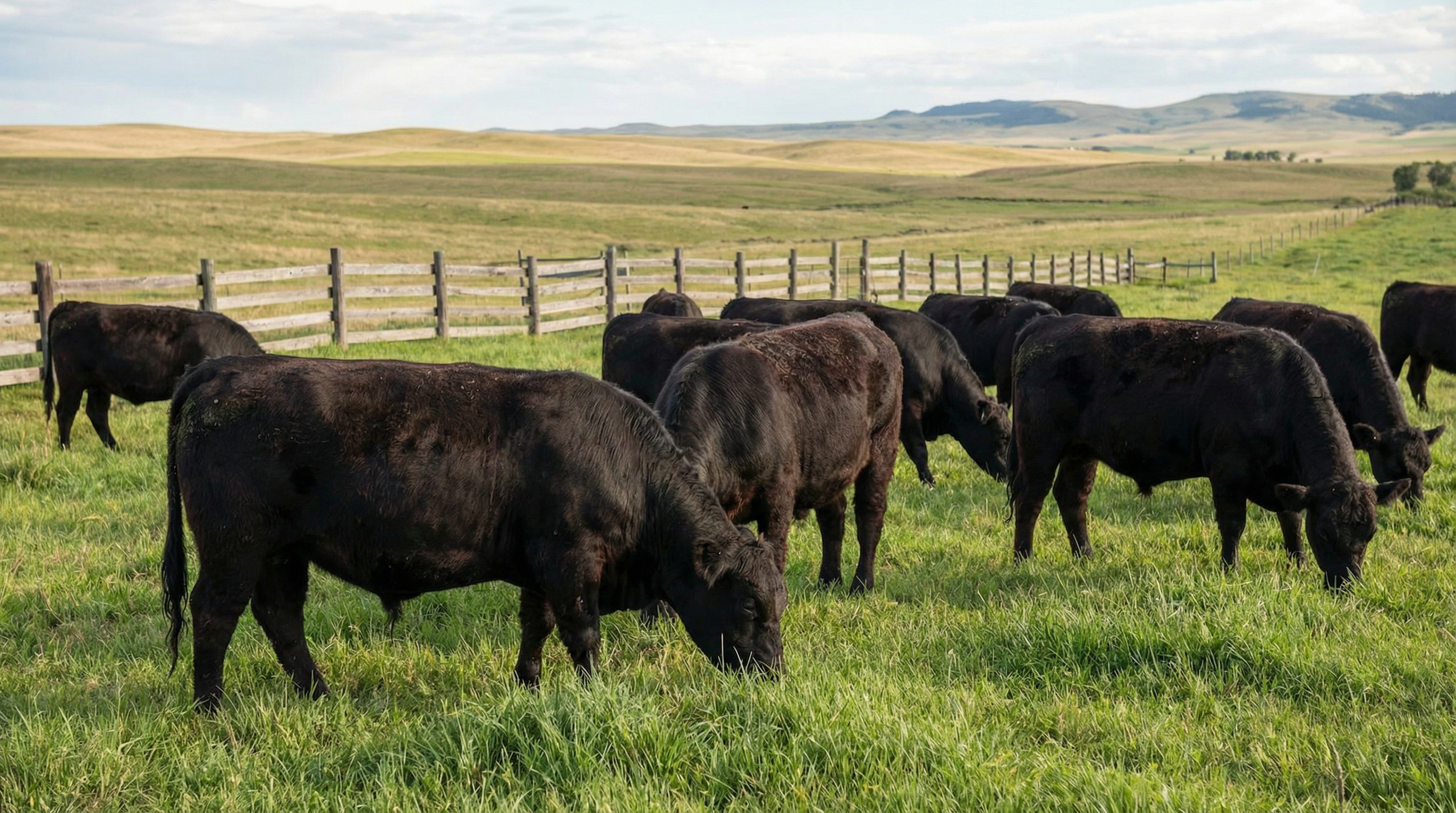
Angus wagyu beef comes from cattle that carry both Angus and Japanese wagyu genetics. In commercial production, this almost always means breeding a purebred wagyu bull with Black Angus cows. The first-generation offspring — called F1 hybrids — are 50% wagyu by genetics. These F1 cattle are what most retailers and restaurants mean when they use terms like "American wagyu" or "Angus wagyu beef."
The breeding is not random. Wagyu bulls contribute the marbling genetics that make wagyu famous. Black Angus cows contribute proven maternal traits (easy calving, good milk production), larger frame size, and the rich beefy flavor that American consumers expect. The cross produces cattle that grow faster and finish at heavier weights than purebred wagyu, while still developing significantly more marbling than purebred Angus.
The F1 Cross: 50% Wagyu Genetics
F1 stands for "first filial generation" — the direct 50/50 cross of two distinct parent breeds. When you buy "Angus wagyu beef" without further specification, F1 is what you are getting about 90% of the time. These cattle inherit roughly half their genetic material from each parent.
From the wagyu side, F1 cattle gain genes associated with intramuscular fat deposition — the biological machinery that deposits fat within muscle tissue rather than just around it. This creates the marbling that defines premium beef. The Angus side contributes genes for larger skeletal structure, faster growth, and the flavor compounds that produce the robust beef taste Americans associate with high-quality steak.
The result is beef that typically grades high USDA Prime or above (BMS 5-8 on the Japanese scale), compared to purebred Angus which usually tops out at BMS 3-5, and purebred wagyu which ranges from BMS 7-12.
Higher Percentage Crosses: F2, F3, and Beyond
Some producers breed F1 females back to purebred wagyu bulls, creating F2 cattle that are 75% wagyu. This increases marbling potential to BMS 7-10, visually closer to Japanese wagyu. F3 crosses (87.5% wagyu) push marbling even higher, to BMS 8-11, and eating quality approaches purebred wagyu territory.
The catch is economics. Higher-percentage crosses take longer to finish, require more careful management, and yield smaller carcasses. They also cost significantly more — an F2 ribeye might run $60-100 per pound versus $40-70 for F1. For most applications, F1 Angus wagyu beef delivers the best value proposition: real wagyu marbling without the price tag that makes you hesitate before cooking it.
How Angus Wagyu Beef Compares to Pure Wagyu
The comparison most buyers want is simple: how does Angus wagyu stack up against the real thing — purebred Japanese wagyu, especially A5 grade?
Marbling and Fat Content
| Type | Typical BMS Range | Intramuscular Fat % | Visual Appearance |
|---|
| USDA Prime Angus | 5-6 | 8-12% | Moderate white streaking |
| F1 Angus Wagyu | 5-8 | 10-18% | Heavy white streaking and webbing |
| F2 Angus Wagyu (75%) | 7-10 | 15-25% | Dense, uniform webbing |
| Purebred Wagyu (A5) | 10-12 | 30-40% | Nearly white appearance — extreme marbling |
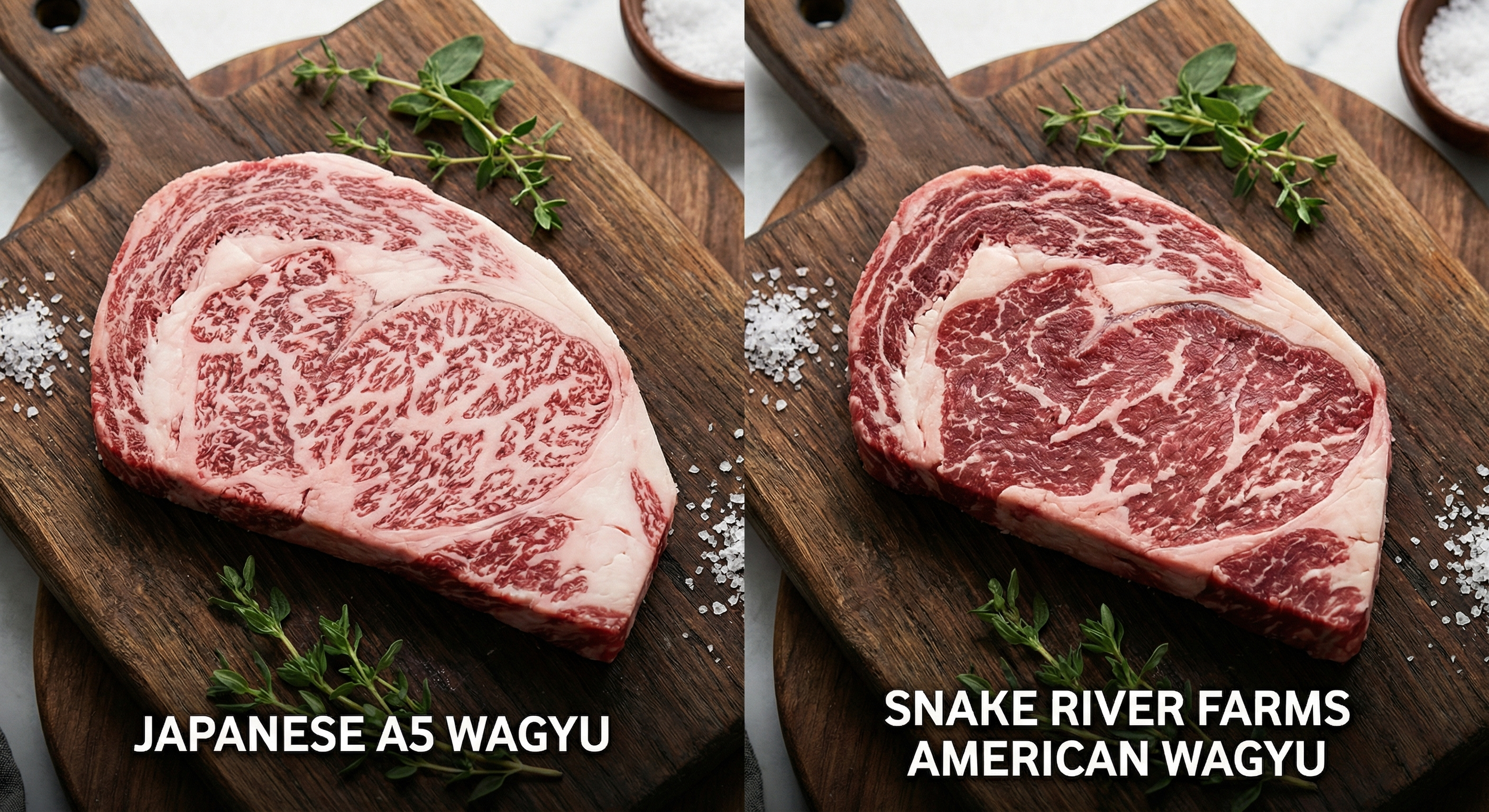
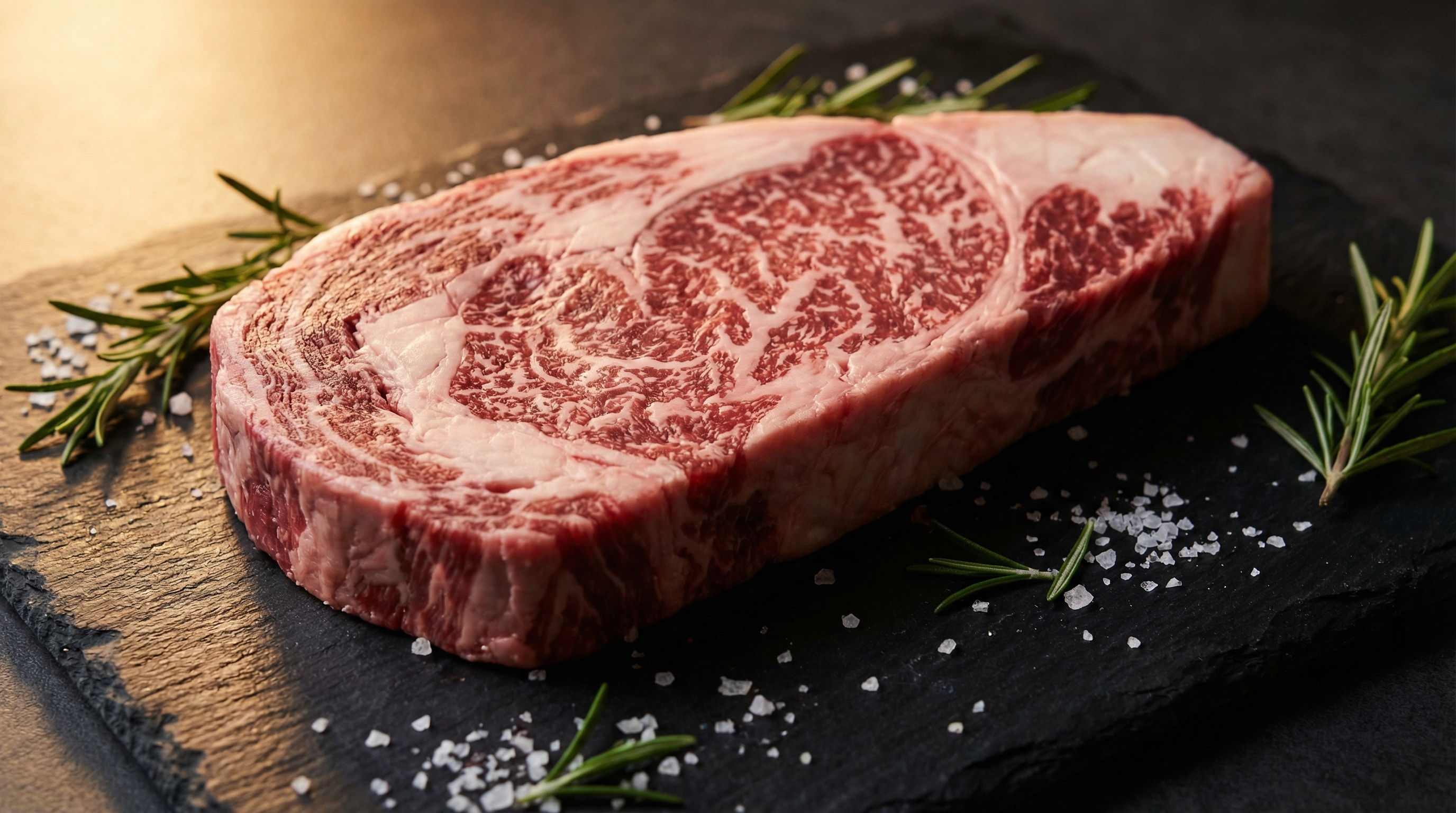
F1 Angus wagyu beef has noticeably more marbling than even the best USDA Prime, but not the extraordinary fat distribution of A5 wagyu. When you slice an F1 Angus wagyu ribeye, you see white fat webbing throughout — enough to create a luxurious mouthfeel and buttery flavor, but not so much that the meat looks more white than red.
Flavor Profile
This is where Angus wagyu beef often wins against purebred wagyu for American palates. A5 wagyu is remarkably rich and buttery, but the flavor is subtle — almost delicate. Some diners describe it as "not beefy enough." The Angus genetics in Angus wagyu beef contribute a more pronounced beef flavor. You get the richness and unctuousness from the wagyu marbling, plus the deep, savory, meaty character from the Angus side.
For comparison: A5 wagyu tastes like butter with a hint of beef. F1 Angus wagyu tastes like exceptional beef with a buttery finish. Which you prefer depends on what you value in steak, but many serious steak enthusiasts find the Angus wagyu cross more satisfying for regular eating.
Portion Size and Richness
A5 wagyu is so rich that 3-4 ounces is typically the recommended serving. Beyond that, many diners experience palate fatigue — the overwhelming richness becomes cloying. Angus wagyu beef, with lower fat content, can be eaten in conventional steak portions. An 8-12 ounce F1 Angus wagyu ribeye is perfectly manageable and enjoyable from first bite to last.
This matters for practical cooking. If you are grilling for a family or hosting a dinner party, Angus wagyu beef allows normal portion sizes. You are not serving tiny tasting portions and still paying $200+ for the meal.
Price Reality: What You Pay for Angus Wagyu Beef
Angus wagyu beef occupies a middle pricing tier. It costs substantially more than commodity beef or even USDA Prime Angus, but far less than imported Japanese wagyu.
| Cut | USDA Prime Angus | F1 Angus Wagyu | Purebred/A5 Wagyu |
|---|
| Ribeye (per lb) | $25-$40 | $40-$70 | $100-$200+ |
| Strip Steak (per lb) | $22-$35 | $35-$60 | $90-$160+ |
| Tenderloin (per lb) | $35-$55 | $55-$90 | $120-$220+ |
| Ground (per lb) | $8-$12 | $12-$20 | $30-$50+ |
F1 Angus wagyu beef typically costs 50-75% more than USDA Prime Angus, but 40-60% less than purebred wagyu. For the quality step up — noticeable marbling increase, richer flavor, better texture — many buyers find the F1 price premium justified.
When the Premium Makes Sense
Angus wagyu beef is worth the cost when:
- You want a special steak but not a once-a-year splurge: F1 Angus wagyu delivers a noticeably elevated experience without entering luxury territory. It is special without being precious.
- You are grilling or searing: The extra marbling self-bastes the steak and creates a richer crust. This is particularly noticeable on cuts like ribeye and strip steak where the marbling really shines.
- You prefer normal portion sizes: If 3 ounces of A5 wagyu leaves you wanting more beef but unable to eat more richness, F1 Angus wagyu solves that problem.
- You value beef flavor over pure richness: The Angus genetics ensure the beef tastes deeply, satisfyingly beefy — not just buttery.
When to Choose Something Else
Skip Angus wagyu beef if:
- You want the full Japanese wagyu experience: Nothing replicates A5 wagyu. If that is what you want, accept no substitutes.
- Budget is tight: USDA Prime Angus, especially from good producers, is excellent beef. The F1 cross is better, but not 2× better — which is roughly what you will pay.
- You are using heavy seasoning or sauces: The extra marbling and richness get lost under aggressive flavors. Save Angus wagyu beef for preparations that let the meat speak: simple salt and pepper, minimal sauce.
How to Cook Angus Wagyu Beef
The higher marbling in Angus wagyu beef demands slight adjustments from conventional steak technique, but nothing as dramatic as cooking A5 wagyu.
Steaks (Ribeye, Strip, Tenderloin)
- Temperature: Medium-rare to medium (130-140°F internal). The marbling keeps the steak juicy even at medium, unlike lean cuts which dry out.
- Seasoning: Salt and pepper. Let the beef flavor shine. The wagyu fat is flavorful enough that complex rubs compete rather than complement.
- Method: Hot cast iron or direct grill heat. Sear hard for 2-3 minutes per side (1.5-inch steak). The marbling renders and creates an exceptional crust.
- Resting: 8-10 minutes loosely tented with foil. The extra fat needs time to redistribute through the meat.
Ground Angus Wagyu
Angus wagyu ground beef makes phenomenal burgers. The higher fat content (typically 75/25 to 80/20) means the patties self-baste as they cook and stay juicy even when fully cooked. Smash burgers are particularly excellent — the rendered wagyu fat creates a crispy, flavorful crust that regular ground beef cannot match. Season simply with salt and pepper and let the beef quality do the work.
Slow-Cooked Cuts (Brisket, Short Ribs)
Angus wagyu brisket is a revelation for barbecue. The extra marbling means the flat stays moist through a 12-16 hour smoke, and the point section becomes impossibly tender. Cook at 250°F until the flat probes like warm butter (200-205°F internal). The wagyu fat bastes the meat from within, solving the perpetual problem of dry brisket flats.
How to Identify Quality Angus Wagyu Beef
The term "American wagyu" has no legal definition enforced by the USDA. This creates room for vague marketing. Here is how to identify what you are actually buying.
Look for Specific Information
Quality producers provide:
- Exact wagyu percentage: "F1 50% wagyu" or "75% Tajima wagyu" shows transparency
- Bloodline information: Named wagyu lineages (Tajima, Kedaka, Fujiyoshi) indicate genuine genetics
- BMS score: Actual marbling measurement (BMS 6, BMS 8) rather than vague quality claims
- American Wagyu Association certification: AWA tracks lineage and verifies genetics
Red Flags
Be cautious of:
- "Wagyu-style" or "wagyu blend": Could mean any percentage, often very low
- No percentage stated: If they do not tell you, assume the lowest (F1 at best, possibly under 50%)
- "Kobe-style": Meaningless marketing term — real Kobe beef cannot be crossbred
- Unusually cheap "wagyu" ground beef ($8-10/lb): Likely minimal wagyu genetics from low-grade animals
Is Angus Wagyu Beef "Real" Wagyu?
This question comes up constantly. The answer depends on your definition of "real."
Genetically, yes — F1 Angus wagyu cattle carry 50% Japanese wagyu genetics. The marbling, fat composition, and eating quality reflect those genetics. The American Wagyu Association registers crossbred animals, and reputable producers track lineage back to imported Japanese wagyu bulls.
Culturally, no — if "real wagyu" means cattle raised in Japan under traditional methods and graded by the JMGA, then Angus wagyu beef does not qualify. It is American-raised beef from crossbred cattle.
The better question is not whether it is "real," but whether it delivers value. A well-raised F1 Angus wagyu ribeye at $50 per pound can be a better buying decision than mediocre USDA Prime at $35 per pound, and a much better decision than paying $150+ per pound for A5 wagyu that you cook improperly or serve to guests who do not appreciate it.
The Bottom Line on Angus Wagyu Beef
Angus wagyu beef is the practical premium steak. It delivers genuine wagyu marbling genetics in a format that works for American production economics, cooking methods, and portion expectations. The F1 cross provides a quality jump over USDA Prime that is immediately noticeable in marbling, flavor, and texture, at a price premium that most steak enthusiasts can justify for regular special occasions rather than once-a-year events.
When someone says "American wagyu," this crossbreed is almost certainly what they mean. And that is not a bad thing. The Angus-wagyu cross has earned its place in the market by delivering real value: exceptional beef that costs less than purebred wagyu, tastes better than conventional premium beef, and cooks like a great steak rather than a fragile luxury ingredient.
For your next Angus wagyu experience, explore The Meatery's American Wagyu collection — every product lists the exact wagyu percentage and bloodline so you know precisely what you are paying for.