Angus-Wagyu Crossbreed: What F1 Hybrid Beef Actually Is and Why It Dominates American Wagyu
Most beef sold as "American wagyu" is actually an Angus-Wagyu crossbreed. Here is what that means for genetics, marbling, flavor, and whether the premium price is justified.
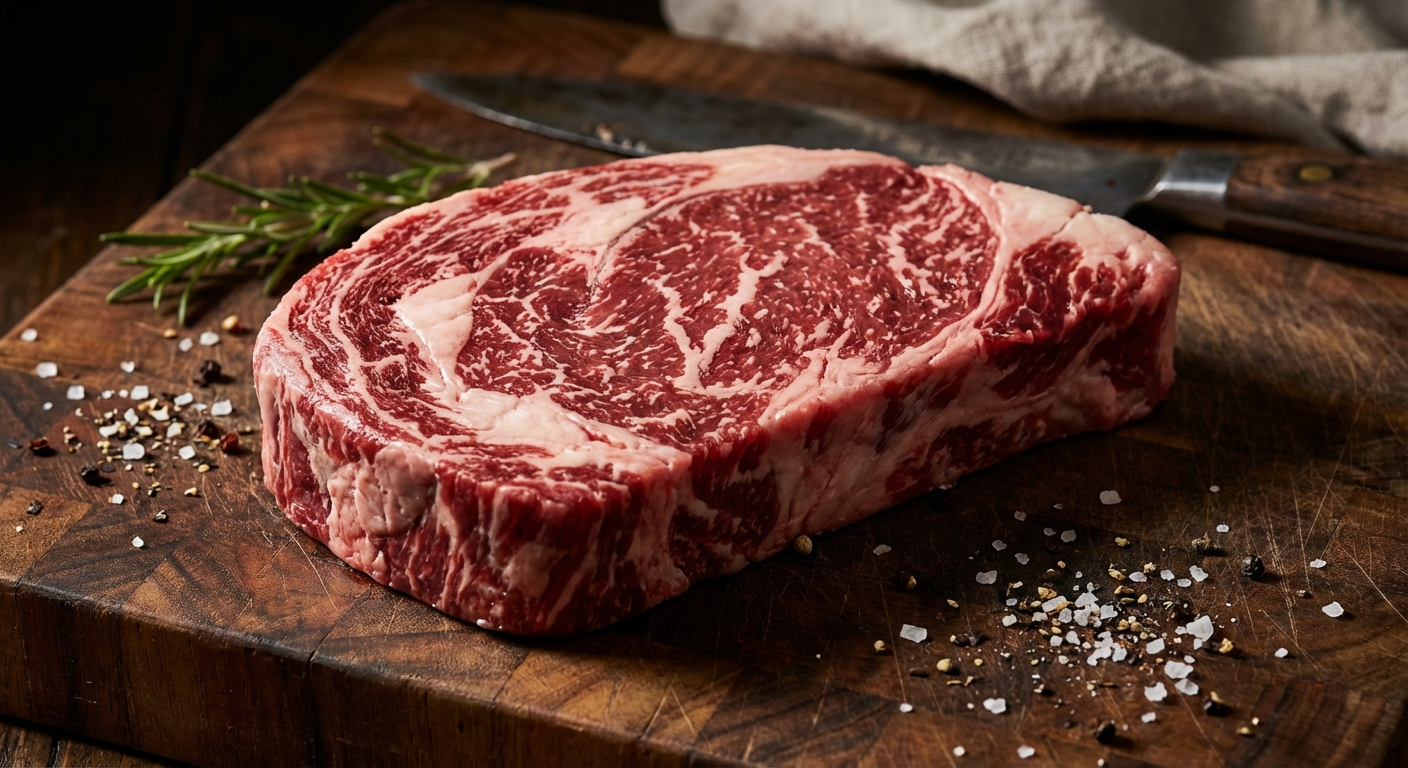
If you have ever purchased "American wagyu" from a restaurant menu or online retailer, odds are strong you were eating Angus-Wagyu crossbreed beef — not purebred wagyu. This is not a deception. It is how the American wagyu industry actually works, and the resulting beef can be outstanding. But understanding what you are buying matters, especially when prices range from $30 to $100+ per pound.
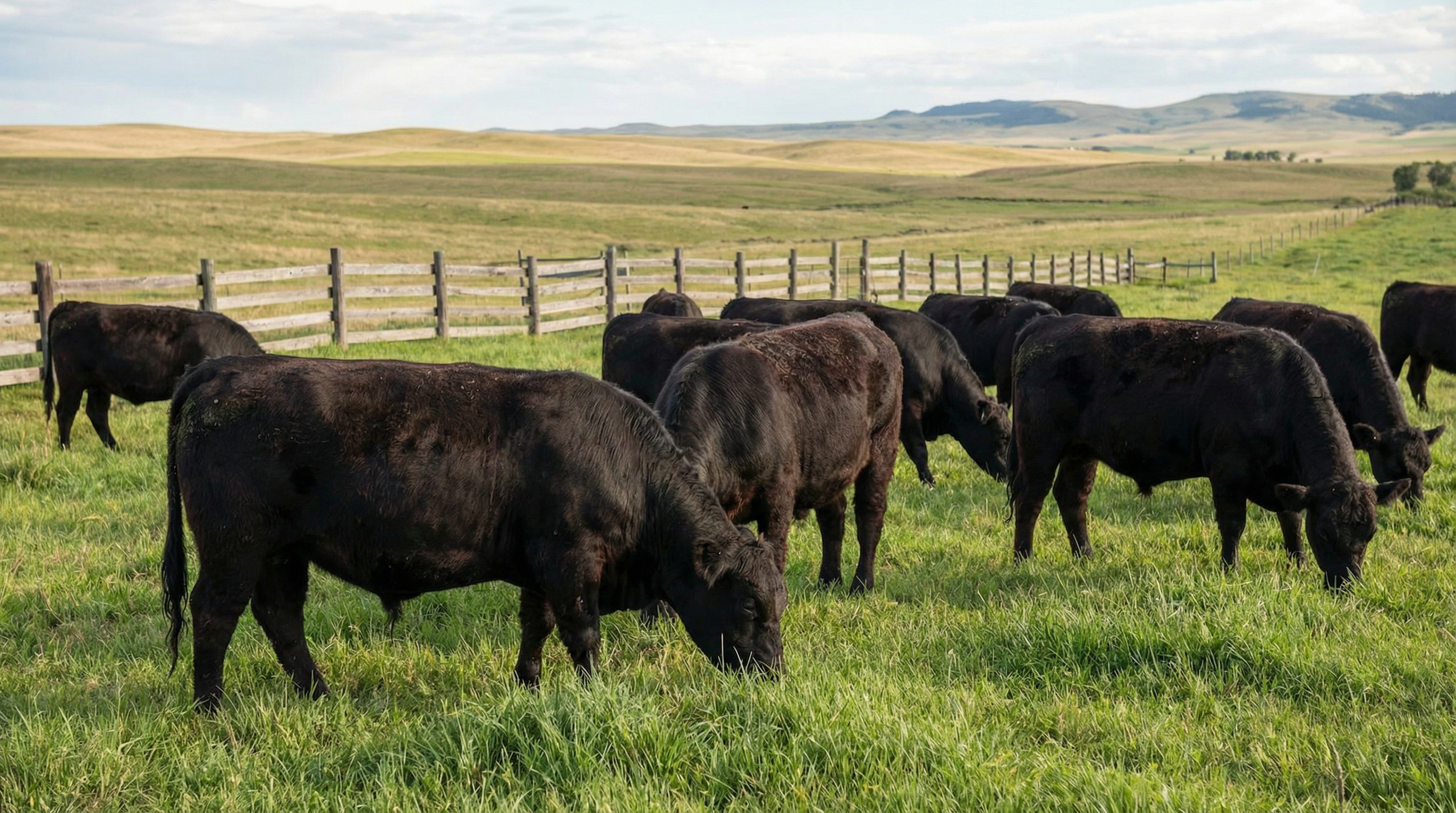
Angus-Wagyu crossbreeding is the backbone of domestic wagyu production in the United States. The cross combines Black Angus cattle's proven adaptability, size, and flavor with Japanese wagyu genetics' extraordinary marbling potential. The result is a hybrid that outperforms both parent breeds in certain ways — and falls short of purebred wagyu in others.
What Is an Angus-Wagyu Crossbreed?
An Angus-Wagyu crossbreed is exactly what it sounds like: the offspring of one Angus parent and one wagyu parent. In practice, breeders almost always cross a Japanese Black (Kuroge Washu) wagyu bull with Black Angus cows. The reverse cross exists but is far less common because wagyu cows are expensive breeding stock that producers prefer to keep in purebred programs.
The resulting calves are called F1 hybrids — first filial generation, meaning the direct 50/50 cross of two distinct breeds. This F1 designation matters because the genetic contribution is predictable: roughly half the marbling genetics from the wagyu side, half the frame size and growth efficiency from the Angus side.
The Genetics Behind the Cross
Wagyu cattle carry specific genetic markers associated with intramuscular fat deposition — the marbling that makes wagyu famous. The most studied are variants in the SCD (stearoyl-CoA desaturase) gene, which influences fatty acid composition, and the FASN (fatty acid synthase) gene, which affects total fat deposition.
When you cross wagyu with Angus, the F1 offspring inherits one copy of each wagyu variant. This creates an intermediate marbling phenotype:
- Purebred Angus: Typically grades USDA Choice to low Prime (BMS 3-5)
- F1 Angus-Wagyu: Typically grades high Prime to above Prime (BMS 5-8)
- Purebred wagyu: Typically grades BMS 7-12 (A4-A5 on the Japanese scale)
The F1 cross does not simply average the parents' marbling. Thanks to heterosis (hybrid vigor), F1 calves often exceed what a simple average would predict. They grow faster, convert feed more efficiently, and reach market weight sooner than purebred wagyu — all while carrying substantially more marbling than purebred Angus.
F1 vs F2 vs F3: Understanding Wagyu Percentages
Not all Angus-Wagyu crosses are equal. The industry uses filial generation numbers and percentage designations that directly correlate with marbling potential and price.
F1 (50% Wagyu)
The direct cross of purebred wagyu and purebred Angus. This is the most common commercial product and what most retailers mean when they say "American wagyu." F1 cattle are efficient to produce because you only need wagyu genetics on one side. Marbling typically reaches BMS 5-8 with proper feeding protocols.
F2 (75% Wagyu)
An F1 female bred back to a purebred wagyu bull. The resulting offspring carries three-quarters wagyu genetics and shows noticeably more marbling than F1 — typically BMS 7-10. The meat is visually closer to Japanese wagyu, with more pronounced white fat webbing throughout the muscle. Price premium over F1 is typically 30-50%.
F3 (87.5% Wagyu)
An F2 female bred back again to a purebred wagyu bull. At this concentration, the beef approaches purebred wagyu quality. BMS scores of 8-11 are common. These animals take longer to finish (24-28 months versus 18-22 for F1), require more careful management, and yield smaller carcasses. Price approaches purebred wagyu territory.
F4+ (93.75%+ Wagyu)
After four generations of breeding back to purebred wagyu, the American Wagyu Association considers these animals "purebred by percentage." At this point, the Angus influence is minimal and the beef is functionally equivalent to fullblood wagyu in most measurable characteristics.
Why Angus Is the Preferred Cross Partner
Wagyu could theoretically be crossed with any beef breed. Producers overwhelmingly choose Angus for practical reasons that directly affect profitability and beef quality.
Frame Size and Growth Rate
Purebred wagyu are smaller-framed cattle that grow slowly. A fullblood Japanese Black steer might take 30+ months to reach 1,300 pounds. An F1 Angus-Wagyu cross reaches 1,400-1,500 pounds in 22-26 months. The Angus genetics contribute frame size and feed efficiency that make the operation economically viable.
Carcass Yield
Angus cattle have been selected for decades to produce high-yielding carcasses with consistent ribeye area and back fat distribution. The cross maintains these structural advantages while adding wagyu marbling. An F1 carcass typically dresses at 62-65% — better than purebred wagyu (58-62%) and comparable to purebred Angus (62-65%).
Flavor Compatibility
Angus beef is already known for rich, beefy flavor. Adding wagyu marbling to an Angus frame produces beef with deep flavor AND luxurious texture — arguably a more well-rounded eating experience than A5 wagyu, which some diners find overwhelmingly rich. The Angus backbone gives the beef substance, while the wagyu genetics add the buttery, melt-in-your-mouth quality.
Maternal Traits
Angus cows are excellent mothers — good milk production, easy calving, strong maternal instincts. This matters because using Angus as the dam (mother) side means lower calf mortality, fewer calving complications, and healthier offspring. Wagyu calves born to wagyu dams can be fragile; Angus dams reduce that risk.
How Angus-Wagyu Marbling Compares
The central question most buyers have: how does the marbling actually compare to purebred wagyu and regular Angus beef?
| Breed/Cross | Typical BMS Range | Intramuscular Fat % | USDA Grade Equivalent | Visual Marbling |
|---|
| Purebred Angus (Choice) | 3-4 | 5-8% | USDA Choice | Light, scattered flecks |
| Purebred Angus (Prime) | 5-6 | 8-12% | USDA Prime | Moderate white streaking |
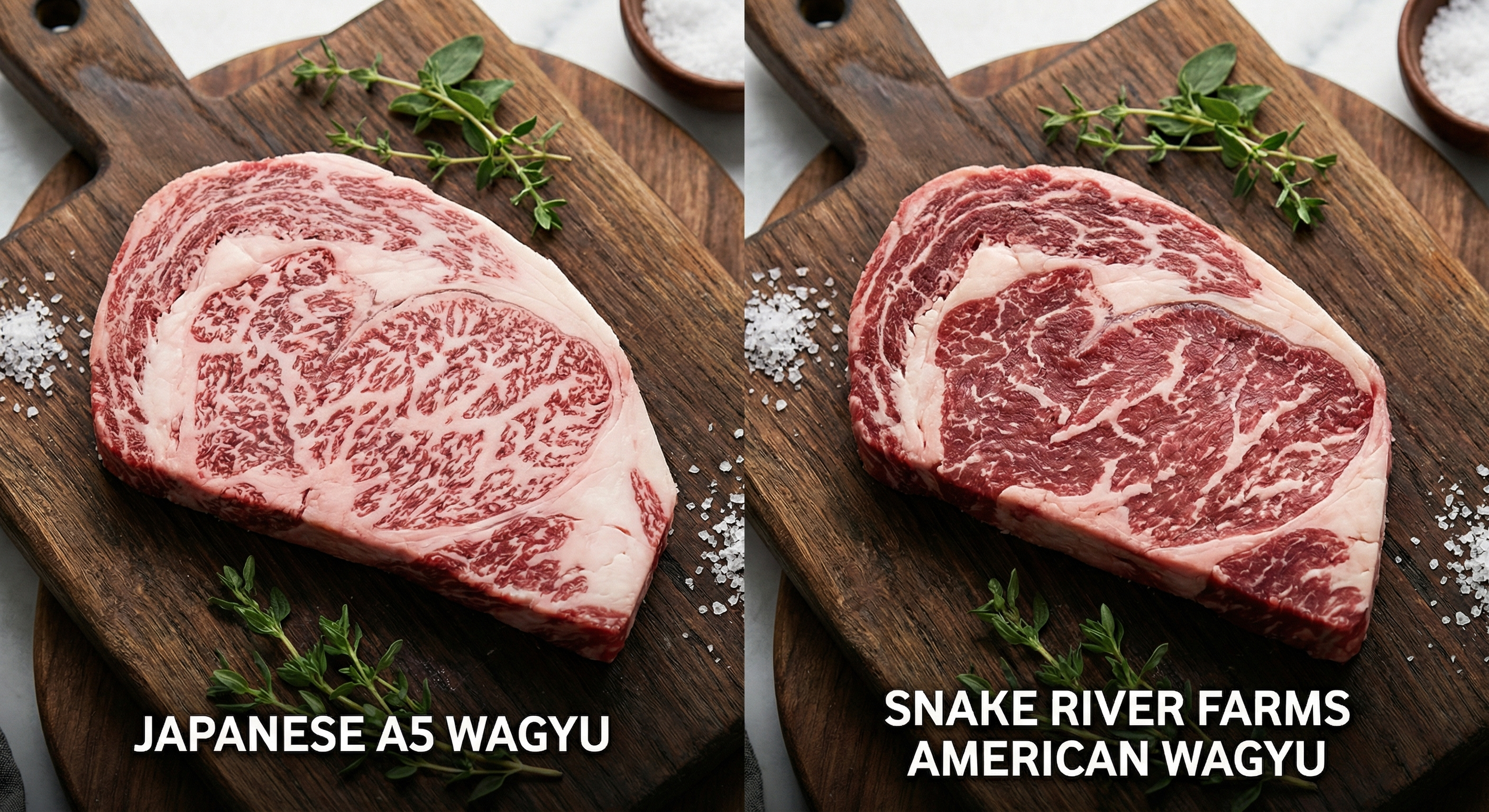
| F1 Angus-Wagyu | 5-8 | 10-18% | Prime to above Prime | Heavy white streaking and webbing |
| F2 Angus-Wagyu (75%) | 7-10 | 15-25% | Above Prime | Dense, uniform webbing |
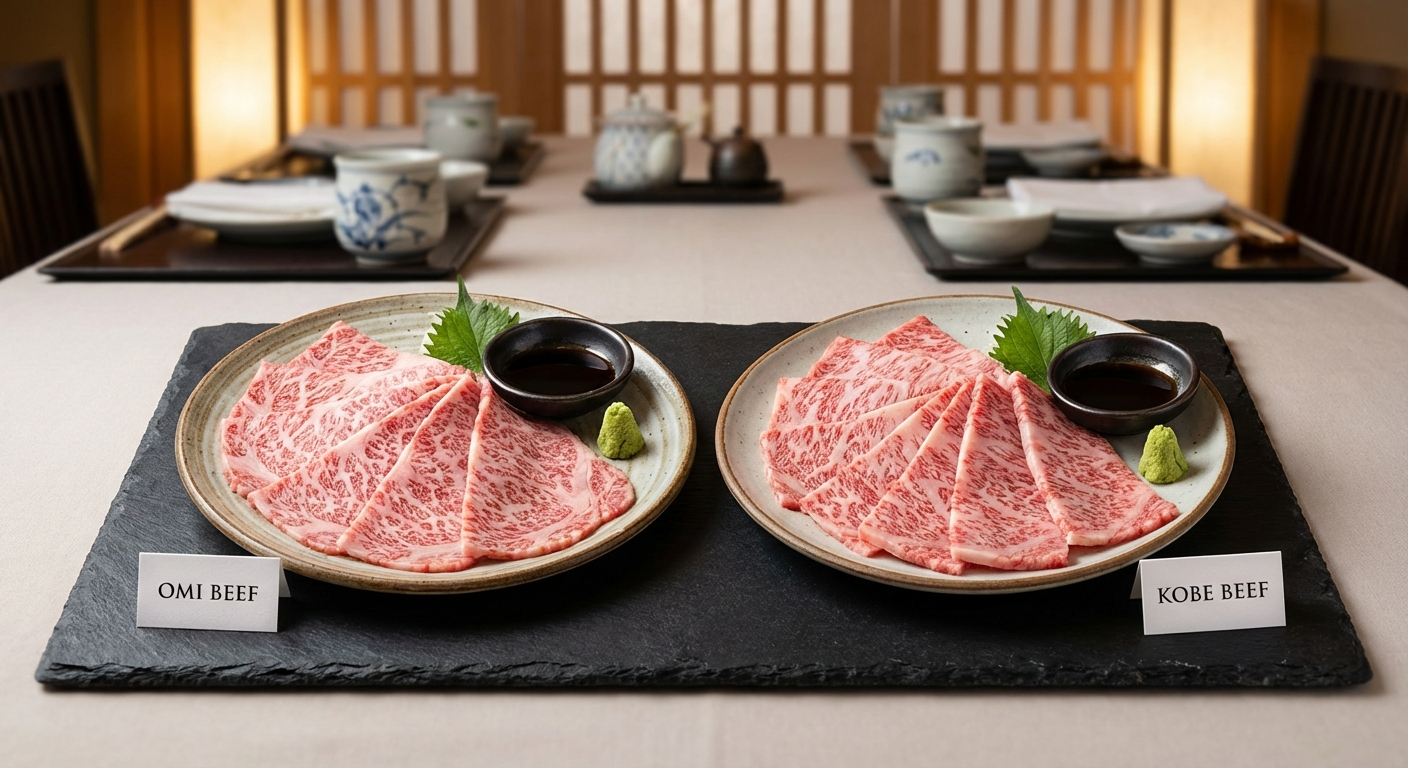
| Purebred/Fullblood Wagyu | 8-12 | 25-40% | Beyond USDA scale | Extreme — nearly white appearance |
The F1 cross occupies a sweet spot that many steak enthusiasts actually prefer. It has enough marbling to create a distinctly luxurious mouthfeel and buttery flavor, but not so much that three ounces is your maximum portion. You can eat an 8-ounce F1 Angus-Wagyu ribeye and enjoy every bite without the palate fatigue that A5 wagyu can cause.
Feeding Programs: What Finishes the Cross Matters
Genetics set the ceiling for marbling. The feeding program determines how close each animal gets to that ceiling. Angus-Wagyu crosses respond dramatically to finishing diet and duration.
Standard Grain Finish (120-150 days)
Most commercial Angus-Wagyu crosses receive a standard feedlot grain finish similar to conventional beef cattle. This produces solid results — BMS 5-7 is typical — but leaves marbling potential on the table. The beef will grade high Prime and eat well, but will not reach its full wagyu potential.
Extended Grain Finish (200-300 days)
Premium Angus-Wagyu programs extend the grain finish period significantly. The longer feeding allows intramuscular fat to continue depositing, and BMS scores climb to 7-9. This is where the cross starts to genuinely resemble Japanese wagyu in eating quality. The extended finish costs more (roughly $2-4 per pound additional) but the resulting product commands $20-40+ per pound premiums.
Grass-Finished Angus-Wagyu
Some producers finish Angus-Wagyu crosses entirely on grass. The marbling will be lower (BMS 4-6) but the fatty acid profile changes favorably — higher omega-3 content, higher CLA (conjugated linoleic acid), and a distinctive grassy, mineral flavor. Grass-finished Angus-Wagyu fills a niche for health-conscious buyers who want some wagyu marbling without the grain-fed fat content.
Price Reality: What You Pay for the Cross
Angus-Wagyu crossbreed beef sits in a pricing tier between commodity beef and imported Japanese wagyu. Here is what current market pricing looks like:
| Cut | USDA Prime Angus (per lb) | F1 Angus-Wagyu (per lb) | F2/75% Wagyu (per lb) | Fullblood Wagyu (per lb) |
|---|
| Ribeye | $25-$40 | $40-$70 | $60-$100 | $80-$150+ |
| Strip Steak | $22-$35 | $35-$60 | $50-$85 | $70-$130+ |
| Tenderloin | $35-$55 | $55-$90 | $75-$120 | $100-$180+ |
| Ground | $8-$12 | $12-$20 | $18-$30 | $25-$45 |
| Brisket | $8-$14 | $14-$25 | $22-$38 | $30-$55 |
F1 Angus-Wagyu represents the best value proposition in the premium beef market. You get 60-70% of the eating experience of purebred wagyu at 40-50% of the price. For most home cooks and even many restaurants, the F1 cross is the sweet spot where quality justifies the premium without entering luxury territory.
How to Identify What You Are Buying
The term "American wagyu" has no legal definition enforced by the USDA. This means labeling varies wildly. Here is how to decode what you are actually getting:
Red Flags
- "Wagyu-style" or "wagyu blend": Could be any percentage, often very low
- No percentage listed: Likely F1 (50%) at best, possibly lower
- "Kobe-style": Marketing term with zero meaning — real Kobe cannot be crossbred
- Unusually cheap "wagyu" ground beef ($8-10/lb): Likely minimal wagyu genetics from low-percentage animals
Green Flags
- Specific percentage stated: "F1 50% wagyu" or "75% Tajima wagyu" shows transparency
- American Wagyu Association certified: AWA tracks lineage and verifies genetics
- Sire/dam information available: Reputable producers can tell you the wagyu bloodline
- BMS score listed: Actual marbling measurement rather than vague descriptors
- Named bloodline (Tajima, Kedaka, Fujiyoshi): Indicates purebred wagyu genetics on at least one side
Cooking Angus-Wagyu Crossbreed Beef
The cooking approach for F1 Angus-Wagyu falls between conventional steak technique and Japanese wagyu technique. The higher marbling demands some adjustments from standard beef cooking, but you do not need the ultra-minimal approach that A5 requires.
Steaks (Ribeye, Strip, Tenderloin)
- Temperature: Medium-rare to medium (130-140°F internal). The higher fat content keeps the meat juicy through medium — unlike lean Angus, which dries out.
- Method: Hot cast iron or grill. Sear 2-3 minutes per side for a 1.5-inch steak. The marbling renders and creates a beautiful crust.
- Seasoning: Salt and pepper. The wagyu fat carries enough flavor that elaborate seasoning competes rather than complements.
- Portions: 8-12 ounces is appropriate. Unlike A5 wagyu (3-4 oz max), the Angus backbone means this beef has enough structure for full-size servings.
- Rest: 8-10 minutes tented loosely with foil. The extra intramuscular fat needs time to redistribute.
Ground Angus-Wagyu
Angus-Wagyu ground beef makes exceptional burgers. The higher fat content (typically 75/25 to 80/20) means self-basting patties that stay juicy even when cooked through. Smash burgers are particularly excellent — the rendered wagyu fat creates an extraordinary crust. Keep seasoning simple: salt, pepper, and let the beef speak.
Low-and-Slow (Brisket, Short Ribs)
Angus-Wagyu brisket is a barbecue revelation. The extra marbling means the flat stays moist through a 12-16 hour smoke, and the point section becomes impossibly tender. Cook at 250°F until the flat probes like warm butter (typically 200-205°F internal). The rendering wagyu fat bastes the meat from within, eliminating the dry-flat problem that plagues lean briskets.
The Bottom Line on Angus-Wagyu Crossbreed Beef
The Angus-Wagyu crossbreed is not a compromise — it is arguably the most practical premium beef on the market. It delivers marbling that exceeds the best USDA Prime, flavor depth that satisfies serious steak enthusiasts, and portion sizes that work for real meals rather than tasting portions.
When someone says "American wagyu," this is almost always what they mean. And that is not a bad thing. The F1 cross has earned its place as the default premium steak in the United States because it delivers exceptional value: genuine wagyu marbling genetics in a format that works for American production, pricing, and plate sizes.
For your next Angus-Wagyu experience, browse The Meatery's American Wagyu collection — every product lists the exact wagyu percentage and bloodline so you know precisely what you are getting.