Angus Wagyu Beef Grading: How to Read Quality Tiers and Avoid Overpaying
Angus wagyu beef spans an enormous quality range from grocery-store "wagyu" to premium BMS 10+ steaks. Here is how to decode the grading systems, evaluate what you are actually buying, and avoid paying premium prices for mid-tier meat.
The angus wagyu beef market operates without a single, standardized grading system. Instead, multiple overlapping frameworks — USDA grading, Japanese BMS scoring, and proprietary brand tiers — create a landscape where two steaks labeled "angus wagyu" can differ as dramatically as USDA Select differs from Prime. Understanding how grading works is the difference between getting exceptional value and overpaying for marketing.
This guide decodes the grading systems, explains what the scores actually measure, and shows you how to evaluate angus wagyu beef quality regardless of how it is labeled.
The Grading Problem: No Single Standard
Conventional beef has a clear hierarchy: USDA Select, Choice, and Prime. The system is imperfect but consistent — a USDA Prime ribeye from any producer meets the same marbling minimum. Angus wagyu beef has no equivalent universal standard.
Instead, you encounter:
- USDA grading — applies to all beef including angus wagyu, but the Prime designation caps at approximately BMS 8-9, meaning exceptional angus wagyu and barely-Prime conventional beef receive the same grade
- BMS scoring — borrowed from the Japanese system but applied inconsistently by American processors without JMGA certification
- Brand-specific tiers — Snake River Farms Black vs Gold, Mishima Reserve grading, and similar proprietary classifications
- Genetics disclosure — some producers specify F1, F2, or percentage wagyu genetics; others use vague terms like "wagyu-influenced"
The result is a market where informed buyers can identify exceptional value and uninformed buyers routinely overpay for mediocre product. Learning to navigate the grading systems tilts that equation in your favor.
USDA Grading for Angus Wagyu
All beef sold commercially in the United States can be USDA graded on the standard scale: Select, Choice, and Prime. The grade is determined primarily by marbling — the amount of intramuscular fat visible in the ribeye muscle between the 12th and 13th ribs.
The USDA marbling scores that correspond to each grade:
- Select: Slight to Small (approximately BMS 2-3)
- Choice: Small to Moderate (approximately BMS 3-5)
- Prime: Moderately Abundant to Abundant (approximately BMS 5-9)
Notice that USDA Prime encompasses a massive range — from BMS 5 (the bare minimum for Prime) to BMS 9+ (extraordinary marbling that exceeds most Japanese A4 wagyu). A conventional Angus steak grading low Prime might score BMS 5-6. A premium angus wagyu steak could grade BMS 8-9 and still receive the same "Prime" designation.
This is why USDA grading alone tells you almost nothing useful when evaluating angus wagyu beef. It establishes a floor — if angus wagyu is not grading Prime, something went wrong — but provides no meaningful differentiation within the Prime category where most quality angus wagyu operates.
The Japanese BMS Scale (Applied to American Beef)
The Beef Marbling Standard (BMS) is Japan's official marbling measurement system, ranging from 1 (no marbling) to 12 (extraordinary marbling). It is the most precise tool for evaluating angus wagyu quality, but when applied to American beef, it comes with significant caveats.
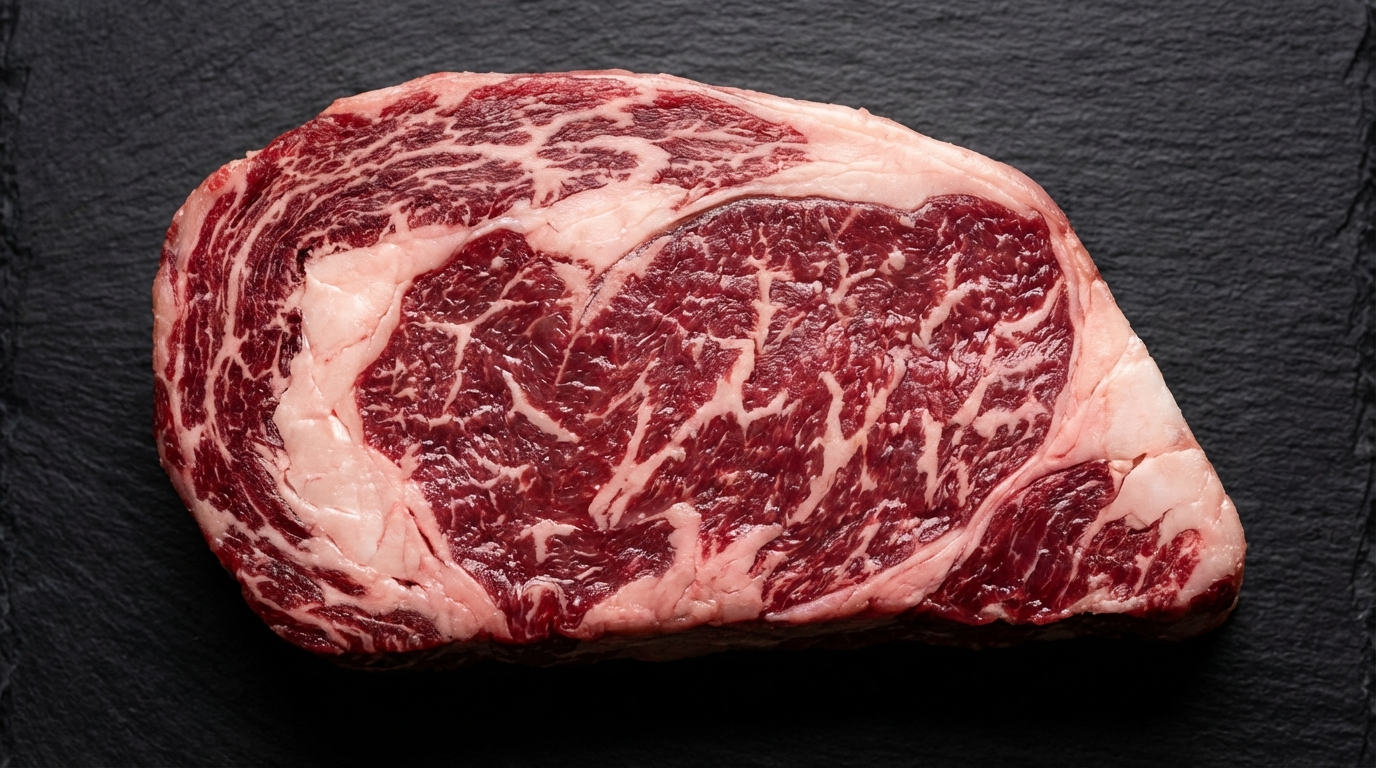
BMS Ranges for Angus Wagyu
Typical angus wagyu beef scores in these BMS ranges depending on genetics and feeding program:
- F1 angus wagyu (50% genetics): BMS 4-7
- F2-F3 angus wagyu (75-87.5% genetics): BMS 6-9
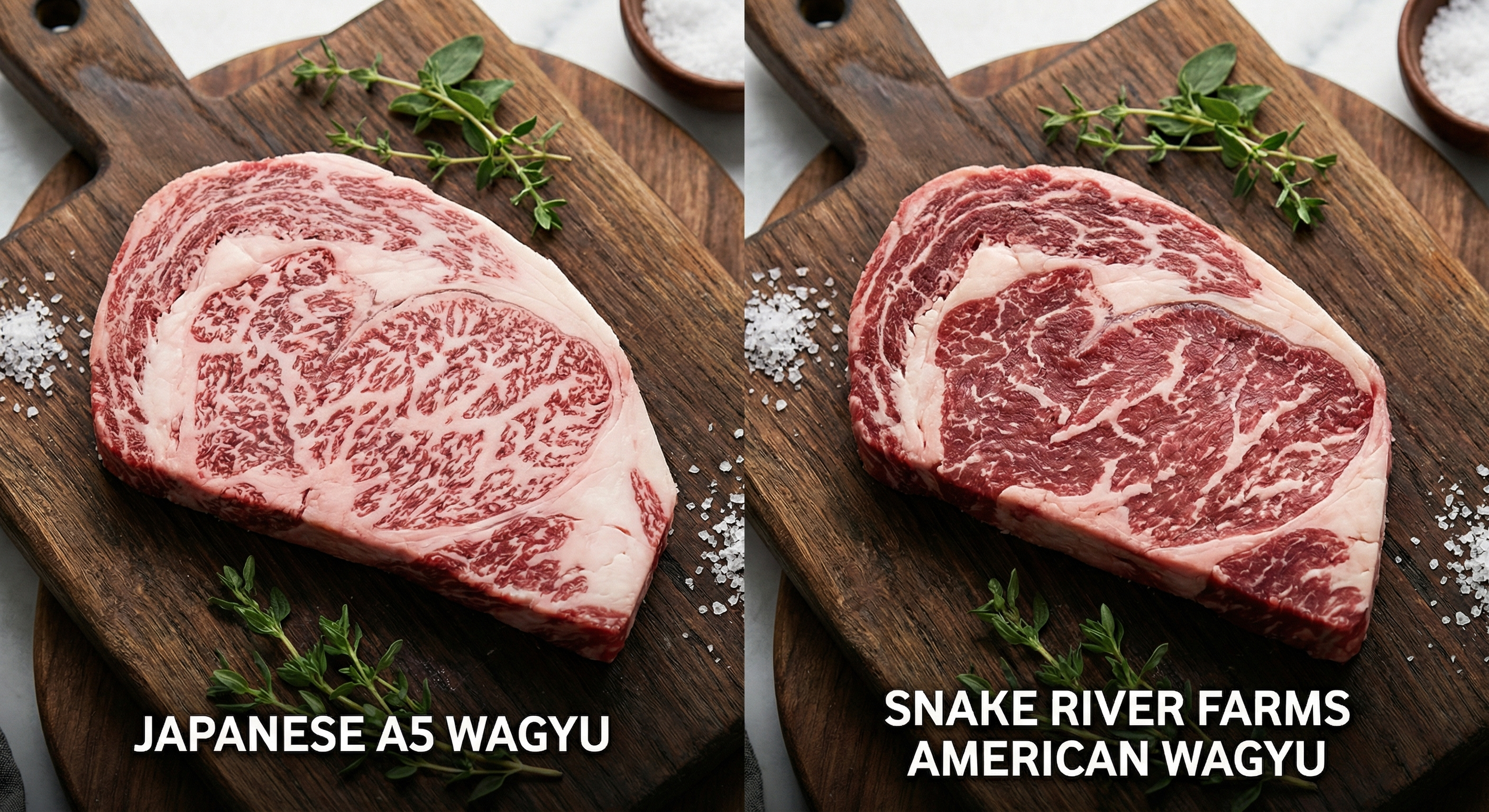
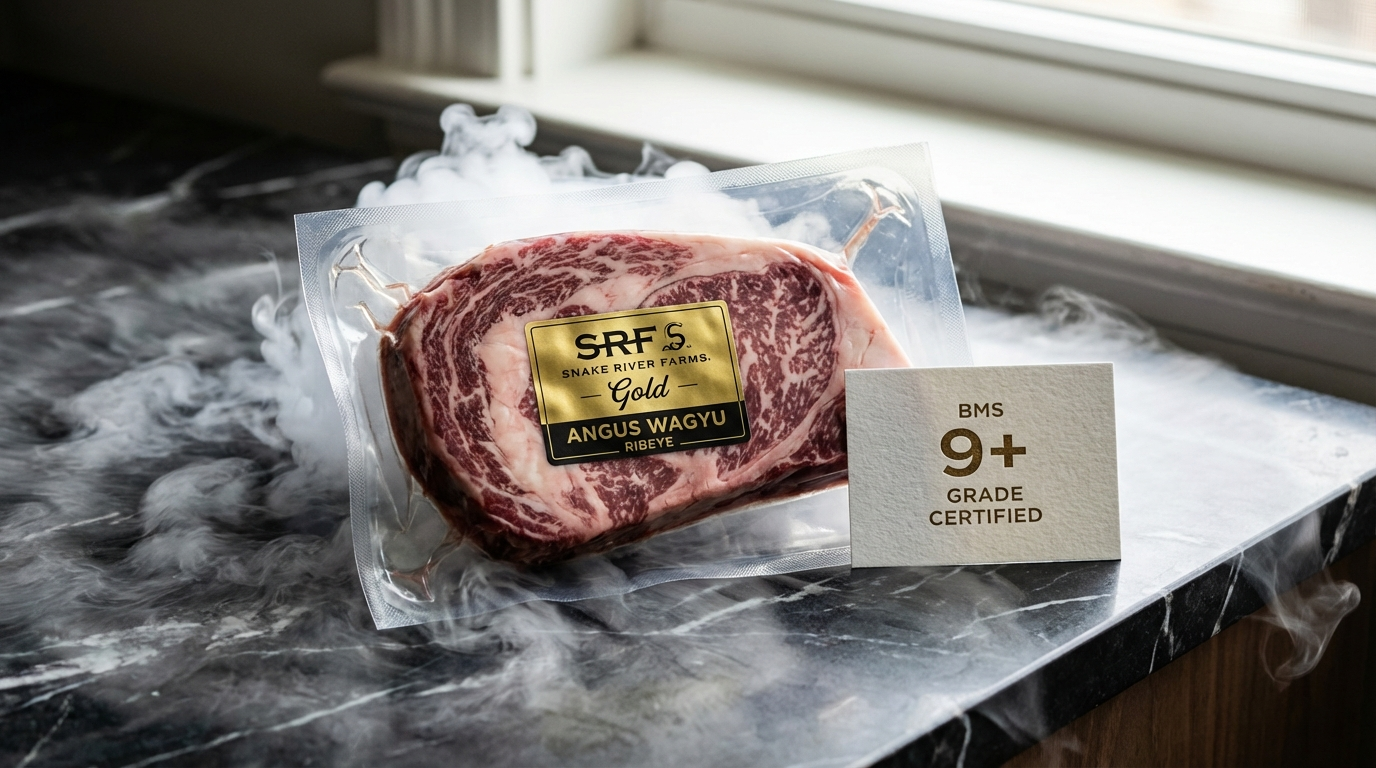
- Premium producers (Snake River Farms Gold, Mishima Reserve): BMS 9-10+
- Japanese fullblood A5 (for comparison): BMS 8-12
The critical insight: BMS 6 is where wagyu genetics begin to produce a noticeably different eating experience from conventional Prime beef. Below BMS 6, you are paying for the wagyu label more than for a transformative product. Above BMS 8, you are in territory that conventional cattle cannot reach regardless of feeding program.
The Authenticity Problem
In Japan, BMS scoring is performed by JMGA-certified graders using standardized visual comparison cards. In the United States, no such certification exists. Each processor or producer applies BMS scores using their own interpretation of the Japanese standards.
What this means in practice: a "BMS 7" from one brand may not equal a "BMS 7" from another. Reputable producers with quality control programs (Snake River Farms, Mishima Reserve, Double 8 Cattle) maintain consistent internal standards. Lesser-known brands or grocery-store wagyu may apply BMS scores generously — or invent them entirely.
When evaluating BMS claims, producer reputation matters as much as the score itself.
Brand-Specific Grading Tiers
The most reliable way to evaluate angus wagyu quality is through brand-specific tiers from established producers. These companies have reputations to protect and apply consistent grading across their product lines.
Snake River Farms (SRF)
The largest and most widely distributed angus wagyu producer in America uses a two-tier system:
- Snake River Farms Black Label: BMS 6-8, F1 cross, grain-fed 350+ days, widely available through retail and online. This is the "standard" premium angus wagyu tier — noticeably better than conventional Prime, priced at $30-50/lb for steaks.
- Snake River Farms Gold Label: BMS 9-11, higher-generation crosses with increased wagyu genetics, grain-fed 400+ days, limited availability, priced at $60-90/lb for steaks. This tier competes with mid-range Japanese A4 wagyu in marbling density.
SRF's grading is consistent and their Black Label serves as a useful benchmark — if another brand's angus wagyu is priced similarly to SRF Black but lacks comparable marbling, you are overpaying.
Mishima Reserve
Uses direct BMS scoring with verified genetics and individual carcass grading. Mishima angus wagyu typically ranges BMS 7-10 with transparent scoring on each package. Their pricing reflects actual BMS scores more directly than brand tiers, which benefits informed buyers.
Double 8 Cattle Company
Maintains full pedigree tracking and sells both F1 and higher-generation angus wagyu with genetic verification. Their grading is less consumer-facing (no Black/Gold tiers) but includes actual lineage documentation — useful if you want to verify genetics rather than trust labels.
Costco and Retail "Wagyu"
Costco periodically stocks angus wagyu from verified suppliers (often SRF or similar programs). Quality is generally reliable but selection is limited and BMS information is rarely disclosed. Expect BMS 5-7 range — better than conventional Prime, but not premium-tier marbling.
Grocery-store "wagyu" without brand attribution is high-risk. Genetics may be F1, may be vaguely "wagyu-influenced," or may be conventional cattle with creative labeling. If there is no producer name, no genetics disclosure, and no BMS score, assume you are paying for marketing rather than meaningful quality.
Reading Quality Without Official Grades
If you encounter angus wagyu beef without clear grading — farmers market, local butcher, unfamiliar online retailer — you can still evaluate quality using these criteria.
Visual Marbling Assessment
Forget the BMS number and look at the actual meat:
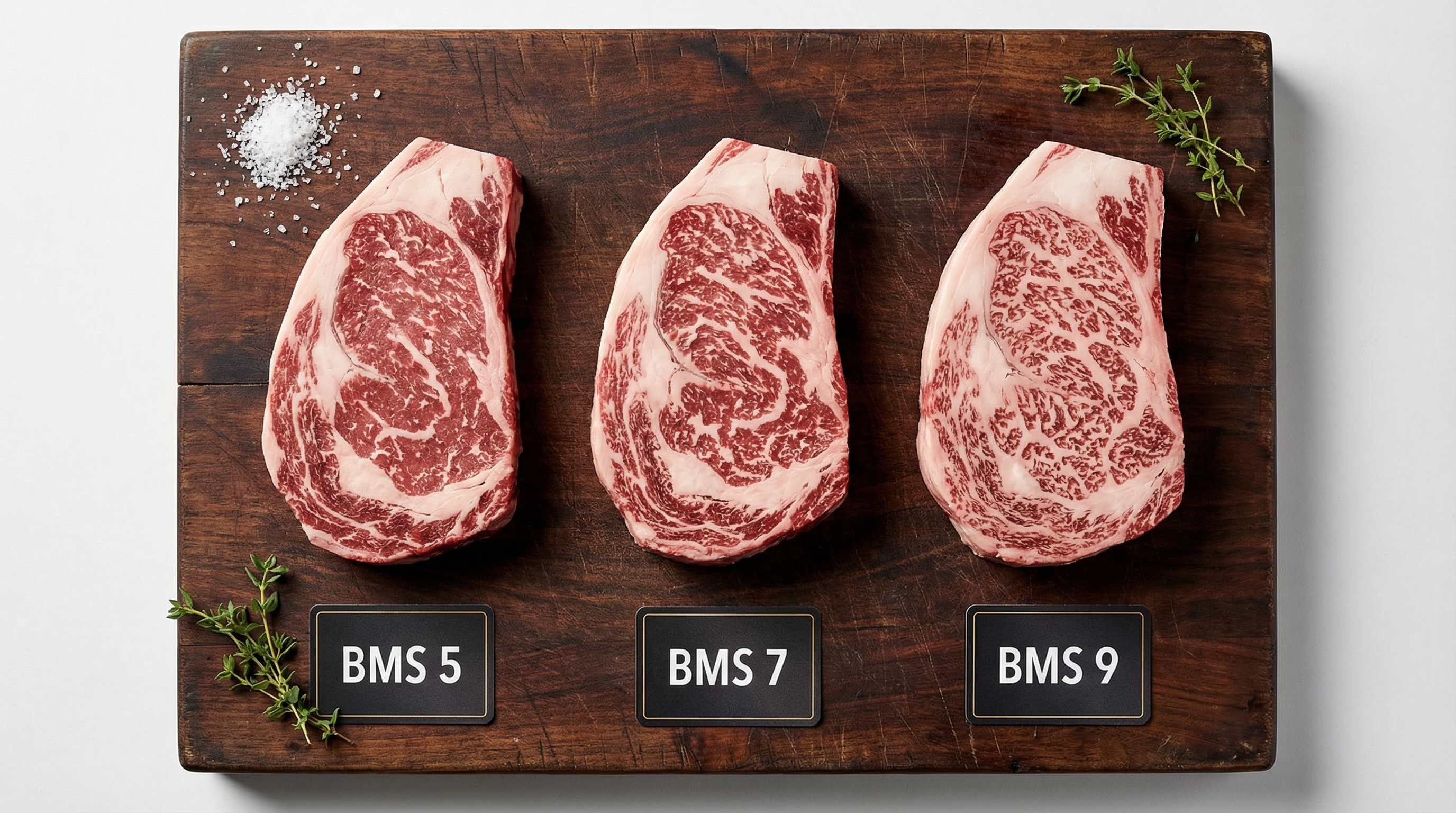
- BMS 4-5 equivalent: Visible white streaks of fat but with large areas of uninterrupted red muscle. Looks similar to high Choice or low Prime conventional beef.
- BMS 6-7 equivalent: Fat lines are finer and more distributed, creating a web-like pattern. Still distinct red muscle visible but with consistent white marbling throughout. This is where wagyu genetics become visually obvious.
- BMS 8-9 equivalent: The fat network is dense enough that red muscle appears in smaller islands surrounded by white marbling. Looks substantially different from any conventional beef.
- BMS 10+ equivalent: Fat and muscle are nearly equal in visual prominence. The steak looks more white than red in cross-section.
If the seller claims "wagyu" but the marbling pattern looks like conventional Prime, trust your eyes over the label.
Genetics and Feeding Program
Ask direct questions:
- What percentage wagyu genetics? F1 (50%), F2 (75%), purebred (93.75%+), or "don't know" (red flag)
- How long were the cattle grain-fed? 350+ days is standard for quality angus wagyu. 180-250 days is conventional finishing. If the answer is vague or "grass-finished," expect conventional marbling regardless of genetics.
- Is the herd registered with the American Wagyu Association? Registration requires verified lineage. Not a guarantee of quality, but eliminates the worst fraud.
Producers with real wagyu programs will answer these questions with specifics. Vague answers or deflection ("it's complicated") suggest the wagyu genetics are minimal or the feeding program does not justify premium pricing.
Price Reality Check
Use price as a cross-check against claimed quality:
- BMS 4-5 range (minimal visual difference from Prime): Should not exceed USDA Prime pricing by more than 20-30%. If it does, you are overpaying for genetics that did not translate to marbling.
- BMS 6-7 range (clearly better marbling than Prime): Premium of 40-80% over USDA Prime is reasonable. This is the sweet spot for value-conscious buyers.
- BMS 8-9 range (approaching Japanese A4 quality): Premium of 100-200% over USDA Prime. Expensive but justified by marbling that conventional beef cannot achieve.
- BMS 10+ range (rivaling A5): Premium of 200-400%+ over USDA Prime. Niche market, special occasion territory.
If someone is selling angus wagyu at BMS 9 prices but the marbling looks like BMS 6, either the grading is inflated or you found an extraordinary deal. The former is far more common.
The F1 vs F2+ Genetics Question
Angus wagyu genetics matter enormously for marbling potential, but the relationship is not linear. Understanding the difference between F1, F2, and higher-generation crosses helps set realistic expectations.
F1 crosses (50% wagyu / 50% Angus): This is the commercial sweet spot. Cattle grow faster and larger than higher-generation wagyu, making them economically viable at scale. Marbling potential tops out around BMS 7-8 with exceptional feeding programs. Most retail angus wagyu is F1.
F2 crosses (75% wagyu / 25% Angus): Slower growth and smaller carcasses than F1, but marbling potential increases to BMS 8-10. Requires deliberate herd management (breeding F1 females back to wagyu bulls), which limits supply. Commands premium pricing when available.
F3+ crosses (87.5%+ wagyu): Approaching purebred wagyu marbling (BMS 9-11+) while retaining some Angus frame size. Rare in commercial channels. Priced closer to Japanese A5 than to standard angus wagyu.
The critical insight: F1 crosses at BMS 6-7 represent better value than F3 crosses at BMS 9 for most buyers. The price premium for higher-generation genetics increases faster than the eating experience improves. Unless you are specifically chasing maximum marbling for special occasions, F1 angus wagyu from a quality producer delivers the best return per dollar.
How Feeding Programs Affect Grading
Wagyu genetics establish marbling potential. Feeding programs determine whether that potential is realized. Even fullblood wagyu cattle will not develop exceptional marbling on a conventional 180-day finishing program.
Typical feeding timelines and corresponding marbling outcomes:
- 180-240 days grain finishing (conventional): F1 angus wagyu will grade USDA Prime but likely BMS 4-5. The wagyu genetics are present but not expressed. This is where most grocery-store "wagyu" operates.
- 300-400 days grain finishing (extended): F1 angus wagyu reaches BMS 6-7. This is the threshold where marbling becomes visually and texturally different from conventional Prime. Most mid-market angus wagyu brands operate here.
- 400-500+ days grain finishing (premium): F1 angus wagyu peaks at BMS 7-8. F2-F3 crosses reach BMS 9-10+. This is Snake River Farms Gold territory — expensive to produce but delivers marbling conventional cattle cannot match.
When evaluating angus wagyu beef, feeding duration is as important as genetics. F1 cattle on a 450-day program will out-marble F2 cattle on a 250-day program. Always ask about both.
Common Grading Deceptions to Avoid
The angus wagyu market is lucrative enough that misleading labeling is common. Here are the most frequent deceptions and how to spot them:
"Wagyu-Style" or "Wagyu-Influenced"
These terms have no regulatory definition. They can mean the cattle carry some distant wagyu genetics, or they can mean absolutely nothing. If the label does not specify percentage wagyu genetics or generation (F1, F2), assume it is marketing rather than meaningful genetic content.
Inflated BMS Scores
Some sellers assign BMS scores that do not match visual marbling. Compare the claimed BMS to reference photos from reputable sources (JMGA marbling cards, SRF product photos). If a "BMS 8" steak looks like BMS 6, the grading is inflated.
USDA Prime Presented as Premium Wagyu
Low-end angus wagyu that barely grades USDA Prime (BMS 5-6 range) is sometimes marketed as if USDA Prime is an achievement. It is not. Quality angus wagyu should significantly exceed the Prime minimum. If the seller emphasizes the USDA Prime grade rather than BMS score or genetic verification, they are selling at the bottom of the angus wagyu quality spectrum.
Ground Beef Genetics Ambiguity
Angus wagyu ground beef often uses trim from F1 cattle — which is fine — but some brands blend conventional trim with small amounts of wagyu fat and label it "wagyu ground beef." Check the fat percentage. Real angus wagyu ground beef is typically 20-25% fat due to the marbling in the trim. If it is 15% fat or lower, it is likely conventional beef with minimal wagyu content.
Best Value by Quality Tier
Where to focus your buying based on what you are optimizing for:
Best value for everyday premium beef: F1 angus wagyu from known producers at BMS 6-7 (Snake River Farms Black, Costco wagyu, Mishima BMS 6-7 range). Noticeably better than conventional Prime at prices that do not require special occasions ($30-45/lb for steaks). This is the sweet spot.
Best value for ground beef: Angus wagyu ground beef at any tier. The marbling makes a dramatic difference in burgers and the price premium over conventional ground beef is modest ($8-15/lb vs $5-8/lb for Prime). Easiest entry point to experience wagyu genetics.
Best value for special occasions: F2-F3 angus wagyu or SRF Gold at BMS 9+ when you want the experience of exceptional marbling without paying Japanese A5 prices. You get 80-90% of the A5 experience at 40-50% of the cost ($60-90/lb vs $150-250/lb).
Worst value: Entry-tier "wagyu" at grocery stores without brand attribution or genetics disclosure. You are paying a 30-50% premium over conventional Prime for meat that may deliver no perceptible difference. Either buy known brands or stick with conventional Prime.
How to Evaluate Before Buying
Whether buying online, at a butcher, or from a farmer, use this checklist:
- Verify genetics: Ask for F1/F2 designation or percentage wagyu genetics. If the seller cannot or will not answer, walk away.
- Check feeding program: 350+ days grain finishing is the baseline for quality angus wagyu. Less than that and you are paying for unrealized genetic potential.
- Look at actual marbling: If buying in person or from a site with good photography, evaluate visible marbling against your BMS expectations. Trust your eyes.
- Confirm producer or brand: Known brands (SRF, Mishima, Double 8, Morgan Ranch) have reputations to protect. Unknown brands without transparency are high-risk.
- Price sanity check: Compare to SRF Black Label pricing as a benchmark. If another product is priced similarly but lacks comparable marbling or transparency, pass.
- Ask about registration: American Wagyu Association registration is not a quality guarantee but eliminates the bottom tier of genetic fraud.
If the seller cannot or will not answer these questions with specifics, you are buying blind. In a market with this much quality variation, blind buying is expensive.
Final Recommendations
Angus wagyu beef grading is fragmented and inconsistent, but informed buyers can navigate it successfully. Focus on these principles:
Brand reputation over scores: A "BMS 7" from Snake River Farms is more trustworthy than a "BMS 9" from an unknown seller without photos or genetic verification.
Genetics and feeding together: F1 genetics mean nothing if the cattle were finished on a conventional timeline. Both must align for quality to match the price.
Visual verification when possible: The marbling pattern tells you more than any label. If the meat does not look dramatically different from conventional Prime, it probably is not worth a dramatic price premium.
Optimize for your use case: Everyday premium steaks should come from the BMS 6-7 range where value peaks. Special occasions justify BMS 9+ if you want the experience. Ground beef is the lowest-risk entry point for angus wagyu genetics.
The angus wagyu market punishes uninformed buyers and rewards those who understand what the grades actually measure. Use these frameworks to evaluate quality independently of marketing, and you will consistently get better beef for your money.