How Angus Wagyu Cattle Are Raised: Production Methods, Feeding Programs, and Quality Standards
Angus wagyu production combines Japanese genetics with American ranching efficiency. Here is exactly how crossbred wagyu cattle are bred, fed, and finished to achieve premium marbling.
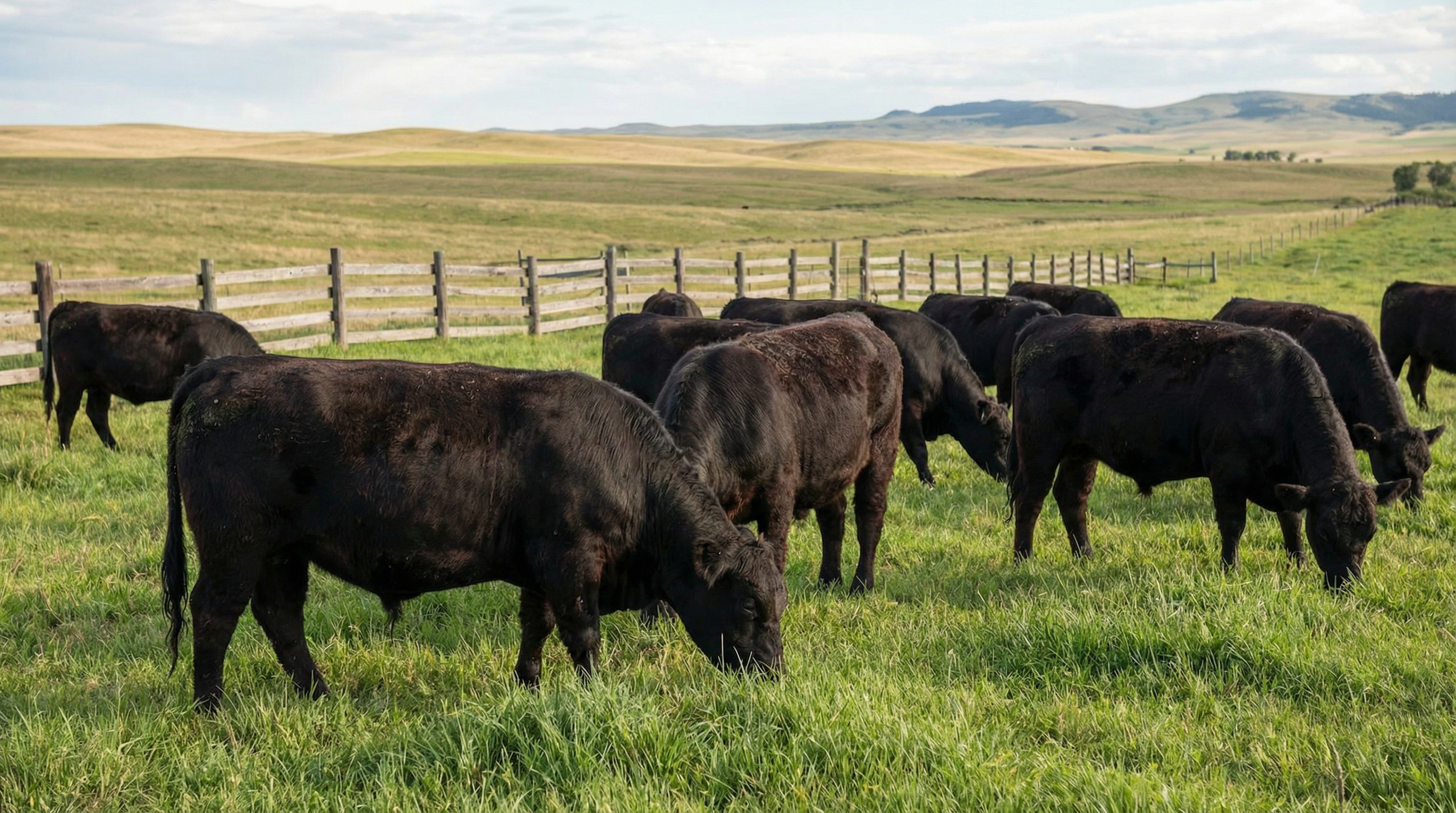
Angus wagyu beef commands premium prices because producers invest significantly more time, feed, and care compared to commodity cattle. But what specifically happens on an American wagyu ranch? How do ranchers coax those characteristic white fat marbling patterns from crossbred cattle that carry only 50-75% wagyu genetics?
I have consulted with multiple American wagyu operations over the past decade, from small family ranches finishing 50 head annually to vertically integrated producers handling thousands. The production methods share common principles — extended feeding periods, specific genetic programs, and grain-based finishing diets — but the execution varies dramatically. Understanding what separates exceptional Angus wagyu from mediocre "wagyu-style" beef requires looking past marketing terms and into actual ranching practices.
The Breeding Program: Creating Angus Wagyu Genetics
Angus wagyu production starts with intentional crossbreeding. Producers use purebred Japanese wagyu bulls (nearly always Japanese Black lineage — Tajima, Kedaka, or Shimane bloodlines) bred to commercial Black Angus cows. This creates F1 (first filial generation) calves that are exactly 50% wagyu by genetics.
Why Black Angus as the Foundation?
American producers chose Black Angus as the crossbreeding partner for practical reasons:
- Maternal traits: Angus cows have excellent calving ease, strong mothering instincts, and good milk production — critical for profitable cow-calf operations
- Frame size: Angus cattle are larger-framed than purebred wagyu, producing heavier finished carcasses (800-1000 lbs hot carcass weight vs 500-700 lbs for purebred wagyu)
- Feed efficiency: Angus cattle convert feed to weight gain more efficiently during the growing phase, reducing pre-finishing costs
- Established infrastructure: The American beef industry is built around Angus genetics — feedlots, processors, and grading systems accommodate Angus frame sizes and growth rates
The cross produces calves that inherit marbling genetics from the wagyu sire while maintaining the growth characteristics and yield grades that make American beef production economically viable.
Genetic Selection: Not All Wagyu Bulls Are Equal
Premium Angus wagyu producers do not use random wagyu bulls. They select for specific traits measured by Expected Progeny Differences (EPDs):
| Trait | Target EPD Range | Why It Matters |
|---|
| Marbling (IMF) | Top 10% of breed | Directly predicts intramuscular fat deposition in offspring |
| Ribeye Area (REA) | Moderate (not extreme) | Balances yield with marbling — overly large REA dilutes marbling |
| Carcass Weight (CW) | Moderate to high | Ensures economically viable carcass size for processing |
| Birth Weight (BW) | Low to moderate | Prevents calving difficulty when bred to smaller Angus cows |
Top producers track marbling EPDs religiously. A wagyu bull in the top 5% for marbling EPD will produce F1 calves that grade 20-30% higher for marbling compared to an average wagyu bull, even when raised identically. Genetics account for roughly 40% of marbling variation; feeding and management account for the other 60%.
F2 and F3 Production: Increasing Wagyu Percentage
Some operations breed F1 females (50% wagyu) back to purebred wagyu bulls, creating F2 offspring at 75% wagyu genetics. A third generation (F3) reaches 87.5% wagyu. Each step increases marbling potential but introduces tradeoffs:
- F2 cattle typically achieve BMS scores of 7-10 (vs BMS 5-8 for F1), but require an additional 60-90 days on feed and finish at lighter carcass weights (700-850 lbs)
- F3 cattle approach purebred wagyu marbling (BMS 8-11) but often need 400+ days on feed total and finish at 600-750 lb carcasses — economically challenging
Most American wagyu production focuses on F1 and F2 crosses where the economics still work for mid-premium and premium retail markets.
Feeding Programs: Building Marbling Through Diet
Angus wagyu cattle spend far longer on feed compared to conventional beef cattle. Where commodity beef finishes in 14-18 months total (including backgrounding and feedlot), Angus wagyu typically requires 24-30 months for F1 cattle and 28-36 months for higher-percentage crosses.
Phase 1: Cow-Calf and Weaning (0-8 months)
Angus wagyu calves start life identically to conventional beef calves: nursing from their mothers on pasture, creep-fed starting around 3-4 months, and weaned at 6-8 months. Premium operations pay attention to:
- Creep feed composition: Higher protein (16-18%) and energy to support early growth without excess fat deposition
- Weaning weight targets: 500-600 lbs at weaning (heavier than commodity calves) to maximize frame development during backgrounding
- Low-stress weaning: Fence-line weaning or gradual separation reduces cortisol spikes that can impact subsequent marbling development
At this stage, the calves look and behave like any other high-quality beef calves. The wagyu genetics are present but not yet expressed.
Phase 2: Backgrounding and Growing (8-16 months)
After weaning, Angus wagyu cattle enter backgrounding programs designed to maximize skeletal and muscle growth before the finishing phase. This is where production methods diverge significantly from conventional beef:
Conventional beef: Backgrounded on high-forage diets (pasture or hay) with minimal grain supplementation to keep costs low. Target daily gains of 1.5-2.0 lbs/day.
Angus wagyu: Backgrounded on moderate to high-energy diets with 30-50% grain (typically corn or barley) mixed with hay and silage. Target daily gains of 2.0-2.5 lbs/day. The higher energy intake during backgrounding primes metabolic pathways for intramuscular fat deposition during finishing.
This phase costs 40-60% more per head for Angus wagyu compared to conventional backgrounding, but it sets up marbling development later. Cattle that are energy-restricted during backgrounding often fail to achieve target marbling scores even with extended finishing periods.
Phase 3: Finishing (16-30+ months)
The finishing phase is where Angus wagyu production truly separates from commodity beef. Conventional beef finishes in 120-180 days on a high-grain diet. Angus wagyu requires 300-500+ days on feed, depending on target marbling grade and wagyu percentage.
Finishing Diet Composition
Typical Angus wagyu finishing ration (dry matter basis):
- Grain (corn, barley, wheat): 70-85% — provides energy for fat deposition
- Protein supplement (soybean meal, distillers grains): 8-12% — supports muscle maintenance during extended finishing
- Roughage (hay, silage, beet pulp): 5-15% — maintains rumen health and prevents acidosis
- Minerals and vitamins: 2-5% — ensures metabolic efficiency and prevents deficiencies during long finishing periods
Energy density ranges from 85-92 Mcal NEg per 100 lbs (megacalories of net energy for gain), compared to 75-85 for conventional finishing diets. The extra energy drives intramuscular fat deposition once the cattle reach physiological maturity around 18-20 months.
Feeding Duration and Marbling Development
Marbling deposition follows a nonlinear curve. During the first 200 days on a finishing diet, Angus wagyu cattle deposit primarily intermuscular and subcutaneous fat (the fat between muscles and under the skin). Intramuscular marbling — the valuable fat within the ribeye and strip loin — accelerates only after day 250-300 on feed.
| Days on Feed | Expected BMS (F1) | Daily Cost ($/head) | Cumulative Feed Cost |
|---|
| 200 | 4-5 | $4.50 | $900 |
| 300 | 5-7 | $5.00 | $1,500 |
| 400 | 6-8 | $5.50 | $2,200 |
| 500 | 7-9 | $6.00 | $3,000 |
The last 100-200 days on feed are the most expensive and also the most critical. A cattle that grades BMS 5 after 300 days might achieve BMS 8 with another 150 days — the difference between mid-premium and ultra-premium beef pricing. Producers constantly balance feed cost against expected marbling improvement.
Why Japanese Wagyu Takes Even Longer
Purebred Japanese wagyu in Japan are finished for 600-900 days (some operations push to 1000+ days for extreme marbling). The extended timeline reflects breed differences:
- Purebred wagyu mature more slowly — they don't reach physiological maturity until 24-28 months (vs 18-22 months for Angus wagyu F1)
- Japanese operations target BMS 10-12, which requires marbling development far beyond what is economically viable in the United States
- Japanese feeding systems often include unique management practices such as high-quality rice straw, beer or sake by-products, and daily brushing — more about tradition and branding than pure marbling optimization
American Angus wagyu production adapted Japanese genetics to fit efficient American feedlot economics: achieve 80-90% of purebred wagyu marbling in 60% of the time and cost.
Quality Control and Grading Standards
Angus wagyu beef operates in a grading gray zone. USDA grading standards (Select, Choice, Prime) were designed for conventional Angus cattle and top out at "abundant" marbling — roughly BMS 5-6. High-marbling Angus wagyu (BMS 7-9) technically still grades "USDA Prime" because no higher grade exists in the U.S. system.
American Wagyu Association (AWA) Standards
The American Wagyu Association provides pedigree registration for crossbred and purebred wagyu cattle in the United States. AWA does not grade carcasses, but registration establishes genetic authenticity. Registered cattle have verified lineage back to imported Japanese wagyu foundation animals.
When producers claim "AWA-registered" Angus wagyu, they are verifying genetics — not marbling grade. You still need to see actual BMS scores or camera-graded marbling data to know what you are buying.
Beef Marbling Standard (BMS) Scoring
Many premium Angus wagyu producers now use BMS scoring (the Japanese 1-12 scale) instead of or alongside USDA grades:
| USDA Grade | BMS Equivalent | Typical F1 Angus Wagyu Range |
|---|
| Choice | 3-4 | Low end |
| Prime (low) | 5-6 | Common |
| Prime (high) | 7-8 | Premium |
| Above Prime | 9-12 | Rare (F2/F3 only) |
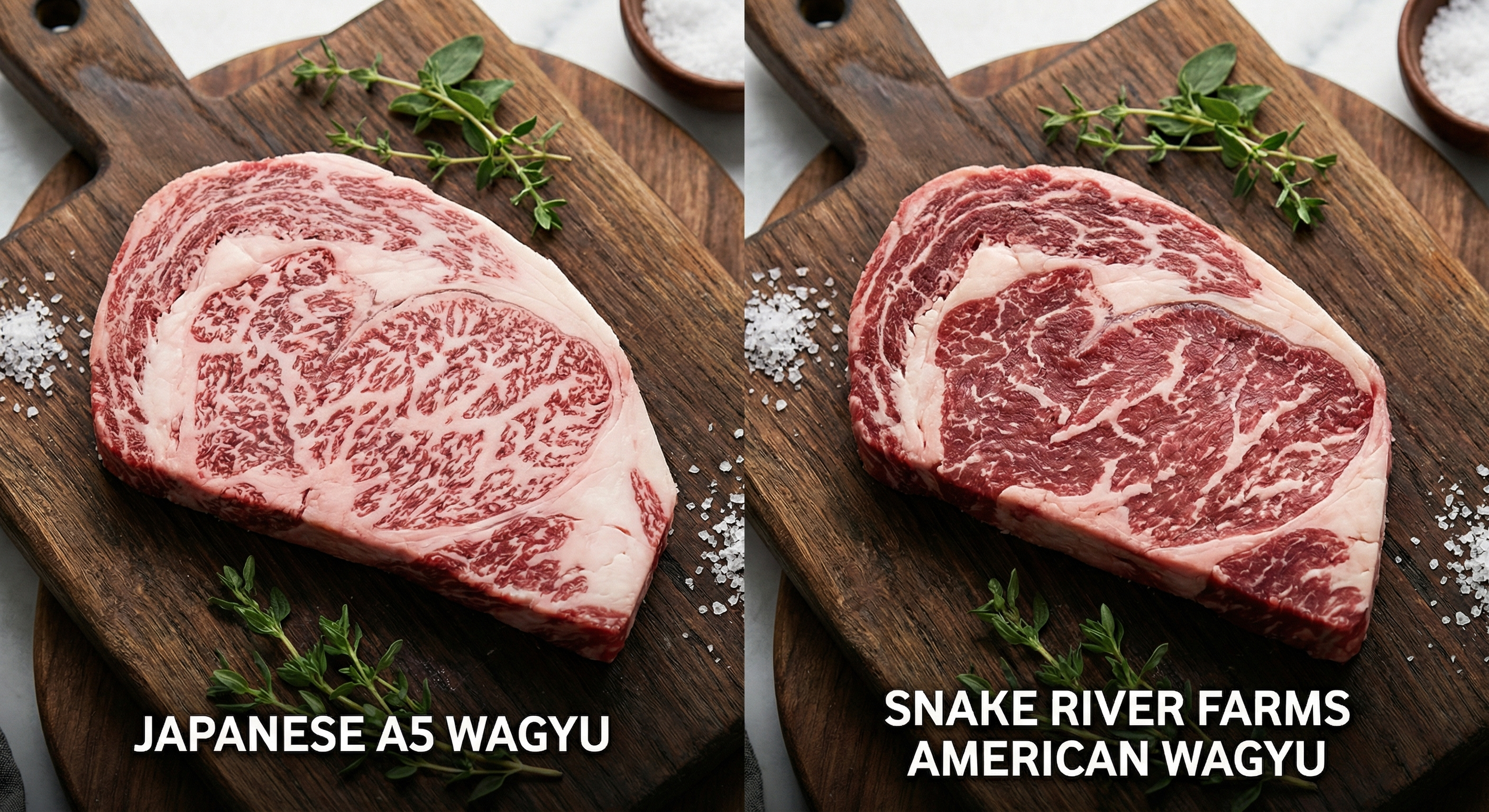
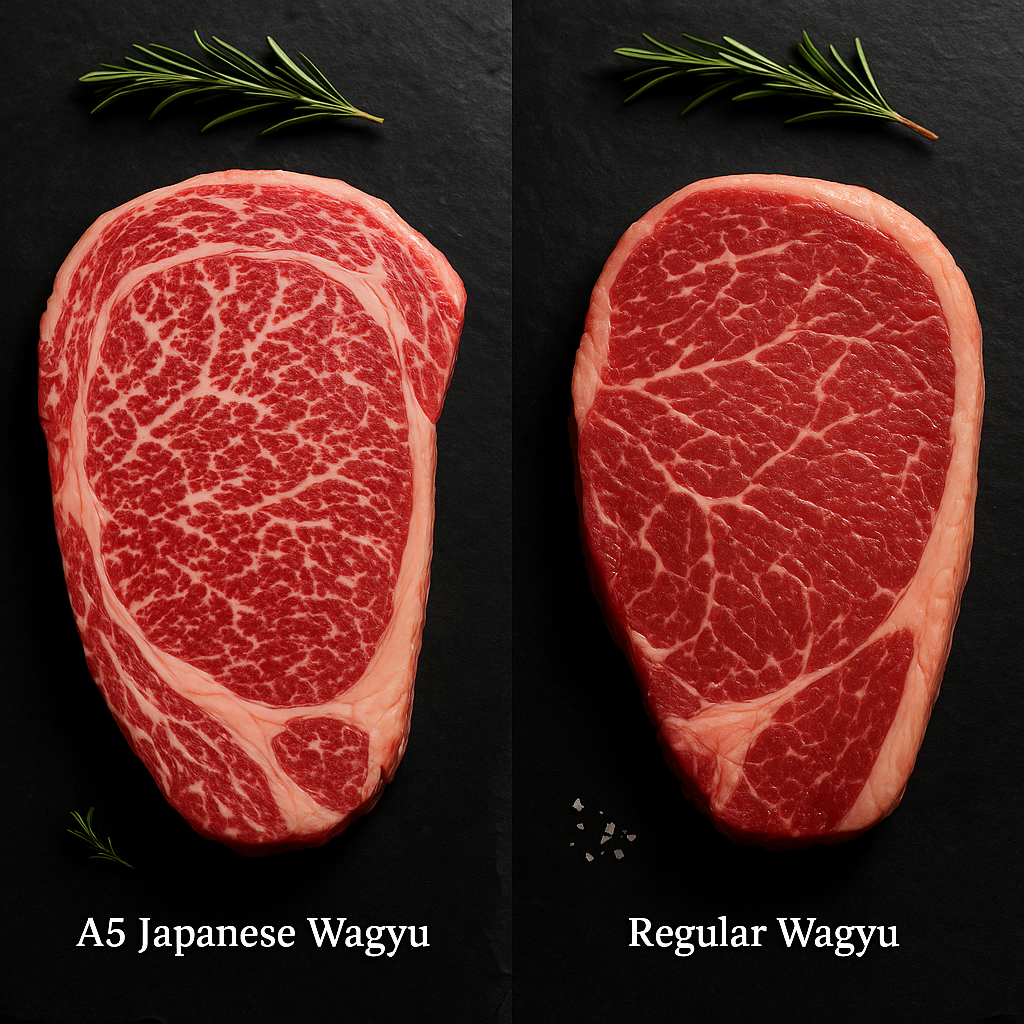
BMS scoring uses computer vision systems or trained graders who compare ribeye cross-sections against photographic standards. A BMS 8 ribeye has roughly 25% intramuscular fat, visibly more marbling than BMS 5-6 "USDA Prime."
Transparency varies. Some producers provide BMS scores on every package; others use vague terms like "premium" or "ultra" without quantification.
Camera Grading and Yield Data
Modern beef processing plants use camera-based grading systems that measure:
- Marbling percentage: Intramuscular fat as percentage of ribeye cross-section
- Ribeye area (REA): Size of the ribeye muscle in square inches
- Backfat thickness: Subcutaneous fat depth (impacts yield grade)
- Yield grade (YG): USDA score predicting percentage of boneless, closely-trimmed retail cuts (1=highest yield, 5=lowest)
Premium Angus wagyu operations track this data per animal and use it to refine breeding and feeding programs. If a specific bull's offspring consistently grade BMS 6 when fed identically to other bulls' offspring that hit BMS 8, that bull gets culled from the breeding program.
Regional Production Differences: Pasture vs Feedlot Finishing
Most American wagyu is finished in dedicated feedlots or on-farm finishing facilities with concrete or dirt pens. A smaller segment markets "pasture-finished" or "grass-finished" Angus wagyu, claiming superior flavor or health benefits. The reality is more complex.
Grain-Finished Angus Wagyu (Mainstream)
Advantages:
- Achieves target marbling (BMS 6-9) reliably with known feeding duration
- Consistent flavor profile — grain-fed beef has milder, sweeter flavor that most American consumers prefer
- Lower cost per pound of gain, making premium marbling economically viable
Disadvantages:
- Requires intensive management — grain overload and acidosis are constant risks with long finishing periods
- Environmental concerns about concentrated animal feeding operations (CAFOs)
- Less marketing appeal to grass-fed/pasture-raised advocates
Grass-Finished Angus Wagyu (Niche)
Advantages:
- Appeals to consumers seeking pasture-raised beef with environmental benefits
- Higher omega-3 fatty acid ratio and CLA content (marginal nutritional differences)
- Can command premium pricing from specific buyer segments
Disadvantages:
- Nearly impossible to achieve high marbling (BMS 7+) on grass alone — most "grass-finished" Angus wagyu tops out at BMS 4-6
- Much longer finishing period (500-700 days) and lower weight gains
- Inconsistent results — forage quality varies seasonally and regionally
- Stronger, more variable flavor — some consumers perceive grass-fed beef as "gamey"
In my experience evaluating grass-finished Angus wagyu, the marbling rarely justifies the premium price. The wagyu genetics provide some marbling advantage over grass-finished Angus, but you cannot fully express wagyu marbling potential without energy-dense grain-based diets. If marbling is your priority, grain-finished is the only viable path.
Economic Reality: Why Angus Wagyu Costs What It Does
Premium Angus wagyu beef costs 50-100% more than USDA Prime Angus. The price reflects genuine production cost differences, not arbitrary markup.
Cost Breakdown Per Head (F1, 400-day finish to BMS 7-8)
| Expense Category | Conventional Beef | Angus Wagyu (F1) | Difference |
|---|
| Weaned calf cost | $800 | $1,200 | +$400 (wagyu genetics premium) |
| Backgrounding feed (180 days) | $400 | $650 | +$250 (higher-energy diet) |
| Finishing feed (400 days) | $700 (150 days) | $2,200 | +$1,500 (longer period + higher cost/day) |
| Labor & facilities | $150 | $350 | +$200 (extended care period) |
| Veterinary & misc | $100 | $200 | +$100 |
| Total cost | $2,150 | $4,600 | +$2,450 (+114%) |
| Carcass weight | 850 lbs | 900 lbs | +50 lbs |
| Cost per lb (carcass) | $2.53/lb | $5.11/lb | +$2.58/lb (+102%) |
This carcass-weight cost does not include processing, aging, cutting, packaging, distribution, or retail markup. By the time Angus wagyu ribeye reaches your plate, the producer's doubling of input costs translates to 50-80% higher retail price — which is actually efficient margin compression compared to production cost differences.
The Break-Even Marbling Threshold
For Angus wagyu production to be economically rational, the marbling improvement must justify the cost. In practice:
- BMS 5-6 (USDA Prime low): Marginal economics — difficult to charge enough premium over commodity Prime to cover extra costs
- BMS 7-8 (Prime high): Viable economics — clear marbling advantage commands 40-60% retail premium
- BMS 9+ (Above Prime): Strong economics IF there is a market — competes directly with imported A5 wagyu which has brand cachet
Producers who finish to BMS 5-6 often struggle financially. The ones succeeding target BMS 7-8 consistently or accept that 20-30% of their cattle will fall below target and get sold as "mid-premium" at lower margins.
Quality Signals to Look For When Buying
The American wagyu market has minimal regulation. Here is how to identify producers using legitimate production methods rather than marketing hype:
Transparency Indicators (Green Flags)
- Specific wagyu percentage stated: "F1 50% wagyu" or "75% Tajima genetics"
- Days on feed disclosed: "Finished 400+ days" signals commitment to marbling development
- BMS scores provided: Actual marbling measurements, not vague quality tiers
- AWA registration mentioned: Verifies genetics, even if it doesn't guarantee grade
- Named bloodlines: "Tajima," "Kedaka," or specific bull names show serious breeding program
- Per-animal traceability: Ability to trace your cut back to the specific animal and feeding history
Red Flags (Buyer Beware)
- "Wagyu-style" or "wagyu blend": Could mean anything from 10% to 90% wagyu — probably low end
- No finishing period disclosed: If they don't tell you, assume it's short (180-250 days)
- Unusually cheap "American wagyu": Ground beef under $12/lb or steaks under $35/lb suggest minimal wagyu genetics or short finishing
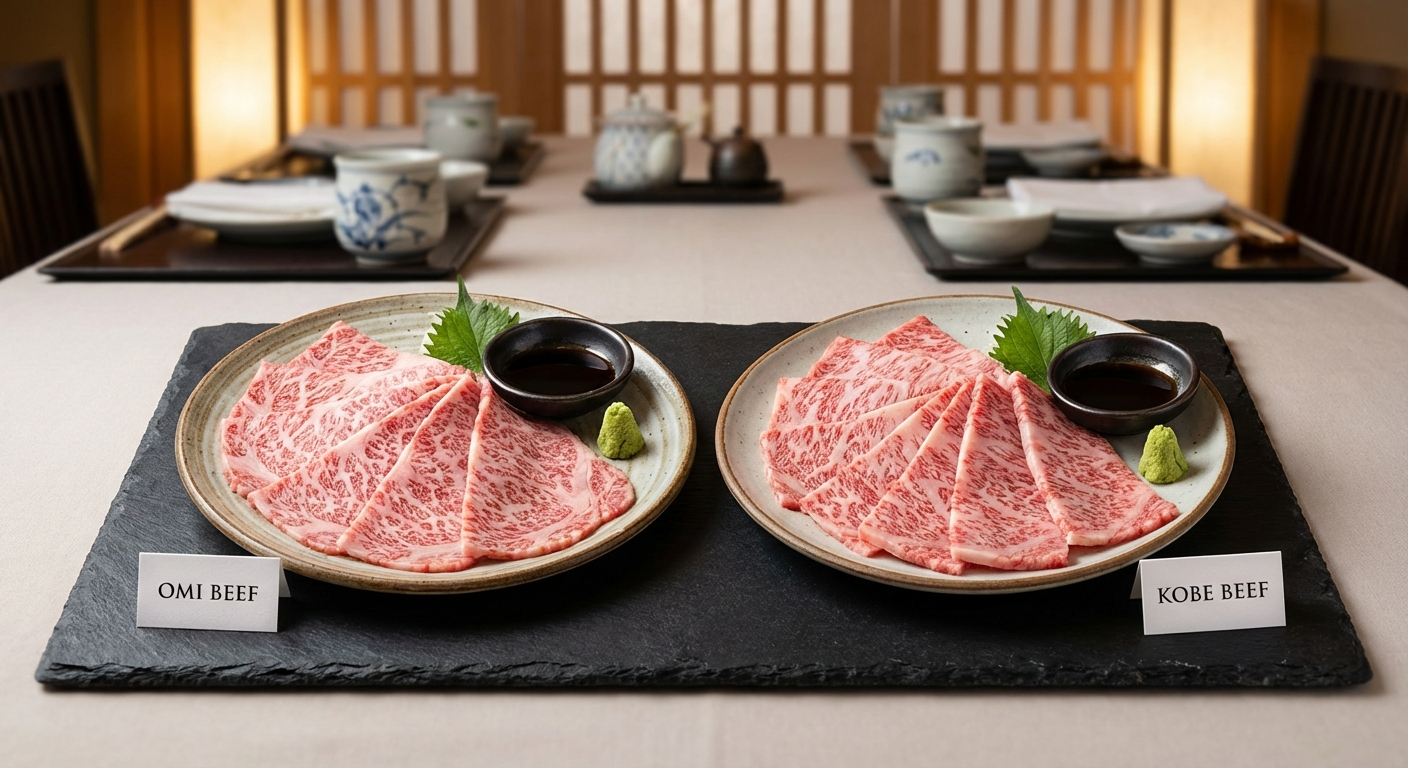
- "Kobe-style" labeling: Meaningless — real Kobe beef is purebred and cannot be crossbred
- No marbling score or BMS: If the marbling were exceptional, they would advertise it
The Future of Angus Wagyu Production
American wagyu production is maturing. The first wave (1990s-2010s) focused on establishing breeding programs and proving the crossbreeds worked. The current phase emphasizes quality consistency, data-driven genetic selection, and premium positioning.
Key trends:
- Genomic testing: Producers increasingly use DNA testing to predict marbling EPDs in young calves, accelerating genetic improvement
- Feed efficiency research: Universities and producers are studying how to achieve target marbling in fewer days on feed through ration optimization
- Retail brand development: More producers marketing direct-to-consumer under their own brands rather than selling to commodity processors
- Export market growth: American wagyu is finding buyers in Asia and Europe who want wagyu marbling without Japanese price tags
For related insights, explore Wagyu Breeding Programs and Beef Marbling Science. When you are ready to experience premium American wagyu, The Meatery's American Wagyu collection sources from producers who disclose exact genetics and BMS scores.
The Bottom Line on Angus Wagyu Production
Angus wagyu production is not magic or marketing — it is deliberate genetics combined with patient, expensive feeding programs. The crossbred cattle inherit marbling genes from Japanese wagyu bulls, but those genes only express fully when cattle are fed high-energy diets for 300-500+ days.
This extended production timeline and higher feed costs justify the retail price premium. When you pay $50-70/lb for F1 Angus wagyu ribeye instead of $30/lb for USDA Prime, you are paying for 400 days on feed instead of 150, genetics selected specifically for marbling, and a producer willing to wait 24-30 months for harvest instead of rushing cattle to market.
The best producers are transparent about wagyu percentage, days on feed, and BMS scores because they have nothing to hide. If those details are missing from a product labeled "American wagyu," you are likely looking at the cheap end of the spectrum — short finishing periods, low wagyu genetics, and marbling that barely exceeds USDA Prime.