Australian Wagyu vs American Wagyu: The Real Differences
Both countries crossbreed wagyu genetics with local cattle, but Australia and America take fundamentally different approaches to grading, raising, and finishing their wagyu. Here is what matters when you are choosing between them.
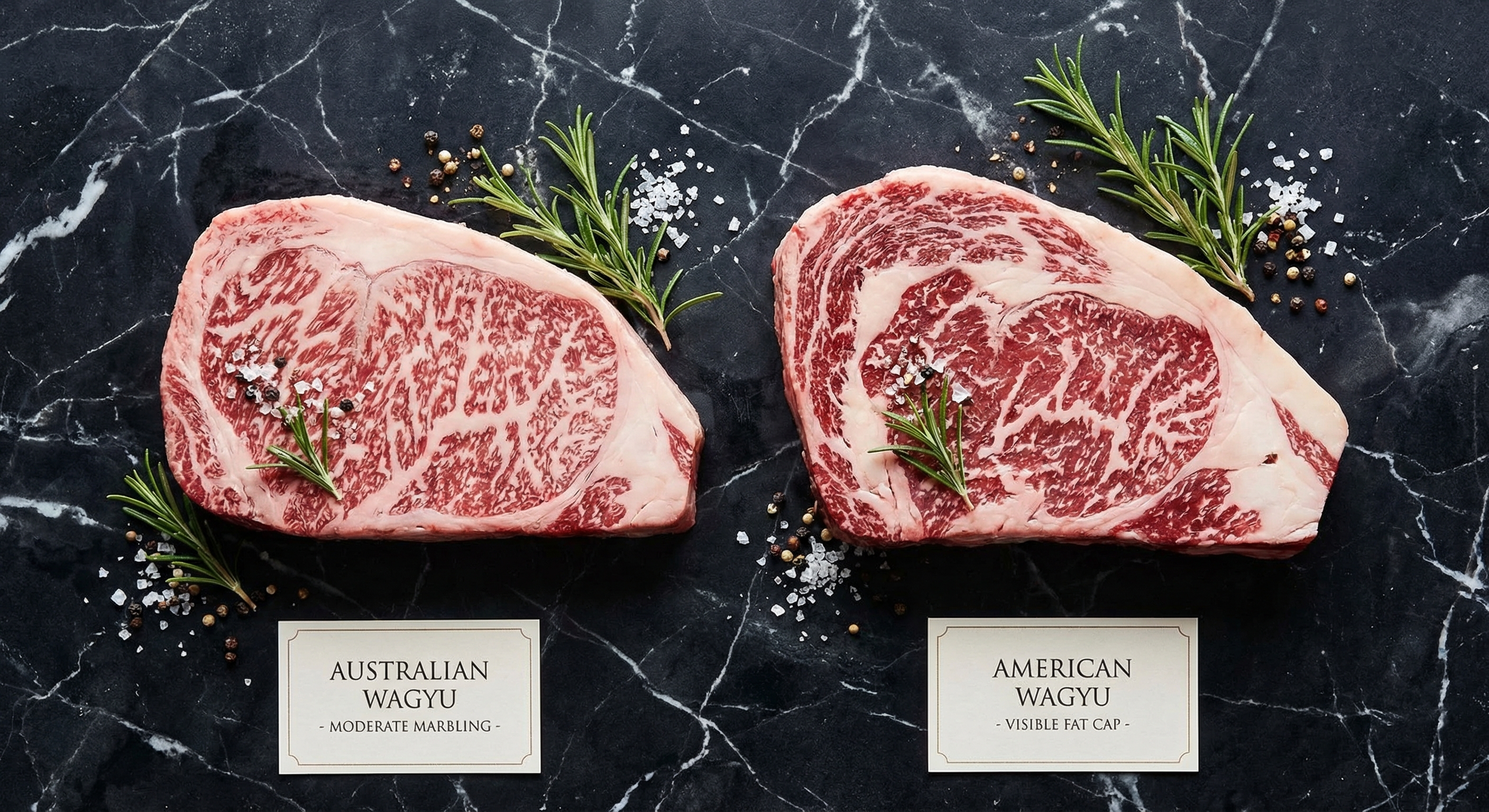
Australian wagyu and American wagyu share a common ancestor — Japanese wagyu genetics crossed with Western breeds — but that is where the similarities end. Different grading systems, feeding programs, regulatory environments, and breeding philosophies produce two distinct products at the butcher counter.
If you have tried one and assumed the other is identical, you are in for a surprise. This guide breaks down every meaningful difference so you can make an informed choice.
Breeding and Genetics: Crossbreeding Approaches
Australia and the United States both imported Japanese wagyu genetics — primarily Japanese Black (Kuroge Washu) — but their breeding programs evolved differently.
Australian wagyu tends to use higher-percentage wagyu genetics. Many Australian producers raise F3 and F4 crosses (75–93% wagyu blood), and a growing number offer fullblood (100% Japanese genetics) programs. The Australian Wagyu Association maintains a strict grading and registration system that tracks bloodline percentages with precision.
American wagyu is typically an F1 cross (50% wagyu, 50% Angus) or occasionally F2 (75% wagyu). The American Wagyu Association recognizes animals from 50% wagyu genetics and up. Most commercial American wagyu on the market is F1, which gives you wagyu marbling characteristics blended with the beefy flavor profile of Angus.
This genetics gap means Australian wagyu generally achieves higher marbling scores than American wagyu at the same grade level, because more wagyu blood equals more intramuscular fat potential.
Grading Systems: AUS-MEAT vs USDA
This is the single biggest source of confusion when comparing these two products. They are graded on completely different scales.
Australian wagyu uses the AUS-MEAT marble score system, which runs from 0 to 9+. This scale was specifically designed for wagyu and correlates closely with Japan’s BMS (Beef Marbling Standard) scale:
- AUS-MEAT 4–5: Moderate marbling, comparable to USDA high Prime
- AUS-MEAT 6–7: Heavy marbling, approaching Japanese A4
- AUS-MEAT 8–9+: Extreme marbling, comparable to Japanese A5 (BMS 8–12)
American wagyu uses the USDA grading system — the same scale applied to all American beef. USDA grades are Select, Choice, and Prime, with Prime being the highest at roughly BMS 4–5. There is no standard USDA grade above Prime, which means an exceptionally marbled American wagyu steak and a moderately marbled one can both carry the same “Prime” label.
Some American producers use the Japanese BMS scale voluntarily, but it is not required or regulated. When you see an American wagyu steak labeled “BMS 8,” that is a producer claim, not a government-verified grade.
Bottom line: Australian wagyu grading gives you a much more precise picture of what you are actually buying.
Feeding Programs and Finishing
How long and what these cattle eat before processing directly impacts flavor, marbling, and texture.
Australian wagyu producers are known for extended grain-finishing programs. Many feed for 350–600+ days on grain, which is necessary to develop the deep intramuscular fat that earns high AUS-MEAT marble scores. Some premium Australian programs run 600+ day feeding regimens that rival Japanese standards.
American wagyu typically finishes on grain for 180–300 days. This is longer than standard American beef (120–150 days) but shorter than most Australian wagyu programs. The shorter feeding period contributes to the generally lower marbling scores in American wagyu.
Australia also benefits from vast rangeland and a temperate climate that allows extended grazing before feedlot finishing. Many Australian wagyu spend 12–18 months on pasture before entering grain programs, which develops complex flavor compounds in the meat that pure grain-feeding cannot replicate.
Flavor Profile: What You Taste
This is where the rubber meets the road for most buyers.
Australian wagyu at the higher marble scores (7+) delivers rich, buttery flavor with a pronounced sweetness from the intramuscular fat. The extended grain feeding develops clean fat flavor without the gamey or grassy notes you might find in shorter-fed products. At AUS-MEAT 9+, the eating experience approaches Japanese A5 — melt-in-your-mouth texture with umami depth.
American wagyu (especially F1 Angus-cross) delivers a flavor profile that splits the difference between traditional American beef and Japanese wagyu. You get the robust, beefy flavor of Angus combined with enhanced marbling and tenderness from the wagyu genetics. It is a familiar steak experience elevated several notches, rather than the entirely different eating experience of high-grade Australian or Japanese wagyu.
Neither is objectively better. If you want something that tastes like the best steak you have ever had, American wagyu delivers. If you want something that challenges your definition of what beef can be, high-scoring Australian wagyu pushes you closer to that threshold.
Price Comparison: What You Pay
Price varies significantly by cut, grade, and producer, but general market ranges give useful context:
- American wagyu ribeye (F1, USDA Prime+): $40–$80 per pound
- Australian wagyu ribeye (AUS-MEAT 6–7): $60–$120 per pound
- Australian wagyu ribeye (AUS-MEAT 9+): $100–$200+ per pound
American wagyu consistently lands at a lower price point because the F1 genetics and shorter feeding programs cost less to produce. Australian wagyu commands a premium because the higher genetics percentage and longer feeding programs are more expensive — and the resulting product grades higher.
For most home cooks, American wagyu represents the best value entry point into wagyu. For special occasions or when you want the full wagyu experience without the A5 price tag, Australian wagyu at AUS-MEAT 7–8 hits a sweet spot of exceptional quality at a more accessible price than Japanese imports.
Availability and Sourcing
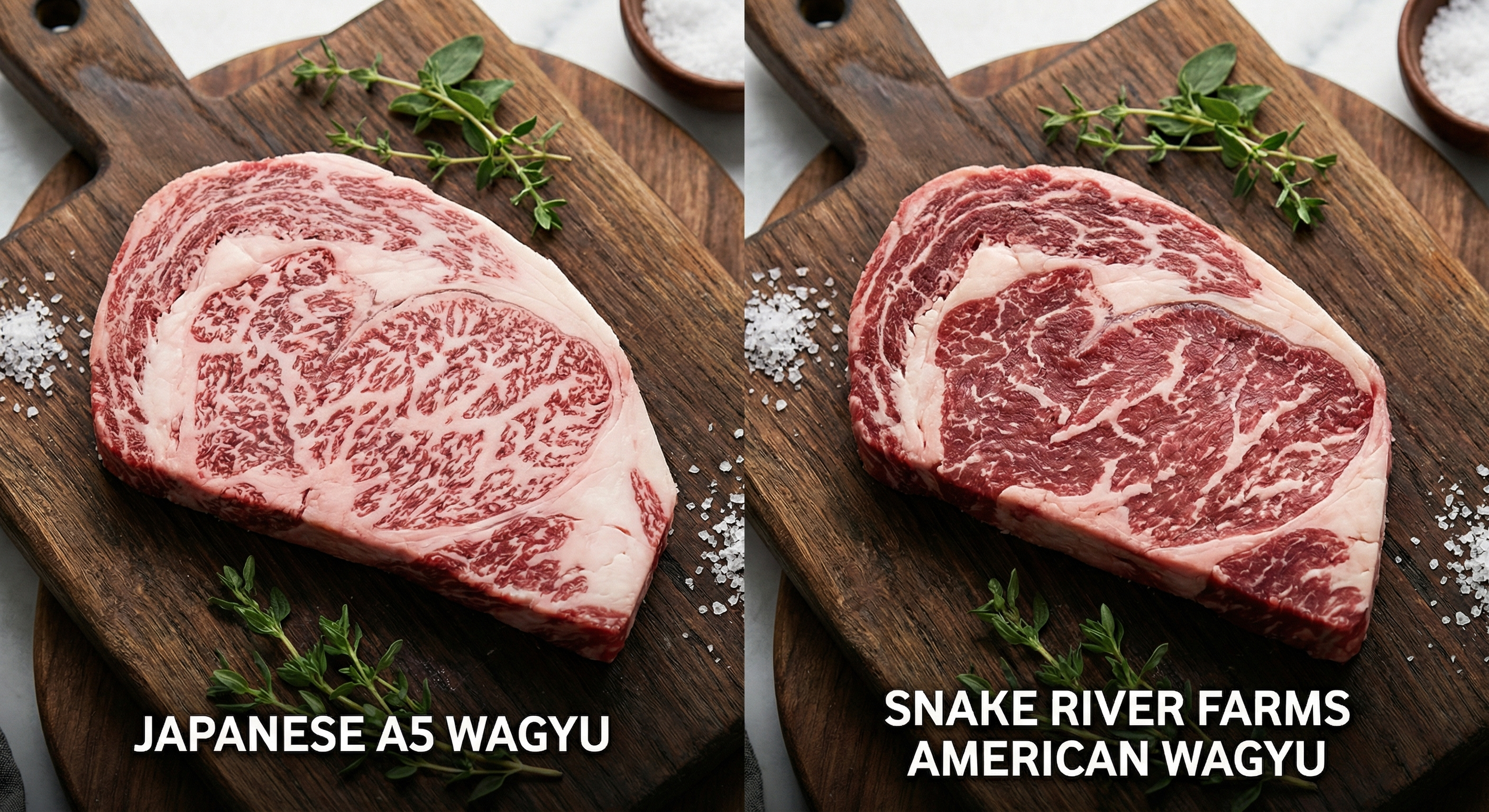
American wagyu is widely available in the United States through online retailers, specialty butchers, and even some high-end grocery chains. Brands like Snake River Farms, Mishima Reserve, and Double 8 Cattle Company have built strong distribution networks. If you live in the U.S., American wagyu is the easiest premium wagyu to source.
Australian wagyu requires a bit more effort to find in the American market. It is imported frozen (Australian law requires this for export beef), which means you are buying previously frozen product. That said, modern flash-freezing preserves quality exceptionally well. Major importers and online retailers like The Meatery stock a range of Australian wagyu cuts and grades.
If freshness is a priority and you are located in the U.S., American wagyu has the advantage. It ships fresh, never frozen, directly from domestic producers.
Which Should You Choose?
Your choice depends on what you value most:
- Choose American wagyu if: You want enhanced marbling and tenderness while keeping that classic beefy steak flavor. Best for grilling, pan-searing, and anywhere you would use a premium steak. Great everyday luxury.
- Choose Australian wagyu if: You want higher marbling scores, a more refined eating experience, and transparent grading that tells you exactly what you are getting. Best for special occasions and when you want to push closer to the Japanese wagyu experience.
Both are excellent products. The real mistake is buying either one without understanding what grade and genetics you are getting. A high-scoring Australian wagyu is a fundamentally different product from a basic F1 American wagyu — and the price should reflect that.