BMS Scale Guide: Understanding Beef Marbling Scores
The complete guide to Beef Marbling Score — what each level looks like, how it affects taste, and what to expect at each BMS.
What is BMS?
Beef Marbling Score (BMS) measures the amount and distribution of intramuscular fat (marbling) in beef. Developed by the Japanese Meat Grading Association, it's the gold standard for evaluating wagyu quality.
The BMS Scale
BMS 1-2: Minimal Marbling
- Virtually no visible marbling
- Lean, firm texture
- Standard commodity beef
- Not sold as wagyu
BMS 3-4: Light Marbling
- Some visible marbling
- Comparable to USDA Choice
- Good flavor, firmer texture
- Entry-level "wagyu" in some markets
BMS 5-6: Moderate Marbling
- Clear marbling throughout
- Comparable to high USDA Prime
- Rich flavor, tender texture
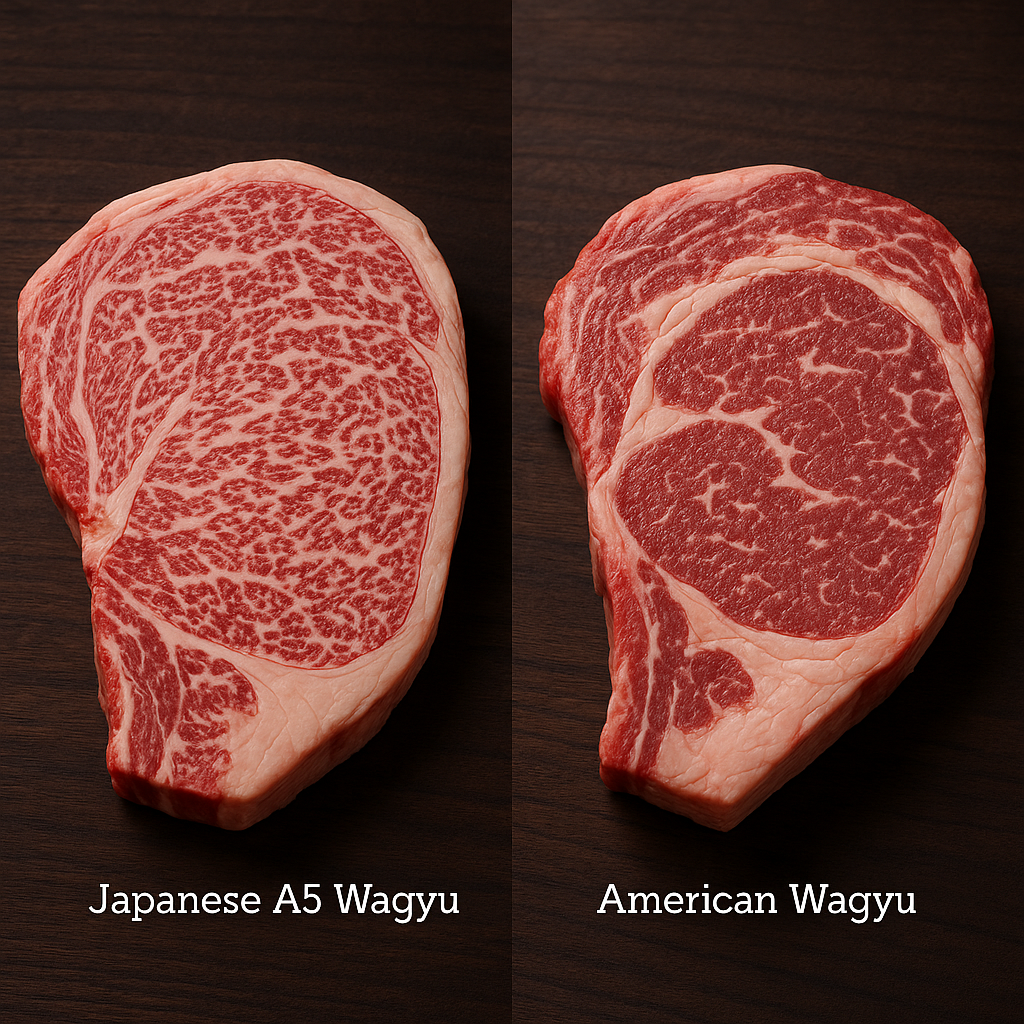
- Typical good American Wagyu
BMS 7-8: Abundant Marbling
- Dense, well-distributed marbling
- Significantly above Prime
- Very rich, buttery flavor
- Entry-level Japanese A5
BMS 9-10: Exceptional Marbling
- Intense marbling throughout
- Snowflake patterns visible
- Extremely rich and tender
- Premium A5 territory
BMS 11-12: Extreme Marbling
- Maximum achievable marbling
- Fat exceeds 50% of meat
- Almost foie gras-like richness
- Rare, top-tier A5
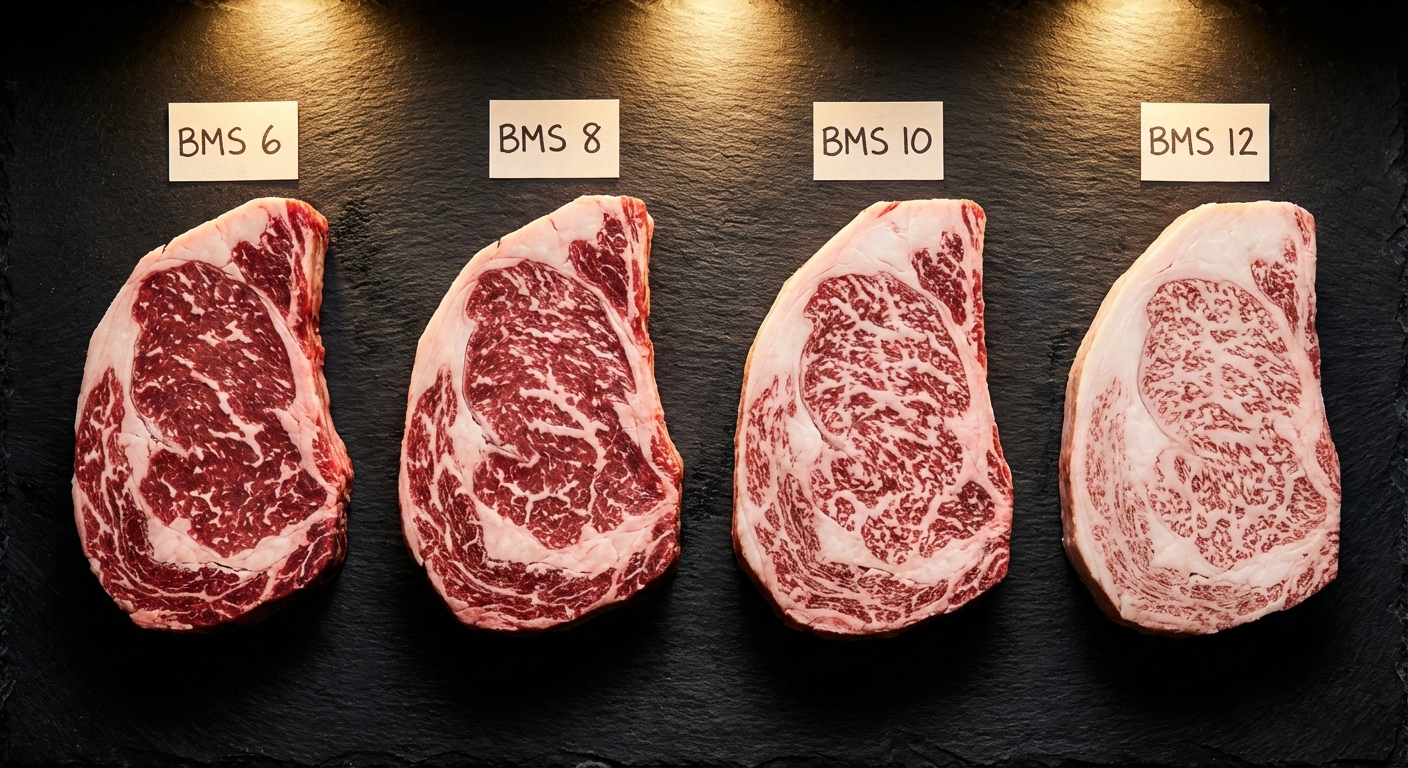
Visual Reference
At BMS 3-4, you see distinct streaks of white fat against red meat.
At BMS 6-7, the white and red start to blend, with marbling distributed throughout.
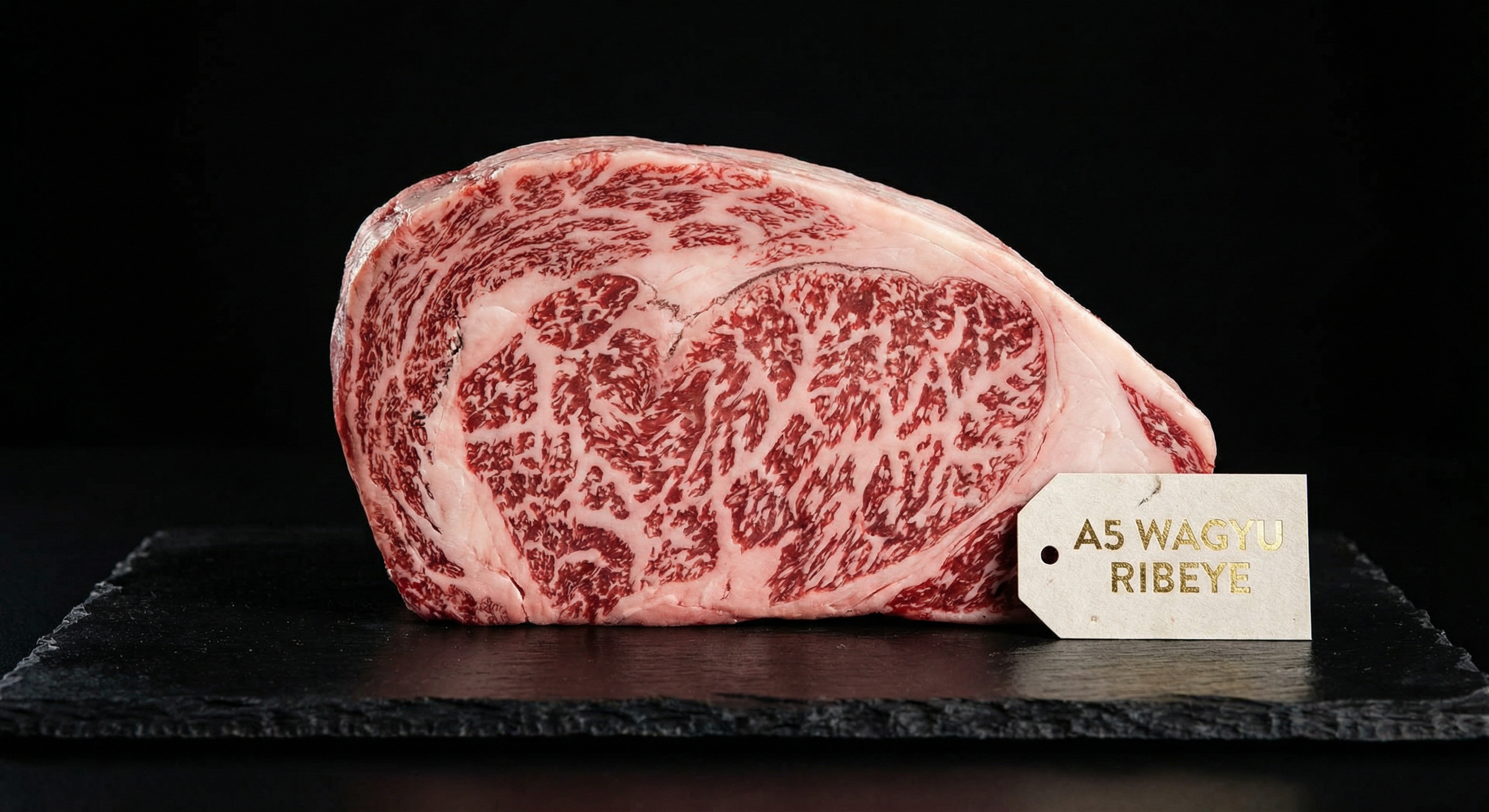
At BMS 9-10, it becomes difficult to see where meat ends and fat begins — the characteristic "snowflake" pattern.
At BMS 11-12, the meat appears almost white with pink, the fat so finely distributed it looks like cream.
How BMS Affects Eating
| BMS Range | Texture | Flavor | Best Portion |
| 3-4 | Firm, some chew | Beefy, moderate richness | 12-16 oz |
| 5-6 | Tender | Rich, satisfying | 10-14 oz |
| 7-8 | Very tender | Very rich, buttery notes | 6-10 oz |
| 9-10 | Melt-in-mouth | Intense, sweet | 3-6 oz |
| 11-12 | Dissolves | Overwhelming richness | 2-4 oz |
| BMS | Price Multiple (vs Prime) |
| 5-6 | 1.5-2x |
| 7-8 | 2-3x |
| 9-10 | 4-6x |
| 11-12 | 6-10x |
The jump from BMS 8 to BMS 10 often doubles the price. Whether that's worth it depends on your palate and occasion.
Common Misconceptions
"Higher BMS is always better" Not necessarily. BMS 11-12 is intense — many people find it overwhelming. BMS 7-8 offers the best balance of richness and familiar "steak" qualities for most diners.
"A5 means BMS 10+" No — A5 spans BMS 8-12. Entry-level A5 (BMS 8) is significantly different from top-tier A5 (BMS 12).
"I can't taste the difference between BMS levels" You absolutely can, especially between ranges (5-6 vs 8-9). Within 1-2 BMS points, differences are subtle but detectable to experienced palates.
My Recommendation
- BMS 5-6: Great value, excellent for steak lovers
- BMS 7-8: Sweet spot for special occasions
- BMS 9-10: True luxury experience
- BMS 11-12: Bucket list, once-a-year indulgence
Don't chase maximum BMS unless you truly appreciate extreme richness. Many steak lovers prefer BMS 7-8, which offers exceptional marbling without the overwhelming fat content. Trusted retailers like The Meatery list BMS scores on every product to help you choose the right level.