How to Verify Authentic Wagyu: Expert Guide to Avoiding Fraud
The wagyu market is flooded with counterfeits and misleading labels. Learn how to verify authentic Japanese wagyu, spot fake Kobe beef, and identify red flags when buying online or dining out.
How to Verify Authentic Wagyu: Expert Guide to Avoiding Fraud
After twenty years in the wagyu industry, I've witnessed every form of fraud imaginable. "Kobe beef" that came from Idaho. "A5 wagyu" with marbling scores that wouldn't qualify as A3. Crossbred cattle marketed as Japanese purebred. The wagyu market is a minefield of counterfeits, half-truths, and outright lies.
This makes me angry — not just because it defrauds consumers, but because it undermines the work of legitimate Japanese producers who have spent generations perfecting their craft. When someone pays premium prices for fake wagyu, they're funding an industry built on deception while denying support to authentic producers.
But the good news is that authentic Japanese wagyu has robust verification systems in place. If you know what to look for, it's actually quite difficult to be fooled. Let me show you exactly how to verify what you're buying.
Understanding JMGA Certification
The Japan Meat Grading Association (JMGA) is the only official grading authority for Japanese beef. Every single piece of authentic Japanese wagyu that enters commercial trade has been graded by a JMGA-certified grader at an authorized slaughterhouse.
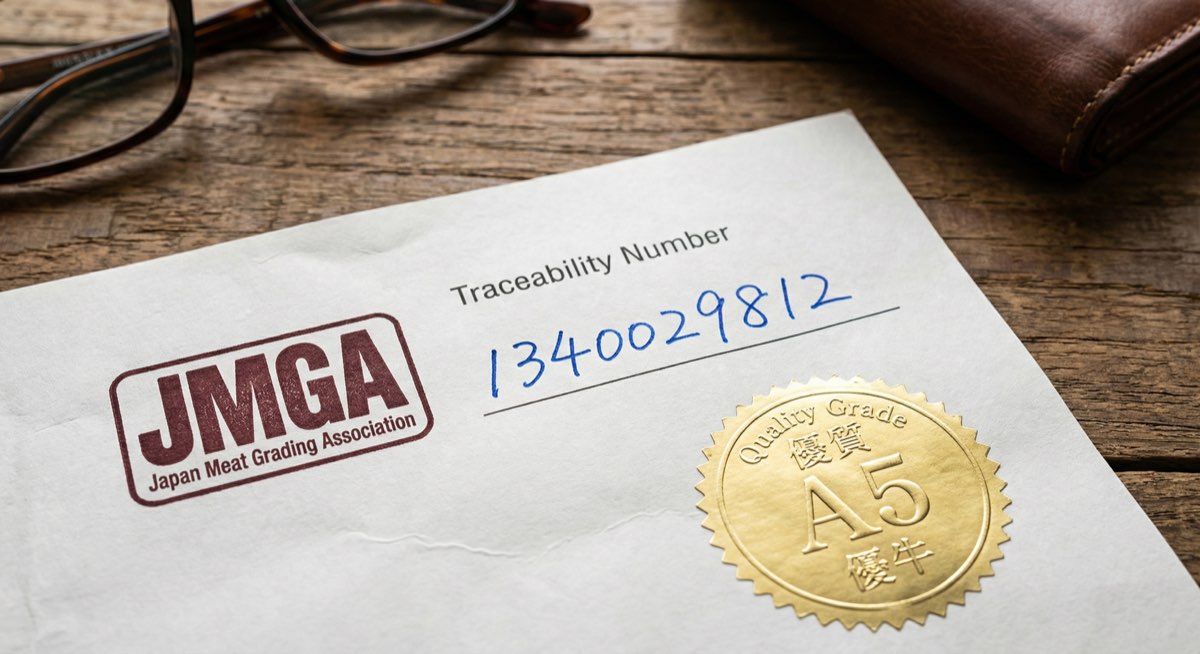
What the JMGA Certificate Contains
An authentic JMGA certificate includes:
- 10-digit Individual Identification Number — Japan's mandatory cattle traceability code
- Yield Grade — A, B, or C (A being the highest)
- Meat Quality Grade — 1 through 5 (5 being the highest)
- BMS (Beef Marbling Score) — Specific score from 1-12
- Prefecture of origin — Where the cattle was raised
- Slaughter date and facility
- Official JMGA stamp and grader signature
- Sometimes a nose print or DNA registration number for high-value cattle
The certificate is printed on security paper with watermarks and anti-counterfeiting features. High-resolution photos of the ribeye cross-section are often included, showing the exact marbling pattern that was graded.
How to Verify a Certificate is Real
Counterfeit certificates exist, so don't assume a piece of paper proves authenticity. Here's how to verify:
- Check the 10-digit number against the official database at https://www.id.nlbc.go.jp/top.html (National Livestock Breeding Center). This database is maintained by the Japanese government and tracks every registered cattle.
- Verify the details match — the database will show birthdate, sex, breed, farm location, and movement history. These should align with what's on the certificate.
- Look for security features — authentic certificates have holographic elements, watermarks, and micro-printing that's difficult to replicate.
- Cross-check the BMS with the grade — A5 grade requires BMS 8-12. If a certificate claims A5 with BMS 6, it's fraudulent.
Reputable importers and retailers will provide high-resolution scans or photos of certificates. If a seller refuses to share the certificate or only provides low-resolution images where the details can't be read, walk away.
The 10-Digit Traceability System: Nose-to-Tail Verification
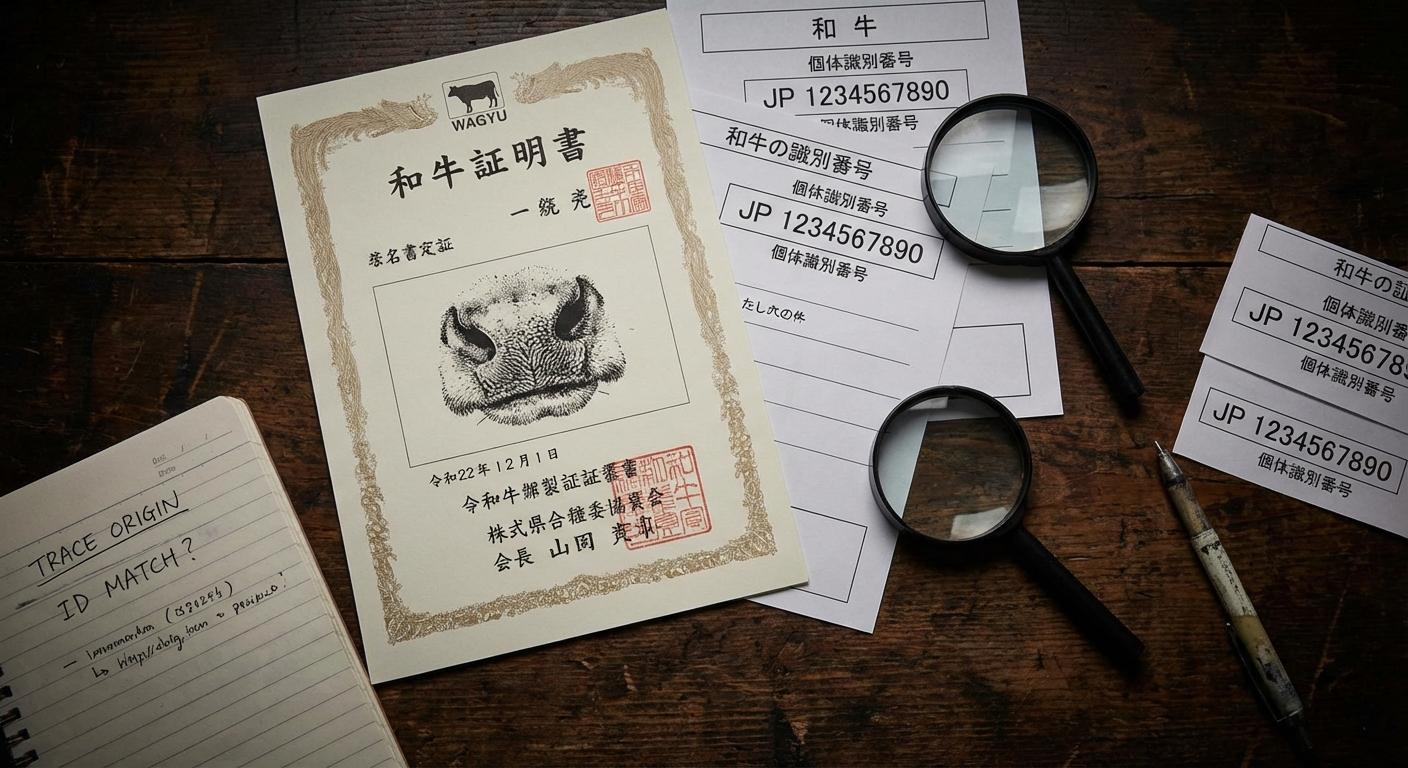
Japan's cattle traceability system is the most rigorous in the world. Since 2004, every cattle born or imported into Japan must have a 10-digit Individual Identification Number recorded at birth and tracked throughout its entire life.
What the 10-Digit Number Reveals
When you look up a traceability number on the NLBC database, you get:
- Birthdate and birthplace — exact farm location and date of birth
- Breed and gender — confirmation of Japanese Black, Brown, etc.
- Movement history — every time the animal changed locations, with dates
- Parentage information — sometimes includes sire and dam registration numbers
- Slaughter date and facility
- For premium branded beef (Kobe, Matsusaka, etc.), brand certification status
This system makes it virtually impossible to pass off non-Japanese beef as Japanese wagyu, if you verify the number. The problem is that most consumers never check.
How to Use the Traceability Database
The database is in Japanese, but it's navigable:
- Go to https://www.id.nlbc.go.jp/top.html
- Enter the 10-digit number in the search field (個体識別番号)
- The results page shows birth info, movement history, and basic details
- For English-speaking users, Google Translate can auto-translate the page
If you're buying Japanese wagyu and the seller can't provide this number, you should not proceed. There is no legitimate reason for a Japanese beef product to lack this number.
QR Codes: Modern Authentication
Many Japanese wagyu products now include QR codes on packaging or certificates. These codes typically link to:
- JMGA verification portal showing grading details
- Producer's own authentication system with photos and documentation
- Prefecture branding association websites for premium branded beef
Scanning the QR code should immediately display verifiable information that matches the product. Some systems even show photos of the actual carcass at grading, allowing you to visually confirm the marbling matches what you received.
QR authentication is harder to fake than printed certificates because it requires maintaining a functional backend database. However, always verify the URL you're directed to — it should be an official domain (ending in .go.jp for government sites, or legitimate producer domains).
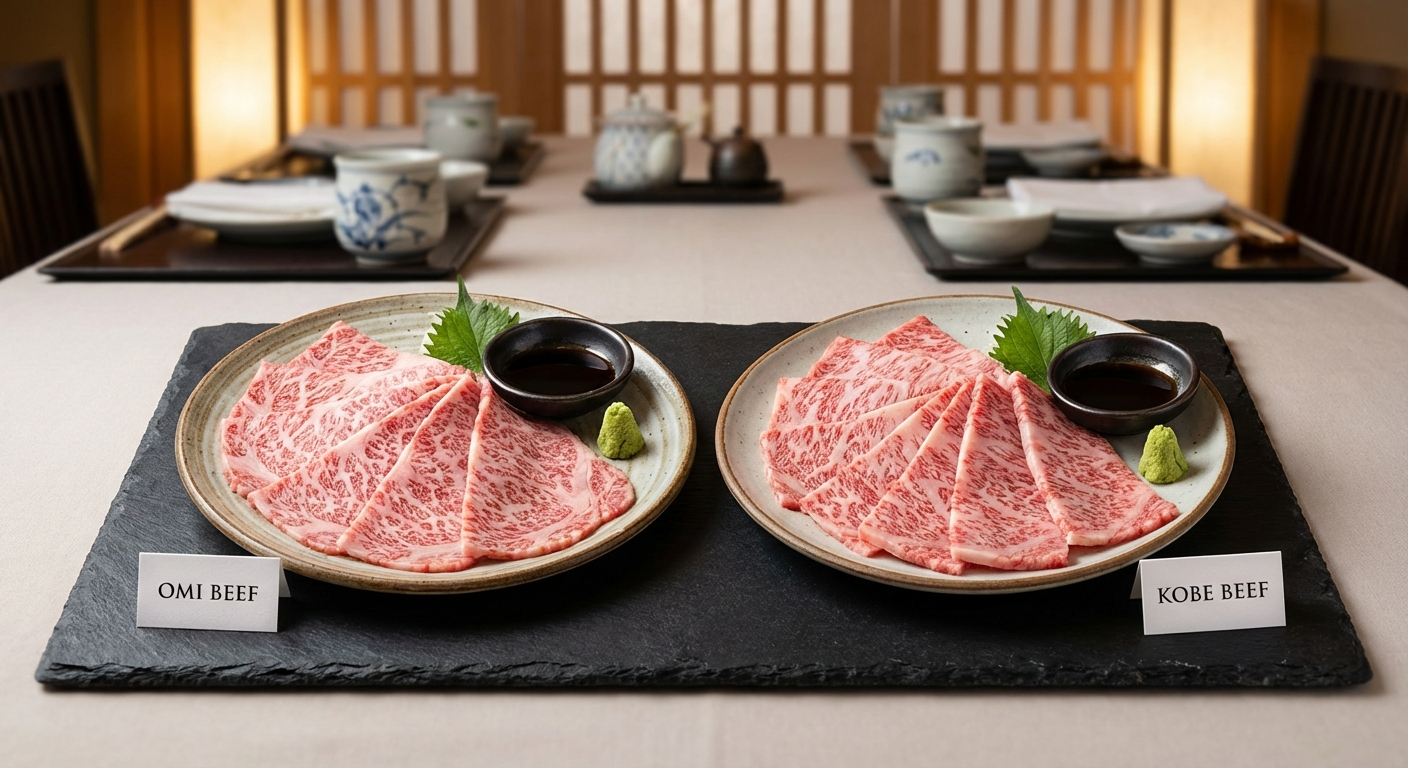
The Fake Kobe Problem in the United States
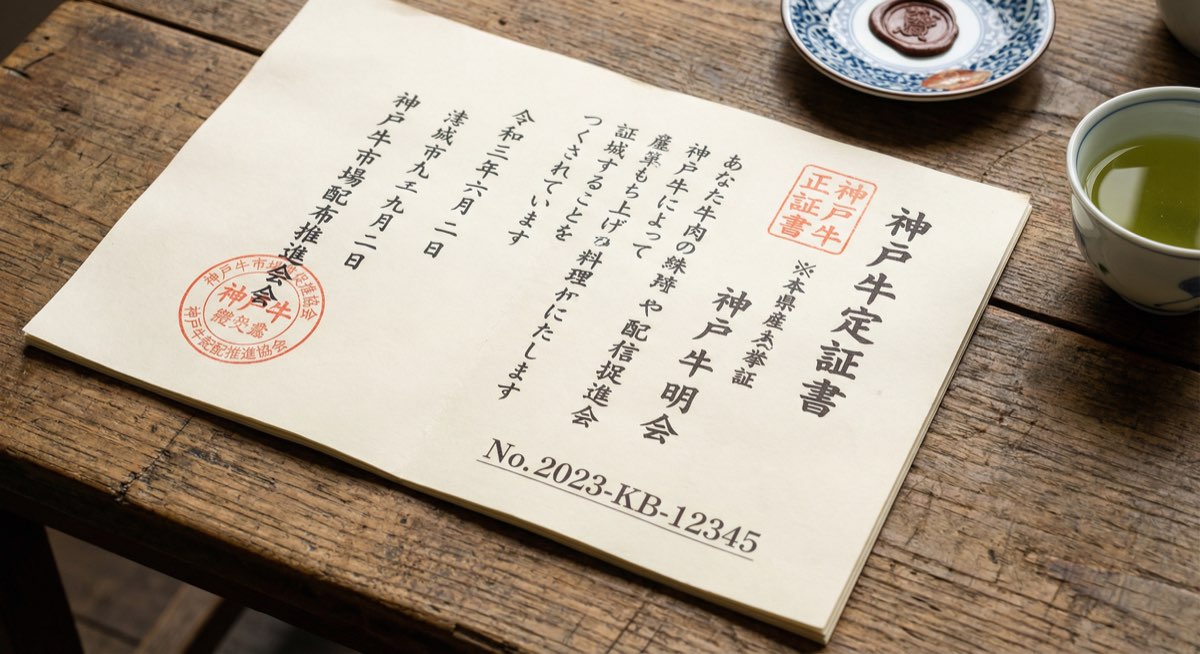
This issue makes my blood boil because it's so pervasive and so blatant. Until 2012, it was literally impossible to get authentic Kobe beef in the United States because Japan had banned beef exports following BSE concerns. Yet hundreds of American restaurants served "Kobe beef" during that period. All of it was fake.
Even now, with legitimate Kobe imports available, the fraud continues. I regularly see "Kobe burgers," "Kobe sliders," and "Kobe beef" at prices that would be impossible for real Kobe.
How to Verify Real Kobe Beef
Authentic Kobe beef must meet extraordinarily strict requirements:
- Born, raised, and slaughtered in Hyogo Prefecture
- Pure Tajima-gyu lineage (specific Japanese Black bloodline)
- Yield grade A or B
- Meat quality grade 4 or 5
- BMS 6 or higher (note: higher than standard A5 minimum)
- Gross carcass weight of 470 kg or less
Only beef meeting ALL these criteria can be labeled "Kobe." The Kobe Beef Marketing & Distribution Promotion Association maintains a registry of every authentic Kobe carcass and authorizes specific retailers and restaurants.
To verify Kobe beef:
- Ask for the 10-digit certification number
- Check it on the official Kobe Beef Marketing Association website: https://www.kobe-niku.jp/en/
- Verify the retailer/restaurant is on the list of authorized sellers (there are only about 9 authorized restaurants in the entire US as of 2024)
- Expect to pay $200-300+ per pound for authentic Kobe — if it's significantly cheaper, it's not real
If a menu lists "Kobe burgers," "American Kobe," or "Kobe-style beef," it is categorically not authentic Kobe. Real Kobe is never ground for burgers due to its extreme value. "American Kobe" is a meaningless marketing term — there is no such thing.
What to Look For in Restaurants
Restaurant fraud is rampant because most diners don't question what they're served. Here's how to protect yourself:
Questions to Ask
- "Can you show me the certificate for this wagyu?" — Legitimate restaurants keep certificates on file and can produce them on request.
- "What's the 10-digit traceability number?" — They should be able to provide this immediately.
- "What prefecture is this from?" — "Japan" is not sufficient. Authentic wagyu has a specific prefecture.
- "What's the BMS score?" — If they say "it's A5" without specifying BMS, they might not know what they're serving.
- "Who's your importer?" — Legitimate restaurants work with known importers who specialize in Japanese beef.
Red Flags in Restaurants
- Generic "wagyu" with no origin details on the menu
- Wagyu burgers priced under $30 — likely American crossbred or not wagyu at all
- "Kobe" anything under $100 per serving — mathematically impossible for real Kobe
- Servers who can't answer basic questions about sourcing
- Restaurants that refuse to show documentation
- Portion sizes over 6-8 oz for Japanese A5 — suggests it's not real A5 (too rich for large portions)
What Authentic Service Looks Like
When a restaurant serves real Japanese wagyu, they're proud of it. They'll volunteer the prefecture, describe the grading, explain the BMS score, and often have certificates displayed or available. The staff is trained on the product because authentic wagyu is a significant investment and marketing point.
If a restaurant treats "wagyu" as just another menu item with no special presentation or knowledge, be skeptical.
Online Buying Red Flags
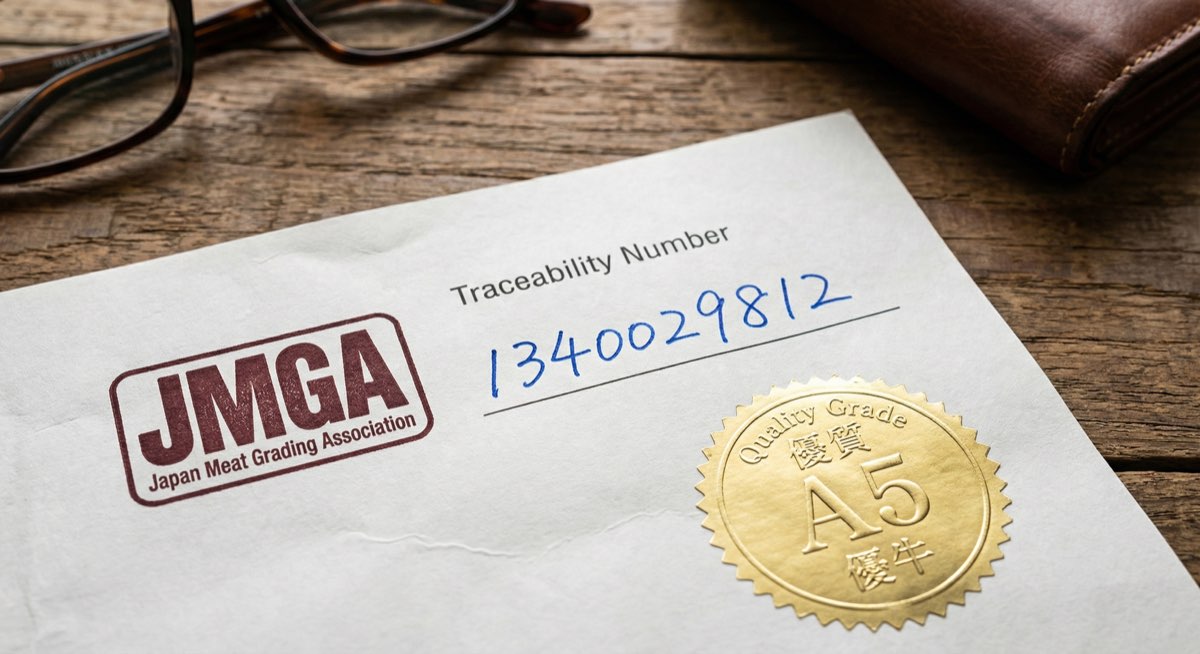
The internet has made authentic wagyu more accessible, but it's also created opportunities for fraud. Here's what to watch for when buying online:
Major Red Flags
- No certificate images — If they won't show you the actual JMGA certificate, don't buy
- Vague origin claims — "Imported from Japan" without prefecture specifics
- "Wagyu-style" or "Kobe-style" — These terms mean it's NOT authentic
- Prices significantly below market — A5 ribeye under $100/lb is suspicious
- Stock photos only — No photos of actual product or certificates
- No traceability numbers provided
- Seller can't answer technical questions about BMS, prefecture, or grading
- Mixed reviews mentioning quality inconsistency — suggests they're sourcing from multiple places or not actually selling what they claim
- "A5 Wagyu" without BMS specification — BMS 8 and BMS 12 are both A5 but dramatically different
What Legitimate Sellers Provide
Reputable online wagyu retailers offer:
- High-resolution certificate photos for every product
- 10-digit traceability numbers listed in product descriptions
- Specific prefecture and BMS information
- Clear genetics information (for American/Australian: Fullblood vs F1 percentage)
- Import documentation and USDA facility approval numbers
- Transparent pricing that aligns with current market rates
- Detailed product descriptions including cut specifications, aging, and handling
- Responsive customer service that can answer technical questions
Trusted online sources like Japanese A5 Wagyu at The Meatery provide complete documentation, traceability, and transparent grading for every product.
Certified Importers and the Supply Chain
Understanding the import process helps you evaluate sellers. Authentic Japanese wagyu must be:
- Slaughtered at a USDA-approved Japanese facility — only certain Japanese slaughterhouses meet US import requirements
- Shipped frozen to the US — maintaining cold chain integrity throughout
- Cleared through USDA inspection at port of entry
- Distributed through licensed importers and distributors
Major legitimate importers include:
- Crowd Cow — Direct-to-consumer with extensive Japanese sourcing
- Holy Grail Steak Company — Specializes in premium Japanese beef
- The Meatery — Offers verified Japanese A5 with full traceability
- Morgan Ranch — Long-established importer to restaurants and retailers
When buying from a retailer, you can ask who their importer is. Legitimate retailers will name their source. If they're evasive or claim to "import directly" without providing facility documentation, be suspicious.
American and Australian Wagyu: Different Verification
The verification process for American and Australian wagyu is different because these countries don't have the same mandatory traceability systems.
American Wagyu
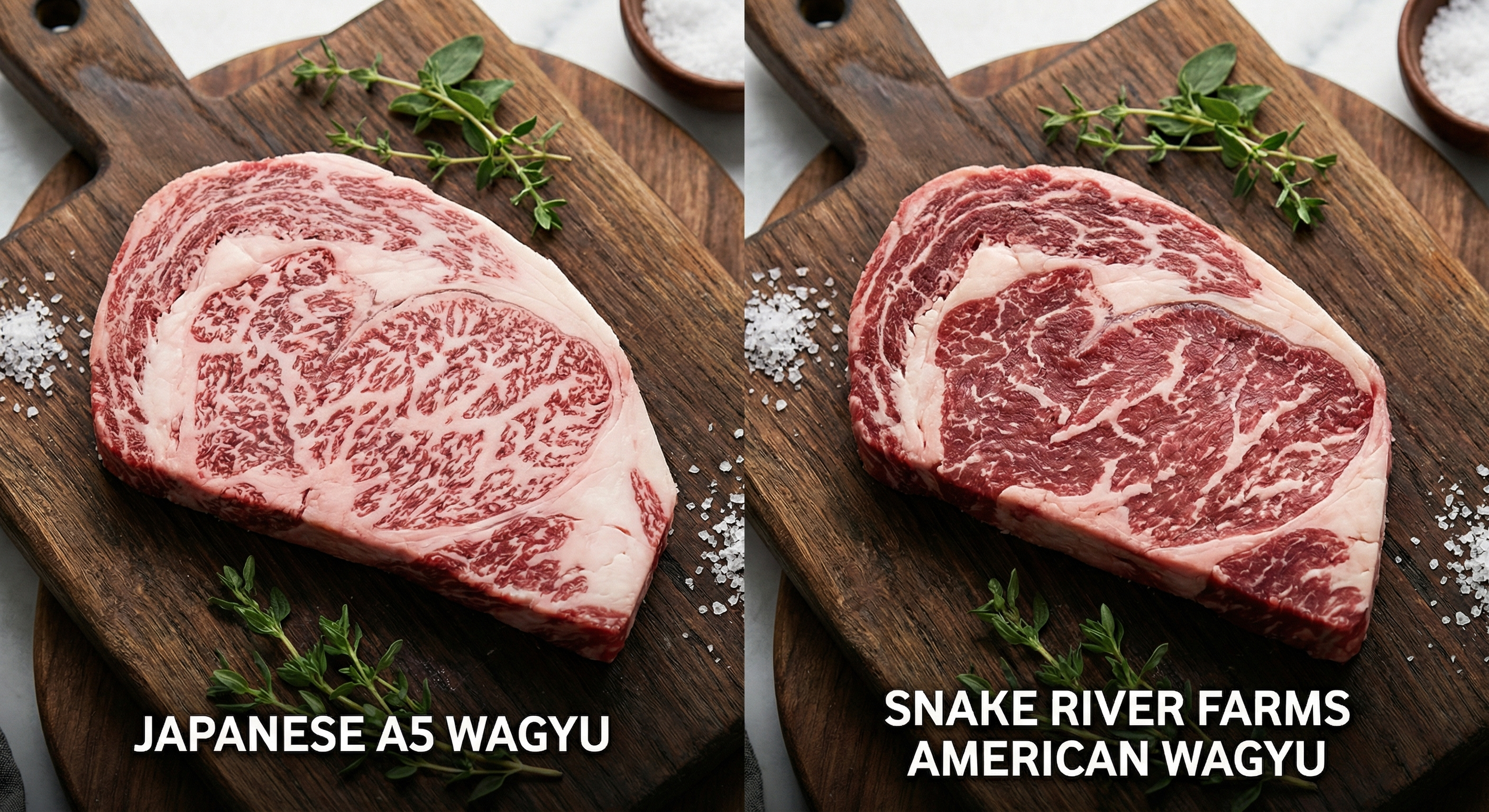
American wagyu has no regulated definition or grading. Any cattle with any percentage of wagyu genetics can be called "wagyu." To verify quality:
- Ask for specific genetics — Fullblood (100% wagyu), F1 (50%), F2 (75%), etc.
- Request producer information — Reputable producers include Snake River Farms, Lone Mountain, Mishima Reserve
- Look for internal grading systems — Some producers use their own BMS-equivalent scoring
- Verify USDA Prime or higher — At minimum, American wagyu should grade USDA Prime
- Ask about lineage — Authentic American wagyu uses registered Japanese genetics
Australian Wagyu
Australian wagyu uses the MSA (Meat Standards Australia) grading system, which is more standardized than American wagyu but less rigorous than Japanese. To verify:
- Request MSA marble score — Should be 4-9+ for premium wagyu
- Clarify Fullblood vs crossbred — Fullblood is 100% Japanese genetics, crossbred is typically F1 or F2
- Ask about feeding program — Premium Australian wagyu is grain-fed 300-500+ days
- Verify producer name — Legitimate producers include Blackmore, Mayura Station, Jack's Creek, Westholme
- Look for Halal certification if relevant — Australia has extensive Halal programs that add accountability
My Final Recommendations
After two decades in this industry, here's my honest advice:
For Japanese A5: Never buy without seeing the JMGA certificate and verifying the 10-digit number. If a seller can't or won't provide this, they're either incompetent or fraudulent. The documentation exists for every piece of authentic Japanese beef — there are no exceptions.
For Kobe specifically: Assume it's fake unless proven otherwise. Real Kobe is extraordinarily rare and expensive. If you're not paying $200-300+/lb and the seller can't provide Kobe Marketing Association verification, it's not real. "American Kobe" and "Kobe-style" are marketing lies.
For restaurants: Ask questions. Legitimate establishments welcome educated customers who care about authenticity. If the staff becomes defensive or evasive when you ask about sourcing, that tells you everything you need to know.
For online purchases: Only buy from retailers who provide complete documentation. Read reviews specifically looking for mentions of authenticity and quality consistency. Verify traceability numbers yourself — don't assume the seller has done it.
For American/Australian wagyu: Genetics matter more than marketing. A well-bred American Fullblood from a known producer like Snake River Farms is superior to mystery "wagyu" at a lower price. Australian Fullblood at MSA 9+ competes with mid-tier Japanese A5.
The wagyu market rewards careful buyers and punishes those who trust marketing over verification. Do your homework, ask questions, and demand proof. Authentic wagyu is worth the premium — but only when it's actually authentic.
When you're ready to purchase verified, fully traceable wagyu, explore The Meatery's Japanese A5 Wagyu collection, where every product includes complete certification and traceability documentation.