Japanese A5 Wagyu vs Australian Wagyu: The Complete Comparison
The ultimate showdown between the two titans of the wagyu world. We compare Japanese A5 and Australian Wagyu on marbling, flavor, texture, and value.
Japanese A5 Wagyu vs Australian Wagyu: The Complete Comparison
If you're stepping into the world of premium beef, you'll inevitably face a difficult choice: Japanese A5 Wagyu or Australian Wagyu?
Both represent the pinnacle of steak experiences. Both command premium prices. But they offer distinctly different eating experiences.
As the Content Lead at The Meatery, I've guided thousands of customers through this exact decision. In this guide, we'll break down the differences in genetics, grading, flavor, and texture so you can choose the right steak for your palate.
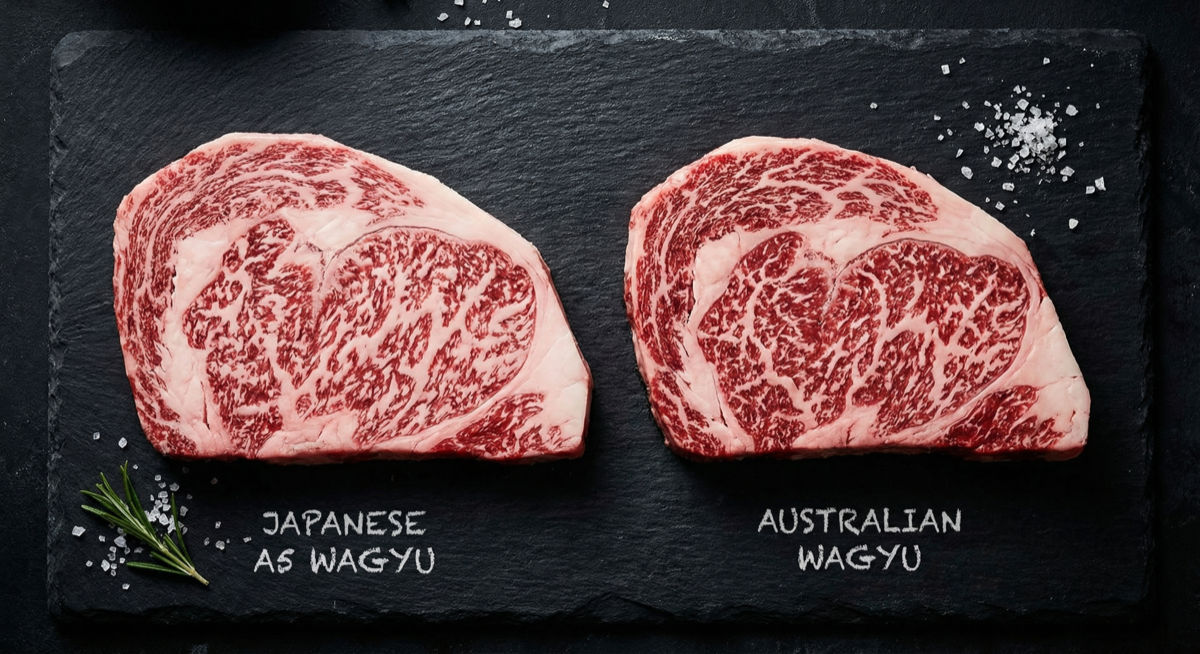
The Core Difference: Genetics and Philosophy
Japanese Wagyu: The Pursuit of Perfection
In Japan, wagyu production is almost religious in its dedication to purity. "Wagyu" literally means "Japanese Cow," and the industry is strictly regulated.
- Genetics: Almost exclusively 100% Fullblood Kuroge Washu (Japanese Black).
- Philosophy: Maximum marbling (intramuscular fat) above all else.
- Feed: Long-fed (600+ days) on specialized grain diets to promote white, clean fat.
- Goal: Japanese A5 Wagyu is designed to melt in your mouth, literally.
Australian Wagyu: The Best of Both Worlds
Australia is the largest producer of wagyu outside Japan. They've taken Japanese genetics and adapted them to vast Australian grazing lands.
- Genetics: Ranges from Crossbred (F1: 50% Wagyu / 50% Angus) to 100% Fullblood.
- Philosophy: Balancing extreme marbling with meaty steak texture.
- Feed: often grass-fed for most of their lives, finished on grain for 300-500+ days.
- Goal: Australian Wagyu aims to be the best *steak* you've ever eaten—tender, but still meaty.
Grading Systems: BMS vs. MSA
Comparing grades can be confusing because the two countries use different scales. Here is the Rosetta Stone of wagyu grading.
Japanese Grading (JMGA)
Japan uses the Beef Marbling Standard (BMS), a scale from 1 to 12.
- A5: The highest yield and quality grade. Must be BMS 8-12.
- BMS 8-9: Excellent A5.
- BMS 10-12: The "Holy Grail" of beef. Extreme marbling.
Australian Grading (AUS-MEAT / MSA)
Australia uses the MSA Marbling Score, which ranges from 300 to 1100+.
- MSA 300-400: Equivalent to BMS 3-4 (Prime+).
- MSA 700-800: Equivalent to BMS 6-7 (High-end American Wagyu).
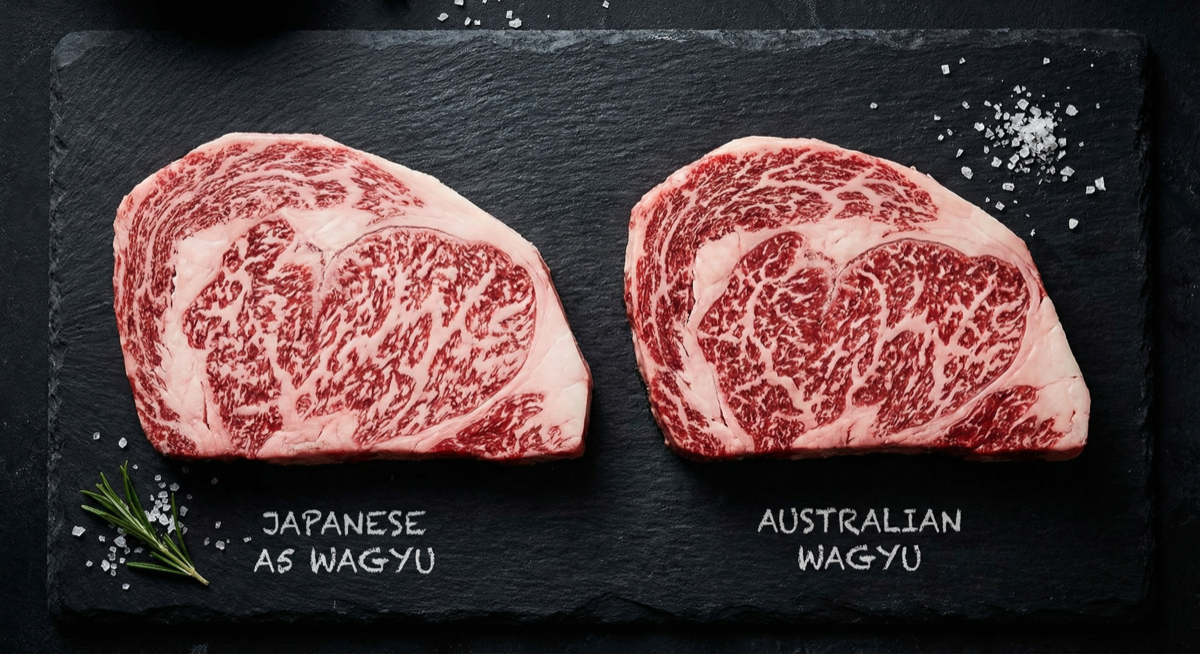
- MSA 900+ (9+): The top tier. Equivalent to Japanese A3-A5 (BMS 8-9).
Key Takeaway: A top-tier Australian Wagyu (MB 9+) is comparable to an entry-level Japanese A5 (BMS 8-9). However, Japan's BMS 10, 11, and 12 have no real equivalent in Australia—they are in a league of their own.
Flavor and Texture Profile
| Feature | Japanese A5 Wagyu | Australian Wagyu (Fullblood) |
|---|---|---|
| Texture | Melts like butter. Requires almost no chewing. | Extremely tender but retains a "steak-like" bite. |
| Flavor | Rich, sweet, umami-heavy. The fat is the main flavor carrier. | Beefier, robust flavor. A balance of meat and fat. |
| Richness | Overwhelmingly rich. Can be too much for some. | Rich but eatable as a full steak. |
| Fat Color | Snow white. | Creamy white to slightly yellow (if grass-fed longer). |
The "Umami" Factor
Japanese A5 is famous for its high concentration of oleic acid, which gives the fat a lower melting point (below human body temperature). This creates a unique sensation where the beef literally dissolves on your tongue, coating your mouth in savory, sweet umami.
Australian Wagyu, while incredibly marbled, typically has a slightly higher melting point. This means you get that initial burst of juice, but the structure holds up longer, satisfying the primal urge to chew meat.
Price Comparison
As you might expect, perfection comes at a price. Here is a general market comparison for 2026:
- Japanese A5 Ribeye: $150 - $250 per lb
- Australian Fullblood Wagyu (MB 9+): $100 - $160 per lb
- Australian Crossbred Wagyu (MB 6-7): $60 - $90 per lb
- American Wagyu (Gold Grade): $50 - $80 per lb
Value Pick: Australian Wagyu MB 6-7 offers incredible value. It eats significantly better than USDA Prime but costs half as much as Japanese A5.
When to Choose Which?
Choose Japanese A5 Wagyu If:
- It's a special occasion. Anniversaries, milestone birthdays, or impressing VIP guests.
- You want the "experience." You aren't just eating dinner; you are tasting a culinary masterpiece.
- You prefer small portions. Because it is so rich, 3-4 oz per person is plenty. It's often served shared, tapas-style.
- You love fatty foods. If you love foie gras or otoro tuna, this is for you.
Choose Australian Wagyu If:
- You want a whole steak. You plan to eat a full 12oz-16oz ribeye yourself.
- You prefer "beefy" flavor. You want that iron-rich steak taste, just elevated.
- You are grilling. While you can grill A5, it's risky (flare-ups). Australian Wagyu handles the grill beautifully.
- Budget is a factor. You want 90% of the wagyu experience for 60% of the price.
Cooking Differences
How you cook these meats is just as important as which one you buy.
Cooking Japanese A5
Pan-sear only. Use a stainless steel or cast-iron skillet. Cut the steak into small strips or cubes. Sear for 45-60 seconds per side. No oil needed—the fat will render instantly. Season simply with sea salt.
Cooking Australian Wagyu
Reverse sear or Grill. You can treat this more like a traditional steak. Reverse sear (oven then pan) works wonders to render the intramuscular fat without overcooking the meat. Finish with a hard sear for crust.
Final Verdict
There is no "better" beef—only the right beef for the moment.
If you want to have your mind blown by a texture you didn't know meat could possess, go Japanese. It is the undisputed king of luxury beef.
If you want the ultimate version of the Saturday night steak dinner—juicy, tender, and flavor-packed—go Australian. It satisfies the carnivore in a way that A5 sometimes doesn't.
At The Meatery, we carry the finest examples of both. Whether you choose the legendary brands of Japan or the pastoral excellence of Australia, you are in for a treat.