Kagoshima Wagyu vs Miyazaki Wagyu: Prefecture Comparison Guide
Japan's two top wagyu prefectures go head-to-head. We compare Kagoshima and Miyazaki beef across marbling, flavor, price, and availability.
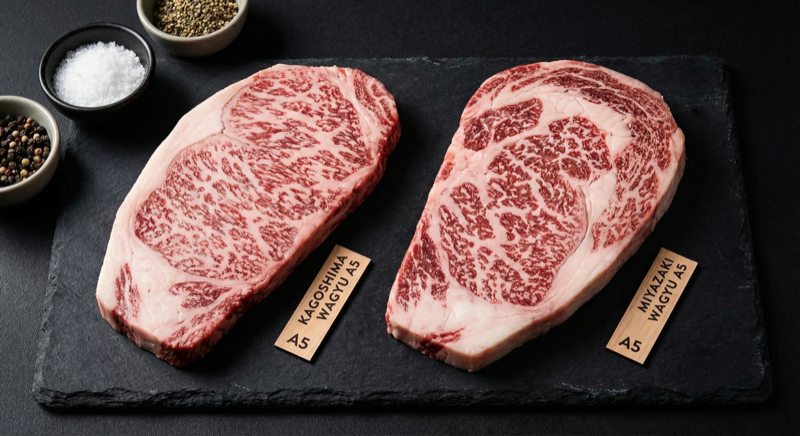
Kagoshima and Miyazaki are Japan's two largest wagyu-producing prefectures, and together they account for nearly 40% of all Japanese wagyu beef. Both produce exceptional A5-grade cattle, both have won the Wagyu Olympics (Zenkoku Wagyu Noryoku Kyoshinkai), and both command premium prices worldwide.
So which one is actually better? After two decades of sourcing, tasting, and selling wagyu from both regions, here's the honest breakdown.
The Prefectures at a Glance
Kagoshima Prefecture
Located at the southern tip of Kyushu, Kagoshima is Japan's #1 wagyu producer by volume. The warm subtropical climate and volcanic soil create ideal grazing conditions. Kagoshima's branded wagyu goes by several names — the most prestigious being Kagoshima Kuroge Washu (Kagoshima Black Cattle).
- Annual production: ~330,000 head (largest in Japan)
- Primary breeds: Japanese Black (Kuroge Washu)
- Key achievement: Won the Wagyu Olympics team competition in 2017
- Climate: Subtropical with mild winters, volcanic mineral-rich soil
- Signature trait: Consistent, clean-flavored beef with sweet fat
Miyazaki Prefecture
Just north of Kagoshima on Kyushu's eastern coast, Miyazaki is Japan's #2 wagyu producer and arguably the most decorated. Miyazaki beef has won the Prime Minister's Award (the highest individual honor) at three consecutive Wagyu Olympics — an unprecedented streak.
- Annual production: ~250,000 head
- Primary breeds: Japanese Black (Kuroge Washu)
- Key achievement: Three consecutive Prime Minister's Awards (2007, 2012, 2017)
- Climate: Warm coastal with high humidity, rich pastureland
- Signature trait: Intensely marbled beef with complex, deep umami
Marbling: BMS Scores Compared
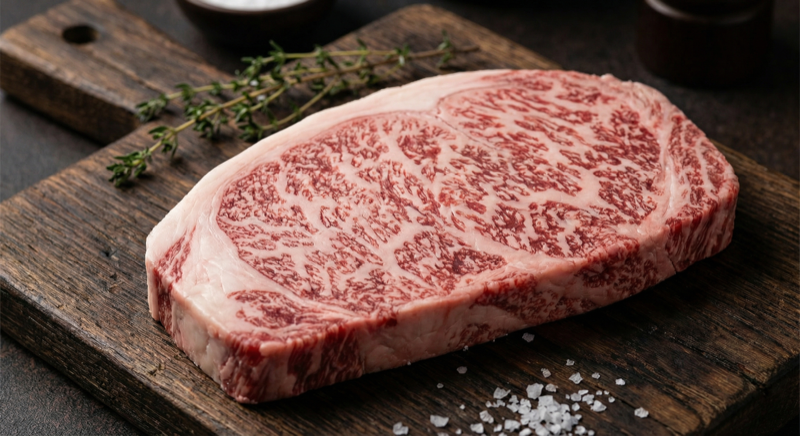
Both prefectures consistently produce A5-grade beef, but the distribution of BMS scores tells an interesting story:
| BMS Score | Kagoshima % | Miyazaki % | Notes |
|---|
| BMS 10 | 35% | 28% | Kagoshima's sweet spot |
| BMS 11 | 18% | 25% | Miyazaki excels here |
| BMS 12 | 5% | 10% | Miyazaki leads at peak marbling |
Kagoshima produces more A5 beef overall due to volume, but a higher percentage of its output clusters around BMS 10. It's remarkably consistent — you know what you're getting.
Miyazaki has a higher percentage hitting BMS 11-12, the absolute peak of marbling. When you see those jaw-dropping photos of beef that looks almost entirely white with thin red veins — that's often Miyazaki.
Flavor Profile Differences
Kagoshima Wagyu
Kagoshima beef is known for:
- Sweet, clean fat — the oleic acid content produces a noticeably sweet, almost fruity note when the fat renders
- Delicate flavor — less aggressive umami, more refined and gentle on the palate
- Lighter finish — doesn't linger as long, making it slightly more accessible for wagyu newcomers
- Consistent quality — the large-scale production means strict quality protocols across farms
Miyazaki Wagyu
Miyazaki beef is known for:
- Deep, complex umami — a richer, more intense beef flavor that builds on the palate
- Buttery, decadent fat — the fat has a lower melting point, creating an almost liquid-silk sensation
- Long finish — flavors linger and evolve, revealing new notes as you chew
- Peak-tier marbling — when you want the most dramatic visual and textural experience
Think of it this way: Kagoshima is Champagne — elegant, consistent, celebratory. Miyazaki is vintage Burgundy — complex, variable, potentially transcendent.
Pricing Comparison
Price varies by cut, grade, and retailer, but here are typical ranges for A5-grade beef in the US market:
| Cut | Kagoshima (per lb) | Miyazaki (per lb) |
|---|
| Ribeye | $120-$180 | $150-$220 |
| Strip | $100-$160 | $130-$200 |
| Filet | $140-$200 | $170-$250 |
| Flat Iron | $80-$120 | $100-$150 |
Miyazaki commands a 15-25% premium over Kagoshima on average, driven by its Olympic pedigree and slightly lower production volume. However, at equivalent BMS scores, the taste difference is subtle. The premium is partly brand prestige.
Best Cuts from Each Prefecture
Kagoshima's Strengths
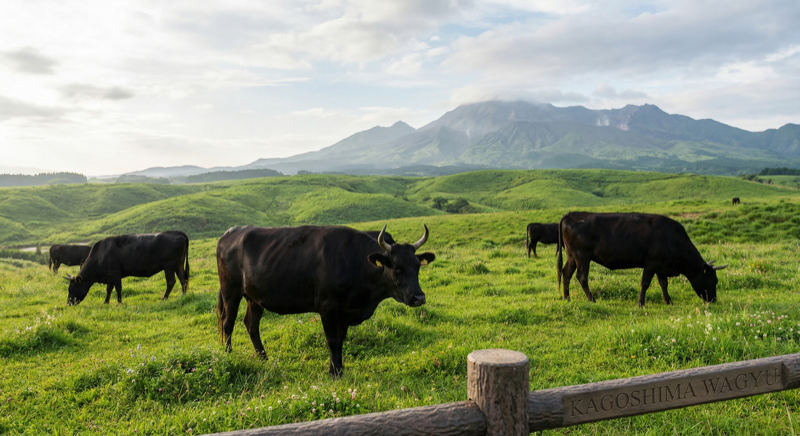
- Ribeye: Kagoshima ribeye at BMS 10-11 is a masterpiece of balance. Rich enough to impress, not so intense that it overwhelms.
- Flat iron / Chuck cuts: Kagoshima's consistency shines in secondary cuts where marbling distribution matters more than peak scores.
- Shabu-shabu slices: The clean, sweet fat profile makes Kagoshima ideal for thin-sliced hot pot preparations.
Miyazaki's Strengths
- Ribeye cap (Spinalis): If you can find Miyazaki BMS 11-12 ribeye cap, it might be the single best piece of beef you'll ever eat.
- Strip steak: Miyazaki's intense umami really shines in the strip, where the leaner profile lets the flavor concentrate.
- Sashimi / raw preparations: The lower-melting-point fat and complex flavor make Miyazaki exceptional served raw or barely seared.
Cooking Recommendations
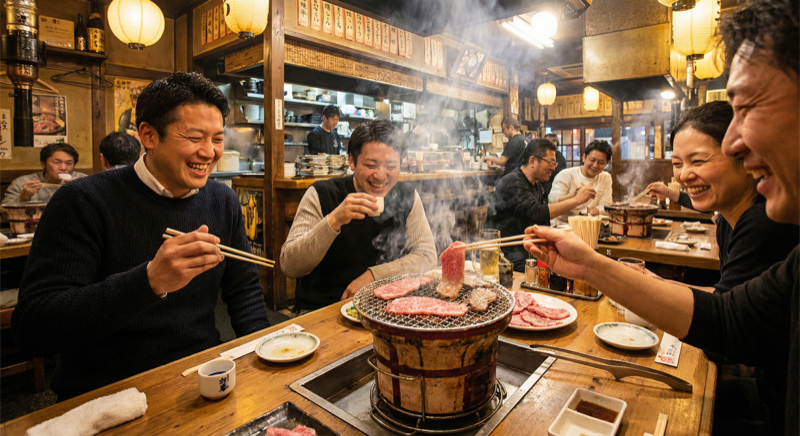
Both prefectures produce A5 beef that should be cooked minimally — but the ideal method differs slightly:
For Kagoshima Wagyu
- Teppanyaki / hot iron: Quick sear on a flat top to develop crust while keeping the interior rare. The sweet fat caramelizes beautifully.
- Shabu-shabu: Slice thin, swish through hot dashi for 5 seconds. Kagoshima's clean flavor profile is made for this.
- Sukiyaki: The sweet soy broth complements Kagoshima's naturally sweet fat.
For Miyazaki Wagyu
- Yakiniku / charcoal grill: The smokiness of charcoal adds another dimension to Miyazaki's complex flavor.
- Tataki (seared sashimi): Barely sear the outside, leave the center completely raw. This showcases the melt-on-tongue fat quality.
- Simple salt and heat: A screaming-hot cast iron with nothing but flaky salt. Let the beef speak for itself.
Which Should You Buy?
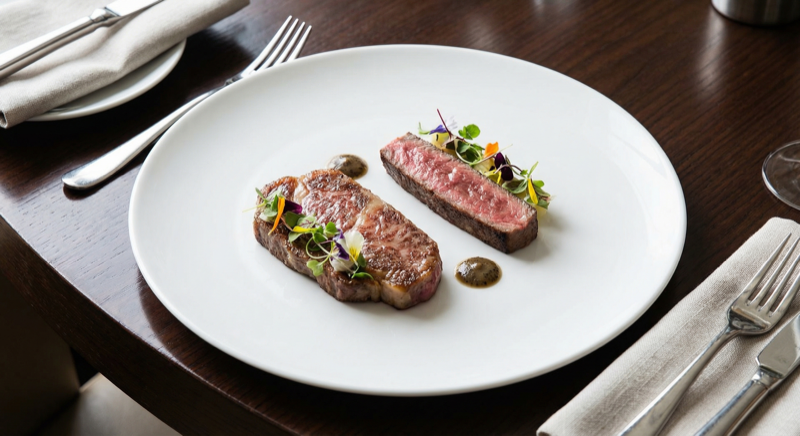
Here's the honest recommendation based on what you're looking for:
Choose Kagoshima if:
- You're new to Japanese A5 wagyu and want an accessible introduction
- You prefer cleaner, sweeter flavor profiles
- You're cooking for guests who might find extreme richness overwhelming
- You want excellent A5 quality at a slightly lower price point
- Consistency matters more than chasing peak scores
Choose Miyazaki if:
- You're a wagyu enthusiast chasing the absolute peak experience
- You love deep, complex, umami-forward flavors
- You want the most dramatic marbling for visual impact
- You're serving it raw or barely cooked (sashimi, tataki)
- The Wagyu Olympics pedigree matters to you
The truth: At A5 grade, both prefectures produce world-class beef that will surpass any domestic steak you've ever had. The differences are real but subtle — like comparing two exceptional wines from neighboring vineyards. You can't go wrong with either.
Browse authentic Japanese A5 wagyu from both prefectures at The Meatery's Japanese A5 Wagyu Collection, with full traceability and certificate of authenticity on every cut.