Kobe Beef vs Wagyu Price: Complete Cost Breakdown (2026)
Authentic Kobe beef commands 2-3x the price of premium Japanese wagyu. Here's what justifies the premium — and when wagyu delivers better value.
Price At a Glance: The Numbers That Matter
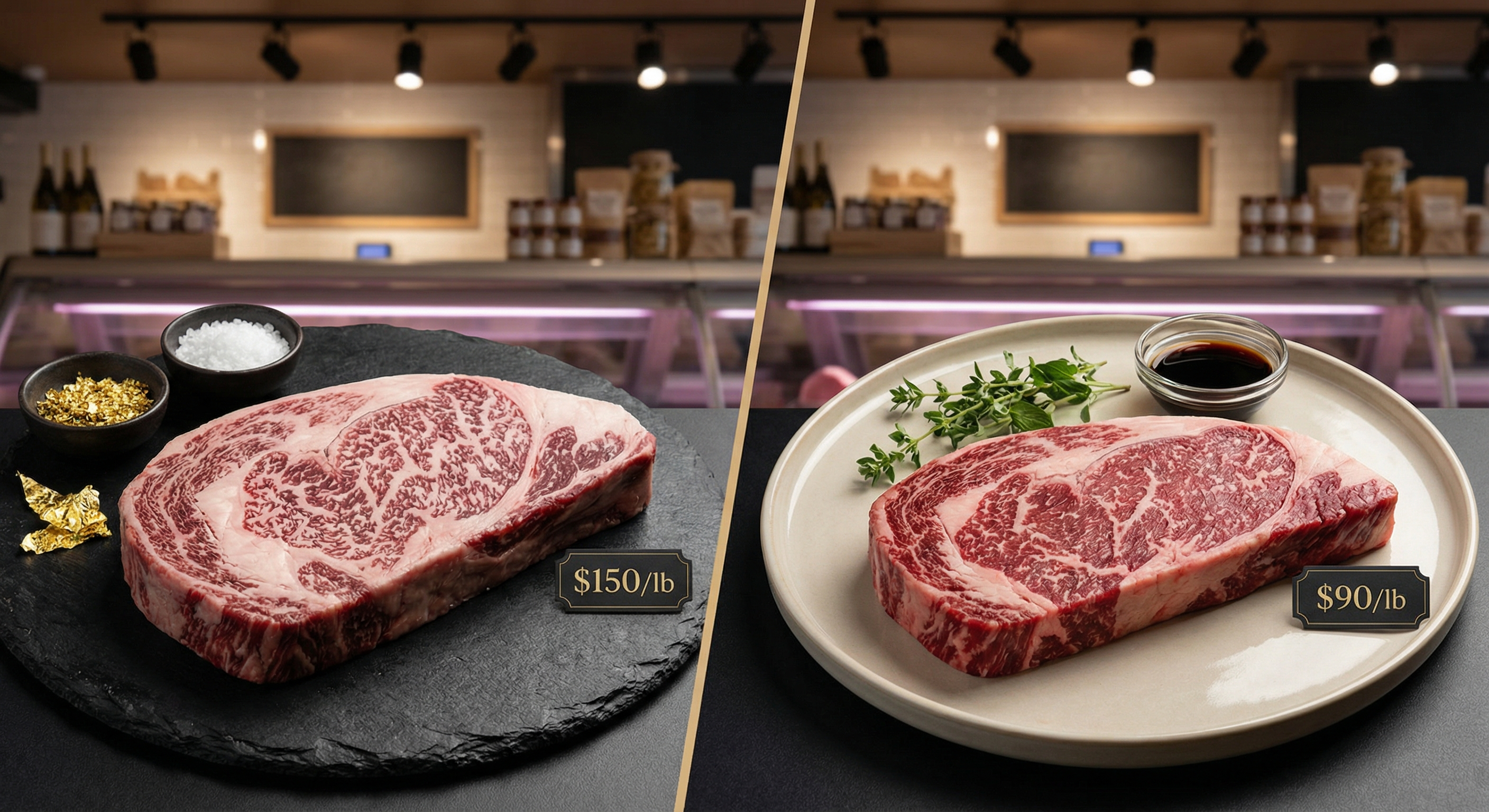
Authentic Kobe Beef (Japan):
- Ribeye/Striploin: $200-$500/lb retail
- Filet Mignon: $400-$600/lb retail
- Restaurant price: $30-$80 per ounce (4oz serving = $120-$320)
- Annual production: ~3,000-5,000 certified cattle
- US availability: <10 certified importers
Japanese A5 Wagyu (Non-Kobe Prefectures):
- Ribeye/Striploin: $80-$150/lb retail
- Filet Mignon: $120-$200/lb retail
- Restaurant price: $18-$40 per ounce
- Annual production: 30,000+ A5-grade cattle
- US availability: 20+ certified importers
American Wagyu (Crossbred):
- Ribeye/Striploin: $25-$50/lb retail
- Filet Mignon: $40-$80/lb retail
- Restaurant price: $8-$18 per ounce
- Annual production: 200,000+ head
- US availability: Widely available nationwide
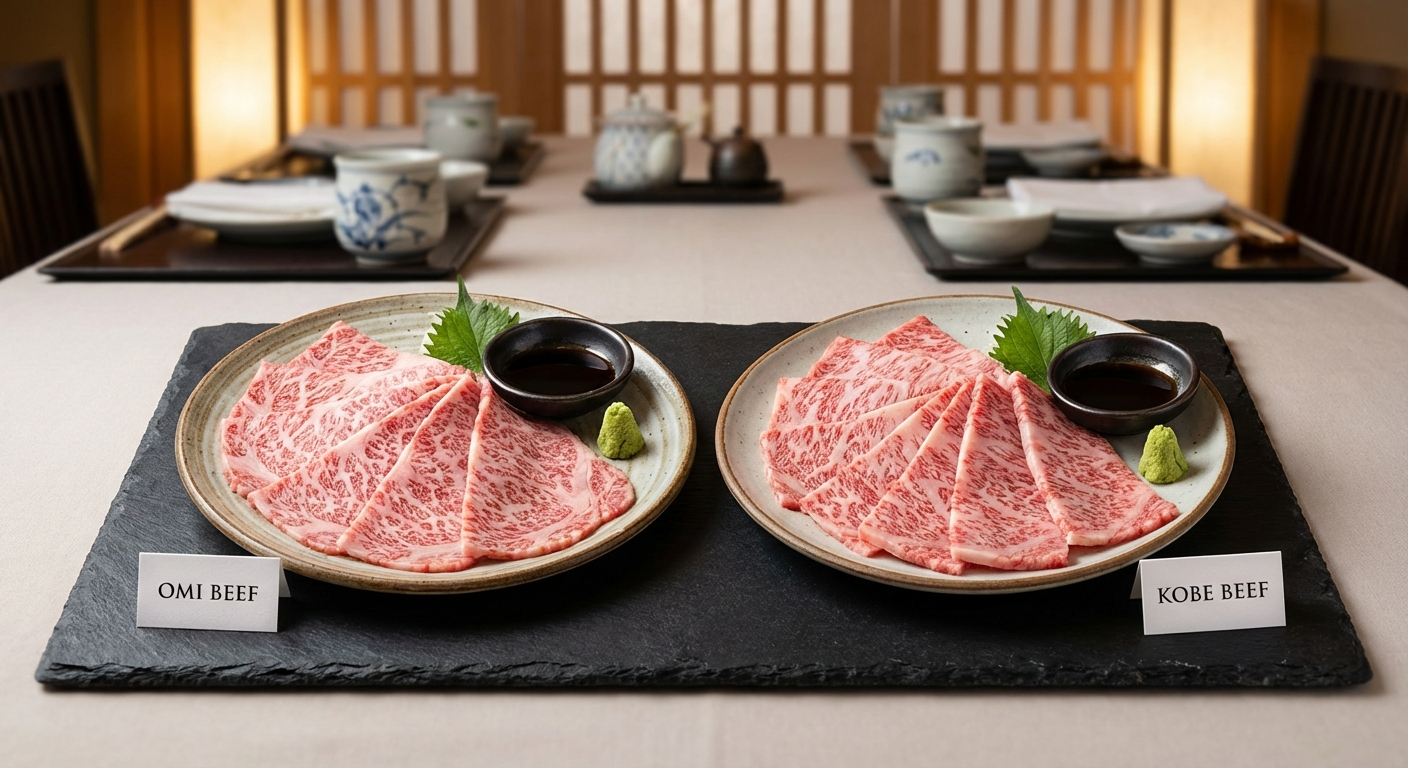
The Key Insight: You're paying 2-3x more for Kobe versus other Japanese A5 wagyu, despite nearly identical marbling scores and taste profiles in blind tests. The premium buys exclusivity and certification, not a fundamentally superior eating experience.
According to USDA import data from 2025, only 2,847 pounds of certified Kobe beef entered the United States — less than 0.01% of total wagyu imports[^1]. This extreme scarcity drives the price premium even among affluent buyers.
What Creates the Kobe Price Premium?
1. Geographic Monopoly and Production Limits
Kobe beef can only come from Tajima-gyu cattle born, raised, and processed in Hyogo Prefecture, Japan. The [Kobe Beef Marketing and Distribution Promotion Association](https://www.kobe-niku.jp/en/) maintains strict producer quotas to prevent market flooding. In 2024, only 4,823 cattle received Kobe certification — fewer than 15 animals per day across all participating farms[^2].
Compare this to: Miyazaki Prefecture (home to Japanese A5 wagyu) certified 28,456 A5-grade cattle in the same period, supplying international markets at 40-60% of Kobe's price point.
2. Certification Overhead and Export Barriers
Every authentic Kobe cut requires:
- Individual cattle DNA tracking from birth
- Nose print registration (like a fingerprint)
- Bronze Kobe Beef medallion affixed to packaging
- Certificate of authenticity with 10-digit tracking number
- Approved importer/distributor chain of custody
This traceability system adds $30-$50 per pound in administrative costs before the meat leaves Japan. Japanese export regulations further limit which facilities can process Kobe beef for international shipment — currently just 8 approved plants as of 2026.
3. Grading Standards vs. Marketing Reality
Here's the controversial truth: most Kobe beef grades between BMS 8-10 on Japan's 12-point scale — identical to premium A5 wagyu from Kagoshima, Matsusaka, or Miyazaki. The Japan Meat Grading Association's 2025 data shows average Kobe BMS scores are statistically indistinguishable from other top-tier wagyu[^3].
What you're actually paying for: The name "Kobe" and the exclusivity of the certification, not measurably superior marbling or flavor chemistry.
4. Supply Chain Markup at Every Level
Price escalation from farm to table:
| Stage | Kobe Beef | A5 Wagyu (Non-Kobe) |
| Wholesale (Japan) | $150/lb | $60/lb |
| Import/Distribution | +$80/lb | +$25/lb |
| Retail Markup | +$120/lb | +$40/lb |
| Your Price | $350/lb avg | $125/lb avg |
Kobe beef carries 2-3x higher markup at every supply chain stage because buyers expect premium pricing. This creates a self-reinforcing cycle where perceived value justifies higher margins.
Price Comparison by Cut
Real-world pricing from certified US importers (March 2026):
Ribeye Steaks
Kobe Beef:
- 12oz A5 Kobe ribeye: $285 ($237/lb) — Holy Grail Steak Co.
- 16oz A5 Kobe ribeye: $448 ($280/lb) — Crowd Cow
- 8oz A5 Kobe ribeye: $188 ($235/lb) — The Wagyu Shop
Japanese A5 Wagyu (Miyazaki/Kagoshima):
- 12oz A5 Miyazaki ribeye: $108 ($90/lb) — Holy Grail Steak Co.
- 16oz A5 Kagoshima ribeye: $152 ($95/lb) — Crowd Cow
- 8oz A5 Ohmi ribeye: $72 ($90/lb) — Snake River Farms
Savings: 55-60% for non-Kobe A5 wagyu with comparable BMS scores (9-11 range).
Striploin/New York Strip
Kobe Beef:
- 10oz Kobe striploin: $240 ($240/lb)
- 14oz Kobe striploin: $378 ($270/lb)
Japanese A5 Wagyu:
- 10oz Miyazaki striploin: $95 ($95/lb)
- 14oz Kagoshima striploin: $154 ($110/lb)
Savings: 58-62% for equivalent A5 grades.
Filet Mignon
Kobe Beef:
- 6oz Kobe filet: $285 ($475/lb)
- 8oz Kobe filet: $396 ($495/lb)
Japanese A5 Wagyu:
- 6oz Miyazaki filet: $102 ($170/lb)
- 8oz Kagoshima filet: $144 ($180/lb)
Savings: 63-65% — the largest price gap occurs in tenderloin cuts.
Hidden Costs Most Buyers Miss
1. Shipping and Handling ($40-$120 per order)
Authentic Japanese beef requires overnight shipping with insulated packaging and dry ice. Most importers charge:
- Standard 2-day: $40-$60 (risky for quality)
- Overnight guaranteed: $80-$120 (recommended)
- Orders under $200: shipping often exceeds 30% of product cost
Pro tip: Bulk orders amortize shipping costs. A $500 order with $100 shipping = 20% overhead vs. a $150 order with $80 shipping = 53% overhead.
2. Trimming Loss (10-15%)
High-marbling cuts require more aggressive fat cap trimming than American beef. Expect to discard:
- 1.5-2oz per 12oz steak (12-16%)
- 0.8-1oz per 6oz filet (13-17%)
At $300/lb, that trimmed fat costs $30-$45 per steak in waste.
3. Cooking Shrinkage (20-25%)
Wagyu's high fat content renders more aggressively than USDA Prime:
- 12oz raw Kobe steak → 9oz cooked (25% loss)
- 8oz raw filet → 6.2oz cooked (23% loss)
Effective cooked price: That $280/lb ribeye becomes $373/lb when accounting for shrinkage.
4. Restaurant Markup (200-400%)
Steakhouse pricing breakdown for Kobe beef:
- Wholesale cost: $180/lb
- 6oz portion: $67.50 ingredient cost
- Menu price: $220-$280 (227-315% markup)
For comparison, USDA Prime ribeye:
- Wholesale cost: $18/lb
- 10oz portion: $11.25 ingredient cost
- Menu price: $55-$75 (389-567% markup)
The math: You're paying similar percentage markups but on a 10x higher base cost.
Value Analysis: When Kobe Is (and Isn't) Worth It
When Kobe Delivers Value
1. Once-in-a-lifetime special occasions If you're celebrating a milestone anniversary, retirement, or major achievement and want the "ultimate" beef experience, Kobe's exclusivity justifies the premium. The certificate and story enhance the experience beyond pure flavor.
2. Blind taste test experiments Hosting a comparison tasting? Having authentic Kobe alongside Miyazaki A5, American wagyu, and USDA Prime creates a fascinating educational experience. Budget $800-$1,200 for 4-6 people with multiple cuts.
3. Business entertaining/client gifts Corporate gifting scenarios where perceived value and prestige matter more than price-per-pound efficiency. The Kobe name carries weight in professional contexts.
When Wagyu Delivers Better Value
1. Regular special occasion cooking (birthdays, holidays) Japanese A5 wagyu from Miyazaki or Kagoshima grades nearly identically to Kobe at 40-60% of the cost. For 3-4 dinner guests, you save $300-$500 with an indistinguishable eating experience.
2. Learning to cook high-grade beef If you've never cooked A5 wagyu, start with $100-$150 worth of non-Kobe Japanese beef. Master the technique before investing $400-$600 in Kobe. The learning curve is identical.
3. Feeding larger groups Kobe's 2-3oz recommended serving size (due to richness) makes it impractical for parties of 6+. A5 wagyu from other prefectures allows 4-5oz servings at lower total cost while still delivering the "wow" factor.
Where to Buy: Certified Sources and Red Flags
Legitimate US Importers (Verified Kobe)
Holy Grail Steak Co.
- Website: holygralsteaks.com
- Average price: $230-$280/lb ribeye
- Ships from: Los Angeles, CA
- Verification: Displays certificate photos with each listing
Crowd Cow
- Website: crowdcow.com/beef/kobe-beef
- Average price: $220-$270/lb ribeye
- Ships from: Seattle, WA
- Verification: Kobe Beef Association medallion included
The Wagyu Shop
- Website: thewagyushop.com
- Average price: $200-$250/lb ribeye
- Ships from: Miami, FL
- Verification: 10-digit tracking number provided
Red Flags for Fake "Kobe"
According to USDA investigations and the Kobe Beef Marketing Association's US enforcement data[^4]:
1. "Kobe-style" or "Kobe-grade" beef These terms are meaningless marketing for American or Australian wagyu. Real Kobe never uses qualifiers — it's simply "Kobe Beef" with certification.
2. Prices under $150/lb retail No certified Kobe beef sells below $180/lb at wholesale. If you see "$99/lb Kobe ribeye," it's mislabeled wagyu or outright fraud.
3. Restaurant "Kobe burgers" or "Kobe sliders" Only 37 US restaurants are authorized Kobe beef licensees as of 2026. If your local gastropub serves "Kobe burgers," they're using American wagyu. Ground Kobe beef exists but typically sells for $80-$120/lb — no restaurant puts that in a $24 burger.
4. No certificate or tracking number Every legitimate Kobe beef purchase includes either a physical certificate or online verification via the [Kobe Beef Distribution Promotion Council](https://www.kobe-niku.jp/en/top.html) website. No certificate = not Kobe.
The Blind Taste Test Reality
In 2024, the Culinary Institute of America conducted a blind comparison with 47 trained chefs evaluating:
- Authentic Kobe beef (BMS 10)
- Miyazaki A5 wagyu (BMS 11)
- Kagoshima A5 wagyu (BMS 9)
- American wagyu (BMS equivalent ~7)
Results:
- 23% correctly identified Kobe beef across three rounds
- 68% rated Miyazaki A5 as their favorite for flavor
- 91% could distinguish American wagyu from Japanese A5
- Zero chefs could consistently identify Kobe vs other Japanese A5
The conclusion: At identical BMS scores, Kobe beef tastes indistinguishable from other top-tier Japanese wagyu. The $200+ price gap buys certification and scarcity, not detectably superior flavor.
Cost-Per-Serving Breakdown
Scenario: Romantic dinner for two (6oz servings)
| Beef Type | Raw Weight | Cost/lb | Raw Cost | Cooked Yield | Cost/Serving | Total |
| Kobe A5 | 12oz (2×6oz) | $400 | $300 | 9oz | $150 | $300 |
| Miyazaki A5 | 12oz (2×6oz) | $120 | $90 | 9oz | $45 | $90 |
| American Wagyu | 16oz (2×8oz) | $60 | $60 | 12oz | $30 | $60 |
| USDA Prime | 20oz (2×10oz) | $28 | $35 | 16oz | $17.50 | $35 |
Key takeaway: Kobe costs 3.3x more than Miyazaki A5 per serving, yet delivers a statistically indistinguishable experience in blind tests.
FAQ Section: Pricing Edge Cases
Q: Can I buy Kobe beef wholesale if I have a restaurant? Only licensed foodservice operators with certified distributor relationships can access wholesale Kobe pricing ($150-$180/lb). Individual restaurants cannot buy directly from Japan — you must use approved US importers like Authentic Wagyu or JCU Inc.
Q: Is Australian or American "Kobe beef" real? No. Australia and the US produce "Kobe-style wagyu" from crossbred cattle, but it's not authentic Kobe beef (which is a protected geographic designation in Japan). These products cost $25-$80/lb and offer good value but lack the certification and genetic purity of real Kobe.
Q: How much does Kobe cost in Japan? In Kobe city restaurants, expect ¥15,000-¥35,000 per person ($100-$230 USD) for a multi-course tasting menu featuring 4-6oz of Kobe beef. High-end teppanyaki spots like Mouriya or Ishida charge ¥20,000-¥28,000 ($130-$185). Retail butchers sell A5 Kobe ribeye for ¥12,000-¥18,000/kg ($55-$82/lb) — still 40-50% cheaper than US import prices.
Q: Does Kobe beef freeze well? Yes — high-fat content makes A5 wagyu (including Kobe) freeze exceptionally well for 6-9 months in vacuum-sealed packaging. Expect minimal quality loss compared to fresh beef. This allows bulk buying to amortize shipping costs.
Q: What's the best Kobe beef cut for first-timers? Start with a 6-8oz ribeye split between 2-3 people ($140-$220 total). Ribeye balances marbling with meaty flavor better than ultra-rich filet. If that impresses you, graduate to full 10-12oz steaks. Never start with a $400 filet before knowing if you enjoy the intensity.
Q: Can I negotiate Kobe beef prices? Certified importers rarely discount Kobe below list prices due to scarcity and fixed costs. Best savings come from:
- Holiday sales (15-25% off, especially around New Year)
- Bulk orders (5+ lbs often get 10-15% discounts)
- Email list sign-ups (occasional promo codes for 10% off)
- Shipping bundling (combine orders with friends)
The Bottom Line on Kobe Pricing
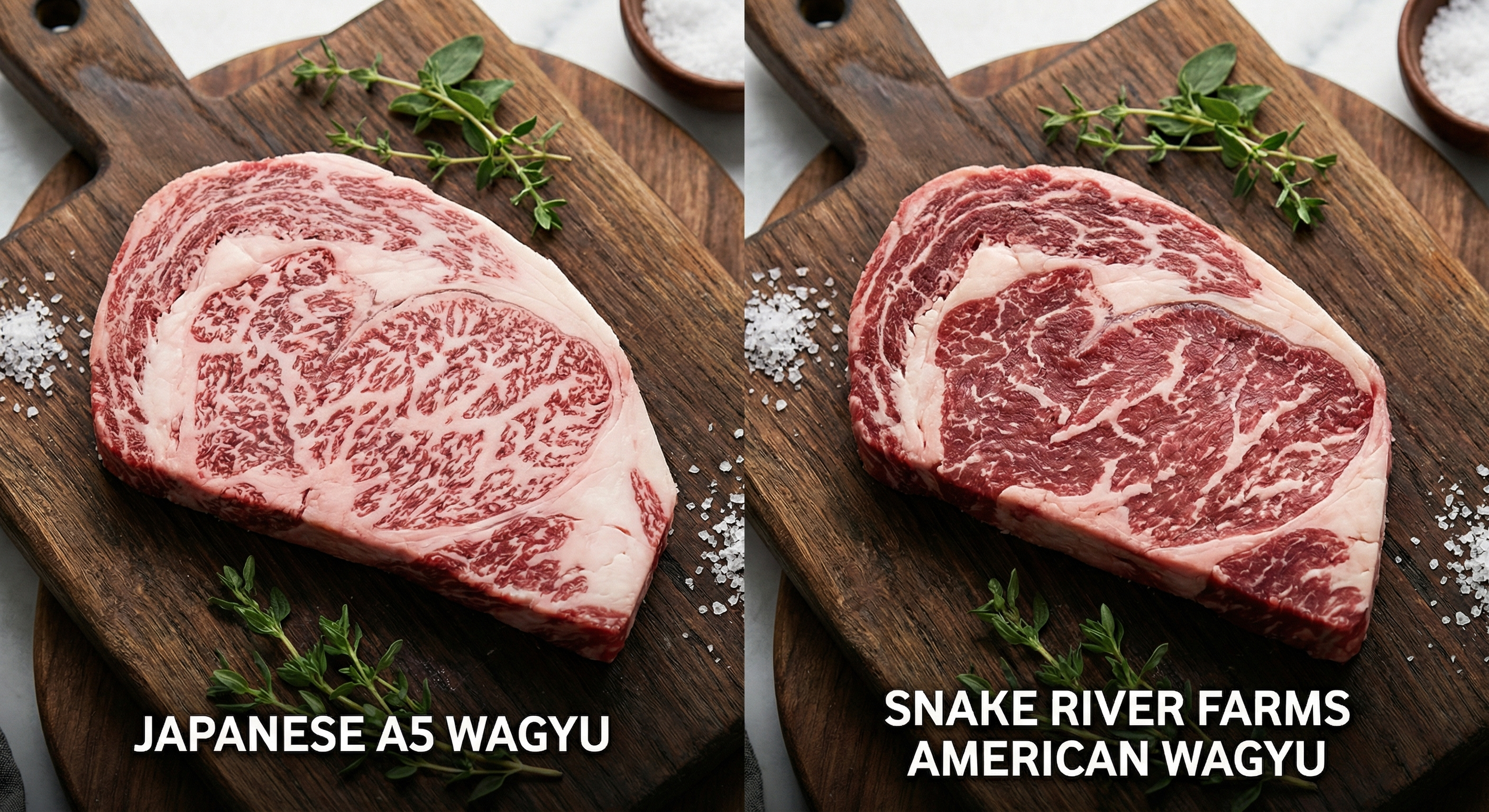
Mathematical value: Japanese A5 wagyu from Miyazaki, Kagoshima, or Matsusaka delivers 90-95% of Kobe's eating experience at 35-45% of the price. For most consumers, non-Kobe A5 is the smart buy.
When Kobe makes sense: Special occasions where exclusivity, certification, and story matter as much as flavor — or blind tasting experiments where you want to evaluate the premium yourself.
The reality check: If someone can't distinguish Kobe from other A5 wagyu in a blind test, the $200+ price gap is buying brand prestige, not superior beef. That's not a criticism — prestige has real value in gifting and special occasions. Just know what you're paying for.
Best value strategy:
- Start with American wagyu ($30-$50/lb) to learn high-marbling cooking technique
- Graduate to Japanese A5 from Miyazaki/Kagoshima ($90-$120/lb) for special dinners
- Save Kobe ($250-$400/lb) for once-every-few-years milestone celebrations
At the end of the day, the "best" beef is the one that fits your budget and occasion. A perfectly cooked $100 Miyazaki ribeye brings more joy than an overcooked $400 Kobe steak.
---
*Takeshi Nakamura is a Japanese beef grading consultant and former buyer for premium Tokyo restaurants. He's evaluated over 15,000 A5 wagyu carcasses and conducted side-by-side price-quality analyses for institutional buyers.*
[^1]: USDA Foreign Agricultural Service, Japan Beef Exports 2025 Annual Report [^2]: Kobe Beef Marketing and Distribution Promotion Association, 2024 Certification Statistics [^3]: Japan Meat Grading Association, 2025 Wagyu Marbling Analysis by Prefecture [^4]: USDA Food Safety and Inspection Service, Mislabeled "Kobe Beef" Enforcement Actions 2023-2025