Wagyu A5 vs A4: Is the Upgrade Worth It?
Japanese Wagyu A5 commands the highest prices, but A4 offers a different experience that many steak lovers actually prefer. Here's how these two top grades really compare.
The Two Highest Grades of Japanese Wagyu, Compared
When you're spending serious money on Japanese wagyu, the question isn't whether to buy quality—it's how much quality. A5 sits at the absolute peak of the Japanese Meat Grading Association (JMGA) system. A4 is one step below. Both represent exceptional beef that most people will never encounter outside of specialty retailers and high-end restaurants.
But here's what the marketing rarely tells you: A4 isn't just "lesser A5." It's a genuinely different eating experience, and depending on how you plan to serve it, A4 might actually be the smarter choice.
Understanding the Japanese Grading System
Before comparing A5 and A4, you need to understand how Japan grades its beef. The JMGA system evaluates two components:
The Letter: Yield Grade (A, B, or C)
A means the carcass has above-average yield—the ratio of usable meat to total carcass weight. Both A5 and A4 carry the "A" yield grade, meaning these cattle produce a high percentage of sellable cuts. Grade B and C wagyu exists but rarely reaches export markets.
The Number: Quality Grade (1-5)
The quality score is determined by four factors, and the lowest individual score sets the overall grade:
- Beef Marbling Score (BMS): The most famous metric, scored 1-12
- Beef Color Standard (BCS): Meat color, scored 1-7 (3-5 preferred)
- Beef Fat Standard (BFS): Fat color, scored 1-7 (1-4 preferred)
- Firmness & Texture: Scored 1-5
This means a cut with BMS 10 marbling but poor fat color could still grade below A5. The system is holistic, not just about marbling—though marbling dominates the conversation for good reason.
Marbling: The Core Difference
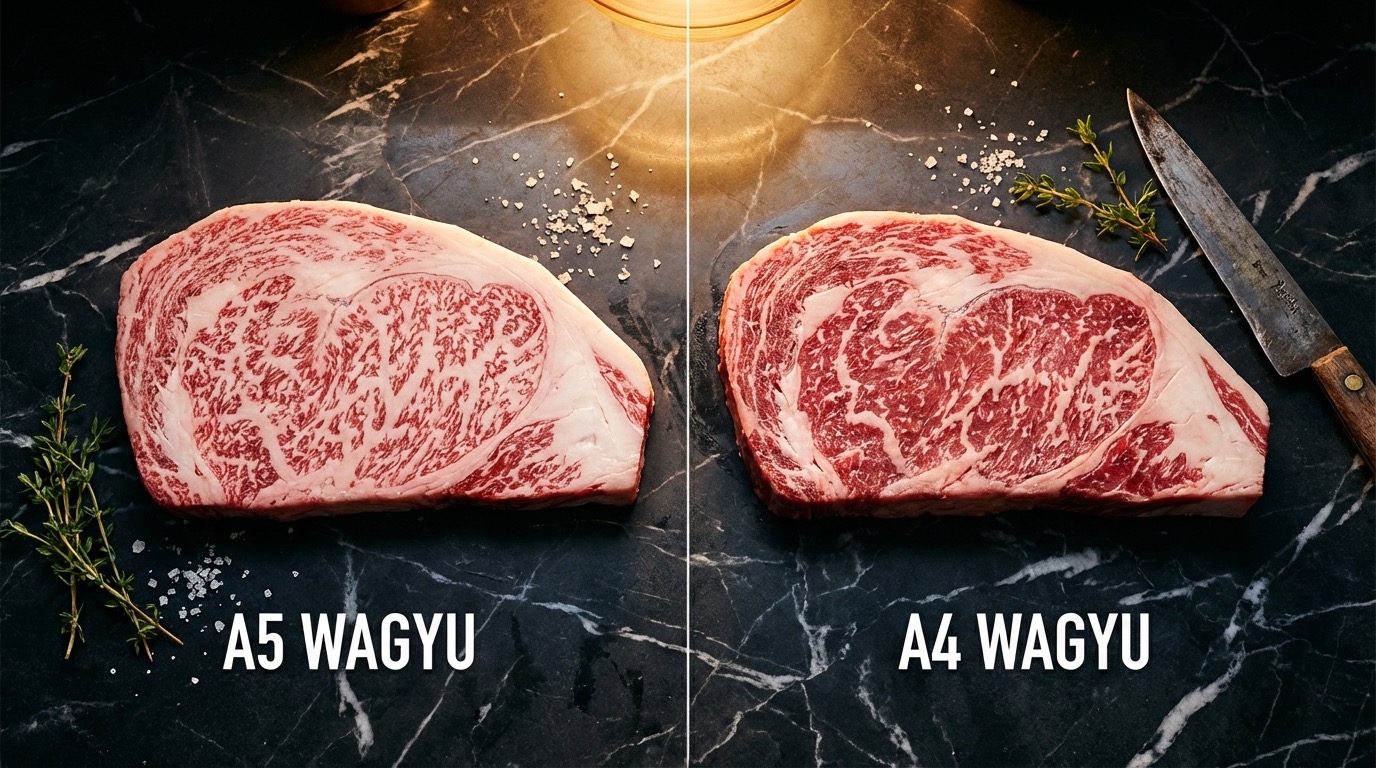
A4 Wagyu: BMS 6-7
A4 wagyu shows heavy marbling by any global standard. At BMS 6-7, the intramuscular fat creates clearly visible white webbing throughout the meat. To put this in perspective, USDA Prime beef—the highest American grade—typically falls around BMS 4-5 on the Japanese scale. A4 wagyu significantly exceeds America's best.
The marbling at this level provides rich flavor and tenderness while still allowing the beef's natural taste to come through. You'll taste both the sweetness of wagyu fat and the savory depth of the muscle itself.
A5 Wagyu: BMS 8-12
A5 is where wagyu enters another dimension. At BMS 8 and above, marbling is so extensive that the meat appears more white than red. At BMS 11-12, the fat-to-lean ratio approaches 50/50, creating the almost impossibly tender, melt-on-your-tongue quality that made wagyu famous.
The flavor profile shifts decisively toward richness. The fat—which melts at a lower temperature than other beef fat due to its high oleic acid content—coats your palate with a buttery sweetness that's unlike any other protein.
Flavor Profile: Rich vs. Balanced
A5: Maximum Richness
A5 wagyu delivers an intense, almost overwhelming richness. The high fat content means each bite releases a wave of buttery, sweet, umami flavor. It's a sensory event—the kind of food that makes you pause and reconsider everything you thought you knew about beef.
The trade-off: most people can only eat 3-4 ounces before experiencing what the Japanese call "fat fatigue." Your palate literally tires of the richness. This isn't a flaw—it's by design. A5 wagyu is traditionally served in small portions, often as thin slices for yakiniku or shabu-shabu, not as a 16-ounce steak.
A4: The Best of Both Worlds
A4 wagyu offers what many experienced eaters consider the ideal balance. You get unmistakable wagyu richness—the buttery fat, the melt-in-your-mouth texture—but the slightly lower marbling lets the beef's natural flavor assert itself. There's more "steak" in the experience.
You can comfortably eat a 6-8 ounce portion of A4 without fat fatigue, making it more versatile as a main course. Many Japanese wagyu connoisseurs actually prefer A4 for exactly this reason.
Price Comparison
The price gap between A4 and A5 is significant but varies by cut and source prefecture:
Typical Price Ranges (Per Pound, 2026)
- A5 Ribeye: $180-$280
- A4 Ribeye: $120-$170
- A5 Striploin: $160-$250
- A4 Striploin: $100-$160
- A5 Tenderloin: $200-$300+
- A4 Tenderloin: $140-$200
On average, expect to pay 30-60% more for A5 over A4 for the same cut. Prefecture matters too—Kobe and Matsusaka command premiums over less famous regions, regardless of grade.
Value Analysis
Here's the math most people don't consider: because A5 portions are typically smaller (3-4 oz vs. 6-8 oz for A4), the per-serving cost difference narrows. A 4-ounce A5 ribeye at $250/lb costs about $62. A 6-ounce A4 ribeye at $150/lb costs about $56. The A5 experience costs only marginally more per serving—though you're getting less food.
Best Uses for Each Grade
When A5 Is the Right Choice
- Yakiniku (Japanese BBQ): Thin slices grilled quickly over high heat—the classic A5 preparation
- Shabu-shabu / Sukiyaki: Paper-thin slices swished in hot broth, where maximum marbling creates silky texture
- Sushi / Sashimi: Raw or lightly torched, where the fat melts at mouth temperature
- Special occasion tastings: Small portions meant to impress and create a memorable moment
- Gifts: A5 carries undeniable prestige and makes a statement
When A4 Is the Better Choice
- Steak dinner: When you want a proper steak portion with wagyu quality
- Grilling: A4 handles direct heat better with less risk of flare-ups from rendered fat
- First-time wagyu: A4 provides an impressive introduction without the intensity that overwhelms newcomers
- Dinner parties: Guests can enjoy a full portion, and the per-person cost is more manageable
- Pairing with bold sides: A4's balanced profile works better alongside other flavors
Cooking Differences
A5 Cooking Tips
A5 requires restraint. The high fat content means:
- No added oil or butter needed—the beef provides its own
- Cook thin slices (¼ inch) on extremely high heat for 15-30 seconds per side
- For thicker cuts, sear quickly and serve rare to medium-rare maximum
- Rendered fat pools quickly—drain or it will fry rather than sear
- Season minimally: quality salt and maybe a touch of wasabi
A4 Cooking Tips
A4 is more forgiving and versatile:
- Can be cut thicker (¾-1 inch) and cooked more like a traditional steak
- Handles medium-rare to medium without losing its character
- Still renders plenty of fat—use minimal added oil
- Works well with a quick sear on cast iron or over charcoal
- Tolerates slightly more seasoning, including pepper and herbs
Prefecture and BMS Variation Within Grades
Not all A5 is created equal, and not all A4 is the same. Within each grade, there's meaningful variation:
Low A5 (BMS 8): The entry point to A5. Noticeably more marbled than A4 but still allows some beef flavor through. Many aficionados consider BMS 8-9 the sweet spot for the A5 experience.
High A5 (BMS 11-12): The absolute peak. Almost as much fat as lean muscle. A stunning visual spectacle and an overwhelming taste experience that's best in very small quantities.
Low A4 (BMS 6): Just above the A3 threshold. Still excellent by global standards but with a distinctly "beefy" character.
High A4 (BMS 7): Approaches A5 territory. Some BMS 7 cuts are nearly indistinguishable from BMS 8 in blind tastings.
The takeaway: a high-end A4 (BMS 7) can deliver a very similar experience to entry-level A5 (BMS 8) at a significantly lower price. This is where value-conscious buyers find their edge.
The Verdict: Which Should You Buy?
Choose A5 when: You want the ultimate wagyu experience, you're serving small portions, or the occasion demands the absolute best. A5 is the pinnacle—there's nothing above it.
Choose A4 when: You want wagyu quality with more versatility, you're serving full steak portions, or you want better value without a dramatic quality drop. A4 is the connoisseur's choice for everyday luxury.
The honest truth: Both A4 and A5 are extraordinary. The gap between USDA Prime and A4 is far larger than the gap between A4 and A5. If you're upgrading from domestic beef, either grade will be a revelation. The "best" choice depends entirely on how you plan to serve it and what experience you're after.