Wagyu Grading Systems Explained: Japanese, American, and Australian
Understanding BMS, yield grades, and what A5 really means — plus how American and Australian systems compare.
Why Grading Matters
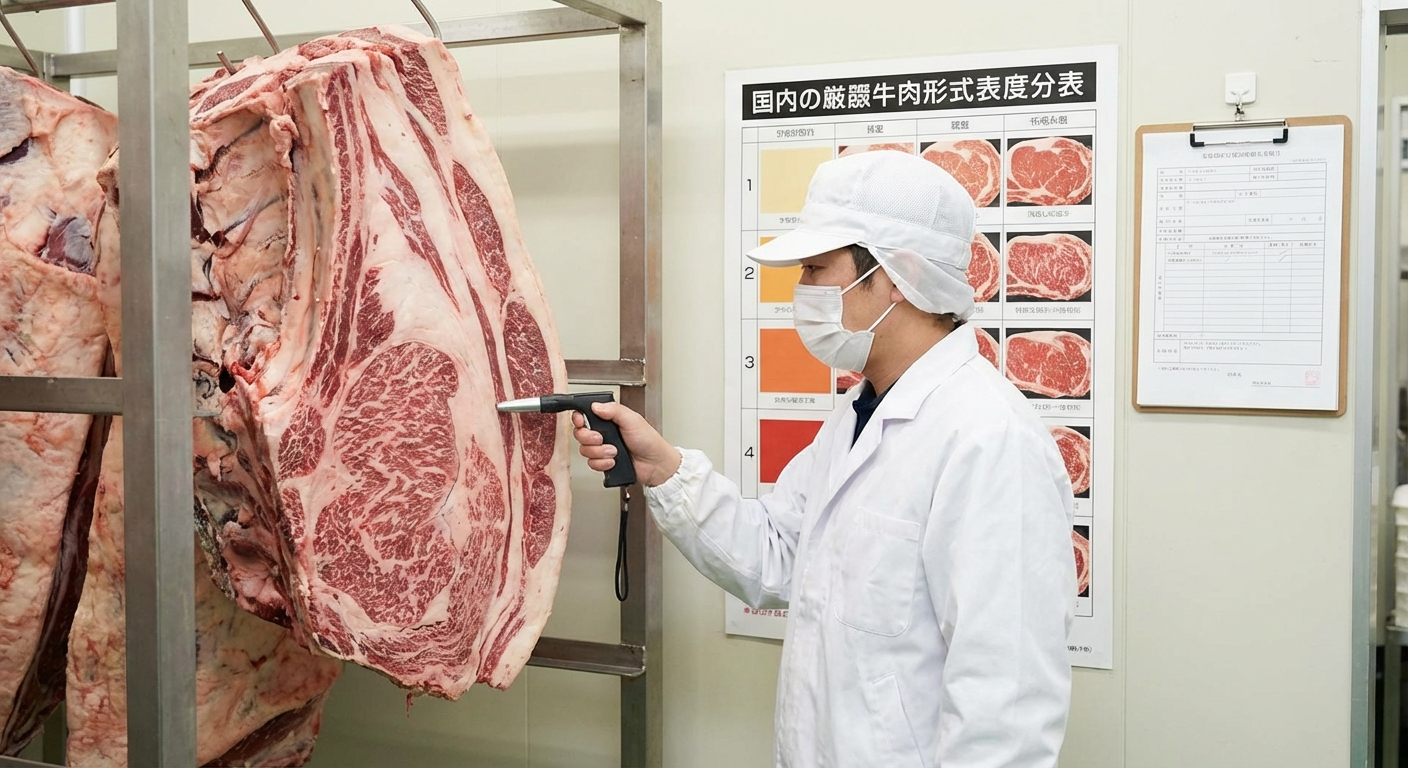
Wagyu grading tells you two things: how much usable meat the carcass yields, and how good that meat is. Understanding grading helps you know what you're buying and whether the price is justified.
Japanese Grading (JMGA)
The Japanese Meat Grading Association uses a two-part system:
Yield Grade (A, B, C)
- A = Above average yield (72%+)
- B = Average yield (69-72%)
- C = Below average yield (<69%)
This affects the producer's economics, not your eating experience.
Quality Grade (1-5)
Based on four factors:- Marbling (BMS) — most important
- Meat color and brightness
- Firmness and texture
- Fat color, luster, and quality
The lowest score among these determines the grade. A5 means excellent in all four categories.
Beef Marbling Score (BMS)
| BMS | Grade | Description |
| 1 | 1 | No marbling |
| 2 | 1 | Trace marbling |
| 3-4 | 2-3 | Small to moderate |
| 5-7 | 4 | Good marbling |
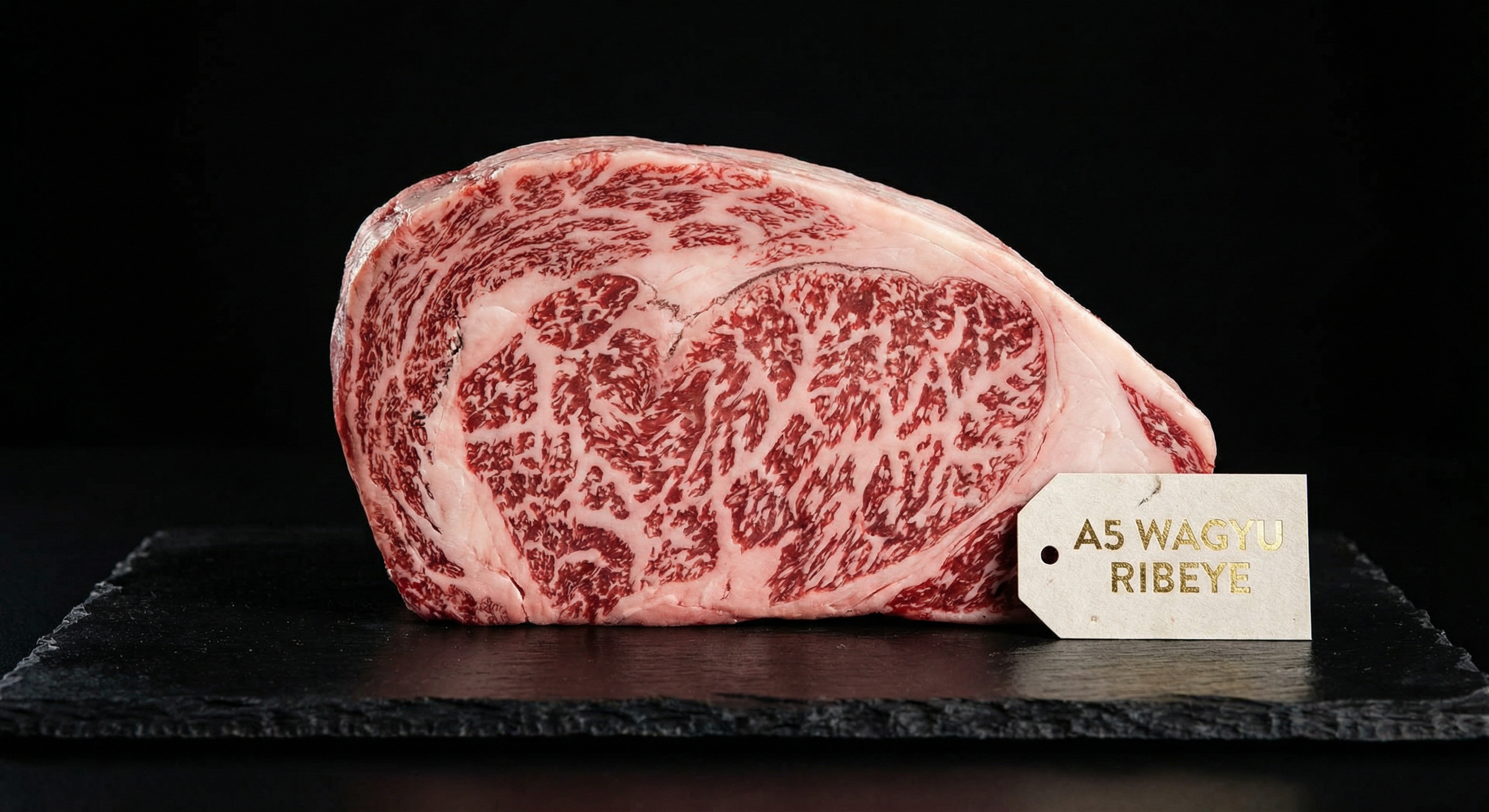
| 8-12 | 5 | Excellent to exceptional |
A5 with BMS 8 is entry-level A5. BMS 11-12 is exceptional even within A5.
American Grading (USDA)
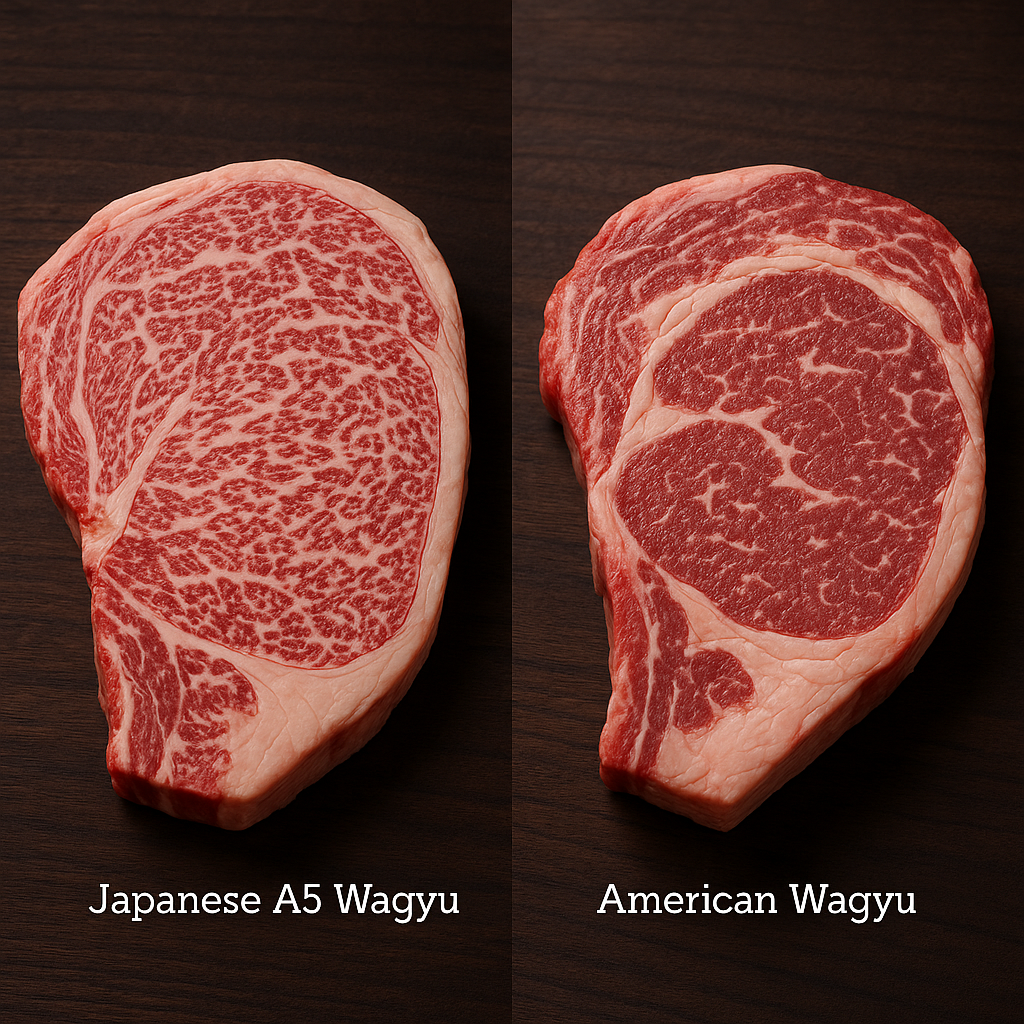
The USDA has no specific wagyu grading. American Wagyu is graded using the same system as regular beef:
- Prime: Top 2-3%, abundant marbling
- Choice: Good marbling, widely available
- Select: Lean, minimal marbling
This is problematic because excellent American Wagyu (BMS 7+) and mediocre American Wagyu (BMS 4) both just get called "Prime" or sold without grade.
Some American producers use their own internal grading (e.g., Snake River Farms' Black and Gold grades), but these aren't standardized.
Australian Grading (AUS-MEAT)
Australia uses the MSA (Meat Standards Australia) marble score:
| MSA Marble Score | Approximate BMS |
| 100-300 | 1-3 | ||
| 400-500 | 4-5 | ||
| 600-700 | 6-7 | ||
| 800-900 | 8-9 | ||
| 1000+ | 10+ | ||
| Japanese | Australian | American | Description |
| A5 BMS 11-12 | MSA 1100+ | — | Ultra-premium, extreme marbling |
| A5 BMS 9-10 | MSA 900-1000 | — | Exceptional |
| A5 BMS 8 | MSA 800 | — | Entry A5 |
| A4 BMS 6-7 | MSA 600-700 | — | Very good |
| A3 BMS 5 | MSA 500 | Prime+ | Good |
| — | MSA 400 | Prime | Standard premium |
What to Look For
Japanese Wagyu:
- Always ask for the BMS score, not just "A5"
- BMS 10+ is exceptional; BMS 8 is entry-level A5
American Wagyu:
- Ask about genetics (Fullblood vs F1)
- Look for producer-specific grading
- Don't assume "wagyu" means high marbling
Australian Wagyu:
- Look for MSA marble score
- 9+ competes with Japanese
- Distinguish Fullblood from crossbred
The Bottom Line
"A5" isn't one quality level — it spans BMS 8-12, a significant range. A well-marbled Australian Fullblood (MSA 9+) can match mid-tier A5. American Wagyu varies wildly because there's no standard. Always dig deeper than the marketing label. For a detailed breakdown of wagyu beef vs Kobe beef, The Meatery's guide is an excellent resource.