Wagyu Ribeye vs Striploin: Which Cut Should You Buy?
You've decided to buy wagyu. Now comes the harder question: ribeye or striploin? These two cuts deliver fundamentally different eating experiences, even from the same animal.
You've committed to buying wagyu. Smart move. But now you're staring at two options that look similar on screen and wondering which one deserves your money. Ribeye and striploin are the two most popular wagyu cuts for a reason — both showcase what makes wagyu special. But they do it in very different ways.
After years of sourcing, grading, and eating both cuts across Japanese A5, Australian Fullblood, and American wagyu, here's the honest comparison that'll help you choose right.
Anatomy: Why These Cuts Are Different
Both ribeye and striploin come from the back of the animal, but from different muscle groups with distinct characteristics:
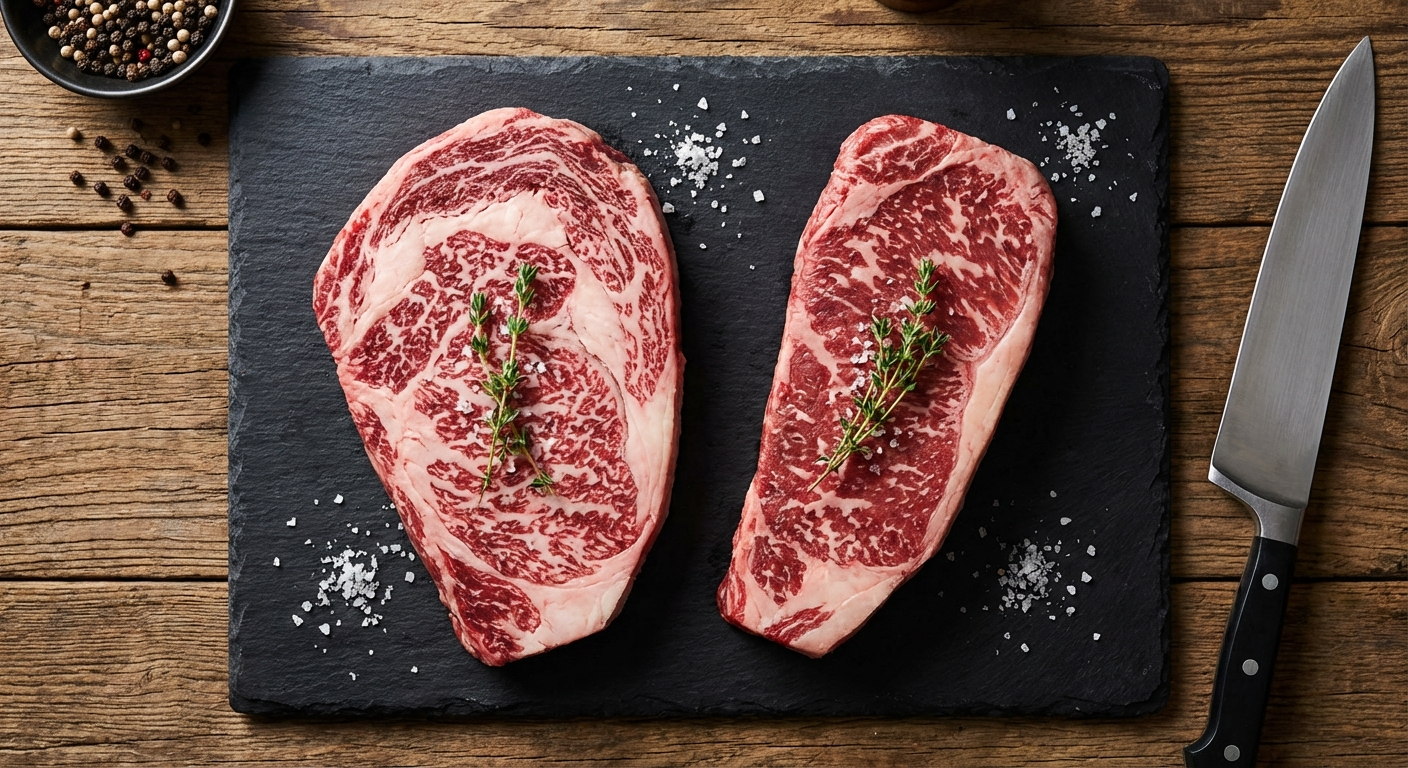
Ribeye (Rib Section, Ribs 6-12): Cut from the longissimus dorsi muscle with portions of the spinalis dorsi (the cap) and complexus. The ribeye is actually three muscles working together, which creates its signature variation in texture and marbling across the steak. The cap — that crescent of deeply marbled meat wrapping the top — is considered by many butchers to be the single best-eating muscle on the entire carcass.
Striploin (Short Loin, Behind the Ribs): Cut from the longissimus dorsi muscle only, without the cap or complexus. It's a single, more uniform muscle with a strip of fat along one edge. The texture is firmer, the grain is tighter, and the marbling pattern is more consistent throughout.
This anatomical difference matters enormously in wagyu because the ribeye's multiple muscle groups each carry fat differently. The cap accumulates extreme marbling while the eye can be slightly leaner — giving you two distinct textures in one steak. The striploin offers a more consistent experience from edge to edge.
Marbling: The Numbers Tell the Story
At equivalent grades from the same animal, ribeye carries more total intramuscular fat than striploin. Here's what the data typically shows:
| Grade | Ribeye BMS Range | Striploin BMS Range | Fat Difference |
|---|
| Japanese A5 | 8-12 | 7-11 | Ribeye +1-2 BMS |
| Australian Fullblood 9+ | MSA 900-1100 | MSA 800-1000 | Ribeye +50-100 MSA |
| American Wagyu (Fullblood) | BMS 7-10 | BMS 6-9 | Ribeye +1 BMS |
| American Wagyu (F1) | BMS 4-7 | BMS 3-6 | Ribeye +1 BMS |
The ribeye's marbling advantage comes primarily from the cap muscle. If you were to isolate just the eye of the ribeye, the marbling difference versus striploin narrows significantly. But you don't eat them in isolation — the whole ribeye steak, including the richly marbled cap, is the product.
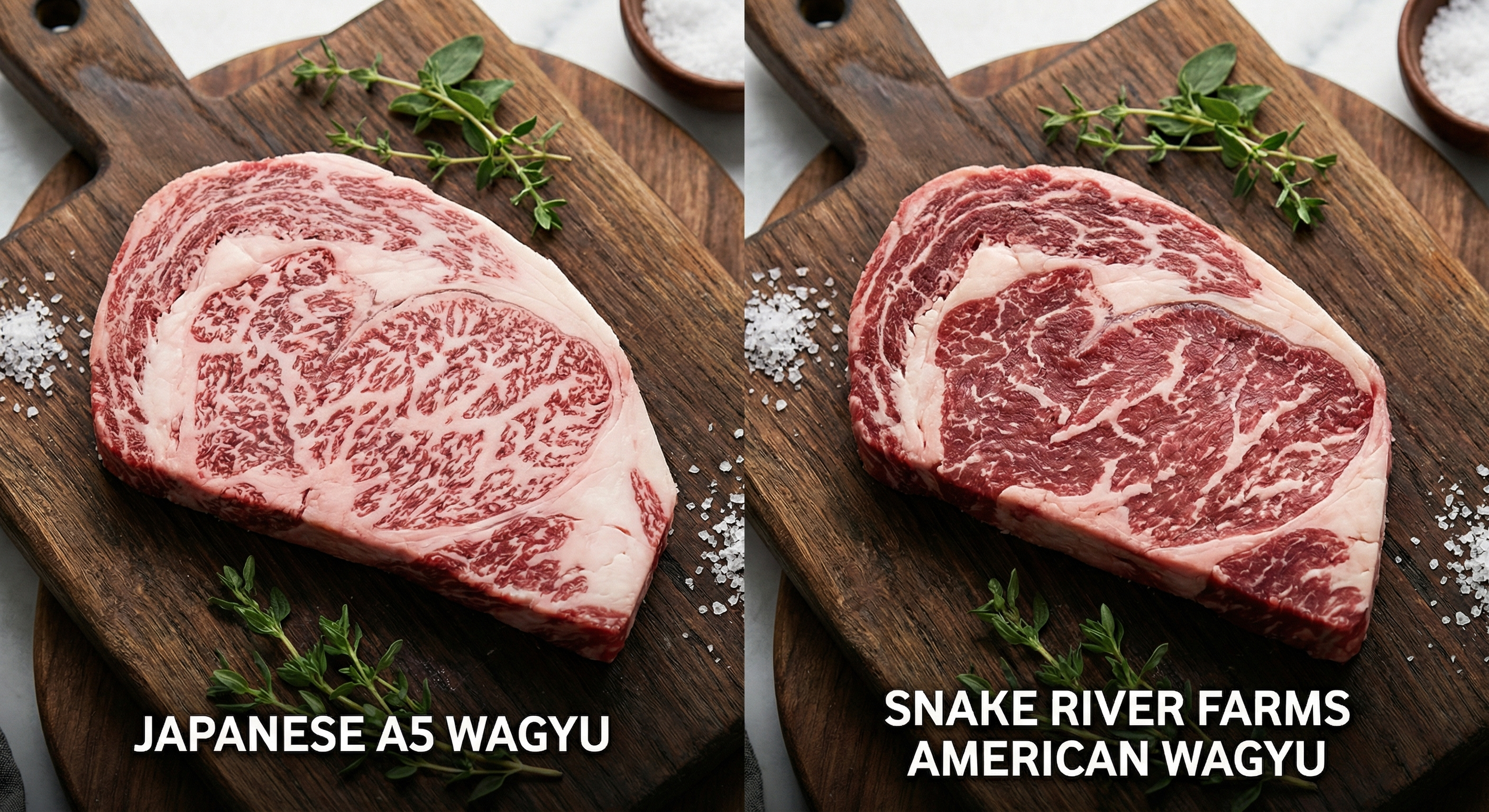
Visual impact: A5 wagyu ribeye is the steak that breaks the internet. Those photos of beef so marbled it looks like white marble with red veins? Almost always ribeye, and usually the cap section. Striploin is beautiful, but it's a quieter, more elegant beauty — fine webs of fat distributed evenly through deep red meat.
Flavor Profile: Richness vs Clarity
Wagyu Ribeye Flavor
Ribeye is the maximalist choice. The multiple muscle groups and higher fat content create a complex, layered eating experience:
- Richness: Intense, almost decadent butteriness. At A5 grade, the fat melts into the meat creating a sauce-like quality
- Sweetness: High oleic acid content in wagyu fat produces a pronounced sweet note, especially when the fat renders on high heat
- Complexity: Different textures within the same steak — the unctuous cap versus the slightly firmer eye — give your palate more to explore
- Finish: Long, coating finish that lingers. The fat leaves a silky residue on your palate
Wagyu Striploin Flavor
Striploin is the purist's choice. The single-muscle structure delivers a cleaner, more focused experience:
- Beef-forward: More actual beef flavor comes through because the fat-to-lean ratio lets the meat speak. You taste wagyu, not just wagyu fat
- Clean richness: Rich without being overwhelming. The marbling enhances rather than dominates
- Savory depth: Stronger umami presence. Where ribeye leans sweet, striploin leans savory
- Cleaner finish: The flavor resolves faster, leaving you satisfied rather than coated
The honest truth: Most wagyu newcomers expect ribeye to be "better" because it's fattier. Many of them end up preferring striploin after tasting both. The ribeye's richness can be overwhelming, especially at A5 grade. Striploin delivers the wagyu magic in a more balanced package that your palate can enjoy for longer.
Texture: Melt vs Bite
Texture is where the difference hits hardest.
A5 Wagyu Ribeye: At BMS 10+, the texture borders on liquid. The cap dissolves on contact with your tongue. The eye has slightly more structure but still requires minimal chewing. It's closer to eating butter or pâté than traditional steak. This is wagyu at its most extreme — and most divisive.
A5 Wagyu Striploin: Still remarkably tender, but with actual structure. You get a gentle resistance when you bite, followed by a smooth, rich chew. There's a sense of eating meat — elevated, luxurious meat, but recognizably steak. The texture satisfies the primal part of your brain that wants to bite into something.
For American wagyu and Australian crossbred, the texture difference is less dramatic but still present. Ribeye will always be softer and more yielding; striploin will always have more clean bite.
Price Comparison
Ribeye commands a premium over striploin at every grade level:
| Grade | Ribeye (per lb) | Striploin (per lb) | Savings |
|---|
| Japanese A5 (BMS 10+) | $150-$220 | $120-$180 | 20-25% |
| Japanese A5 (BMS 8-9) | $100-$160 | $80-$130 | 20-25% |
| Australian Fullblood 9+ | $80-$150 | $65-$120 | 15-20% |
| American Wagyu Fullblood | $60-$100 | $45-$80 | 15-25% |
| American Wagyu F1 | $40-$70 | $30-$55 | 20-25% |
The price difference reflects both consumer demand (ribeye is the marquee cut) and marbling (higher BMS per pound means higher grading). But here's the value play: an A5 striploin at $130/lb gives you a better eating experience than most steaks on earth, at 25% less than the same animal's ribeye.
Cooking: Different Approaches for Different Cuts
Cooking Wagyu Ribeye
The high fat content means you need to manage rendering carefully:
- No added oil or butter. The steak provides more than enough fat — adding more creates a greasy mess
- High heat, short time. Screaming-hot cast iron or teppan. For Japanese A5 cut ½-inch thick: 45-60 seconds per side
- Score the fat cap if your ribeye has a substantial external fat cap — this helps it render evenly
- Temperature: rare to medium-rare. Internal 120-130°F. Higher temps cause the abundant fat to render out completely, leaving the steak deflated and greasy rather than rich
- Slice thin after resting. A5 ribeye is best cut into bite-sized pieces rather than eating as a whole steak — this helps manage the richness
Cooking Wagyu Striploin
The leaner profile gives you more cooking flexibility:
- Slightly more heat tolerance. Striploin handles medium-rare to medium (130-140°F) better than ribeye because there's less fat to over-render
- Works beautifully with charcoal. The cleaner fat profile picks up smoke flavors better — try yakitori-style charcoal for an incredible result
- Can be served as a whole steak. Unlike A5 ribeye which benefits from slicing, an A5 striploin can be presented and eaten as a proper steak — just keep the portion to 4-5 oz
- Rest longer. Give striploin a full 5-minute rest to let the juices redistribute — the tighter grain benefits from this more than ribeye does
- Sear the fat edge. Hold the steak with tongs and sear the fat strip along the edge for 30 seconds to render and crisp it
Best Uses for Each Cut
When to Choose Ribeye
- Maximum impact occasion. Proposing, milestone birthday, first-ever wagyu experience for a steak lover
- Yakiniku / Korean BBQ style. Thin-sliced A5 ribeye over charcoal is possibly the best way to eat beef
- Photography. If you're documenting the experience, ribeye provides the most dramatic visual
- Shabu-shabu. Paper-thin sliced ribeye in hot broth — the fat renders instantly, creating an impossibly silky bite
- You want richness above all else. If "more is more" is your philosophy, ribeye delivers maximum wagyu intensity
When to Choose Striploin
- First wagyu purchase. Striploin is the more approachable introduction — delivers the magic without overwhelming
- Multi-course dinner. When wagyu is one course among several, striploin's cleaner finish won't dominate the rest of the meal
- Steak dinner format. If you want to sit down with a proper steak on a plate and eat it with a knife and fork, striploin holds that format better
- Grilling. Striploin's structure holds up better on a grill grate where ribeye's extreme fat can cause flare-ups
- Better value. When you want premium wagyu quality but want to stretch your budget further
- Repeat buying. For regular wagyu enjoyment rather than special occasions, striploin's balance makes it more sustainable
The Verdict: There's No Wrong Answer
If you're the type who orders the richest item on the menu, who wants to be stopped in your tracks by sheer decadence — wagyu ribeye is your cut. It's the most dramatic expression of what wagyu cattle produce.
If you want to actually taste beef — extraordinary, luxurious beef — while maintaining the recognizable pleasure of eating a steak, striploin is your cut. It's wagyu in its most balanced, most enjoyable-for-longer form.
My personal recommendation for someone buying their first wagyu steak? Start with striploin. It'll blow your mind without overwhelming your palate. Then graduate to ribeye when you're ready for the full experience. And if you can swing it, buy one of each and compare side by side — that's the fastest way to discover your preference.
For premium wagyu ribeye and striploin with full BMS scores and traceability, browse The Meatery's Japanese A5 collection. Every cut comes with a certificate of authenticity so you know exactly what you're getting.