Wagyu Tomahawk vs Regular Tomahawk: The Ultimate Comparison
The tomahawk cut is already dramatic — but wagyu genetics take it to another level. Here's what separates a wagyu tomahawk from a standard USDA Prime tomahawk, and when the price premium makes sense.
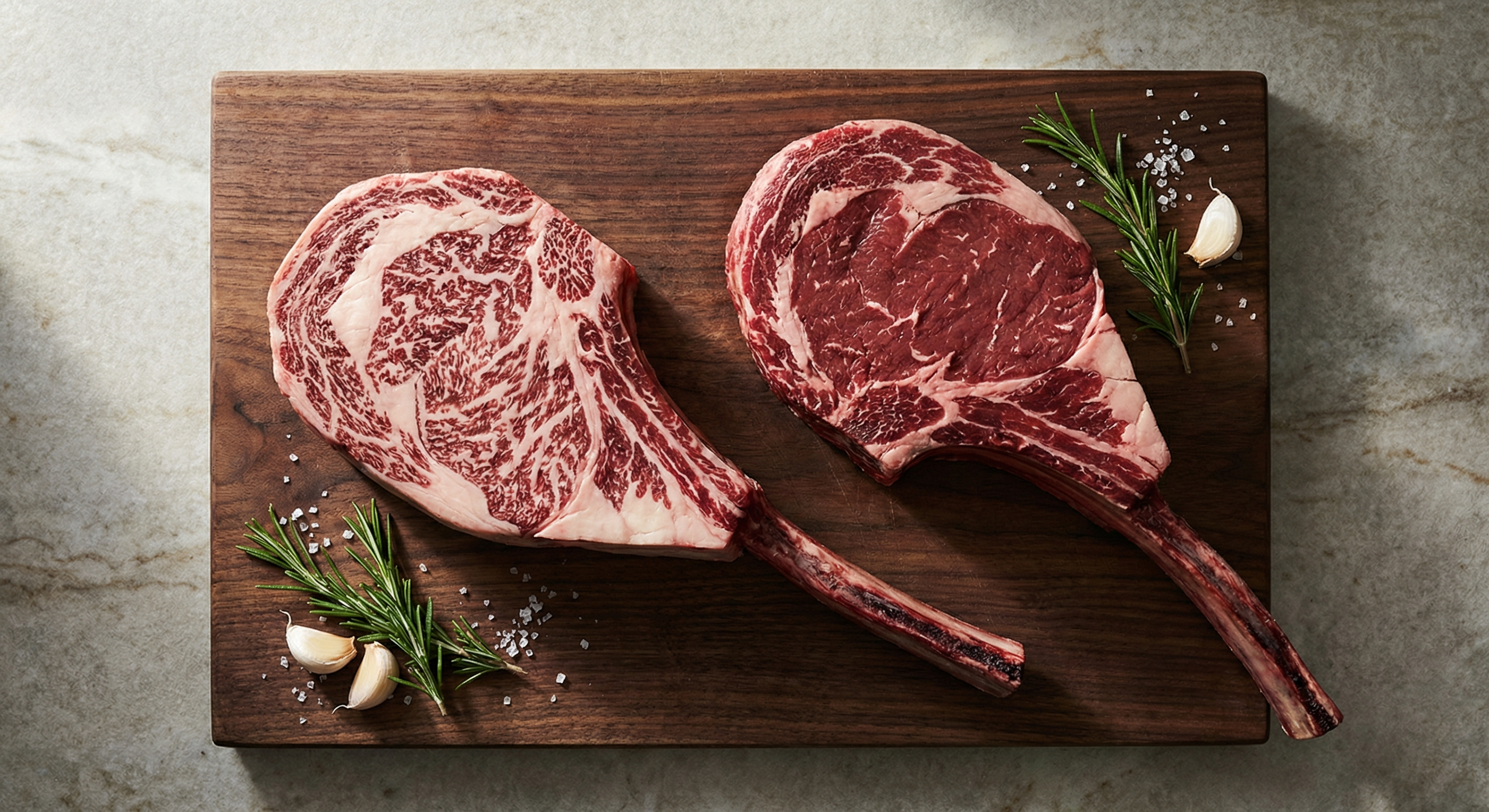
A tomahawk steak is theatrical by design — a full ribeye with an 8–12 inch frenched rib bone left attached for presentation. When you source that cut from wagyu cattle instead of conventional beef, you're multiplying both the visual drama and the price tag.
The question isn't which looks better on Instagram. It's whether the $150–$400 difference between a USDA Prime tomahawk and a wagyu tomahawk delivers a proportionally different eating experience — and for whom.
Having sourced both types for restaurants and private clients over the past 15 years, I can tell you the gap is substantial, but not in the ways most buyers expect.
The Cut Itself: What Makes a Tomahawk
Before we dive into breed differences, let's establish what defines a tomahawk steak.
A tomahawk is a bone-in ribeye with the entire rib bone frenched (meat and fat removed from the bone) to create that distinctive handle. According to USDA beef cut specifications, it comes from the beef rib primal (ribs 6–12), specifically cuts closer to the chuck end where the bone is longest and most dramatic.
The meat itself is identical to a standard bone-in ribeye — the same longissimus dorsi muscle, the same spinalis cap (ribeye cap), the same internal marbling. The bone adds zero flavor during the short cook time, but it does slow heat transfer slightly and creates an impressive plating presentation.
Typical dimensions:
- Meat portion: 1.5–2.5 lbs (24–40 oz)
- Bone length: 8–12 inches
- Total weight: 2–3.5 lbs including bone
- Thickness: 2–2.5 inches
Now, let's talk about what changes when you source this cut from different cattle genetics.
Marbling: The Core Difference
This is where wagyu and conventional beef diverge most dramatically.
Regular Tomahawk Marbling (USDA Prime)
A quality regular tomahawk — let's say USDA Prime, which represents the top 3–5% of American beef — shows strong marbling by conventional standards. You'll see distinct white fat streaks running through the deep red muscle, concentrated more heavily in the ribeye cap and less so in the center eye.
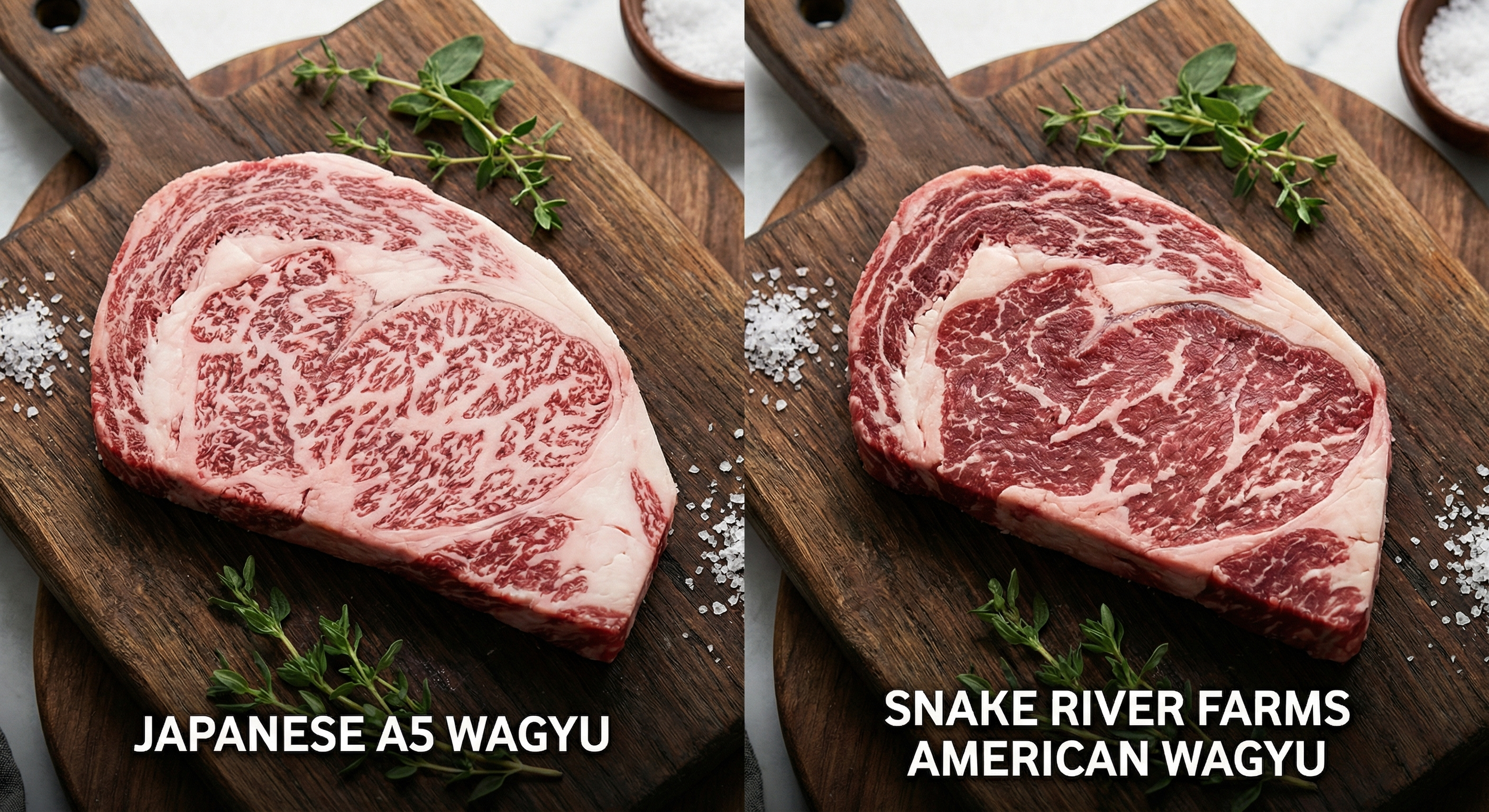
USDA Prime typically measures 8–10% intramuscular fat, which places it around BMS 4–5 on Japan's Beef Marbling Standard scale. The fat is visible and contributes to juiciness, but the lean muscle dominates the visual appearance. When cooked, the fat melts into the muscle fibers, creating richness without overwhelming the beef flavor.
In my experience testing hundreds of Prime tomahawks for restaurant clients, you get consistent quality but predictable results. The beef taste is front and center — savory, mineral-rich, with a satisfying chew.
Wagyu Tomahawk Marbling
Wagyu flips the ratio. Instead of 8–10% intramuscular fat, you're looking at:
- American wagyu (F1 crossbred): 15–25% intramuscular fat (BMS 6–9)
- Australian wagyu (purebred): 25–35% intramuscular fat (BMS 8–10)
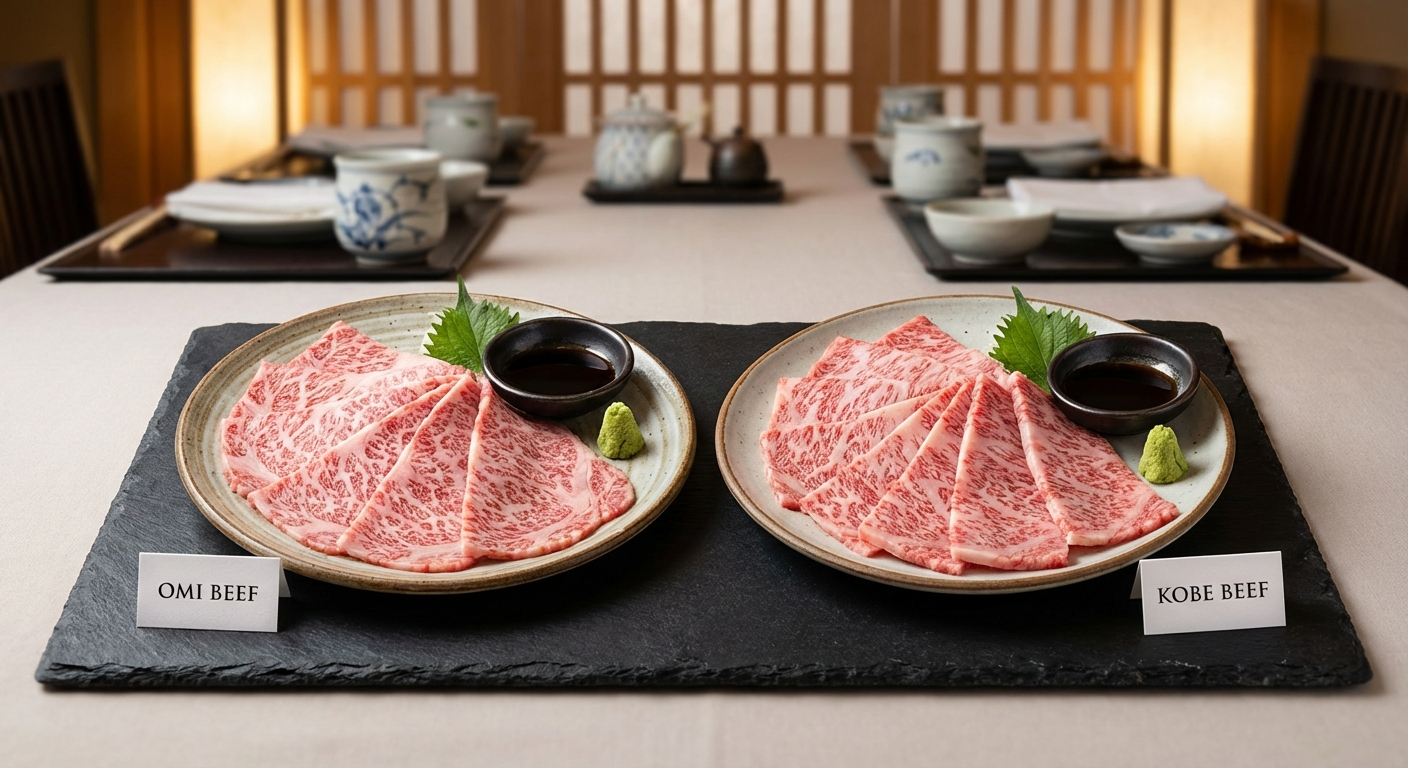
- Japanese A5 wagyu: 35–50% intramuscular fat (BMS 10–12)
The visual difference is immediate. Rather than red-with-white-streaks, high-grade wagyu tomahawks shift toward an almost pink-white appearance. The marbling isn't just between muscle bundles — it infiltrates individual muscle fibers at a microscopic level, creating that trademark snowflake pattern.
I remember the first A5 tomahawk I evaluated for a Beverly Hills steakhouse. Under the overhead lights, it looked closer to a slab of pork belly than a ribeye. The client was skeptical until we cooked it.
Flavor & Texture: Two Different Eating Experiences
The marbling difference translates to fundamentally different flavors.
Regular Tomahawk Flavor Profile
A well-prepared USDA Prime tomahawk delivers what most Americans think of as an exceptional steak:
- Prominent beef flavor: Savory, slightly mineral, with that characteristic iron note from well-developed muscle
- Juicy but not fatty: The intramuscular fat lubricates the bite without dominating
- Satisfying chew: There's texture and substance — you're eating muscle tissue with fat enhancing it, not fat with muscle suspended in it
- Clean finish: The flavor clears relatively quickly, inviting another bite
This is the steak experience most people grew up with and associate with quality beef. The 32–40 oz portion size feels appropriate because the flavor profile can sustain it.
Wagyu Tomahawk Flavor Profile
Wagyu inverts that experience entirely:
- Fat-forward richness: The primary sensation is butter-like unctuousness, not beef muscle
- Umami depth: High concentrations of oleic acid and glutamate create persistent savory richness
- Subtle sweetness: A faint sweet note emerges from the specific fatty acid composition
- Minimal chew: The meat practically melts — there's almost no resistance
- Long finish: The richness coats your palate and lingers for minutes
According to research published in Meat Science, wagyu fat melts at approximately 77°F (25°C) — well below body temperature — compared to 104°F (40°C) for conventional beef fat. This lower melting point creates that distinctive melt-in-your-mouth sensation.
The intensity of wagyu makes large portions impractical. When I serve Japanese A5 tomahawks at private events, I recommend 3–4 oz portions per person, not the 16–20 oz servings typical for regular steaks. The richness is overwhelming in large quantities.
Price Comparison: Understanding the Premium
The cost gap between regular and wagyu tomahawks is substantial.
Regular Tomahawk Pricing (2026)
- USDA Choice tomahawk: $40–$60 per steak
- USDA Prime tomahawk: $80–$120 per steak
- Dry-aged Prime tomahawk: $120–$180 per steak
At the top end, you're paying $3–$5 per ounce for exceptional conventional beef.
Wagyu Tomahawk Pricing (2026)
- American wagyu (F1 cross) tomahawk: $150–$250 per steak
- Australian wagyu (BMS 8–9) tomahawk: $250–$350 per steak
- Japanese A5 wagyu tomahawk: $350–$600+ per steak
At the Japanese A5 tier, you're looking at $15–$20 per ounce — roughly 4–5x the cost of Prime beef.
Why the premium? Production costs drive it:
- Feed duration: Wagyu cattle are grain-finished for 400–600 days vs. 120–180 days for conventional beef
- Feed costs: Wagyu consume significantly more grain to achieve extreme marbling
- Yield: The heavy marbling reduces the percentage of saleable lean meat
- Import costs: Japanese A5 faces tariffs, cold chain logistics, and strict export certification
According to USDA Economic Research Service data, feed costs alone for wagyu production run 3–4x higher per head than conventional beef due to the extended finishing period.
Cooking Differences: Why Technique Matters More with Wagyu
The high fat content in wagyu tomahawks requires modified cooking techniques.
Cooking Regular Tomahawks
Standard tomahawks thrive with high-heat methods:
- Reverse sear: Slow-roast at 250°F to 115°F internal, then sear hard on high heat
- Direct grill: Sear over 500°F+ coals, then move to indirect heat to finish
- Pan-roast: Sear in cast iron, finish in 400°F oven
You want aggressive browning to develop Maillard reaction compounds (that savory crust), and the lean muscle can handle the heat. Target 125–130°F for medium-rare.
Cooking Wagyu Tomahawks
Wagyu's fat content changes everything:
Lower heat: Excessive heat causes the abundant intramuscular fat to render out too quickly, leaving you with a greasy mess and dry meat underneath. I've watched chefs ruin $400 steaks by treating wagyu like Prime beef.
Gentler approach:
- Low-temp roast to 115°F internal (takes longer due to high fat content insulating the center)
- Quick, light sear — 45–60 seconds per side max
- Rest 10–15 minutes to allow fat to redistribute
- Slice thin (1/4 inch) against the grain
Temperature considerations: Because wagyu fat melts at 77°F, anything above 130°F internal starts to feel greasy rather than luscious. I recommend 120–125°F internal for optimal texture — technically rare-plus, but the fat content makes it feel richer than medium-rare conventional beef.
Seasoning: Salt only. The beef's flavor complexity doesn't need enhancement, and the fat carries the salt beautifully. Skip the pepper, garlic, and herb butter — they compete rather than complement.
Nutritional Comparison: More Fat Means Different Macros
The marbling gap creates predictable nutritional differences.
Regular Tomahawk (USDA Prime, 4 oz cooked)
- Calories: 280–320
- Protein: 28–32g
- Fat: 16–20g
- Saturated fat: 7–9g
Wagyu Tomahawk (American Wagyu, 4 oz cooked)
- Calories: 380–440
- Protein: 20–24g
- Fat: 32–38g
- Saturated fat: 14–16g
Japanese A5 wagyu pushes even higher — often 500+ calories per 4 oz due to 40–50% intramuscular fat content.
One nutritional advantage wagyu offers: its fat contains significantly higher proportions of monounsaturated fatty acids (the same heart-healthy oleic acid found in olive oil). Research from Texas A&M's meat science department shows wagyu beef contains up to 40% oleic acid compared to 15–20% in conventional beef.
Still, you're consuming substantially more total fat and calories per serving with wagyu.
Decision Matrix: Which Tomahawk Makes Sense?
Here's how I advise clients on choosing between regular and wagyu tomahawks.
Choose Regular Tomahawk (USDA Prime) If:
- You want the classic steakhouse experience — prominent beef flavor with juicy texture
- You're feeding multiple people and want 8–12 oz portions per person
- You plan to grill or use high-heat methods
- Your budget is $80–$150 for the steak
- You prefer substantial chew and texture over melt-in-mouth richness
- You're pairing with bold sides like garlic mashed potatoes or creamed spinach
Choose American Wagyu Tomahawk If:
- You want a middle-ground option — noticeably richer than Prime but less intense than Japanese A5
- You're celebrating something special but don't want to spend $400+ on one steak
- You're serving 4–6 oz portions to highlight the marbling without overwhelming diners
- Your budget is $150–$250
- You want impressive marbling that still looks recognizably like steak
Choose Australian or Japanese A5 Wagyu Tomahawk If:
- You want the ultimate luxury beef experience — something fundamentally different from conventional steak
- You're comfortable with 3–4 oz portions due to extreme richness
- You'll use gentle cooking methods (low-temp roast + light sear)
- Your budget is $250–$600
- You appreciate fat as the primary flavor vehicle, not muscle
- You're pairing with minimal sides — pickled vegetables, simple greens, wasabi
Sourcing Considerations: Finding Quality Options
Not all tomahawks — wagyu or conventional — are created equal.
What to Look For in Regular Tomahawks
- USDA Prime grade minimum: Choice-grade tomahawks lack sufficient marbling to justify the bone-in premium
- Even thickness: Look for steaks cut evenly (2–2.5 inches throughout) for consistent cooking
- Clean frenching: The bone should be scraped clean with no meat or fat clinging to it
- Bright color: Deep red meat, white fat — avoid gray or brown tinges
- Dry-aged option: If your budget allows, 28–45 day dry-aged Prime tomahawks develop concentrated flavor that elevates the experience
What to Look For in Wagyu Tomahawks
- Marbling score disclosure: Reputable sellers specify BMS (Beef Marbling Standard) or equivalent. If they just say "wagyu" without a score, be skeptical
- Origin transparency: Know whether you're buying American F1 cross, Australian purebred, or Japanese A5 — the categories aren't interchangeable
- Certification: Japanese A5 should come with a certificate of authenticity showing the farm, region, and BMS score
- Realistic pricing: If someone's selling "A5 tomahawk" for $120, it's not A5
I recommend The Meatery for verified wagyu sourcing — they're transparent about BMS scores, origin, and genetics. For Prime tomahawks, look for dry-aged options from quality butchers who can tell you the source ranch.
Common Misconceptions About Tomahawk Steaks
Let me clear up a few myths I hear constantly from clients.
Myth 1: "The Bone Adds Flavor"
It doesn't — not in any way you can actually taste. Tomahawks cook for 45–90 minutes total. That's nowhere near enough time for bone marrow or bone compounds to migrate into the meat. The bone is purely aesthetic and slightly slows heat transfer to the meat closest to it.
Myth 2: "Wagyu is Always Better Than Prime"
Better is subjective. If you want the intense beefy flavor of well-developed muscle, Prime delivers that better than wagyu. Wagyu is richer and more luxurious, but it's a different experience, not a superior version of the same thing.
Myth 3: "All Wagyu Tomahawks Are Japanese A5"
False. Most "wagyu tomahawks" sold in the U.S. are American F1 crossbred (50% wagyu genetics) or Australian purebred. Genuine Japanese A5 tomahawks are rare and expensive. If the price seems reasonable, you're not getting A5.
Myth 4: "Bigger is Better"
For wagyu especially, portion size matters. A 40 oz wagyu tomahawk sounds impressive, but the richness makes it nearly impossible to finish. I've seen $500 steaks go half-eaten because the diner couldn't handle the intensity. Smaller, higher-quality portions are smarter.
Final Recommendation: Which Should You Buy?
After 15 years evaluating beef for clients, here's my honest take.
For most occasions, buy USDA Prime tomahawks. They deliver the classic steakhouse experience, handle high-heat cooking methods forgivingly, and serve large groups without breaking the bank. A well-sourced Prime tomahawk — especially dry-aged — is spectacular and satisfying in a way that feels familiar and indulgent without being overwhelming.
For special celebrations or culinary exploration, buy American wagyu tomahawks. They split the difference between Prime and A5 — noticeably richer and more marbled than Prime, but still structured enough to serve in reasonable portions (6–8 oz) and cook with standard techniques. This is the sweet spot for most people upgrading from conventional beef.
For once-in-a-lifetime experiences or true luxury, buy Australian or Japanese A5 tomahawks. These aren't everyday steaks. They're culinary experiences closer to foie gras or uni than traditional beef. Serve small portions (3–4 oz), cook gently, and prepare for something fundamentally different. If you're not ready for that level of fat-forward intensity, you'll waste your money.
The best tomahawk isn't the most expensive one. It's the one that matches your expectations, cooking skill, and what you actually want to eat that night.