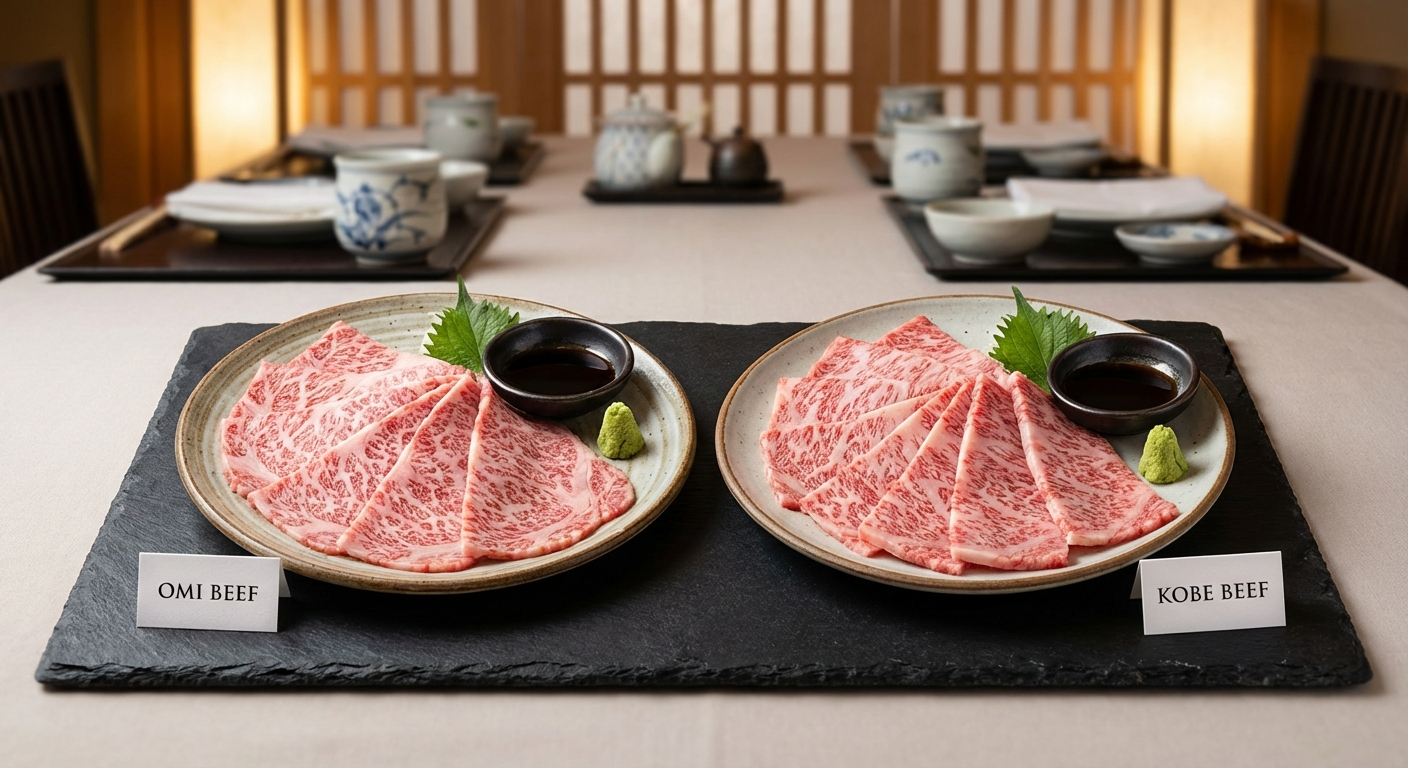
Wagyu vs Angus Beef: How They Actually Compare
Wagyu and Angus are both premium beef categories — but they're built on completely different genetics, grading systems, and flavor profiles. Here's what separates them.
Angus is America's most popular beef breed. Wagyu is Japan's most prized. Both command premium prices, but they deliver fundamentally different eating experiences. Understanding the gap between them helps you decide what belongs on your plate — and whether the price difference is justified.
This isn't a question of which is "better." It's about understanding two distinct approaches to beef quality that evolved on opposite sides of the Pacific.
The Genetic Foundation: Why These Breeds Are Different
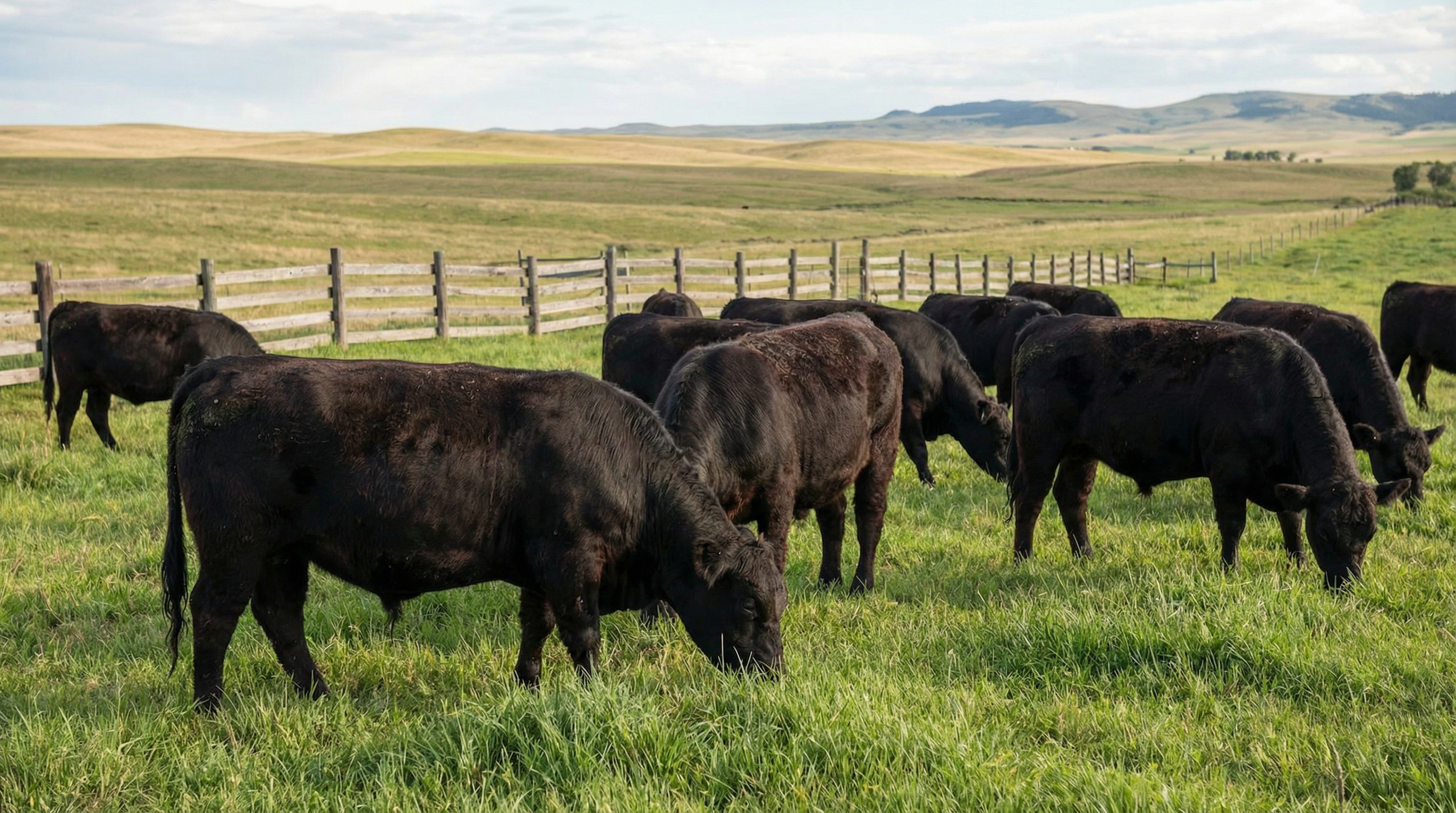
Angus cattle (Aberdeen Angus) were developed in northeastern Scotland in the 1800s for efficient growth, hardiness, and consistent meat quality. They're muscular, adaptable animals that convert feed to lean protein reliably. Angus genetics dominate American beef — roughly 60% of the U.S. commercial herd carries Angus influence.
Wagyu cattle (primarily Japanese Black, or Kuroge Washu) were developed in Japan over centuries with a completely different goal: maximizing intramuscular fat. Japanese breeders selected for marbling above all else, creating animals with a genetic predisposition for extreme fat deposition within the muscle fibers.
This genetic divergence produces measurably different meat:
- Certified Angus Beef (CAB): Typically 4–8% intramuscular fat, USDA Choice to low Prime
- American wagyu (Angus-wagyu cross): 12–20% intramuscular fat
- Japanese fullblood wagyu (A4–A5): 25–40%+ intramuscular fat
That's not a subtle distinction. At the top end, wagyu contains 5–8x the intramuscular fat of quality Angus beef.
Marbling: The Most Visible Difference
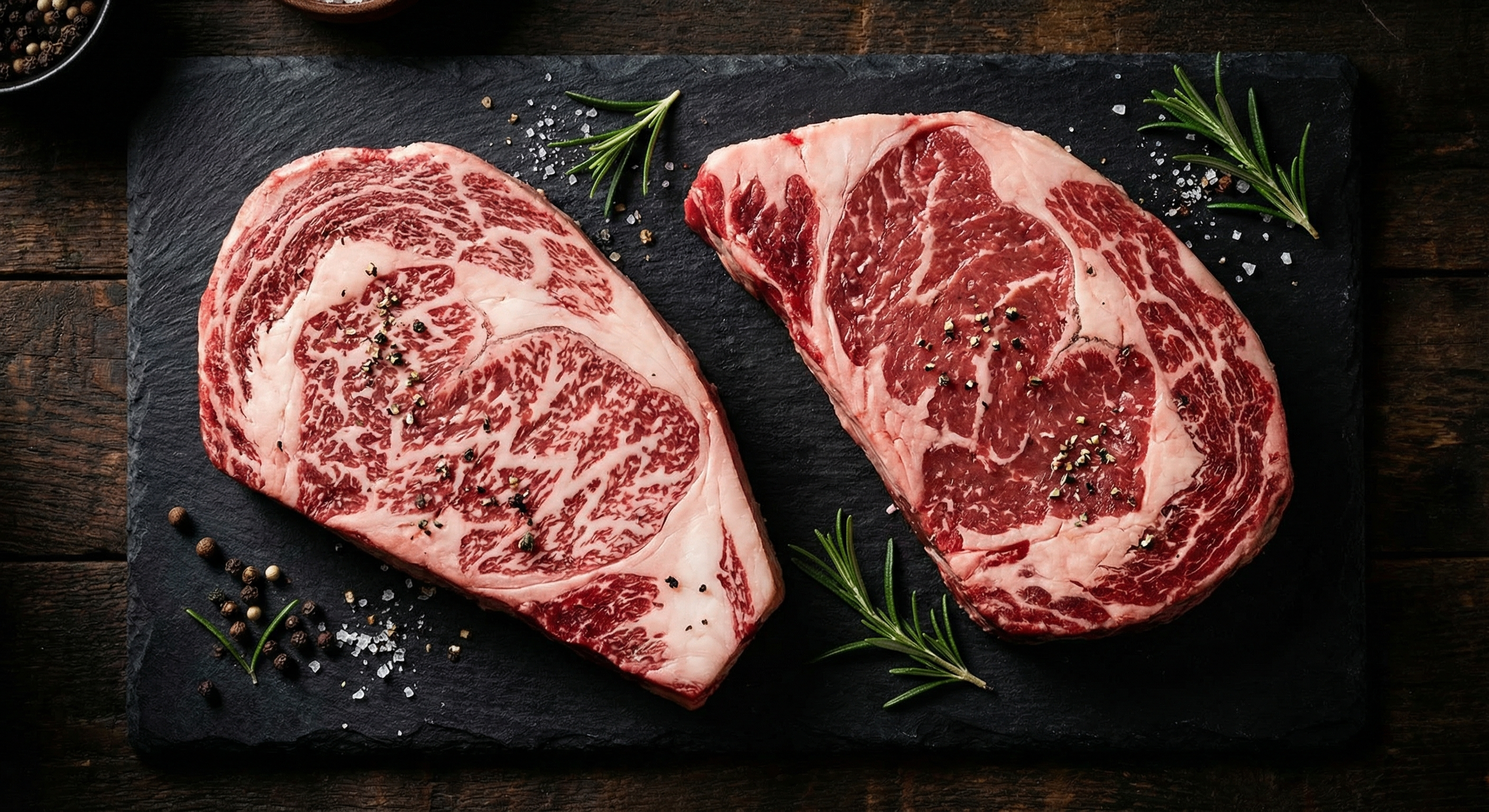
Marbling is the defining visual and textural divider between these two breeds.
Angus Marbling
Quality Angus beef — especially Certified Angus Beef (CAB) — shows clean, moderate marbling. You'll see distinct white streaks running through red muscle, concentrated in certain areas of the cut. CAB requires at least "modest" marbling (the upper end of USDA Choice), which means visible fat webbing throughout the steak but with the red muscle clearly dominant.
Even at its best, Angus marbling follows the USDA scale. The highest-grading Angus steaks reach USDA Prime (roughly BMS 4–5 on Japan's scale), which represents exceptional marbling by American standards but moderate marbling by Japanese standards.
Wagyu Marbling
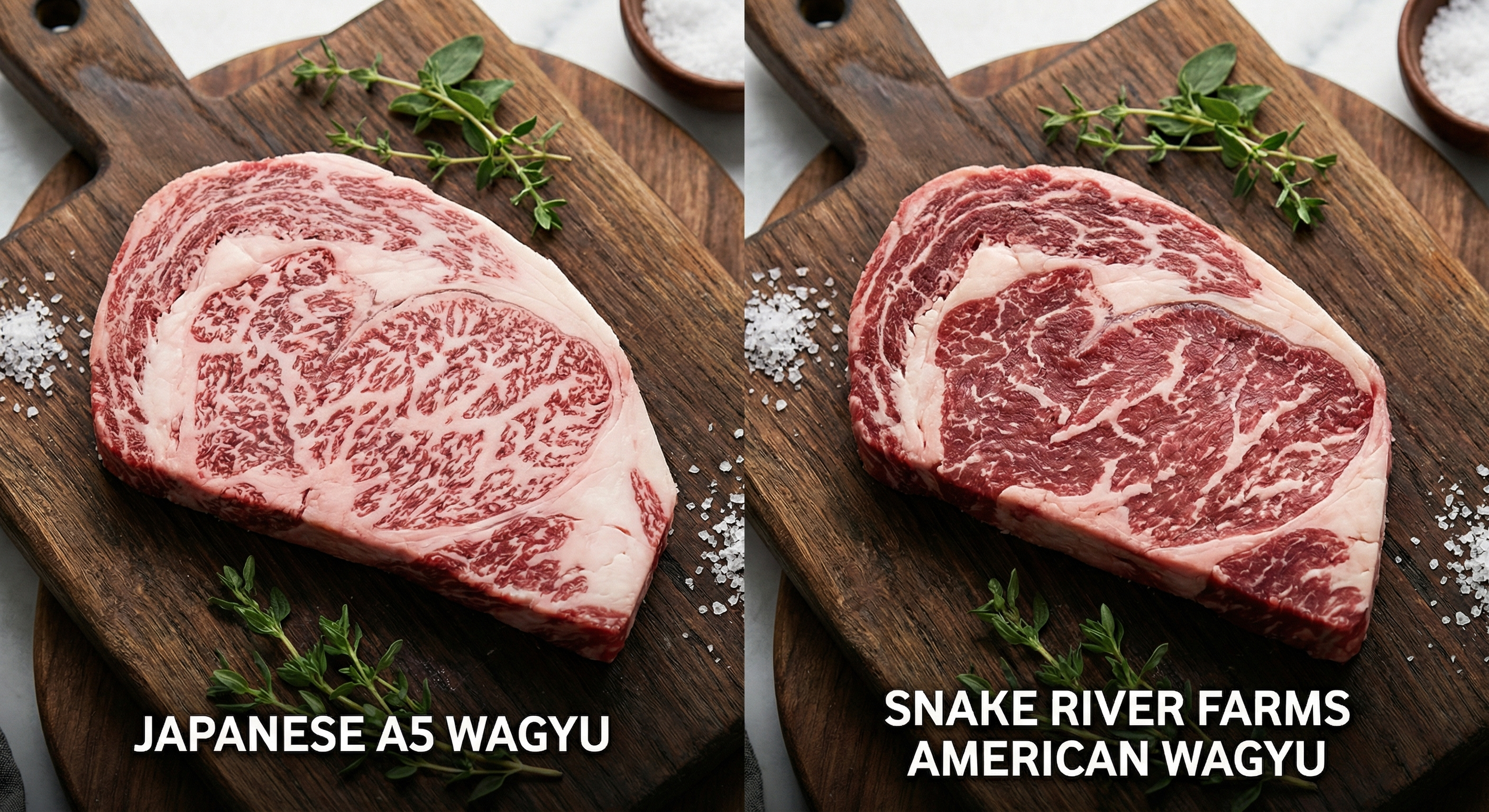
Japanese wagyu marbling is a different phenomenon entirely. In BMS 8+ beef (A4 grade and above), the fat distribution is so fine and uniform that the meat shifts from red-with-white-streaks to an almost pink-white appearance. The fat doesn't just run between muscle fibers — it infiltrates them at a microscopic level.
Japan's BMS scale runs from 1 to 12. Where top Angus peaks at BMS 4–5, A5 wagyu starts at BMS 8 and can reach 12. The visual difference is immediately obvious even to someone who's never compared the two before.
Flavor Profile: Rich Complexity vs Clean Beef Taste
The marbling difference translates directly to flavor.
Angus Flavor
Well-raised Angus beef delivers what most Americans think of when they imagine a great steak: savory, mineral-rich, with a clean beefy intensity. The fat adds juiciness and richness, but the lean muscle drives the experience. There's a satisfying chew, a pronounced iron note, and that deeply savory quality that comes from well-developed muscle fibers.
This is the steak you want to grill hot and fast, season with salt and pepper, and eat as a centerpiece. Angus excels in applications where the beef flavor itself is the star — steakhouse dinners, burgers, roasts.
Wagyu Flavor
Wagyu inverts the ratio. The intramuscular fat becomes the primary flavor vehicle, delivering an experience closer to butter or foie gras than traditional steak:
- Butteriness: Wagyu fat melts at approximately 77°F (25°C) — well below body temperature — compared to about 104°F (40°C) for regular beef fat. It literally dissolves on your tongue.
- Umami depth: Higher concentrations of oleic acid and glutamate create a persistent savory richness that lingers far longer than Angus.
- Sweetness: Many tasters detect a subtle sweet note in high-grade wagyu, produced by the specific fatty acid composition.
- Minimal chew: The fat-to-muscle ratio means wagyu practically melts. There's almost no resistance when you bite through it.
This richness is also wagyu's limitation for some diners. A 16-oz A5 wagyu ribeye would overwhelm most palates. Japanese wagyu is traditionally served in 2–4 oz portions precisely because of this intensity.
Grading Systems: Different Standards for Different Goals
Angus and wagyu operate under fundamentally different quality frameworks.
USDA Grading (Angus)
American beef — including Angus — is graded by USDA inspectors based primarily on marbling and animal maturity:
- USDA Select: Slight marbling, leaner eating experience
- USDA Choice: Small to moderate marbling (the American sweet spot)
- USDA Prime: Abundant marbling (top 3–5% of all U.S. beef)
Certified Angus Beef adds additional requirements beyond USDA grading: specific breed criteria, marbling minimums, sizing standards, and age restrictions. It's a quality program built on top of the USDA system.
Japanese Meat Grading (Wagyu)
Japan's system evaluates yield grade (A, B, or C) and meat quality grade (1–5) based on four factors: marbling (BMS), meat color, fat color and quality, and firmness/texture. The highest grade — A5 — requires BMS 8 or above plus excellent scores in all other categories.
The scales don't translate directly, but for reference:
- USDA Prime ≈ BMS 4–5 ≈ roughly Japanese B3–A3
- Japanese A4 (BMS 6–7) has no USDA equivalent — it exceeds Prime
- Japanese A5 (BMS 8–12) is off the American scale entirely
Price: What You're Actually Paying For
The price gap between Angus and wagyu is substantial and directly reflects production costs.
- Certified Angus Beef ribeye: $18–$30/lb retail
- American wagyu (crossbred) ribeye: $40–$80/lb
- Japanese A5 wagyu ribeye: $120–$250/lb
Why so expensive? Japanese wagyu cattle are raised for 28–36 months (vs. 18–22 for Angus), fed specialized diets, and managed in smaller herds with individual attention. The genetics themselves are expensive — fullblood wagyu semen and embryos command premium prices. And Japan strictly limits exports, keeping supply constrained.
American wagyu (typically 50% wagyu, 50% Angus crosses) splits the difference in both price and quality. It offers more marbling than pure Angus at a fraction of Japanese wagyu prices — often the best value proposition for home cooks wanting to explore wagyu character.
Cooking: Different Approaches for Different Meats
The marbling gap means Angus and wagyu respond differently to heat.
Cooking Angus
Angus beef is forgiving and versatile. Standard high-heat methods work perfectly:
- Grill at 450–550°F for steaks
- Cast iron sear with butter basting
- Reverse sear for thick cuts
- Low and slow for roasts and brisket
Angus steaks benefit from resting, can be cooked to medium without drying out (thanks to moderate marbling), and pair well with bold seasonings, sauces, and compound butters.
Cooking Wagyu
High-grade wagyu requires restraint. The extreme fat content means:
- Cook thin slices (¼ to ½ inch) briefly over high heat — 30–60 seconds per side
- Season minimally — salt only, applied just before cooking
- Serve smaller portions (3–5 oz for A5) to avoid palate fatigue
- Skip the butter — the meat provides its own
- Avoid cooking past medium-rare — you'll render out the marbling that you paid for
American wagyu crossbreeds are more flexible, handling standard steak cooking methods while still benefiting from slightly gentler treatment than pure Angus.
Nutrition: Similar Protein, Different Fat Profiles
Both provide complete protein with all essential amino acids, but the fat composition differs meaningfully:
- Angus: Higher in saturated fat relative to total fat content. A 6-oz Angus ribeye (Choice) contains roughly 36g total fat, 15g saturated.
- Wagyu: Higher total fat but with a more favorable fatty acid profile. Wagyu fat contains up to 40% more monounsaturated fatty acids (particularly oleic acid, the same heart-healthy fat in olive oil) than conventional beef fat.
Neither is a health food in large quantities, but the common assumption that wagyu is "worse for you" because it has more fat oversimplifies the picture. The type of fat matters, and wagyu's fatty acid profile is closer to that of fish or olive oil than typical beef fat.
Which Should You Buy?
This depends entirely on the occasion and your priorities:
Choose Angus when:
- You want a classic, satisfying steak dinner
- You're grilling for a group
- The beef needs to stand up to bold flavors, marinades, or sauces
- You want large portions (12–16 oz steaks)
- Budget matters — Angus delivers excellent quality per dollar
Choose wagyu when:
- You want a special-occasion, memorable eating experience
- You appreciate nuanced, rich flavor over straightforward beef taste
- You're serving smaller portions as a tasting or course
- You want to explore the upper limits of beef quality
- Texture (melt-in-your-mouth) matters more than chew
Consider American wagyu when:
- You want the best of both worlds — more marbling than Angus, more beef flavor than A5
- You want a full-size steak with enhanced richness
- You're curious about wagyu but not ready for A5 prices
The Bottom Line
Angus and wagyu aren't competing for the same role on your plate. Angus is the benchmark for excellent everyday beef — reliable, versatile, and genuinely delicious at its best. Wagyu is an entirely different eating experience, built on centuries of selective breeding for a quality most beef breeds can't achieve.
Neither is objectively superior. The best beef is the one that matches the moment — and understanding these differences means you'll always make the right call.