Wagyu vs Filet Mignon: What You're Actually Comparing
Wagyu and filet mignon aren't competing categories — one is a breed, the other is a cut. Here's what actually matters when choosing between them.
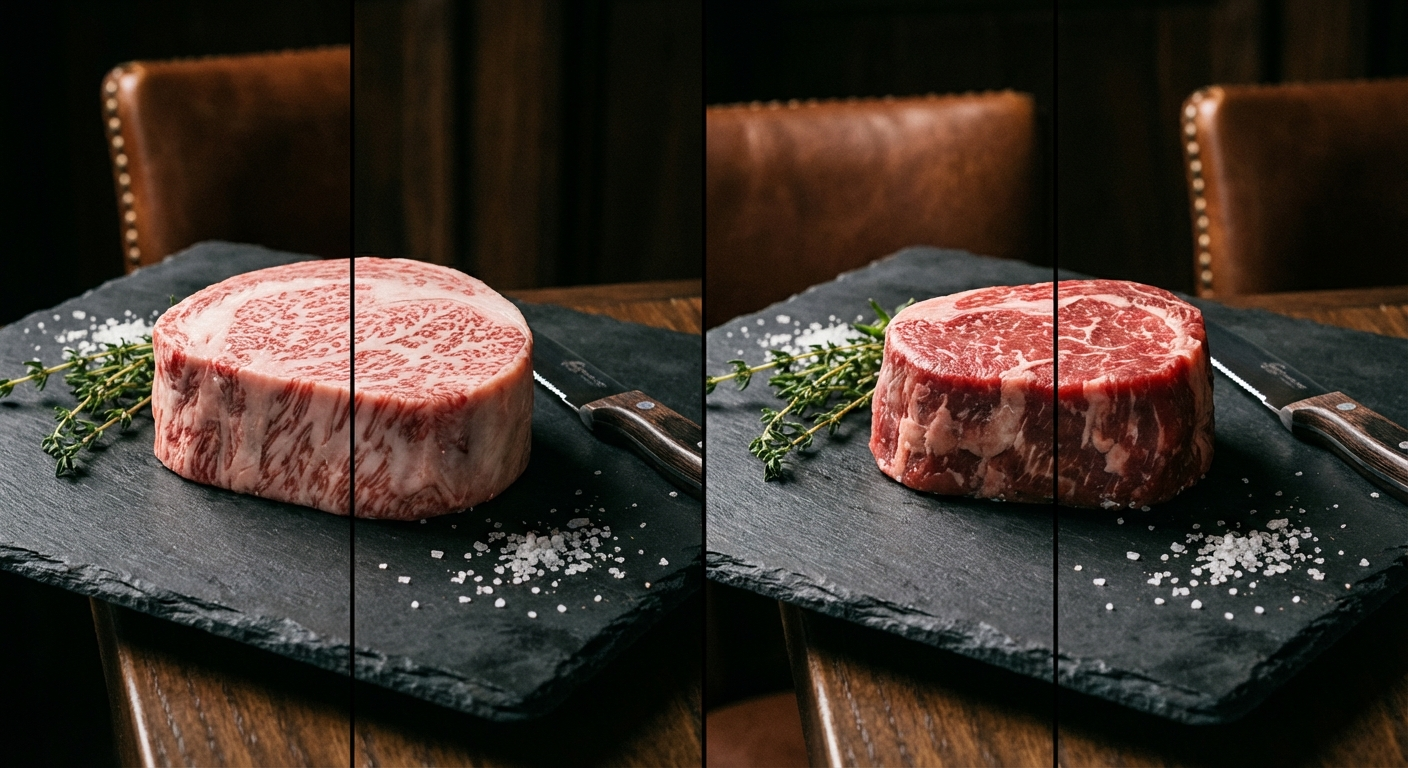
"Wagyu vs filet mignon" is one of the most common beef comparisons people search for, but it's built on a misunderstanding. Wagyu is a breed of cattle. Filet mignon is a specific cut from the tenderloin. They're not opposites — you can have wagyu filet mignon, and many high-end retailers sell exactly that.
The real question most people are asking is: should I spend my money on a wagyu steak (usually ribeye or strip) or a traditional filet mignon? That's a genuinely useful comparison, and the answer depends on what you value in a steak.
The Core Difference: Breed vs Cut
Before diving into the comparison, let's clarify the terms:
- Wagyu refers to Japanese cattle breeds (primarily Japanese Black / Kuroge) genetically predisposed to extreme intramuscular marbling. Wagyu cattle produce beef across every cut — ribeye, strip, tenderloin, chuck, brisket, and more.
- Filet mignon is the thick center portion of the beef tenderloin, located along the spine. It's the most tender cut on any animal, regardless of breed. A filet mignon can come from Angus, Hereford, wagyu, or any other breed.
When people compare "wagyu vs filet mignon," they're usually comparing a marbled wagyu steak (ribeye or strip) against a conventional USDA Prime or Choice filet mignon. That's the comparison we'll break down.
Flavor Profile: Rich vs Clean
This is where the two diverge most dramatically.
Wagyu Ribeye or Strip (BMS 6+)
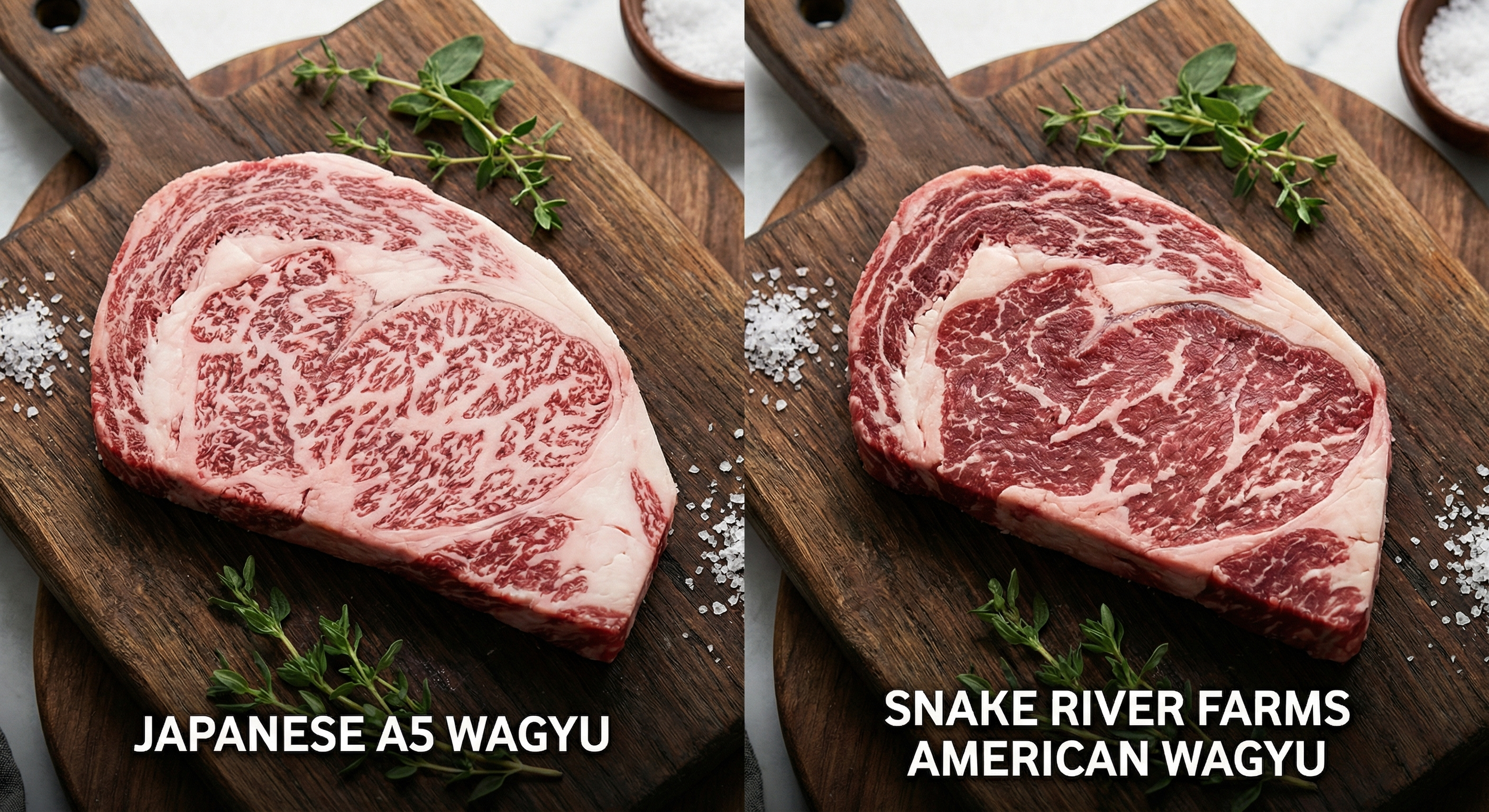
Wagyu steaks from high-marbling cuts deliver an intensely rich, buttery flavor. The intramuscular fat melts at a low temperature (wagyu fat has a higher ratio of monounsaturated oleic acid), creating a coating effect on your palate. The flavor is complex — beefy, sweet, and almost umami-forward. A Japanese A5 wagyu ribeye at BMS 10-12 is so rich that most people find 4-6 ounces to be a full serving.
Traditional Filet Mignon (USDA Prime or Choice)
Filet mignon is prized for tenderness, not fat. It's the leanest premium steak cut, with a clean, mild beef flavor. The texture is velvety and almost buttery from tenderness alone — not from fat rendering. A well-prepared filet lets you taste the beef itself without the richness overwhelming the palate. Most people comfortably eat an 8-10 ounce filet.
The Overlap: Wagyu Filet Mignon
Wagyu tenderloin (filet mignon cut from wagyu cattle) bridges both worlds. Even in highly marbled wagyu, the tenderloin is leaner than the ribeye — but still significantly more marbled than conventional filet. A wagyu filet at BMS 7-8 offers the tenderness of filet with noticeably more richness and flavor depth than a standard Prime version. It's the best of both worlds for many steak lovers, though it comes at a premium price.
Texture Comparison
Texture is the other major differentiator:
| Attribute | Wagyu Ribeye/Strip (A5) | USDA Prime Filet Mignon | Wagyu Filet Mignon |
|---|
| Tenderness | Very tender (fat-assisted) | Extremely tender (muscle structure) | Extremely tender + fat-assisted |
| Mouthfeel | Buttery, rich, melting | Velvety, clean, lean | Velvety with subtle richness |
| Chew | Almost none — dissolves | Minimal — soft bite | Minimal — soft and silky |
| Fat sensation | Dominant — coats the palate | Minimal — light and clean | Moderate — balanced |
| Best portion size | 3-6 oz (A5), 6-10 oz (American wagyu) | 6-10 oz | 6-8 oz |
The key insight: wagyu steaks achieve their tenderness largely through fat marbling, while filet mignon is inherently tender due to the tenderloin muscle doing almost no work during the animal's life. These are fundamentally different paths to a similar result.
Price Comparison: What You'll Actually Pay
Pricing varies significantly depending on the grade and origin. Here's what current US retail looks like from premium retailers like The Meatery:
| Steak | Price Per Pound (2026) | Typical Serving Size | Cost Per Serving |
|---|
| USDA Choice Filet Mignon | $30-$45/lb | 8 oz | $15-$23 |
| USDA Prime Filet Mignon | $50-$75/lb | 8 oz | $25-$38 |
| American Wagyu Ribeye | $50-$90/lb | 8 oz | $25-$45 |
| Australian Wagyu Ribeye (MSA 7+) | $55-$100/lb | 8 oz | $28-$50 |
| Japanese A5 Wagyu Ribeye | $120-$250/lb | 4 oz | $30-$63 |
| American Wagyu Filet Mignon | $60-$100/lb | 6 oz | $23-$38 |
| Japanese A5 Wagyu Filet Mignon | $150-$300/lb | 4 oz | $38-$75 |
The surprise: On a per-serving basis, American wagyu ribeye and USDA Prime filet mignon are often in the same price range. The real price jump happens with Japanese A5 wagyu, where even small servings run $30-$75. Wagyu filet mignon from any origin commands a premium over both — you're paying for the best cut from the best breed.
Cooking Method Matters
How you cook each steak affects the experience significantly:
Best for Wagyu Ribeye/Strip
- Sear on cast iron or binchotan grill — high heat, short cook time
- Target medium-rare to medium (130-140°F internal) to render the intramuscular fat
- Slice thin if A5 grade — the richness is intense
- Season simply: salt, maybe a touch of wasabi or ponzu
- Avoid sous vide for A5 — the fat needs direct heat to develop flavor
Best for Filet Mignon
- Pan-sear then oven finish — the classic method
- Target rare to medium-rare (125-135°F) to preserve tenderness
- Butter baste during searing adds the fat that filet lacks naturally
- Works beautifully with compound butter, béarnaise, or pan sauce
- Excellent for sous vide — consistent edge-to-edge doneness
Best for Wagyu Filet Mignon
- Treat it closer to the filet method — it doesn't need the fat-rendering intensity of a wagyu ribeye
- Simple sear with finishing salt lets the natural marbling speak
- Skip heavy sauces — you don't need added fat on this cut
Which Should You Choose?
Your ideal pick depends on what you're after:
Choose Wagyu (Ribeye/Strip) If You Want:
- Maximum richness and an almost decadent eating experience
- Complex, layered beefy flavor with sweet, buttery notes
- A "special occasion" steak that feels like an event
- Smaller portions that pack more flavor punch per bite
Choose Filet Mignon If You Want:
- Pure tenderness as the star of the show
- A cleaner, less fatty flavor profile
- A larger portion you can eat comfortably
- A familiar luxury steak that never disappoints
- More flexibility with sauces and accompaniments
Choose Wagyu Filet Mignon If You Want:
- The ultimate combination of tenderness and marbling
- Something most people have never tasted
- A refined experience that balances richness and elegance
- To spend top dollar on the best single steak possible
The Bottom Line
Comparing wagyu to filet mignon is like comparing a sports car brand to a specific car model — they operate on different axes. Wagyu defines the quality tier of the beef. Filet mignon defines where on the animal the steak comes from.
For most home cooks exploring premium beef for the first time, American wagyu ribeye offers the most dramatic flavor upgrade per dollar. For steakhouse veterans who already love filet mignon, trying a wagyu filet (even American or Australian wagyu) will reveal what that cut can really do with proper marbling behind it.
And if you've never had Japanese A5 in any cut — start with a small portion of A5 ribeye or strip. It's a fundamentally different eating experience that redefines what beef can taste like. Then circle back to A5 filet mignon when you want something more refined and subtle.
Either way, you're eating well. The only wrong choice is overcooking it.