Wagyu vs Grass-Fed Beef: Completely Different Animals
Wagyu maximizes intramuscular fat. Grass-fed beef minimizes it. These two approaches to beef quality produce radically different eating experiences, nutritional profiles, and price points.
Wagyu and grass-fed beef represent two fundamentally different philosophies about what makes beef “good.” Wagyu breeders spent centuries maximizing intramuscular fat for tenderness and flavor. Grass-fed advocates prioritize leanness, omega-3 content, and pasture-based raising for health and environmental reasons.
Neither philosophy is wrong — but they produce wildly different products. Understanding the trade-offs helps you choose the right beef for your goals, whether that is peak indulgence, optimal nutrition, or something in between.
What Defines Each Category
Wagyu refers to beef from Japanese-origin cattle breeds (primarily Japanese Black) genetically predisposed to extreme intramuscular fat deposition. The term covers a spectrum from F1 crosses (50% wagyu genetics) to fullblood Japanese A5. What unites all wagyu is above-average marbling compared to conventional beef.
Grass-fed beef is defined by diet, not genetics. USDA grass-fed means the animal ate only grass and forage after weaning — no grain finishing. “Grass-fed, grass-finished” is the strictest designation, meaning the animal never consumed grain at any point. Any cattle breed can produce grass-fed beef.
This distinction is critical: wagyu is about genetics and marbling potential, grass-fed is about diet and fat composition. They are answering completely different questions about beef quality.
Marbling and Fat Content
This is the most dramatic difference between the two.
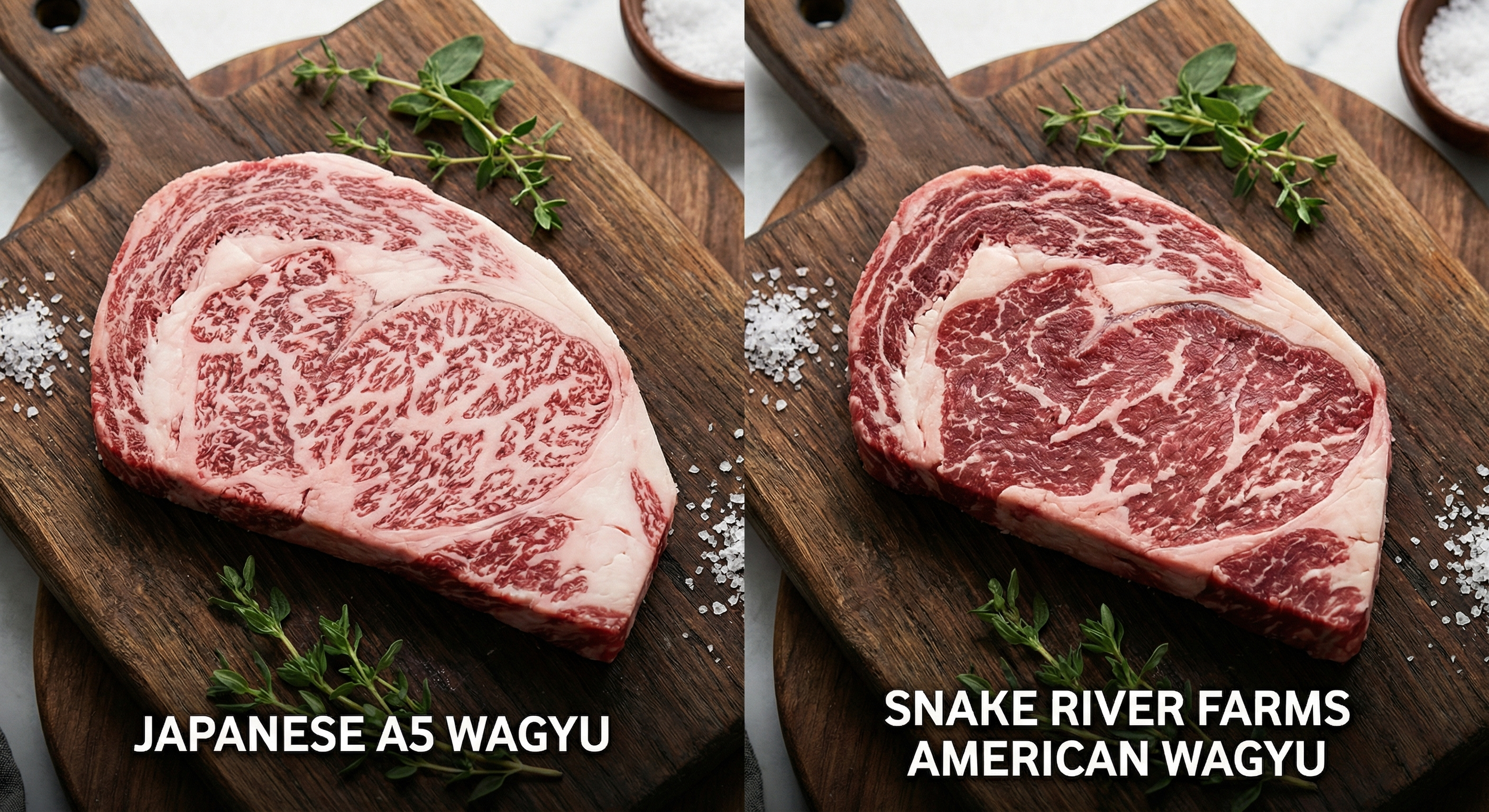
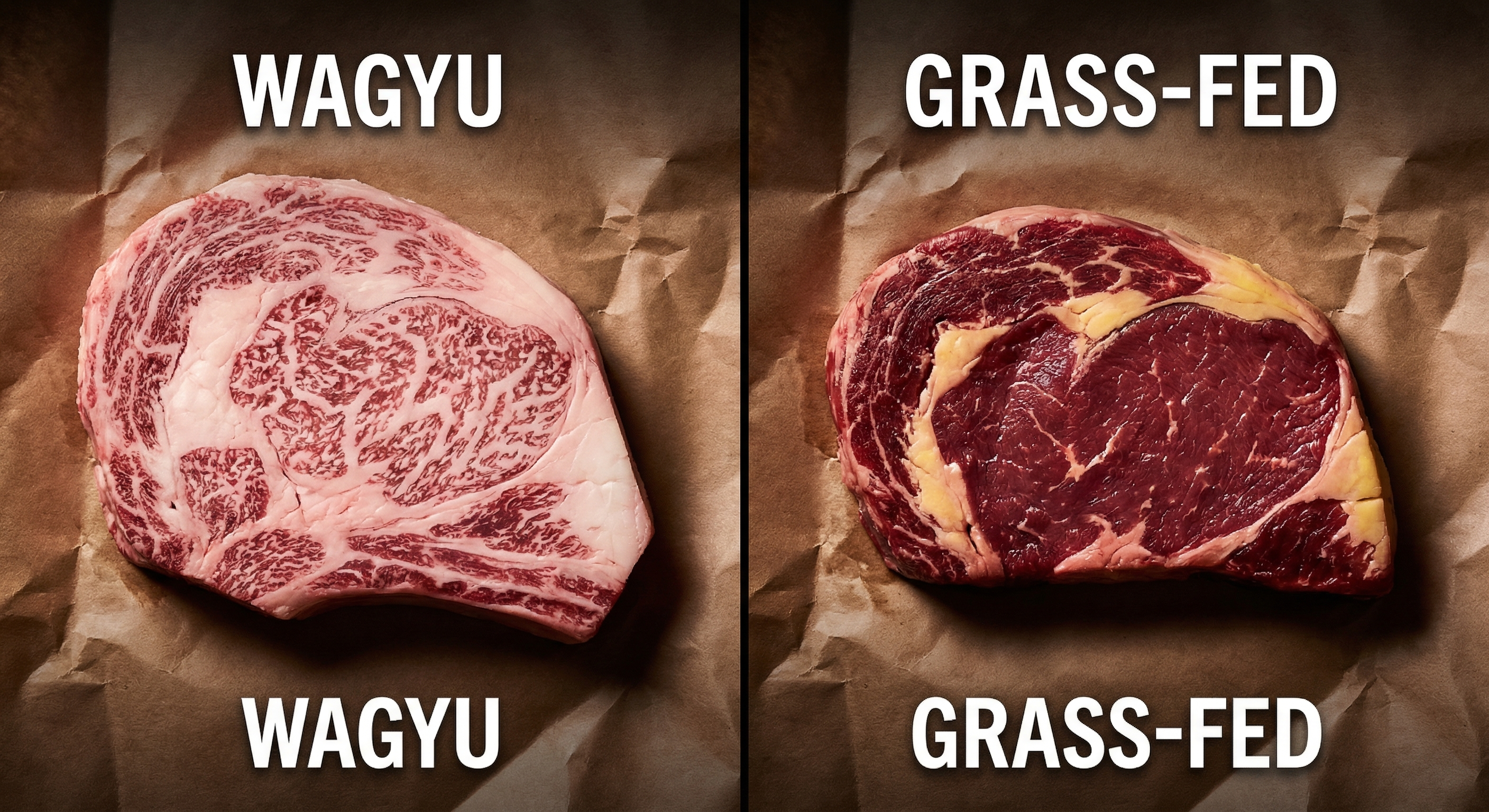
Wagyu contains 20–40%+ intramuscular fat in premium grades (Japanese A4–A5). Even lower-grade wagyu crosses typically carry 12–20% intramuscular fat. The fat is distributed in fine, web-like patterns throughout the muscle fiber — the hallmark “snowflake” marbling that makes wagyu visually distinctive.
Grass-fed beef is significantly leaner, typically 2–5% intramuscular fat. Without grain finishing (which promotes rapid fat deposition), grass-fed cattle develop muscle without the heavy marbling that grain-fed animals accumulate. A grass-fed ribeye may contain 3–4% intramuscular fat compared to 25%+ in an A5 wagyu ribeye.
This 5–10x difference in fat content is not subtle. It affects every aspect of the eating experience from first bite to the last.
Flavor Profile: Richness vs Mineral Depth
Wagyu flavor is dominated by its fat. High-grade wagyu delivers intense butteriness, sweetness, and umami. The intramuscular fat melts at low temperatures (wagyu fat has a lower melting point than conventional beef fat due to higher oleic acid content), creating the signature “melt in your mouth” sensation. It is rich, luxurious, and can be almost overwhelmingly decadent in large portions.
Grass-fed flavor is leaner, more mineral, and often described as “beefier” than grain-finished alternatives. Without heavy marbling masking the base meat flavor, you taste the actual muscle more directly. Grass-fed beef from well-managed pastures can have complex earthy, almost herbal notes that reflect the animal’s diet. Some people describe a slight gaminess, though this varies hugely by producer, breed, and season.
The flavor preference is genuinely personal. Wagyu lovers find grass-fed beef bland and tough. Grass-fed enthusiasts find wagyu greasy and one-dimensional. Both perspectives have merit.
Nutritional Comparison
Nutrition is where grass-fed beef holds a clear advantage on several metrics:
- Omega-3 fatty acids: Grass-fed beef contains 2–5x more omega-3s than grain-fed beef. Wagyu, despite its high fat content, is grain-finished and does not carry the same omega-3 advantage.
- CLA (conjugated linoleic acid): Grass-fed beef contains 2–3x more CLA, a fatty acid linked to anti-inflammatory and metabolic benefits.
- Vitamin content: Grass-fed beef is higher in Vitamins A and E, and beta-carotene (which gives grass-fed fat its characteristic yellowish tint).
- Total calories: A 6 oz grass-fed ribeye runs roughly 250–300 calories. The same portion of A5 wagyu exceeds 600 calories due to fat content.
However, wagyu fat has one notable nutritional highlight: it contains a higher proportion of monounsaturated fat (oleic acid) compared to conventional beef. This is the same “good fat” found in olive oil. Wagyu’s oleic acid percentage (up to 55% of total fat) is higher than most beef, including grass-fed.
For overall nutritional density per calorie, grass-fed wins. For oleic acid content specifically, wagyu has the edge.
Cooking Methods: Adaptation Required
You cannot cook these two products the same way and expect good results.
Wagyu (especially A4–A5) needs lower heat, shorter cooking times, and smaller portions. The extreme fat content means overcooking renders out too much fat, leaving you with a greasy, deflated steak. Sear hot and fast, serve rare to medium-rare, and cut portions to 3–4 oz. High-grade wagyu is an experience, not a meal-sized steak.
Grass-fed beef requires the opposite approach: lower heat and slightly longer cooking, ideally with added fat (butter basting, oil). The lean meat dries out quickly at high temperatures. Reverse searing works exceptionally well for grass-fed steaks — bring to temperature slowly in a low oven, then sear briefly for crust. Pull 5°F below your target temperature, because lean beef carries over more aggressively.
The most common mistake with grass-fed is treating it like conventional beef and overcooking it. The most common mistake with wagyu is treating it like a normal steak and cutting too large a portion.
Price and Value
The price gap is significant but depends on grade and sourcing:
- Quality grass-fed ribeye: $15–$30 per pound
- American wagyu ribeye (F1): $40–$80 per pound
- Australian wagyu ribeye (AUS-MEAT 7+): $80–$150 per pound
- Japanese A5 wagyu ribeye: $150–$300+ per pound
On a per-serving basis, the gap narrows slightly for high-grade wagyu because you eat less of it (3–4 oz vs 8–12 oz). A 4 oz serving of A5 at $200/lb costs $50, while a 10 oz grass-fed steak at $25/lb costs $15.60. Still a 3x difference, but not the 8–10x the per-pound prices suggest.
For everyday cooking — weeknight steaks, stews, ground beef, roasts — grass-fed beef offers excellent quality at a fraction of wagyu prices. Wagyu is best reserved for special occasions or small-portion appetizer presentations where its unique properties can shine.
Environmental and Ethical Considerations
This is an increasingly important factor for many buyers.
Grass-fed beef from well-managed rotational grazing operations can actually be carbon-negative, sequestering more carbon in soil than the cattle emit. Pasture-raised cattle also avoid the ethical concerns associated with feedlot confinement. That said, grass-fed beef requires more land per pound of beef produced and takes longer to reach market weight.
Wagyu production is grain-intensive by nature. Achieving high marbling scores requires extended grain-finishing (300–600+ days in feed programs). This means higher feed inputs, more confined raising conditions, and a larger carbon footprint per pound. The trade-off is a product that delivers an eating experience grass-fed cannot match.
If environmental impact drives your purchasing decisions, grass-fed from verified regenerative operations has a clear advantage. If eating experience is the priority, wagyu delivers something no grass-fed product can replicate.
Which One Should You Buy?
- Choose wagyu if: You want maximum tenderness, richness, and a special-occasion eating experience. Best for seared steaks in small portions, tataki, shabu-shabu, and anywhere intramuscular fat is the star.
- Choose grass-fed if: You prioritize nutrition, leanness, environmental impact, or want everyday premium beef at accessible prices. Best for roasts, grilling, burgers, stews, and anywhere you want clean beef flavor without excessive richness.
- Choose both if: Stock grass-fed for regular meals and keep wagyu for the nights that call for something extraordinary. They serve completely different roles in a well-stocked kitchen.
The smart move is not picking a side — it is understanding that these products serve different purposes. Once you stop comparing them and start using each where it excels, both become indispensable.