Wagyu vs Ibérico Pork: The World's Two Most Marbled Meats Compared
Wagyu and Ibérico represent the pinnacle of marbling in their respective species — one from Japanese cattle, the other from acorn-fed Spanish pigs. Here is how they actually compare.
Wagyu beef and Ibérico pork are the two most heavily marbled meats on earth. One comes from Japanese Black cattle selectively bred for intramuscular fat. The other comes from Black Iberian pigs that roam Spanish oak forests eating acorns. Both command premium prices. Both deliver extraordinary eating experiences. But they are fundamentally different animals with different fat profiles, flavors, and ideal cooking methods.
This guide breaks down the real differences — genetics, marbling, fat chemistry, flavor, price, and how to cook each one — so you can make informed decisions about which luxury protein deserves a spot on your table.
The Animals: Different Species, Same Obsession with Fat
Wagyu and Ibérico share one remarkable quality: extreme intramuscular fat deposition. But they achieve it through completely different biological pathways.
Japanese Black Wagyu (Bos taurus)
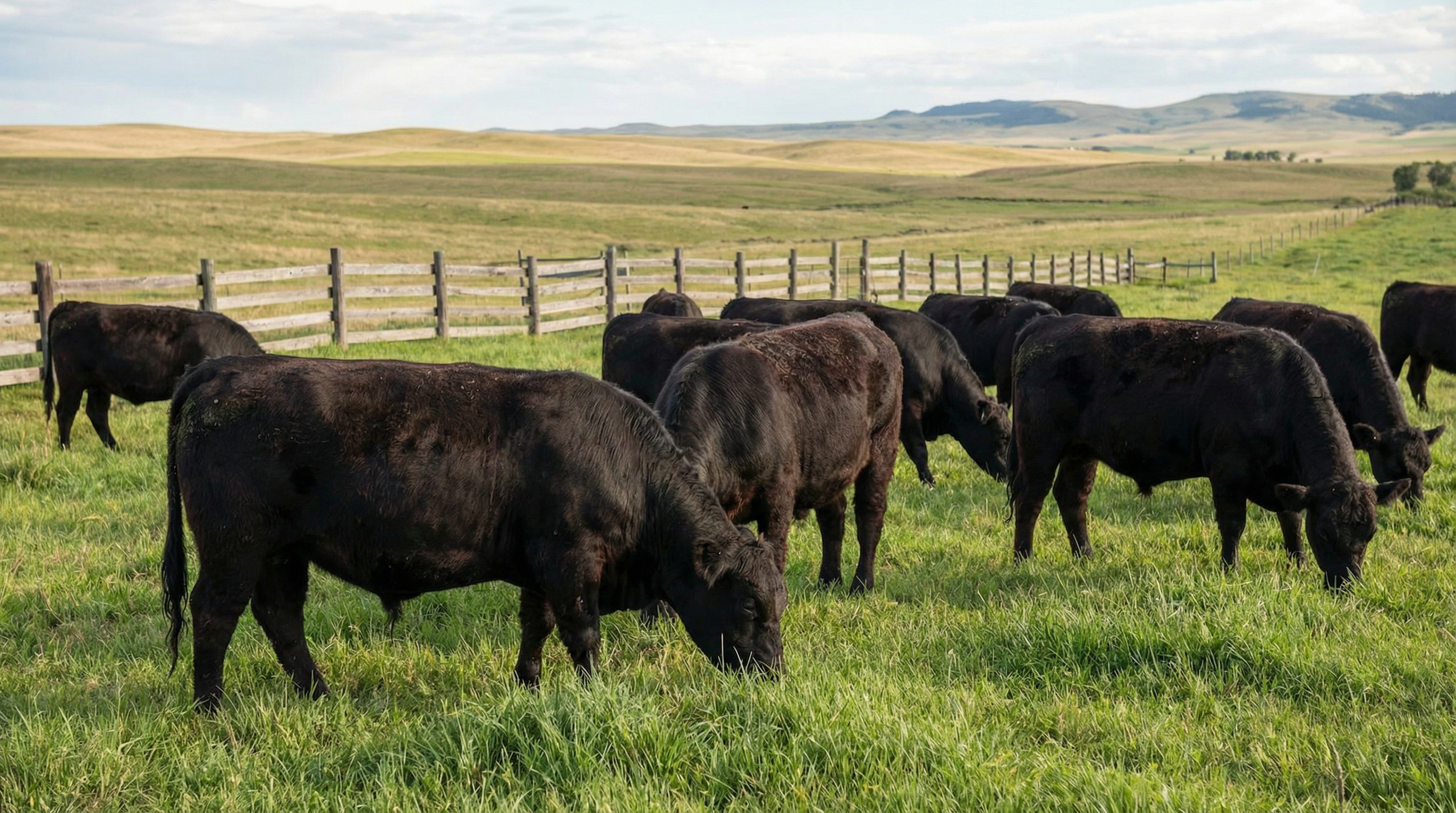
Japanese Black cattle (Kuroge Washu) were isolated on the Japanese archipelago and selectively bred for centuries with one primary selection criterion: marbling. The result is cattle with a genetic predisposition to deposit fat within muscle fibers at levels 5-8 times higher than conventional beef breeds. Raised for 28-32 months in controlled, low-stress environments with carefully managed grain-based diets, these animals produce the most heavily marbled beef in the world.
Key characteristics:
- Intramuscular fat: 25-40%+ in A5 grade
- Fat melting point: ~77°F (25°C) — below body temperature
- Oleic acid: 50-55% of total fat
- Primary marbling metric: BMS (Beef Marbling Standard) 8-12
Black Iberian Pig (Sus scrofa domesticus)
The cerdo ibérico is a heritage breed native to the Iberian Peninsula, genetically distinct from commercial pork breeds. What makes Ibérico pigs extraordinary is their natural ability to infiltrate muscle tissue with fat — a trait amplified dramatically during the montanera, the acorn-feeding season from October to March when pigs forage freely in dehesa oak forests, consuming 10-15 kg of acorns (bellotas) daily.
Key characteristics:
- Intramuscular fat: 15-25% in bellota grade
- Fat melting point: ~82°F (28°C) — slightly higher than wagyu but still low
- Oleic acid: 55-60% of total fat (highest of any meat)
- Primary quality metric: Feed classification (Bellota > Cebo de Campo > Cebo)
The parallel is striking: both breeds were shaped by centuries of selection for fat infiltration within the muscle, not just external fat coverage. This is what separates them from every other meat on the market.
Marbling Comparison: How the Fat Distributes
While both meats are heavily marbled by their species' standards, the marbling patterns look and behave differently.
| Metric | A5 Japanese Wagyu | Ibérico Bellota | USDA Prime Beef | Commercial Pork |
|---|
| Intramuscular fat | 25-40% | 15-25% | 8-13% | 2-4% |
| Fat per 3oz serving | 20-28g | 12-18g | 10-14g | 3-5g |
| Oleic acid (% of fat) | 50-55% | 55-60% | 38-42% | 42-48% |
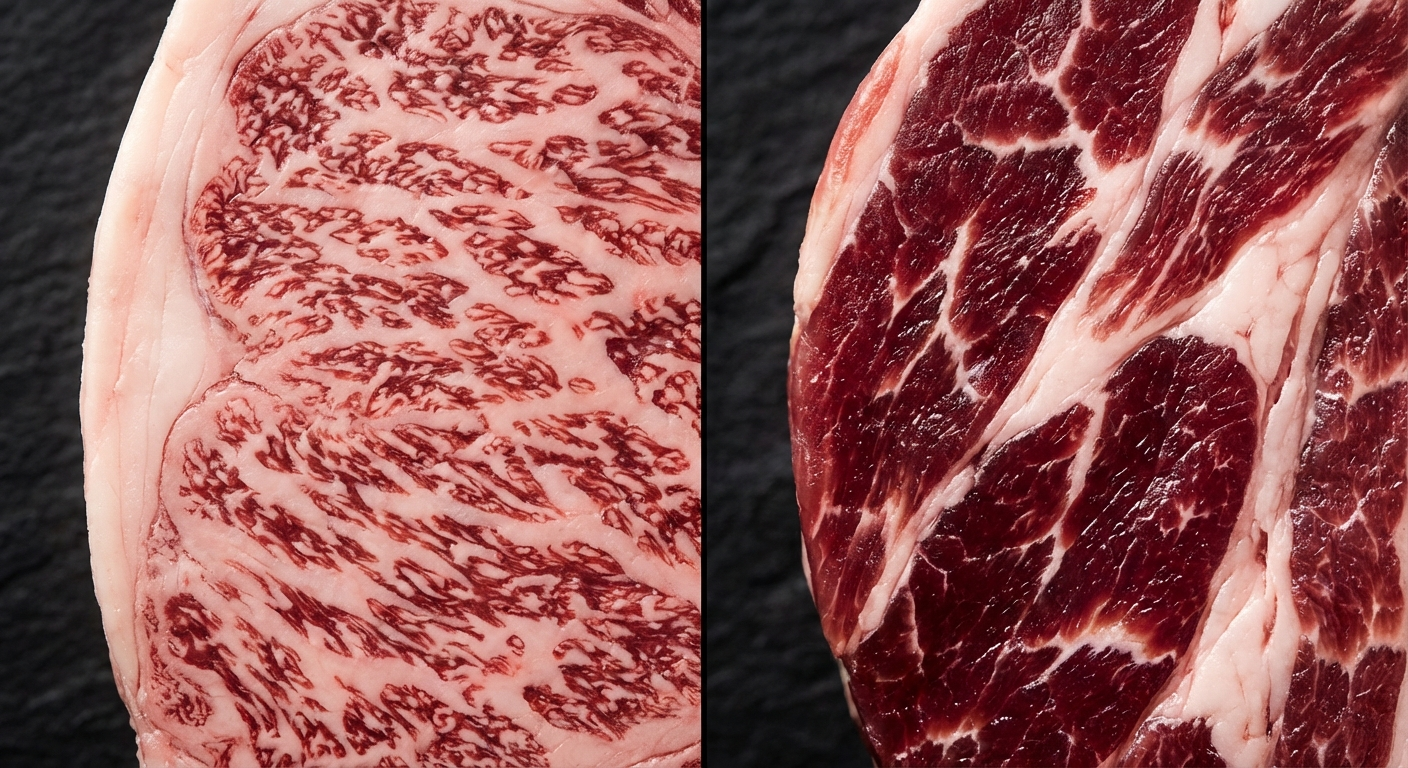
| Visual marbling | Dense white webbing | Ruby-red meat with white streaks | Moderate flecks | Minimal |
| Fat color | Pure white to cream | White to ivory | White to yellowish | White |
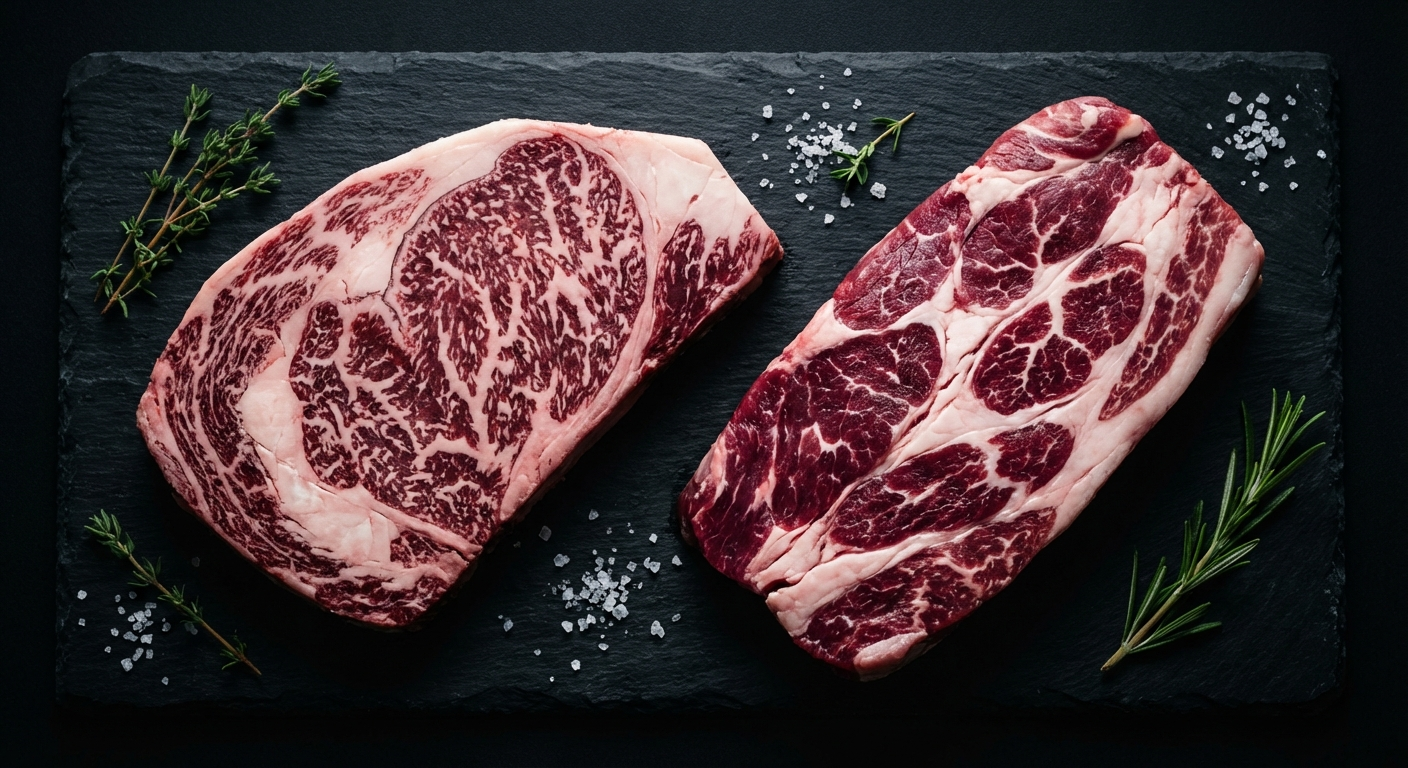
Wagyu marbling appears as an intricate web of pure white fat against deep red beef. Ibérico marbling presents differently — the base meat itself is darker and more ruby-colored than any pork you have seen, and the fat streaks are slightly broader and more irregular than wagyu's fine lacework. Both are unmistakable once you have seen them next to conventional cuts of their species.
Fat Chemistry: Why Both Taste Unlike Anything Else
The reason wagyu and Ibérico are so prized goes beyond volume of fat. It is the composition of that fat that creates their signature eating experiences.
Oleic Acid: The Key to Both
Oleic acid is a monounsaturated omega-9 fatty acid — the same fat that makes olive oil healthy and palatable. Both wagyu and Ibérico contain exceptionally high levels:
- Ibérico bellota: 55-60% oleic acid — the highest of any meat, driven by the acorn diet which is naturally rich in oleic acid
- A5 wagyu: 50-55% oleic acid — achieved through genetics and extended grain finishing
- Olive oil: 55-83% oleic acid (for comparison)
- Conventional beef: 38-42% oleic acid
- Conventional pork: 42-48% oleic acid
High oleic acid content does two things. First, it lowers the melting point of the fat so it literally dissolves on your tongue at body temperature, creating that signature buttery sensation. Second, oleic acid is associated with cardiovascular health benefits — which is why both wagyu and Ibérico fat profiles are sometimes compared to olive oil rather than typical animal fats.
The Acorn Effect
Ibérico bellota pork has a secret weapon: the acorn diet actively changes the pig's fat composition. During montanera, pigs eat nothing but acorns and grass for 3-4 months. Acorns are approximately 65% oleic acid, and this dietary fat is absorbed and deposited directly into the pig's muscle and subcutaneous fat. The result is pork fat that is chemically more similar to olive oil than to conventional lard.
Wagyu achieves its oleic acid levels through a different mechanism — genetic selection and extended grain feeding that promotes lipogenesis (the conversion of dietary carbohydrates into monounsaturated fats within the animal's body). Same result, completely different biological pathway.
Flavor Profiles: Beef Luxury vs Pork Luxury
Despite their shared emphasis on marbling, wagyu and Ibérico deliver very different flavor experiences.
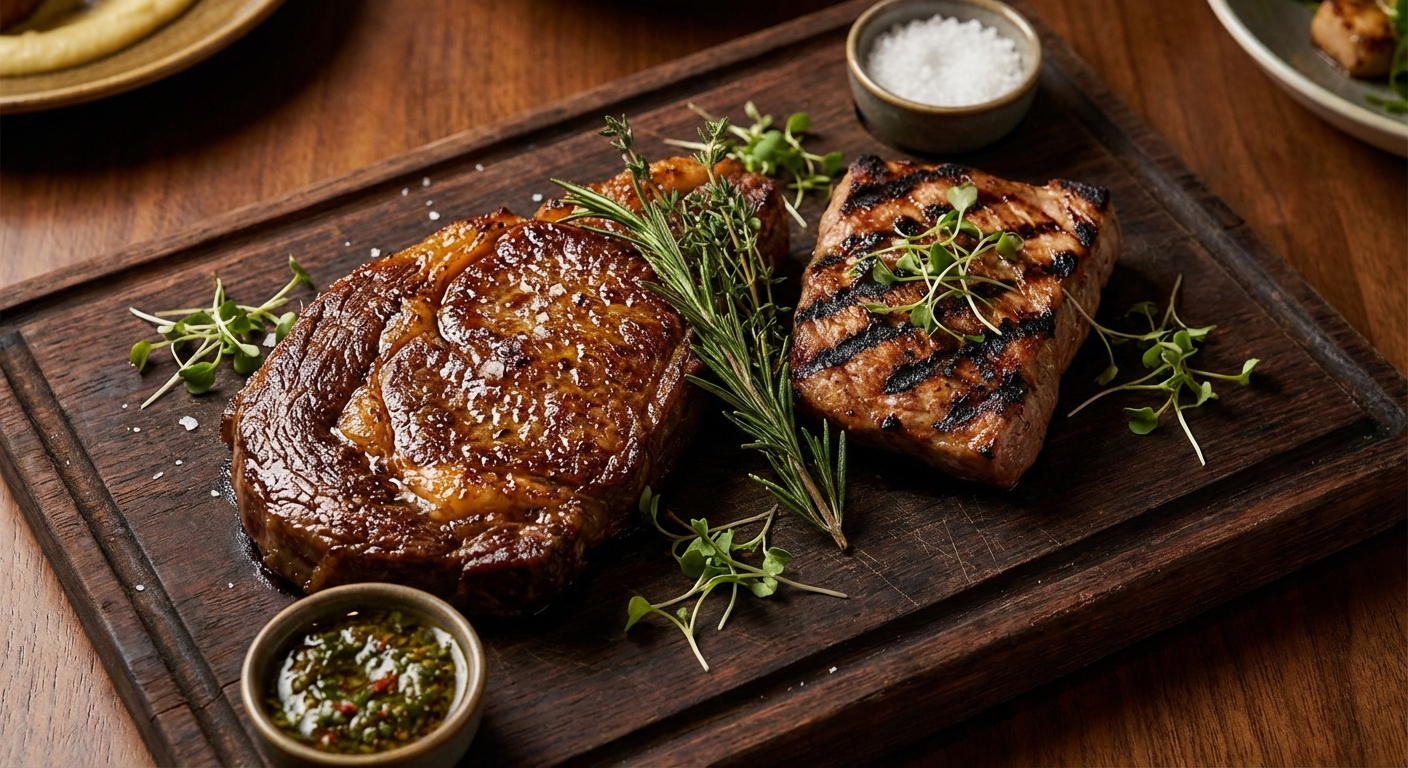
A5 Wagyu Flavor Profile
- Primary notes: Rich, beefy umami with sweet, buttery fat
- Texture: Impossibly tender, almost custard-like in high-BMS cuts
- Finish: Long, coating richness that lingers
- Serving reality: Most people find 3-4 oz satisfying due to extreme richness
- Best cuts: Ribeye (the gold standard), striploin, tenderloin
Ibérico Bellota Flavor Profile
- Primary notes: Nutty, sweet, with a distinct acorn-derived earthiness
- Texture: Silky and succulent, but with more tooth than wagyu
- Finish: Clean, slightly sweet with lingering nuttiness
- Serving reality: You can comfortably eat 6-8 oz — rich but not as overwhelming as A5
- Best cuts: Secreto (the "secret" cut), presa, pluma, loin
The fundamental difference is this: wagyu overwhelms you with richness. A few bites of A5 wagyu and your palate is coated in luxurious fat. Ibérico is more balanced — deeply flavorful and silky but with enough structure and nuttiness to sustain a full portion. Many chefs describe Ibérico as "the A5 of pork but with a longer runway."
Price Comparison: What Luxury Costs
Both wagyu and Ibérico command significant premiums over conventional meat. Here is what you can expect to pay in the U.S. market as of 2026:
| Product | Price Range (per lb) | Typical Serving | Cost per Serving |
|---|
| Japanese A5 Wagyu Ribeye | $120-$200 | 3-4 oz | $22-$50 |
| Japanese A5 Wagyu Striploin | $100-$170 | 3-4 oz | $19-$43 |
| American Wagyu Ribeye | $40-$80 | 8-12 oz | $20-$60 |
| Ibérico Bellota Secreto | $35-$55 | 6-8 oz | $13-$28 |
| Ibérico Bellota Presa | $30-$50 | 6-8 oz | $11-$25 |
| Ibérico Bellota Loin Chops | $25-$40 | 8-10 oz | $13-$25 |
| USDA Prime Ribeye | $25-$45 | 12-16 oz | $19-$45 |
On a per-serving basis, Ibérico bellota often delivers better value than Japanese A5 wagyu. You get more food per serving, the cuts are less expensive per pound, and the eating experience — while different — is comparably luxurious. American wagyu falls in between on price and offers a more familiar beef experience with enhanced marbling.
Cooking Methods: How to Handle Each
Both meats require restraint. Their internal fat does most of the work — your job is not to ruin it.
Cooking Wagyu
- Preferred method: Hot sear in cast iron or over charcoal, 45-90 seconds per side
- Target temp: Rare to medium-rare (120-130°F internal)
- Thickness: Cut 1-1.5 inches for proper sear-to-center ratio
- Seasoning: Salt only. The beef speaks for itself.
- Critical mistake: Overcooking. Above medium (145°F), the rendered fat creates a greasy texture rather than a silky one
- No added fat: Use a dry pan or minimal oil — wagyu renders enough of its own fat
Cooking Ibérico
- Preferred method: Hot grill or cast iron sear. Secreto and presa do exceptionally well over live fire.
- Target temp: Medium-rare to medium (135-145°F) — Ibérico is safe and delicious at pink, unlike conventional pork
- Thickness: Secreto is naturally thin and irregular; presa and pluma are 1-2 inches
- Seasoning: Salt, maybe a touch of smoked paprika (pimentón) to honor its Spanish roots
- Critical mistake: Treating it like conventional pork and cooking to 160°F. You will dry out the marbling.
- Rest time: 5-8 minutes to redistribute juices
The biggest shift for both: you are not adding fat to lean protein. You are managing fat that is already woven through the meat. Low intervention, high heat, short cook times.
Grading Systems: How Quality Is Certified
Both wagyu and Ibérico have structured grading systems, but they measure very different things.
Wagyu Grading (JMGA)
Japanese wagyu uses a letter-number system (e.g., A5). The letter (A/B/C) indicates yield — how much usable meat the carcass produces. The number (1-5) indicates quality based on four factors: marbling (BMS), meat color, firmness, and fat quality. A5 with BMS 10-12 is the highest commercially available grade.
Ibérico Grading (Spanish Denominación de Origen)
Ibérico quality is determined primarily by diet and breed purity, not a marbling score:
- Bellota (Acorn-Fed): Pigs finished exclusively on acorns during montanera. The gold standard.
- Cebo de Campo (Field-Grazed): Pigs raised outdoors with supplemental grain feeding. Good marbling, but less of the distinctive nutty flavor.
- Cebo (Grain-Fed): Pigs raised in confinement on grain. Still an Ibérico pig genetically, but without the diet that makes the fat special.
Additionally, Ibérico pigs are classified by breed purity:
- 100% Ibérico (Pata Negra): Both parents are purebred Ibérico
- 75% Ibérico: One parent purebred, one crossbred
- 50% Ibérico: One Ibérico parent, one Duroc parent
The premium product is 100% Ibérico de Bellota — purebred pigs finished exclusively on acorns. This is the true Ibérico equivalent of A5 wagyu.
Nutrition Comparison
Neither wagyu nor Ibérico bellota is a "diet food," but their fat profiles are more favorable than you might expect.
| Per 3oz cooked serving | A5 Wagyu Ribeye | Ibérico Bellota Secreto | USDA Prime Ribeye |
|---|
| Calories | 280-340 | 220-280 | 210-250 |
| Total fat | 24-30g | 16-22g | 14-18g |
| Saturated fat | 9-12g | 5-7g | 6-8g |
| Monounsaturated fat | 12-16g | 9-13g | 6-8g |
| Protein | 14-18g | 18-22g | 22-26g |
| Iron | 2.4mg | 1.2mg | 2.6mg |
Key nutritional takeaways: Ibérico bellota has less total and saturated fat than A5 wagyu per serving, with a higher ratio of monounsaturated to saturated fat. Both meats have significantly higher monounsaturated fat percentages than their conventional counterparts. Per serving, you get more protein from Ibérico since you eat a larger portion.
Which Should You Buy?
The right choice depends on what you are after:
Choose wagyu when:
- You want the most intense, richest beef experience possible
- You are serving small, impressive portions (date night, special occasion)
- You want something universally recognized as luxury
- You prefer the deep umami of beef
Choose Ibérico when:
- You want a luxury protein you can eat a full portion of
- You appreciate nuanced, nutty flavors over pure richness
- You are grilling and want something that handles live fire beautifully
- You want premium marbling at a lower price point than A5 wagyu
- You enjoy exploring cuts (secreto, presa, pluma) that most people have never tried
The real answer: Try both. They are the two peaks of the marbling world from entirely different mountain ranges. Wagyu is the ultimate expression of beef. Ibérico is the ultimate expression of pork. Comparing them is less about declaring a winner and more about understanding what makes each one extraordinary — and finding room for both in your kitchen.