Wagyu New York Strip vs Regular New York Strip: Is the Upgrade Worth It?
The New York strip is America's go-to steak cut. But what happens when you upgrade from USDA Prime to wagyu? We break down the real differences in marbling, flavor, price, and cooking so you can decide whether the wagyu version is worth the premium.
The New York strip — also called Kansas City strip, strip loin, or top loin — is one of the most popular steak cuts in America. It sits along the spine in the short loin, delivering a firm texture, bold beef flavor, and a satisfying fat cap along one edge. It's the steak that built American steakhouse culture.
But there's a growing category disrupting the strip steak aisle: wagyu New York strips. Whether Japanese A5, Australian Fullblood, or American wagyu, these strips promise a fundamentally different eating experience from the same anatomical cut. The question isn't whether wagyu strips are "better" — it's whether the difference justifies a price tag that can run 3-10x higher.
The Cut: Same Anatomy, Different Animal
Both steaks come from the exact same primal: the short loin, specifically the longissimus dorsi muscle on the dorsal side of the lumbar vertebrae. This muscle does relatively little work compared to shoulder or leg muscles, which is why strips are naturally tender regardless of breed.
What separates a wagyu strip from a regular strip isn't where it's cut — it's the animal it comes from. Wagyu cattle (particularly Japanese Black / Kuroge Washu) have a genetic predisposition for extreme intramuscular fat deposition. That same longissimus dorsi muscle that carries moderate marbling in a USDA Prime steer becomes a web of fine fat threads in a wagyu animal.
Key anatomical differences in the finished steak:
- Fat distribution: Regular strips concentrate fat in the cap and intermuscular seams. Wagyu strips distribute fat throughout the entire muscle fiber network.
- Muscle fiber density: Wagyu muscle fibers are thinner and more separated by fat, creating a less dense bite.
- Fat cap: Both have one, but wagyu fat caps are softer and render faster due to lower melting points.
Marbling: The Defining Difference
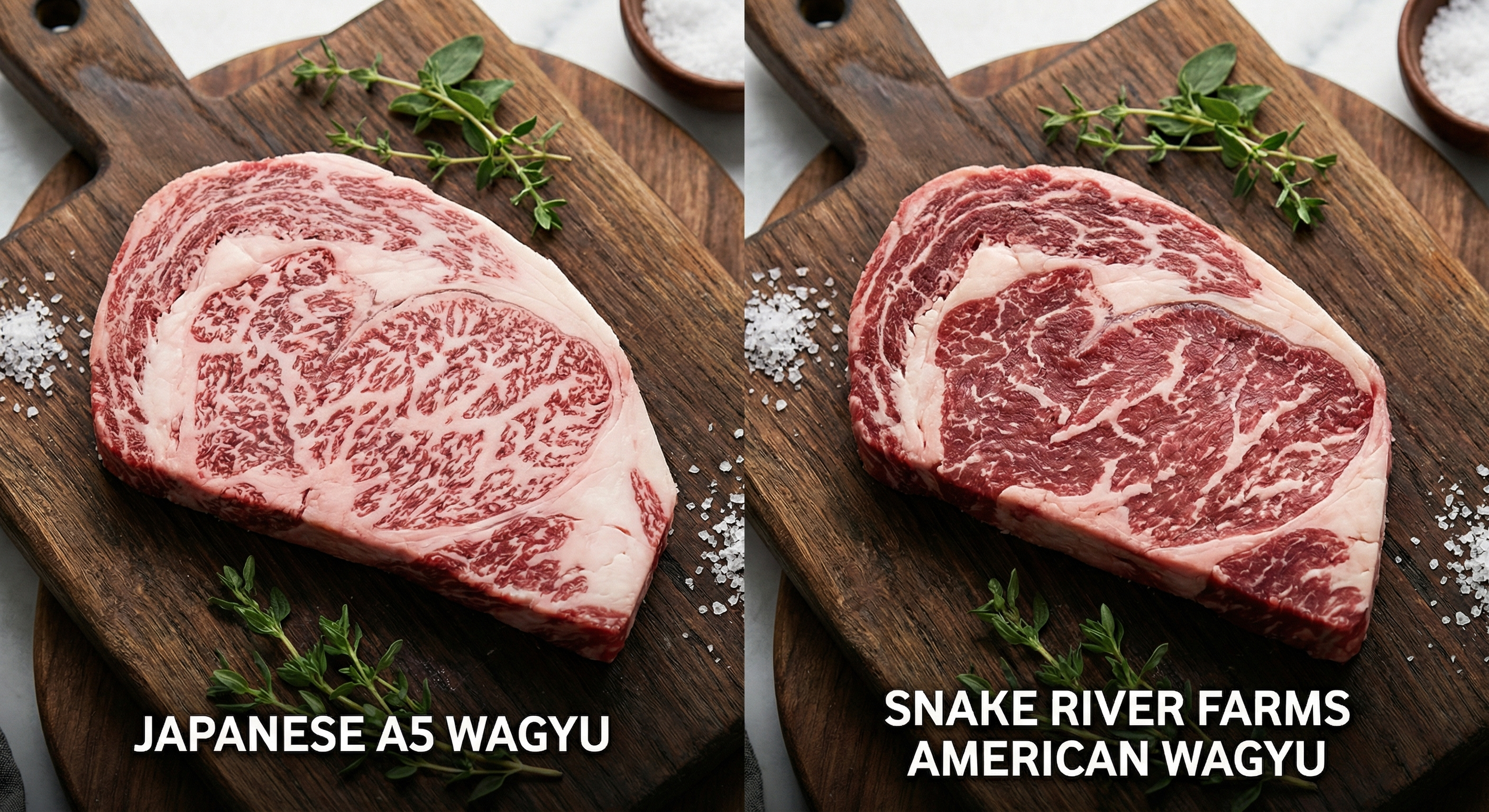
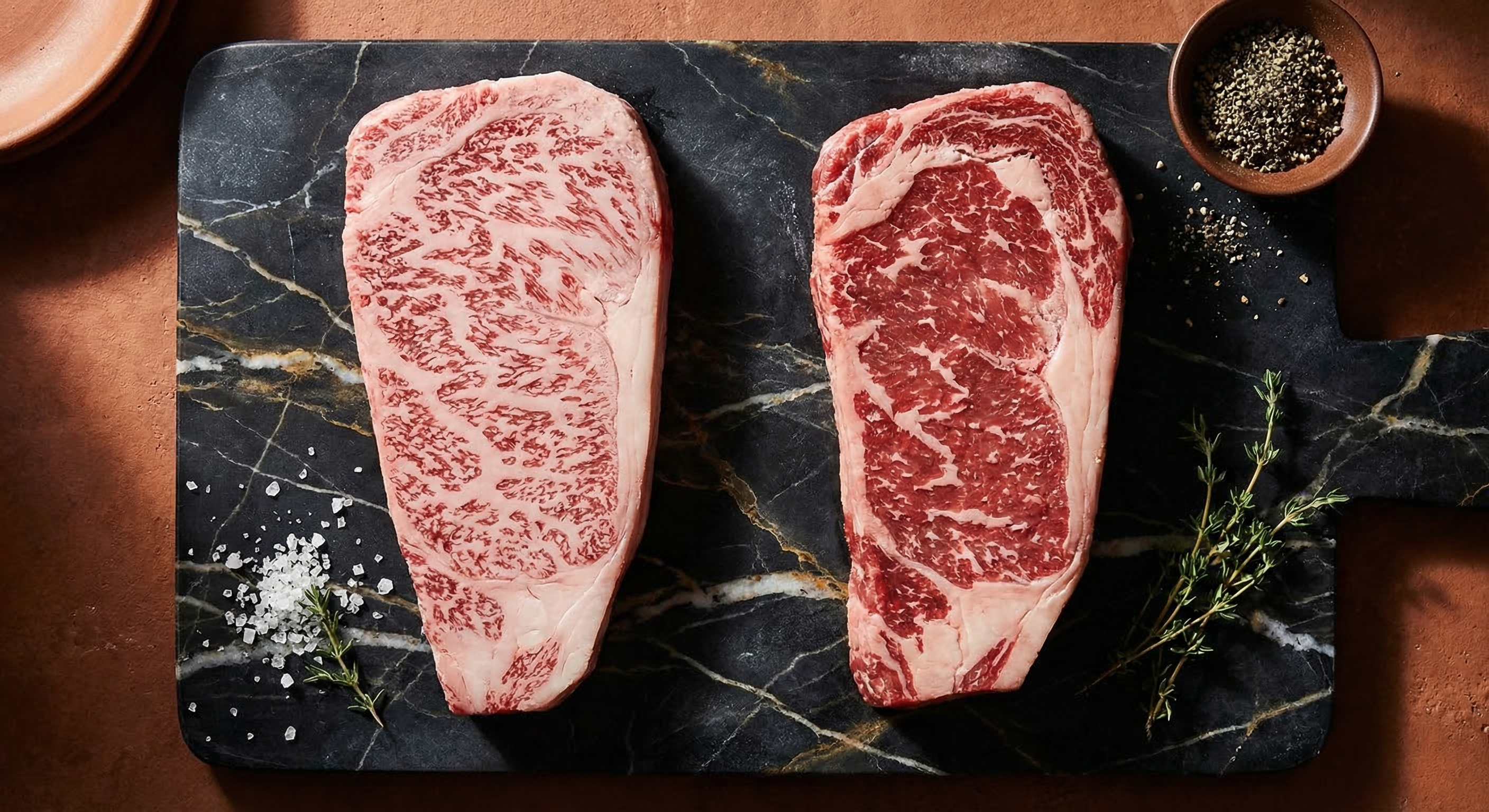
This is where the gap becomes dramatic. Marbling — intramuscular fat visible as white flecks and veins within the red meat — is what separates a good steak from an extraordinary one. And in New York strips, the marbling difference between wagyu and conventional beef is stark.
Regular New York Strip (USDA Grades)
- USDA Select: Minimal marbling, lean, can be tough. BMS equivalent: 1-2.
- USDA Choice: Moderate marbling, decent flavor. The grocery store standard. BMS equivalent: 3-4.
- USDA Prime: Abundant marbling, rich and juicy. Only top 5-8% of US cattle qualify. BMS equivalent: 4-5.
Wagyu New York Strip (BMS Scale)
- American wagyu: BMS 6-9 typical. Noticeably more marbled than USDA Prime but still recognizably "beefy."
- Australian Fullblood wagyu: BMS 7-10+. Dense, uniform marbling. The strip starts looking like a different cut entirely.
- Japanese A5 wagyu: BMS 8-12. The muscle is more fat than lean. A raw A5 strip looks almost white with red accents rather than red with white accents.
To put this in perspective: a USDA Prime strip contains roughly 8-12% intramuscular fat. A Japanese A5 strip contains 25-40%. That's not an incremental upgrade — it's a categorically different product that happens to share the same cut name.
Flavor and Texture: Two Different Eating Experiences
Because marbling drives flavor and texture, wagyu and regular strips deliver fundamentally different experiences on the plate.
Regular New York Strip Flavor Profile
A well-cooked USDA Prime strip delivers what most Americans think of when they imagine "great steak": bold, mineral-rich beef flavor with a firm bite that has some give. The fat cap provides richness when rendered properly, and the meat has a satisfying chew without being tough. The flavor is concentrated and direct — iron, umami, and rendered fat hitting your palate in clean, familiar waves.
This is the flavor that built Peter Luger, Keen's, and every great American steakhouse. It's assertive, satisfying, and designed for 12-16 oz portions.
Wagyu New York Strip Flavor Profile
A wagyu strip — particularly A5 grade — is a completely different sensory experience. The first thing you notice is the texture: it practically dissolves. The intramuscular fat melts at or below body temperature (around 77°F / 25°C), so the steak begins breaking down the moment it hits your tongue.
The flavor is richer but more nuanced. Instead of bold, direct beef, you get layers: butter, sweet cream, a subtle nuttiness, and deep umami that builds rather than hits. The high oleic acid content (similar to olive oil) gives it a rounded, almost fruity sweetness that regular beef simply cannot produce.
But here's the critical difference most first-timers don't expect: you eat far less of it. A 4-oz portion of A5 wagyu strip is deeply satisfying — even overwhelming. Eat 16 oz and you'll likely feel sick from the richness. This isn't a knock on wagyu; it's the intended experience. The Japanese serve wagyu in 3-4 oz portions for good reason.
How to Cook Each One
The cooking approach needs to match the marbling level. Apply the wrong technique to either steak and you'll waste what makes it good.
Cooking a Regular New York Strip
The traditional approach works beautifully:
- Bring to room temperature (30-45 minutes out of the fridge)
- Season generously with coarse salt and pepper — the steak can handle aggressive seasoning
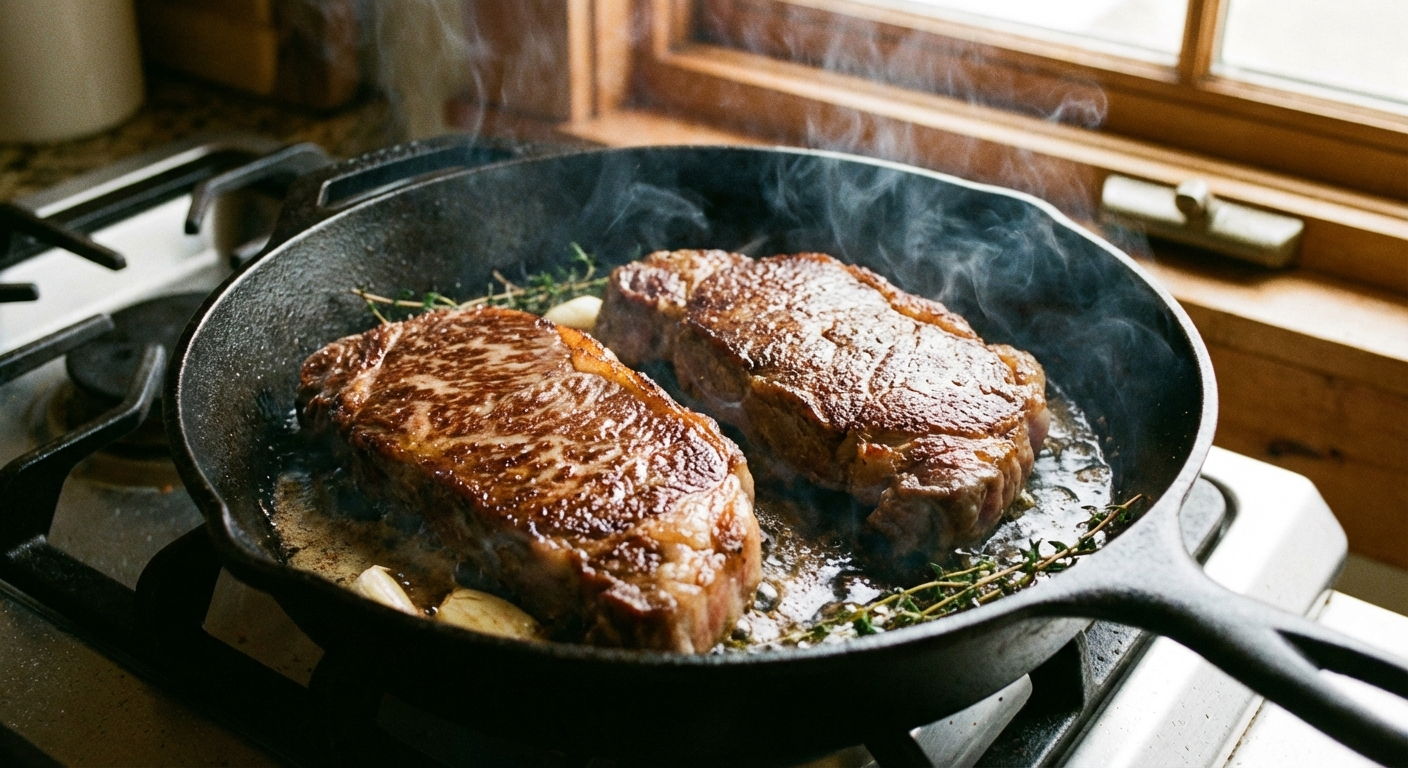
- Sear hot: Cast iron or grill at 500°F+, 3-4 minutes per side for medium-rare
- Rest 5-8 minutes under foil — the juices need to redistribute
- Optional butter baste during the last minute of cooking adds richness
Target internal temp: 130°F for medium-rare. The strip's moderate fat content means it's forgiving — you have a wider window between perfectly done and overcooked compared to leaner cuts like tenderloin.
Cooking a Wagyu New York Strip
The rules change significantly with wagyu, especially A5:
- Slice thinner if it's A5 — 1/2 to 3/4 inch rather than the standard 1-1.5 inches
- Season minimally: Fine salt only. The fat carries its own complex flavor. Heavy seasoning fights the nuance.
- Use extreme heat, briefly: 60-90 seconds per side maximum. The abundant fat renders quickly — too long and you lose it to the pan.
- No additional fat needed: The steak produces its own rendering fat. Don't add butter or oil to a hot pan for A5 — it already has more fat than it needs.
- Skip the rest period: Unlike conventional steak, A5 wagyu is best eaten immediately. The fat begins solidifying as it cools, dulling the melt-in-your-mouth texture.
For American wagyu strips (BMS 6-8), you can use a hybrid approach: treat it more like a regular strip but with slightly shorter cook times and less added fat.
Price Comparison: What You're Actually Paying For
The price gap between wagyu and regular strips is significant, but understanding per-serving cost changes the math.
| Grade | Price per Pound | Typical Serving | Cost per Serving |
|---|
| USDA Select | $8-14 | 12-16 oz | $6-14 |
| USDA Choice | $14-22 | 12-16 oz | $11-22 |
| USDA Prime | $28-45 | 10-14 oz | $18-39 |
| American Wagyu | $50-90 | 8-10 oz | $25-56 |
| Australian Fullblood | $80-150 | 6-8 oz | $30-75 |
| Japanese A5 | $120-250 | 3-4 oz | $22-62 |
The surprising takeaway: on a per-serving basis, Japanese A5 wagyu strips aren't as wildly expensive as per-pound pricing suggests. A 3-oz A5 portion can cost less than a 14-oz USDA Prime strip at a high-end steakhouse. The key is recalibrating your expectation of what a "serving" means.
When to Choose Each
Neither steak is universally "better." They serve different purposes:
Choose a Regular New York Strip When:
- You want a satisfying, full-sized steak dinner (12-16 oz)
- You're grilling for a crowd and want consistent, crowd-pleasing results
- Bold beef flavor is the priority over buttery richness
- You're pairing with robust sides (baked potatoes, creamed spinach, red wine)
- Budget matters and you want the best value in premium steak
Choose a Wagyu New York Strip When:
- You want a special-occasion experience that's memorable and unique
- You appreciate the nuanced, melt-in-your-mouth texture that only heavy marbling delivers
- You're comfortable with smaller portions (3-6 oz for A5, 8-10 oz for American wagyu)
- You want to pair with delicate accompaniments — simple rice, light salad, clean sake
- You're exploring different wagyu grades and want to taste the progression
The American Wagyu Sweet Spot
If you're curious about wagyu but not ready for the A5 leap, American wagyu New York strips are the ideal entry point. At BMS 6-8, they deliver noticeably more marbling and richness than USDA Prime while remaining recognizably "steak-like" in portion size and cooking approach. They work beautifully on the grill, pair well with traditional steakhouse sides, and cost roughly 2-3x more than Prime rather than 5-10x.
Sourcing and Quality Red Flags
The wagyu market has a labeling problem. Here's what to watch for when buying wagyu strips:
- "Wagyu-style" or "wagyu-inspired": These terms are meaningless. The animal is either wagyu-bred or it isn't.
- No BMS or grade listed: Legitimate wagyu sellers always specify the grade. If the listing just says "wagyu" with no BMS, be skeptical.
- Suspiciously low prices: Genuine Japanese A5 strips under $80/lb don't exist at retail. If you see "A5 wagyu" for $40/lb, it's either mislabeled or fake.
- No provenance: Good wagyu always has a traceable origin — the prefecture (for Japanese), the ranch (for American/Australian), and ideally a certificate of authenticity for A5.
For regular strips, the quality signals are simpler: look for USDA grading (Prime > Choice > Select), check that the color is bright cherry red with clean white fat, and buy from a butcher who can tell you where the beef was sourced.
The Verdict
The wagyu New York strip and the regular New York strip share a name and a primal cut, but they're fundamentally different products serving different purposes. A USDA Prime strip is a perfect everyday luxury — bold, satisfying, and built for full-sized steak dinners. A wagyu strip is a focused sensory experience — rich, nuanced, and designed for smaller portions where every bite demands your attention.
If you've never tried wagyu, start with an American wagyu strip. It bridges the gap between familiar steakhouse comfort and the wagyu world. If you're already a wagyu enthusiast, an A5 strip showcases what extreme marbling does to a cut you already know — and the comparison is unforgettable.