Wagyu vs Prime Rib: How They Compare and When to Choose Each
Wagyu is a breed defined by genetics. Prime rib is a cut defined by location on the carcass. Here's why comparing them requires understanding both — and when each one wins.
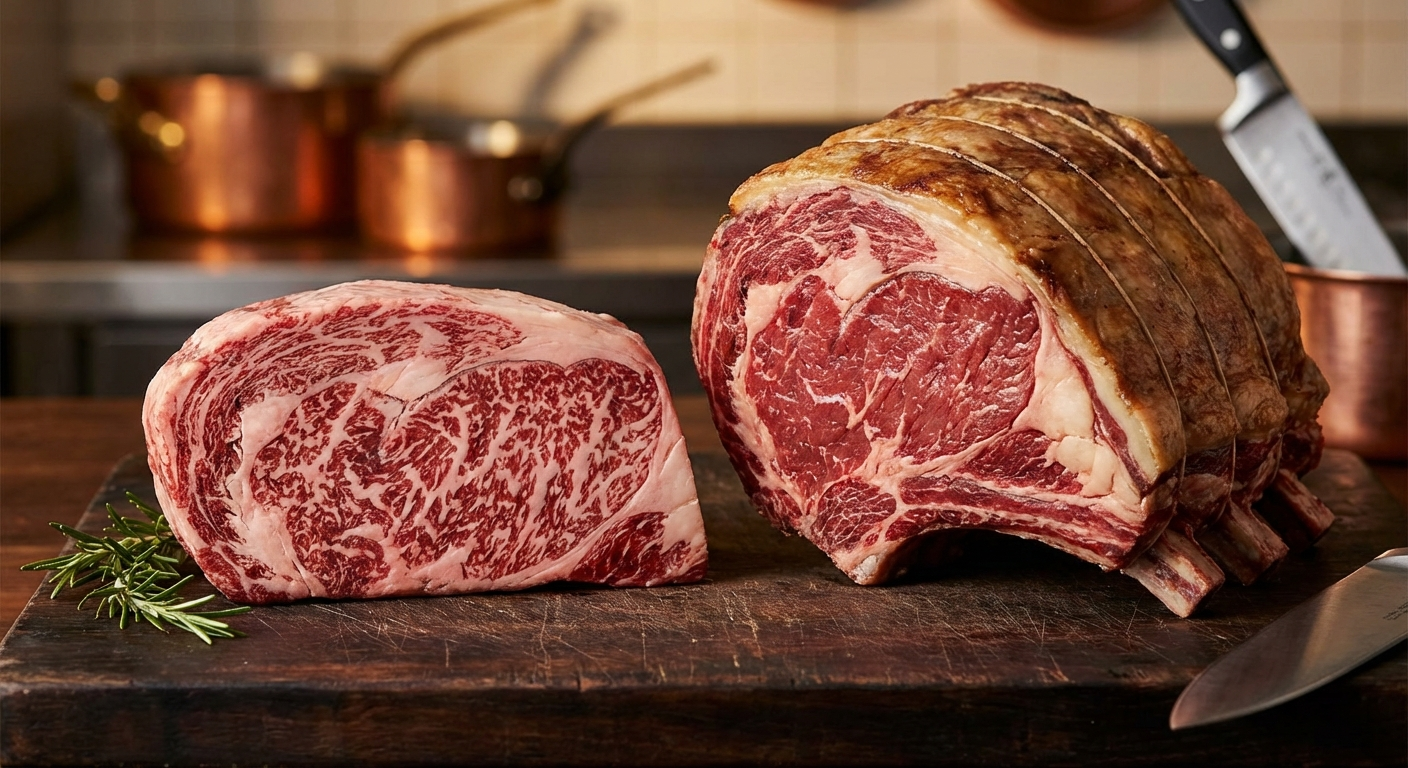
People search "wagyu vs prime rib" expecting a simple winner. The reality is more nuanced: wagyu is a cattle breed known for extreme marbling, while prime rib is a specific cut — the rib primal, roasted bone-in — that can come from any breed including wagyu. You can actually have wagyu prime rib, which makes this an apples-to-oranges comparison that's worth breaking down properly.
Understanding the distinction matters because it affects what you buy, how you cook it, what you pay, and what ends up on your plate. Here's the complete comparison.
What Wagyu Actually Is
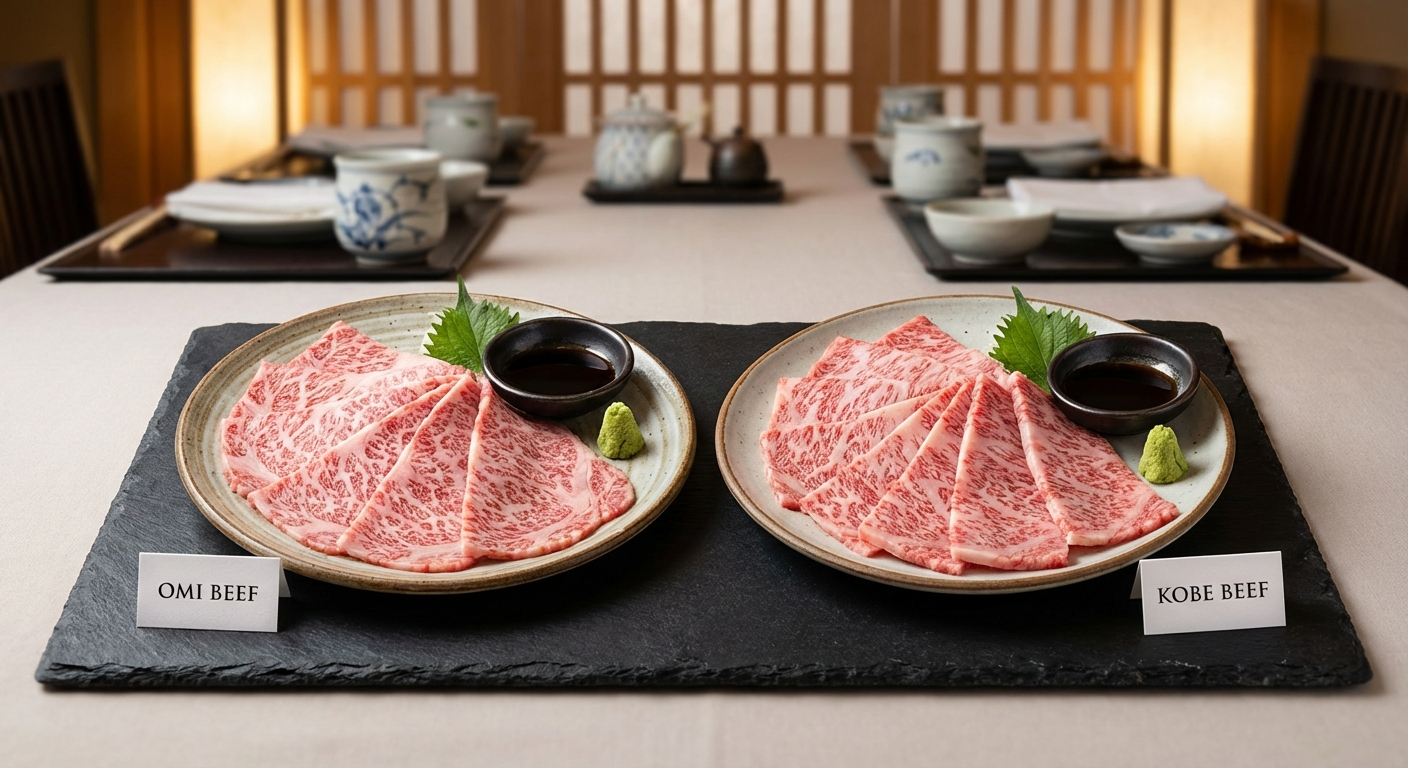
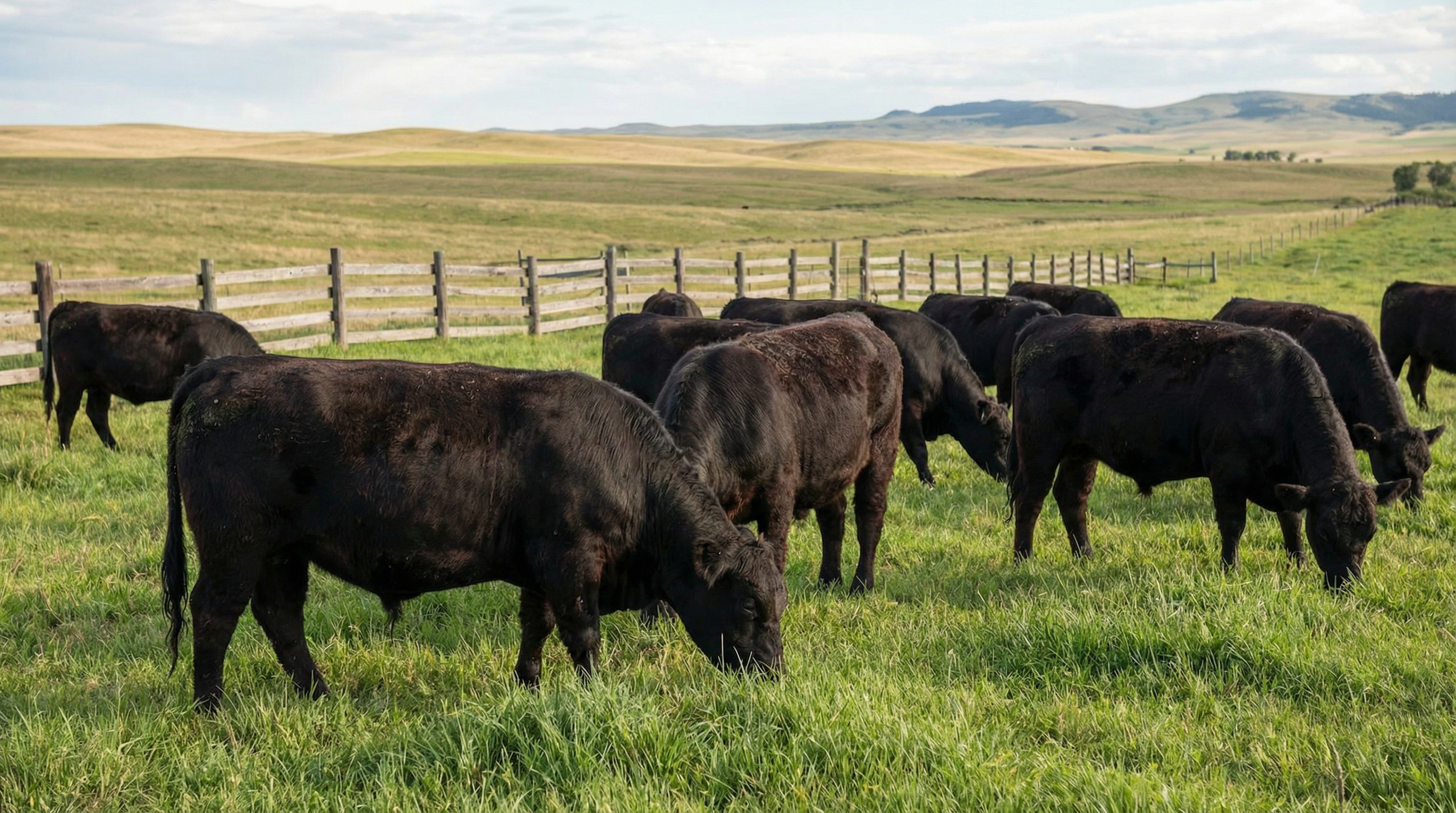
Wagyu refers to four Japanese cattle breeds, with Japanese Black (Kuroge Washu) producing the overwhelming majority of premium wagyu beef worldwide. The defining characteristic is a genetic predisposition for intense intramuscular fat — the web of white marbling that runs through every muscle fiber.
This isn't just about fat content. Wagyu fat has a lower melting point (around 77°F / 25°C) than standard beef fat, which is why it literally melts on your tongue. The fatty acid composition is also different: higher in monounsaturated fats, particularly oleic acid — the same heart-healthy fat found in olive oil.
Wagyu is graded differently depending on origin:
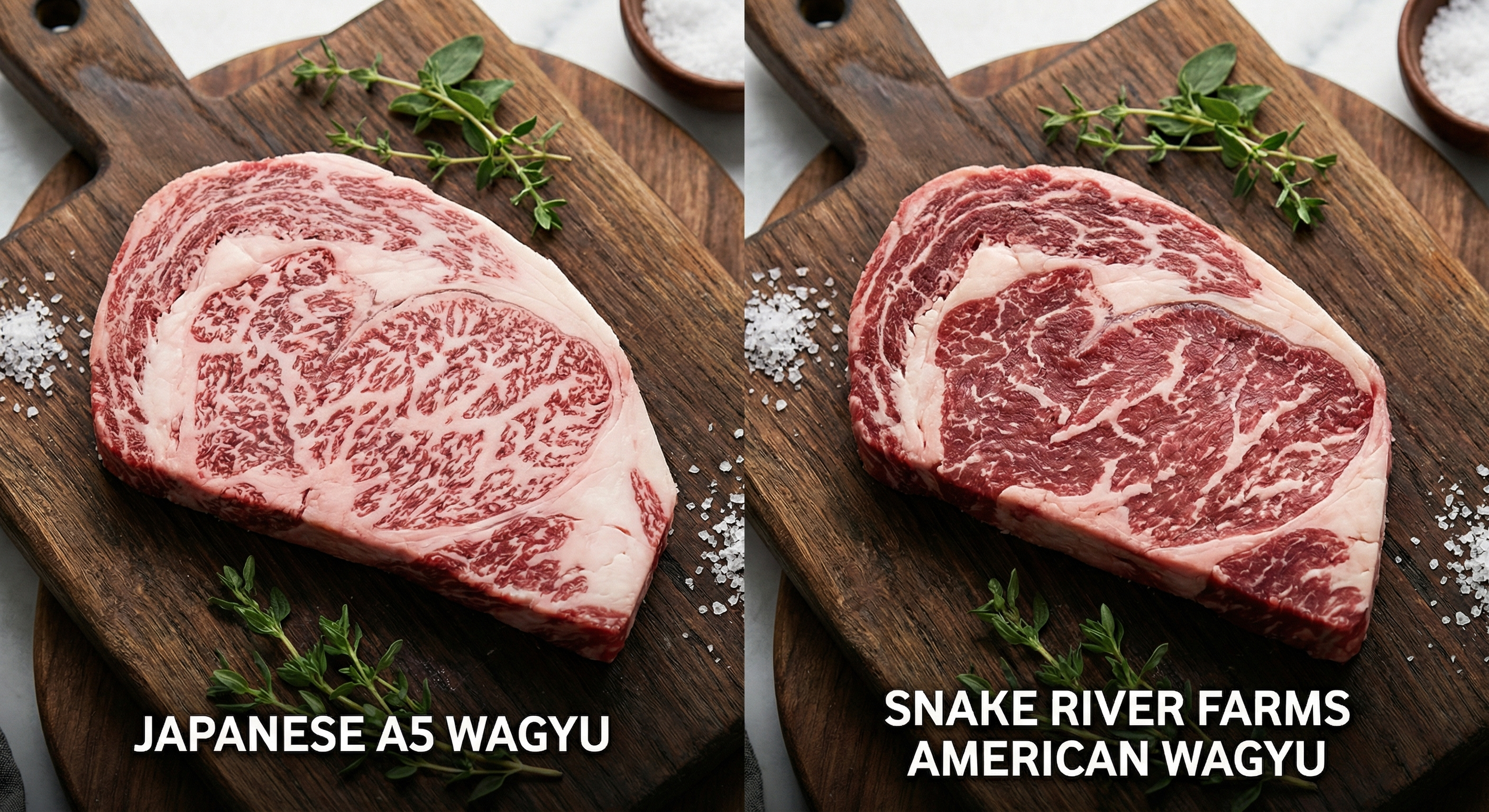
- Japanese wagyu: Graded A1-A5 by the JMGA, with A5 representing the highest quality. Beef Marbling Score (BMS) ranges from 1-12, with premium cuts at BMS 10-12.
- American wagyu: Typically crossbred with Angus, graded on the USDA scale but often exceeding Prime grade. BMS ranges from 6-9 for quality producers.
- Australian wagyu: Graded on the AUS-MEAT scale (MSA 1-9+), with Fullblood wagyu scoring MSA 7-9+.
When most people say "wagyu," they mean a steak — typically a ribeye, striploin, or tenderloin — cut thin and served in smaller portions (3-6 oz) to match the richness of the meat.
What Prime Rib Actually Is
Prime rib is a roast cut from the rib primal section of the steer — ribs 6 through 12. The name comes from the cooking method (roasted) and the cut location (rib), not necessarily the USDA grade, although quality prime rib is typically graded USDA Prime or Choice.
A full prime rib roast (also called a standing rib roast) includes seven ribs and weighs 14-20 pounds. Most home cooks and restaurants work with a 3-4 rib section weighing 6-10 pounds. The roast is cooked bone-in at low temperature, producing a thick, pink center with a well-rendered fat cap.
Key characteristics of prime rib:
- Cut location: Rib primal (ribs 6-12), including the longissimus dorsi (ribeye muscle), spinalis dorsi (cap), and complexus
- Cooking method: Slow-roasted at 200-275°F, often finished with a high-heat sear
- Serving size: Thick slices, typically 12-24 oz per person
- Fat profile: External fat cap plus moderate intramuscular marbling (in USDA Prime grade)
- Bone contribution: Bones insulate and add flavor during the long roast
The distinction matters: you can buy wagyu prime rib, USDA Prime prime rib, or even Choice prime rib. "Prime rib" describes the cut and preparation, not the quality grade.
Marbling and Fat: The Core Difference
This is where the comparison gets meaningful. Marbling — intramuscular fat distributed throughout the lean muscle — is the single biggest differentiator between wagyu and standard prime rib.
USDA Prime grade beef, the top tier for standard cattle, scores a Beef Marbling Standard of roughly 5-7. This represents abundant marbling for conventional breeds. A quality prime rib roast graded USDA Prime will have visible white streaks of fat throughout the meat.
Japanese A5 wagyu scores BMS 10-12 — nearly double the marbling of USDA Prime. American wagyu typically falls in the BMS 6-9 range, overlapping with and often exceeding the top of USDA Prime grading.
What this means in practice:
- USDA Prime rib roast: Rich, beefy, with pockets of rendered fat that create juicy, flavorful bites. The fat cap bastes the exterior during roasting.
- Wagyu steak (A5): Uniformly buttery throughout every fiber. The entire steak is essentially fat-laced protein that melts at body temperature. Flavor is sweet, umami-forward, less traditionally "beefy."
- Wagyu prime rib (if you can find it): The rib primal with wagyu-level marbling, slow-roasted. Extraordinarily rich — most people can only eat 6-8 oz before the richness becomes overwhelming.
Flavor Profile Comparison
Wagyu and prime rib deliver fundamentally different eating experiences, even though both are "beef."
Prime rib delivers a classic, robust beef flavor. The slow roasting concentrates the meat's natural juices. The fat cap renders into a crispy, savory crust. The interior stays pink and tender. It tastes like the platonic ideal of beef — deep, mineral, rich but not overwhelming. You can eat a 16 oz slice and want more.
Wagyu steak leans into butteriness and umami rather than traditional beefiness. High-grade Japanese wagyu (A5) has a sweet, almost nutty quality with a mouthfeel closer to foie gras than steak. The fat doesn't feel "fatty" in the heavy sense — it dissolves instantly, coating your palate. A 4 oz portion feels like a full meal because of the richness.
Neither is objectively "better." They serve different purposes:
- Want a hearty, satisfying meal with generous portions? Prime rib wins.
- Want an intense, luxurious experience in small bites? Wagyu wins.
- Feeding a table of 8? Prime rib is built for that.
- Celebrating a milestone with an unforgettable bite? Wagyu delivers.
Cooking Methods: Completely Different Approaches
How you cook wagyu and prime rib diverges significantly, and getting it wrong with either one wastes your money.
Cooking Prime Rib
Prime rib is a forgiving, slow-cook cut:
- Season generously with salt, pepper, garlic, and herbs (12-24 hours ahead for salt penetration)
- Roast at 200-250°F until internal temperature hits 120°F (rare) to 130°F (medium-rare)
- Rest for 30-45 minutes (carryover brings it up 5-10°F)
- Optional: blast at 500°F for 8-10 minutes for a crispy exterior
- Slice thick, serve with au jus and horseradish
Total cook time: 3-5 hours for a 3-rib roast. The process is straightforward and hard to ruin if you use a thermometer.
Cooking Wagyu Steak
Wagyu demands precision and restraint:
- Bring to room temperature (30-45 minutes)
- Season with salt only — wagyu's flavor doesn't need help
- Sear in a screaming-hot cast iron or binchotan charcoal grill for 60-90 seconds per side
- Target rare to medium-rare internal temp (115-125°F) — going past medium renders out the marbling you're paying for
- Rest briefly (3-5 minutes), slice thin against the grain
- Serve immediately in small portions
Total cook time: under 10 minutes. The window between perfect and overcooked is narrow.
Price Comparison: What You'll Actually Pay
Price is often the deciding factor, and the range is enormous:
- USDA Choice prime rib roast: $14-20/lb — solid quality, widely available at butcher shops
- USDA Prime prime rib roast: $25-40/lb — significant step up in marbling, available at quality butchers and Costco
- American wagyu ribeye steak: $60-120/lb — depending on producer and BMS score
- Japanese A5 wagyu ribeye: $150-300/lb — imported, certified, BMS 10-12
- Wagyu prime rib roast (American): $80-150/lb — rare, usually special-order
But price per pound doesn't tell the whole story. Serving sizes matter:
- A prime rib dinner for 6 people (3-rib roast, ~8 lbs): $200-320 for Prime grade
- A wagyu steak dinner for 6 people (six 5 oz steaks, ~2 lbs): $300-600 for American wagyu
- A Japanese A5 wagyu dinner for 6 (six 4 oz portions, ~1.5 lbs): $450-900
Per person, prime rib is the better value for feeding a group. Wagyu is the splurge for when the experience matters more than the portion size.
When to Choose Prime Rib
Prime rib makes more sense when:
- Feeding a crowd: Holiday dinners, family gatherings, dinner parties — prime rib is a centerpiece that serves 6-12 people from a single roast
- You want generous portions: Thick slices, hearty servings, and leftovers for sandwiches the next day
- Classic beef flavor is the goal: If you want your meal to taste like the best beef you've ever had, prime rib delivers that traditional experience
- Budget matters: Even USDA Prime prime rib costs a fraction of wagyu per serving
- You're a confident home cook: Prime rib is impressive but genuinely hard to mess up with a meat thermometer
When to Choose Wagyu
Wagyu makes more sense when:
- It's a special occasion for 2-4 people: Anniversary, birthday, milestone — wagyu turns dinner into an event
- You want an experience, not just a meal: The texture, melt, and flavor of A5 wagyu is genuinely unlike anything else
- Small portions work: If your group appreciates quality over quantity, wagyu delivers maximum impact per bite
- You're exploring beef at the highest level: For food enthusiasts, tasting A5 wagyu is a bucket-list experience that redefines what beef can be
- You're pairing with other courses: As part of a multi-course meal, a 3-4 oz wagyu steak is the perfect protein course
The Hybrid Option: Wagyu Prime Rib
For those who refuse to choose, wagyu prime rib exists — and it's exceptional. American wagyu producers like Snake River Farms and Mishima Reserve offer whole rib roasts from wagyu or wagyu-cross cattle. You get the slow-roasted, bone-in presentation of prime rib with marbling that exceeds USDA Prime by a wide margin.
Expect to pay $80-150 per pound for a wagyu prime rib roast. A 3-rib section will run $500-1,000+. It's an extraordinary splurge, but for a once-a-year holiday dinner, it's hard to beat.
Cook it the same way as standard prime rib, but pull it 5°F earlier — the extra fat means carryover temperature will be higher, and you absolutely want to stay in the rare to medium-rare zone to keep that wagyu marbling working for you.