Wagyu vs Prime Ribeye: What Makes Japanese A5 Different
Japanese A5 wagyu and USDA Prime ribeye come from different breeding philosophies. Here's how genetics, grading, and marbling create two distinct eating experiences.
Why This Comparison Matters
When I'm sourcing ribeyes for high-end accounts, buyers always ask the same question: "Is wagyu really worth 4x the price of Prime?" The answer depends entirely on what you're optimizing for—intensity of marbling, beef flavor purity, or versatility in the kitchen.
These two cuts represent fundamentally different breeding goals. USDA Prime comes from cattle bred for efficient beef production with enough marbling to meet the Prime grade threshold (8-10% intramuscular fat). Japanese A5 wagyu comes from specific breeds (Kuroge Washu) selected across generations specifically to maximize intramuscular fat percentage—often reaching 25-30% or higher.
Understanding the genetic and grading differences helps you decide when to pay the premium and when Prime delivers better value for your cooking method.
Genetics and Breeding Philosophy
USDA Prime Ribeye: Production-First Genetics
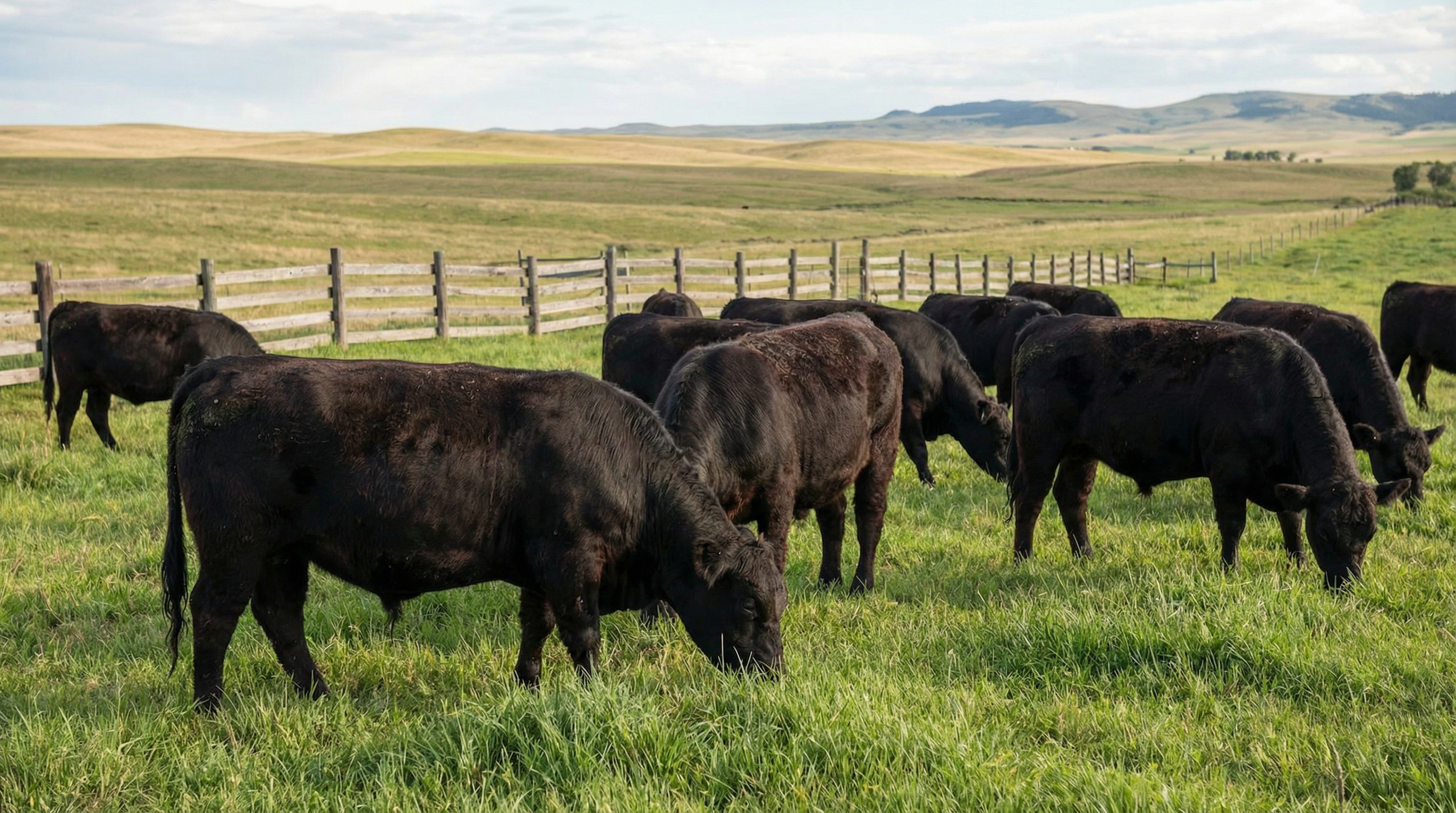
Most U.S. Prime beef comes from Angus cattle, occasionally Hereford or crossbreeds. The USDA grading system evaluates any cattle breed that meets federal inspection standards—genetics aren't specified, only the resulting marbling density.
Key characteristics:
- Faster growth rates (market weight in 14-18 months)
- Higher red meat yield per carcass
- Marbling develops through grain finishing (90-120 days)
- Emphasis on large muscle volume with moderate fat
According to [USDA Agricultural Marketing Service grading standards](https://www.ams.usda.gov/grades-standards/beef/grading), Prime grade requires "abundant" marbling (8-10% intramuscular fat by weight) distributed throughout the ribeye. Approximately 5-7% of U.S. beef reaches Prime grade—the rest grades Choice or lower.
Japanese A5 Wagyu: Fat-Maximizing Genetics
Japanese wagyu comes from four specific breeds, with 90% being Japanese Black (Kuroge Washu). These cattle have been selectively bred since the 1960s specifically to increase the Beef Marbling Standard (BMS) score—a measure of intramuscular fat density.
Key characteristics:
- Slower growth (market weight at 28-32 months)
- Genetic predisposition for fine-grained marbling patterns
- Fat development occurs throughout the growth cycle, not just finishing
- Lower muscle-to-fat ratio than American cattle
The Japanese Meat Grading Association publishes detailed [grading criteria](https://www.jmga.or.jp/en/) that combine yield grade (A/B/C) and quality grade (1-5). A5 represents the highest yield and highest quality, with BMS scores typically 8-12 (significantly above USDA Prime's equivalent of BMS 4-5).
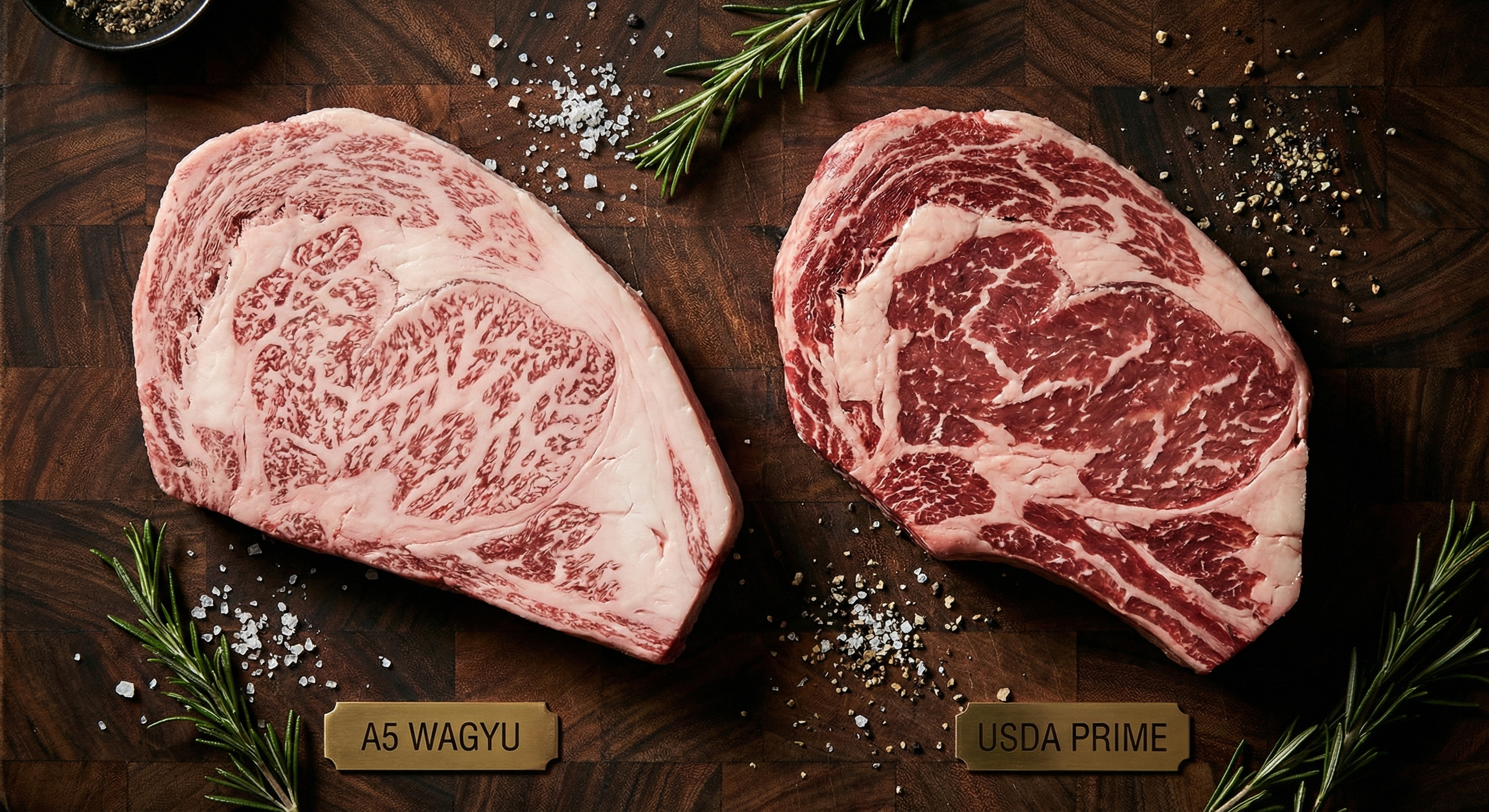
Author Note: I've worked with both Japanese and American beef distributors for over twelve years. When I source A5 ribeyes, I see BMS 10+ consistently—those cuts look like white marble with red streaks. Prime ribeyes show reversed proportions: red meat with white streaks. This fundamental ratio defines every other difference between the two.
Grading Systems: How Each Is Evaluated
USDA Grading for Prime Ribeye
The USDA evaluates beef carcasses between the 12th and 13th rib, measuring:
1. Marbling Score (Primary Factor)
- Practically Devoid → Prime scale
- Prime = abundant marbling throughout ribeye cross-section
- Scored visually against reference standards
2. Maturity (Secondary Factor)
- Young beef (A maturity, 9-30 months) grades higher
- Older animals with same marbling grade lower
3. Other Quality Indicators
- Ribeye color (bright cherry-red preferred)
- Fat color (white to slightly yellow)
- Texture firmness
Prime ribeye breakdown:
- 8-10% intramuscular fat
- Marbling score: moderately abundant to abundant
- ~5-7% of graded U.S. beef reaches Prime
Japanese A5 Grading System
Japanese grading combines two separate evaluations:
Yield Grade (A/B/C)
- A = ≥72% usable meat from carcass
- B = 69-72%
- C = <69%
Quality Grade (1-5) Based on four factors:
- BMS (Beef Marbling Standard): 1-12 scale measuring fat distribution
- Meat color and brightness: 1-7 scale (bright pink-red preferred)
- Fat color and luster: 1-7 scale (bright white preferred)
- Firmness and texture: 1-5 scale
A5 ribeye requirements:
- Highest yield (A)
- BMS 8-12 (20-30%+ intramuscular fat)
- Superior color, fat quality, and texture
- Only ~10-15% of Japanese wagyu grades A5
The [University of Nebraska Meat Science Department](https://meat.unl.edu/) has compared marbling distribution across grading systems—their research confirms A5 wagyu shows 2.5-3x the intramuscular fat percentage of USDA Prime when measured by direct lipid extraction.
Marbling and Fat Distribution Patterns
Visual Marbling Differences
USDA Prime Ribeye:
- Marbling appears as distinct white streaks against red muscle
- Fat distributed in irregular patterns
- Visible gaps of solid muscle between fat deposits
- Marbling concentrates near the ribeye cap (spinalis dorsi)
Japanese A5 Wagyu Ribeye:
- Marbling creates fine, web-like patterns throughout
- Fat interspersed so densely it creates a pink appearance
- Minimal solid red muscle visible
- Uniform distribution from cap to eye
Fat Composition Differences
Beyond density, the fats differ chemically:
USDA Prime:
- Higher stearic acid content (firmer fat at room temperature)
- Melting point: 40-45°C (104-113°F)
- Fat renders more slowly during cooking
Japanese A5 Wagyu:
- Higher oleic acid and monounsaturated fat content
- Melting point: 25-30°C (77-86°F)
- Fat begins rendering at room temperature
Research published by the [American Meat Science Association](https://meatscience.org/) shows wagyu contains 30-40% more monounsaturated fats than American beef, contributing to the "melt-in-your-mouth" texture and lower firmness when raw.
In my experience: When I cut into a cold A5 ribeye straight from the fridge, the knife glides through with minimal resistance. Prime ribeye requires more cutting force because the fat and muscle have distinctly different textures. This textural contrast continues through cooking—Prime stays "steaky" while A5 becomes almost creamy.
Price Comparison and Value Analysis
Current Market Pricing (March 2026)
USDA Prime Ribeye:
- Wholesale: $18-24/lb
- Retail butcher: $28-38/lb
- High-end restaurant supplier: $22-32/lb
Japanese A5 Wagyu Ribeye:
- Wholesale: $120-180/lb (authentic Japanese imports)
- Retail: $150-220/lb
- Restaurant supplier: $130-200/lb
A5 wagyu costs roughly 5-7x more than Prime ribeye. This premium reflects:
- Longer growth cycle (28-32 months vs 14-18 months)
- Lower yield per animal
- Import costs and tariffs for authentic Japanese product
- Exclusivity (limited A5 volume vs. large Prime production)
Cost Per Serving Calculation
Prime Ribeye (10 oz serving):
- Cost: $17.50-23.75
- Typical restaurant markup: $60-90
A5 Wagyu Ribeye (4 oz serving):
- Cost: $37.50-55.00
- Typical restaurant markup: $120-180
Why smaller portions for A5? The fat density makes wagyu extremely rich—most diners find 4-6 oz portions satisfying, while Prime ribeye portions typically run 10-16 oz.
When Each Offers Better Value
Choose USDA Prime when:
- You want a traditional steakhouse experience
- Cooking for multiple people on a budget
- Grilling over high heat (searing, charcoal)
- Pairing with robust sides and sauces
- Serving portions above 8 oz
Choose A5 Wagyu when:
- Celebrating a special occasion
- Exploring premium ingredients
- Cooking Japanese-style (hibachi, shabu-shabu)
- Serving small tasting portions
- Prioritizing marbling intensity over beef flavor
Cooking Methods: Which Techniques Work Best
Optimal Cooking for Prime Ribeye
Recommended methods:
- Reverse sear (275°F oven → high-heat sear)
- Direct grilling (charcoal or gas, high heat)
- Cast iron skillet
Why these methods work: Prime ribeye benefits from aggressive heat that renders the fat pockets while developing Maillard reactions on the surface. The higher stearic acid content means fat needs sustained heat to break down properly.
Optimal Cooking for A5 Wagyu Ribeye
Recommended methods:
- Hot cast iron (minimal oil)
- Japanese hibachi/teppanyaki
- Shabu-shabu (hot pot)
Why these methods work: A5's low melting point (77-86°F) means prolonged heat liquifies the fat completely, leaving only muscle fibers. Quick, high-heat cooking sets the exterior while keeping fat semi-solid internally—creating the signature texture.
Critical mistake I see constantly: People treat A5 wagyu like Prime and cook it to 135°F+ internal temperature. At that point, you've melted out most of the fat that you paid the premium for. The meat becomes dry and loses its defining characteristic. A5 eaten at 125°F internal feels like butter; at 140°F it tastes like expensive lean beef.
Seasoning Philosophy
Prime Ribeye:
- Salt generously (coarse kosher or sea salt)
- Black pepper (optional, coarse grind)
- Compound butters, herb crusts, peppercorn sauces all work
- Robust seasoning complements strong beef flavor
A5 Wagyu:
- Light salt only (finishing flake salt)
- Minimal or no pepper
- Avoid heavy sauces—they mask the fat sweetness
- Some prefer no seasoning at all beyond salt
The fat in A5 carries delicate, almost sweet umami flavors that heavy seasoning overwhelms. Prime ribeye's stronger beef flavor holds up to bold accompaniments.
Flavor Profile Comparison
USDA Prime Ribeye Flavor
Primary tasting notes:
- Strong, classic beef flavor
- Savory, mineral-rich depth
- Fat adds richness without dominating
- Slight gaminess depending on cattle diet
- Finish is clean, meaty
Texture:
- Firm, substantial chew
- Fat and lean clearly distinct textures
- Traditional "steaky" mouthfeel
Japanese A5 Wagyu Ribeye Flavor
Primary tasting notes:
- Subtle, refined beef flavor (less intense than Prime)
- Buttery, almost sweet fat quality
- Umami-forward with minimal metallic notes
- Luxurious, mouth-coating richness
- Finish is creamy, lingers on palate
Texture:
- Tender to the point of softness
- Fat melts into muscle, creating uniform texture
- Less chew, more "melt"
Side-by-side: When I've done blind tastings with chefs, Prime ribeye consistently scores higher for "beef flavor intensity," while A5 scores higher for "luxurious texture" and "fat quality." They're optimized for different sensory experiences—neither is objectively "better," but each excels in its category.
Nutritional and Health Considerations
Macronutrient Breakdown (Per 4 oz Serving)
USDA Prime Ribeye:
- Calories: ~280-320
- Protein: 24-26g
- Fat: 20-24g
- Cholesterol: 80-95mg
Japanese A5 Wagyu Ribeye:
- Calories: ~420-480 (higher due to fat density)
- Protein: 16-18g (lower due to less muscle mass)
- Fat: 38-44g
- Cholesterol: 90-110mg
Health Context
Despite higher fat content, wagyu's fatty acid profile differs significantly:
Monounsaturated fat advantage: Japanese wagyu contains 30-40% more oleic acid (the same heart-healthy fat found in olive oil) than conventional beef. Research from [Penn State University's Department of Food Science](https://foodscience.psu.edu/) suggests high-oleic beef may have neutral or slightly beneficial effects on cholesterol ratios compared to high-stearic acid beef.
Protein trade-off: A5 wagyu delivers less protein per ounce due to muscle displacement by fat. If protein density is your goal, Prime ribeye (or leaner grades) offers better value.
Portion size matters: The caloric difference diminishes when accounting for realistic portion sizes. A 4 oz wagyu serving (~450 calories) compares reasonably to an 8 oz Prime ribeye serving (~560-640 calories), which is a more typical American steakhouse portion.
Takeaway: Neither option qualifies as "health food," but both fit into diets when consumed in moderation. The monounsaturated fat profile in wagyu offers a slight edge for cardiovascular health, while Prime provides more protein per calorie.
Which Cut Should You Choose?
Choose USDA Prime Ribeye If:
✅ You want bold, traditional beef flavor ✅ You're serving 8+ oz portions ✅ You're grilling for a group ✅ You enjoy pairing steak with rich sauces and sides ✅ You prefer substantial chew and texture ✅ Budget is a consideration
Best for: Backyard cookouts, traditional steakhouse dinners, everyday grilling, carnivore diet adherents prioritizing protein
Choose Japanese A5 Wagyu Ribeye If:
✅ You're celebrating a special occasion ✅ You want the most luxurious marbling experience available ✅ You prefer subtle, refined beef flavor with buttery richness ✅ You're serving 4-6 oz tasting portions ✅ You enjoy Japanese cooking techniques ✅ Texture and fat quality matter more than beef intensity
Best for: Special celebrations, tasting menus, Japanese hot pot or hibachi, culinary exploration, luxury dining experiences
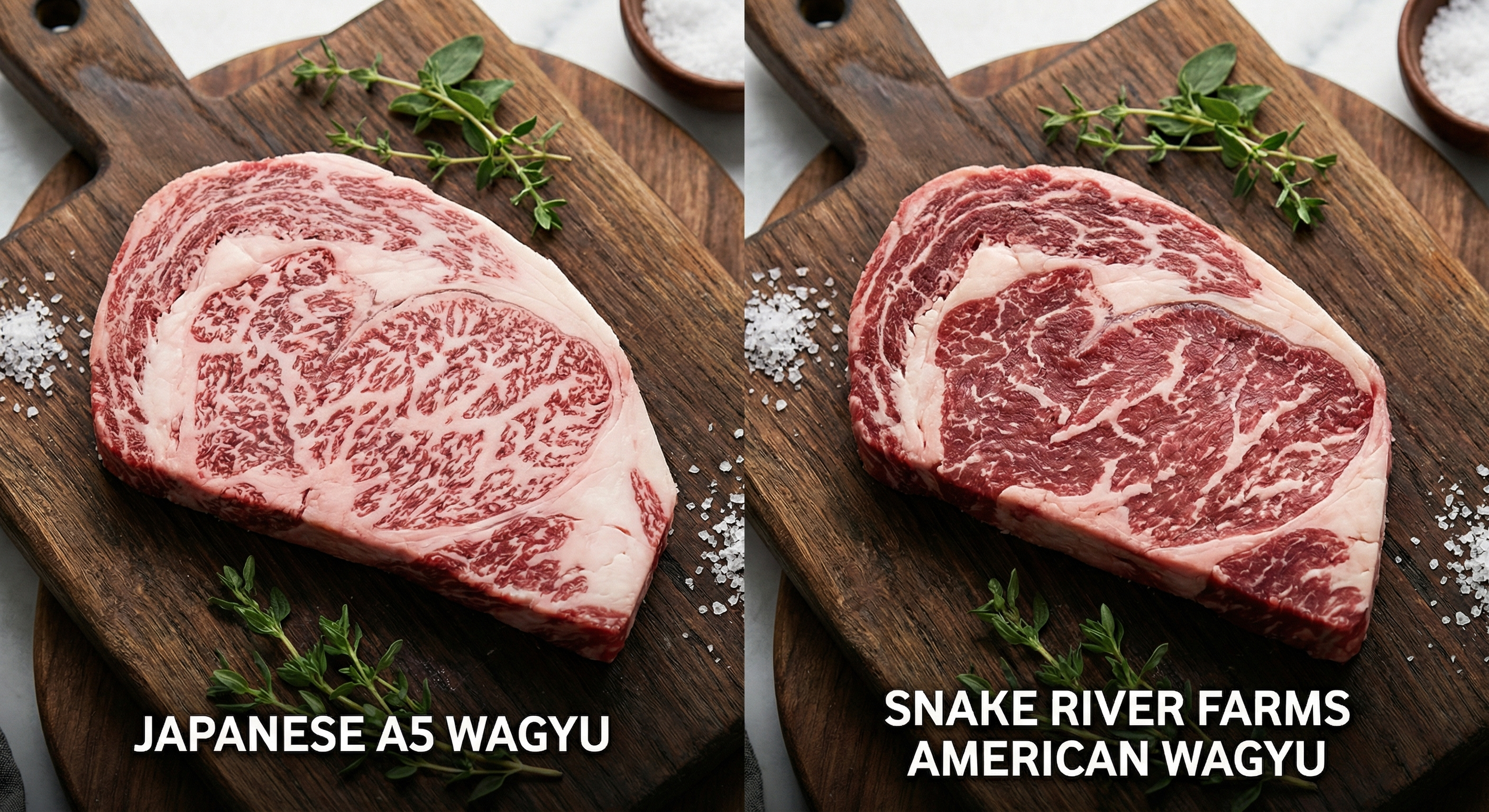
The Hybrid Option: American Wagyu
If you want middle ground between Prime and A5, consider American wagyu (crossbred Angus-wagyu cattle raised domestically):
- Marbling falls between Prime (8-10%) and A5 (25-30%)—typically 12-18%
- Price point: $45-80/lb (3-4x Prime, roughly half of A5)
- Retains more "beefy" flavor than A5 while offering superior marbling to Prime
- Works with traditional American cooking methods
- 6-8 oz portions feel appropriate (not as rich as A5)
American wagyu offers 70-80% of A5's marbling experience at 40-50% of the cost—a compelling value proposition for frequent wagyu consumers.
Final Recommendations
For first-time wagyu buyers: Start with American wagyu before jumping to A5. The price difference is significant, and many find American wagyu delivers the marbling upgrade they wanted without the sticker shock or extreme richness.
For traditional steak lovers: USDA Prime ribeye offers everything most people want in a steakhouse experience—rich marbling, bold flavor, satisfying chew. The 5-7x price premium for A5 only makes sense if you specifically crave the Japanese fat-forward style.
For special occasions: A5 justifies its cost when texture and marbling matter more than portion size. Serve it shabu-shabu or hibachi-style in 3-4 oz portions with minimal seasoning. Let the fat quality be the star.
In my sourcing work: High-end restaurants typically feature both—Prime as the everyday luxury ribeye (8-12 oz portions, $75-120), and A5 as the premium tasting option (3-4 oz portions, $150-220). This gives customers choice based on their priorities: volume and beef flavor vs. marbling intensity and textural luxury.
The "right" choice depends entirely on what you're optimizing for. Both cuts represent the top tier of their respective breeding philosophies—neither is objectively superior, but each excels at delivering a specific experience.