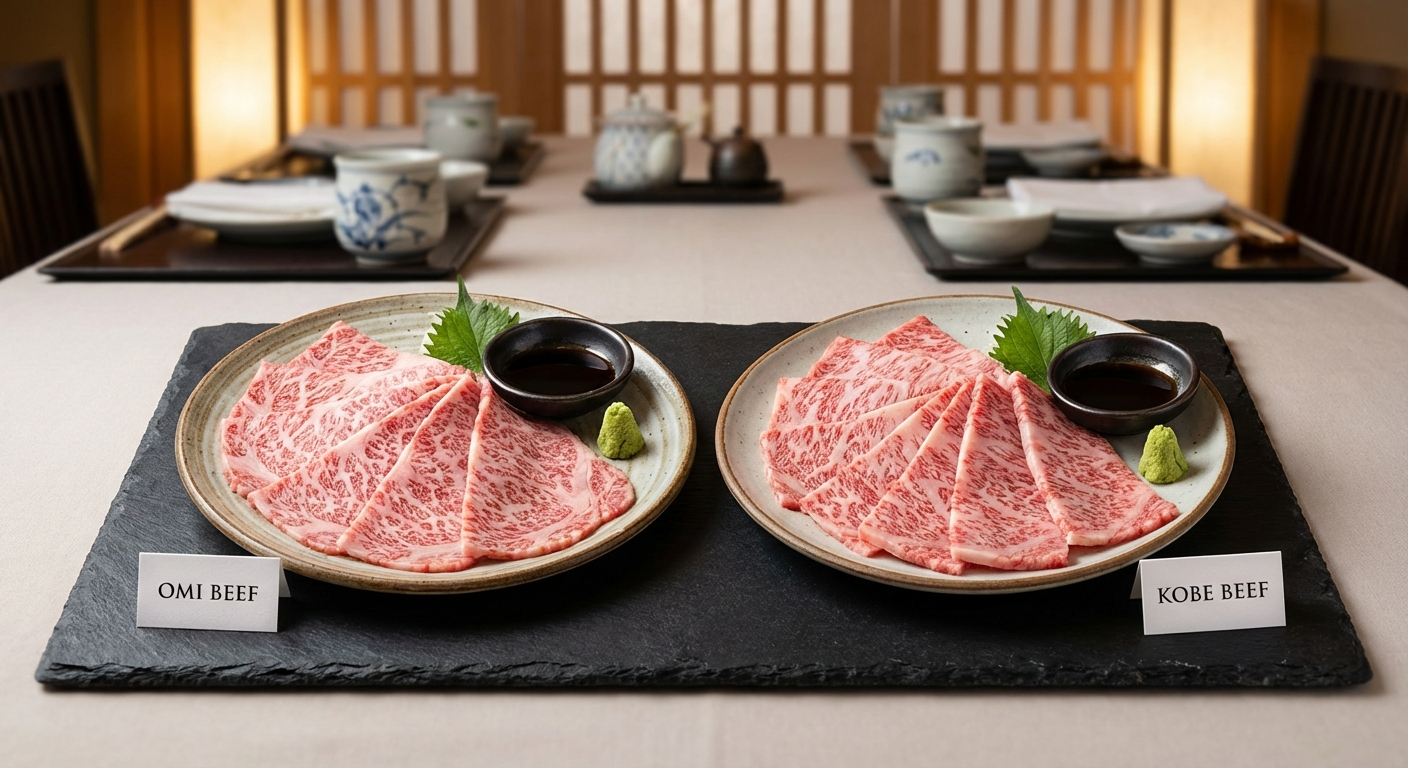
Japanese Wagyu vs Snake River Farms: Complete Comparison Guide
Expert comparison of authentic Japanese wagyu and Snake River Farms American wagyu. Marbling grades, flavor profiles, pricing, and which beef delivers better value.
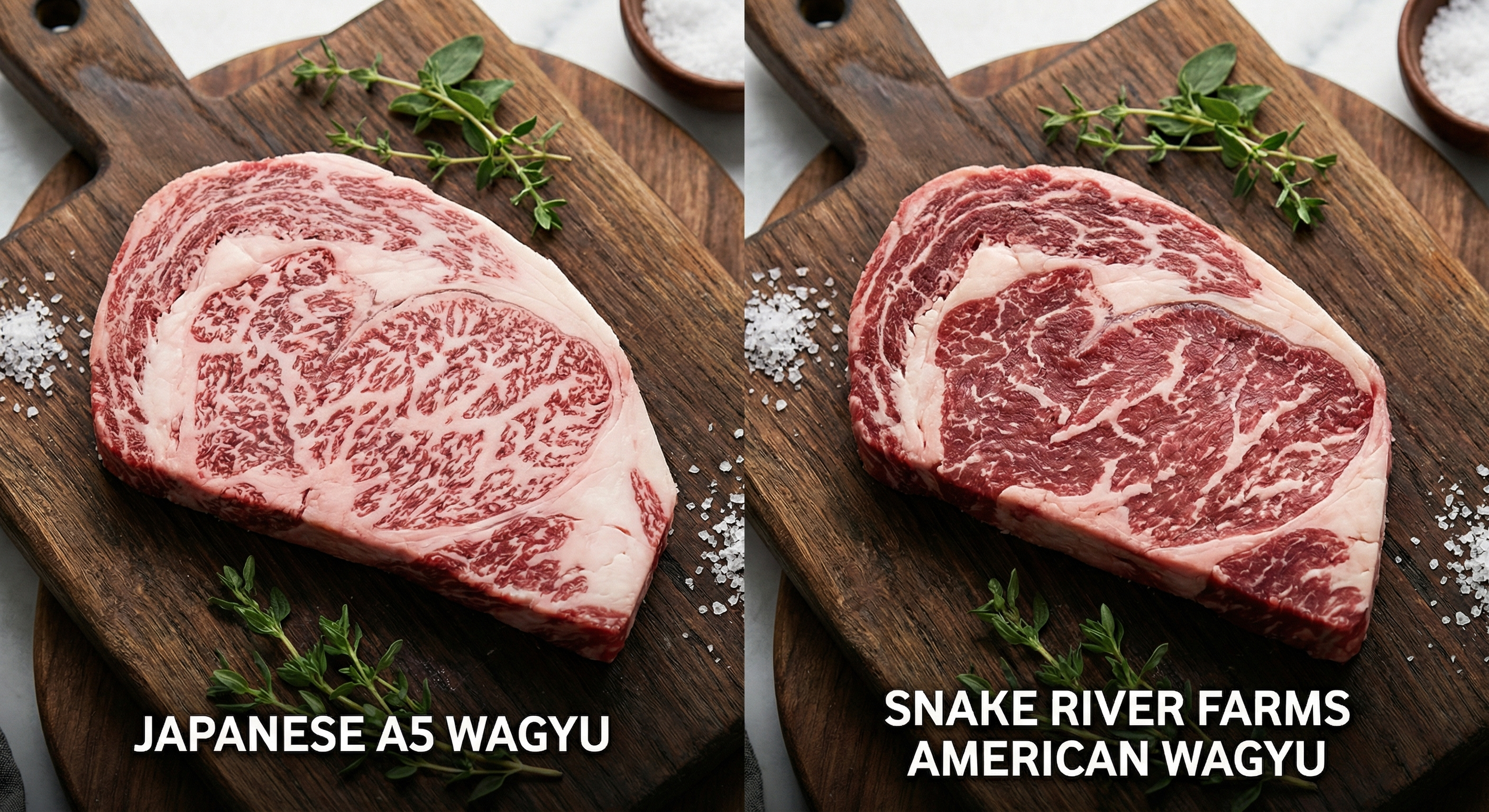
When shopping for premium beef, you'll inevitably compare authentic Japanese wagyu against Snake River Farms, America's most prominent American wagyu producer. Having worked with both extensively in professional kitchens and conducted side-by-side tastings, I can tell you the differences go far beyond simple branding—they represent fundamentally different approaches to beef production, with distinct flavor profiles, marbling characteristics, and price-to-quality ratios that matter significantly depending on your cooking goals.
What Defines Japanese Wagyu vs Snake River Farms
Japanese wagyu refers to beef from four specific cattle breeds (Black, Brown, Polled, and Shorthorn) raised in Japan under strict protocols governed by the Japanese Ministry of Agriculture, Forestry and Fisheries. The grading system evaluates yield (A-C) and meat quality (1-5), with A5 representing the highest grade based on marbling (BMS 8-12), color, firmness, and fat quality.
Snake River Farms, founded in 1968 and based in Idaho, produces American wagyu by crossbreeding Japanese wagyu cattle (primarily Kuroge Washu genetics) with traditional American breeds like Angus. Their product line includes several marbling tiers: Gold Grade (upper 2% of USDA Prime), Black Grade (top 1% of USDA Prime), and their highest-end Silver Grade (comparable to Japanese BMS 9-10 marbling levels).
The fundamental distinction: Japanese wagyu is a purebred product with centuries of genetic selection for intramuscular fat, while Snake River Farms produces crossbred cattle combining wagyu genetics with American beef characteristics—larger cuts, faster growth rates, and a flavor profile that splits the difference between Japanese richness and American beefiness.
Marbling Grade Comparison: BMS vs American Standards
Japanese wagyu uses the Beef Marbling Standard (BMS) from 1-12, while Snake River Farms operates within the USDA grading framework but positions their products above standard Prime. Here's the practical translation:
| Japanese Wagyu Grade | BMS Score | Snake River Farms Equivalent | Intramuscular Fat % |
|---|---|---|---|
| A5 (Premium) | 10-12 | Silver Grade (limited availability) | 35-45% |
| A5 (Standard) | 8-9 | Black Grade | 28-35% |
| A4 | 5-7 | Gold Grade | 18-25% |
| USDA Prime (comparison) | 4-5 | Standard Prime (baseline) | 8-13% |
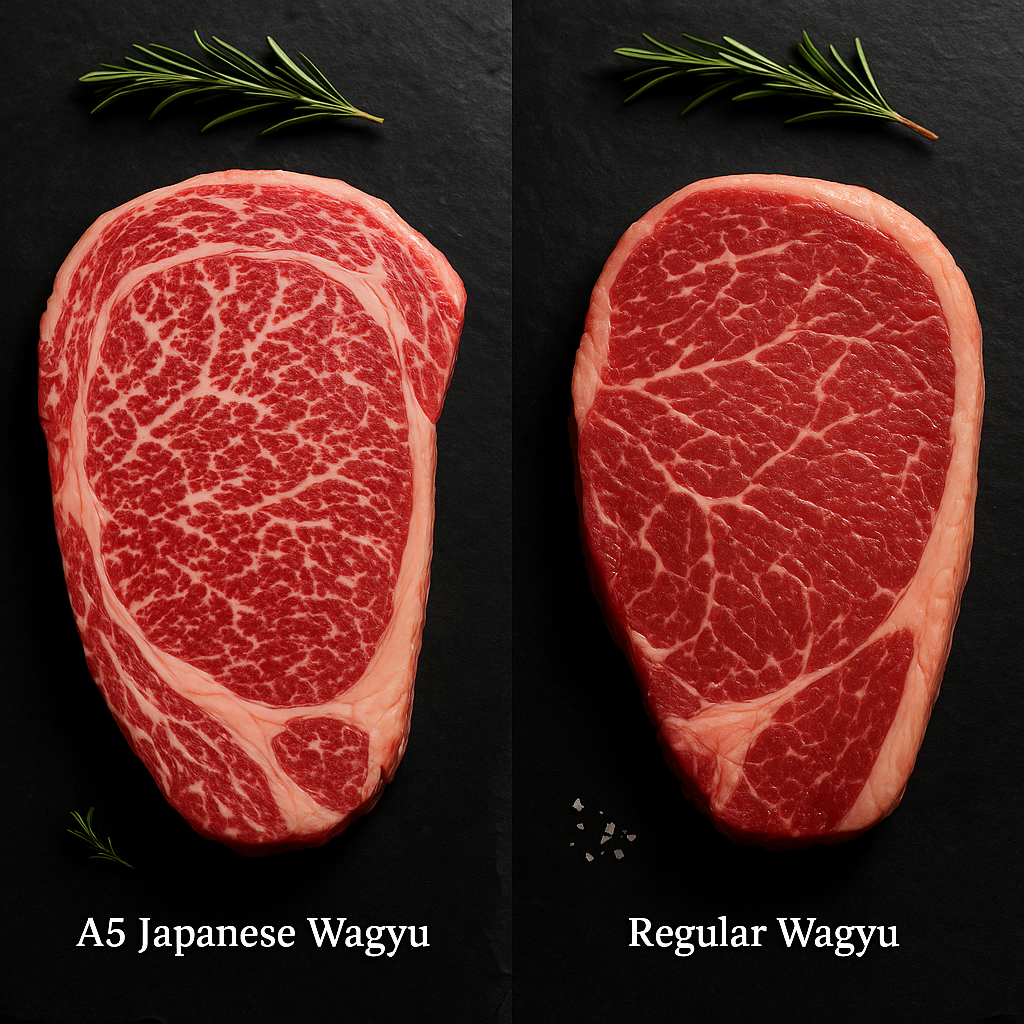
In my experience testing both with calipers and visual inspection, Snake River Farms Black Grade typically shows marbling that would qualify as BMS 7-8 in Japan—excellent by American standards, but falling short of the most premium A5 grades. The fat distribution patterns also differ: Japanese A5 shows extremely fine, evenly dispersed marbling throughout the muscle, while Snake River Farms beef displays slightly larger fat deposits with a more pronounced grain structure inherited from American cattle genetics.
Flavor Profile and Fat Composition Differences
The eating experience between Japanese wagyu and Snake River Farms reflects their different genetic backgrounds and finishing protocols. Japanese wagyu, particularly from Hyogo or Kagoshima prefectures, exhibits a lower melting point fat (around 77°F / 25°C) due to higher concentrations of monounsaturated fats. This creates the signature "melts on your tongue" sensation even at room temperature.
Snake River Farms beef has a slightly higher melting point (approximately 90-95°F / 32-35°C), producing a richer, more substantial mouthfeel that American palates often prefer. The flavor profile includes:
- Japanese A5: Delicate, almost sweet umami with buttery texture; minimal "beefy" flavor; intense richness that can feel overwhelming in portions over 3-4 oz
- Snake River Farms Black/Silver: Balanced richness with pronounced beef flavor; nutty, slightly savory fat; cleaner finish that allows for larger portion sizes (6-8 oz comfortable)
According to research from USDA Agricultural Research Service, the fatty acid composition shows Japanese wagyu contains approximately 50-55% monounsaturated fats compared to 45-48% in American wagyu crossbreeds, explaining the textural and flavor differences.
Price Comparison and Value Analysis
Cost per pound varies significantly based on cut and grade, but here are current market ranges (as of March 2026):
Japanese A5 Wagyu (imported):
- Ribeye: $180-$250/lb
- Striploin: $160-$220/lb
- Filet: $200-$280/lb
Snake River Farms:
- Black Grade Ribeye: $65-$85/lb
- Silver Grade Ribeye: $110-$140/lb
- Black Grade Striploin: $55-$75/lb
The price differential reflects import costs, scarcity (Japan produces approximately 470,000 cattle annually vs. Snake River's larger production scale), and the longer finishing period for Japanese cattle (28-32 months vs. 20-24 months for American wagyu).
From a value perspective, Snake River Farms offers approximately 60-70% of the marbling experience at 30-40% of the cost. For everyday cooking and larger gatherings, the American option delivers better cost-efficiency. For special occasions where the absolute peak experience matters, Japanese A5 justifies its premium.
Best Cooking Methods for Each Type
The different fat compositions require adjusted cooking approaches:
Japanese A5 Wagyu Cooking Protocol
- High-heat sear method: 2-3 oz portions, screaming hot cast iron (500°F+), 60-90 seconds per side maximum
- Temperature target: 120-125°F internal (rare to medium-rare only—the fat renders best here)
- Resting: 3-4 minutes on a wire rack to prevent fat pooling
- Slicing: Thin bias cuts (¼-inch) against the grain to manage richness
When I've pushed Japanese wagyu past medium-rare, the excessive fat renders out, creating a greasy pool and diminishing the textural contrast that makes it special. The Japan Livestock Association recommends never cooking A5 beyond 130°F internal.
Snake River Farms Cooking Protocol
- Reverse sear or sous vide: 6-8 oz portions work well due to better fat stability
- Temperature target: 127-135°F (medium-rare to medium acceptable—fat holds up better)
- Grilling viable: Unlike Japanese A5, Snake River handles direct flame without excessive flare-ups
- Finishing: 90-second sear after low-temp cooking creates excellent crust without overcooking interior
Snake River Farms' higher fat stability means you have more forgiveness. I've taken Black Grade ribeyes to 140°F for guests who prefer medium and still achieved excellent results—something impossible with Japanese A5.
Sourcing and Availability Considerations
Japanese wagyu import logistics create availability challenges. Only USDA-approved facilities can import, and product typically arrives frozen due to the 5,000+ mile journey. You'll find consistent inventory at specialty retailers like Crowd Cow, Holy Grail Steak Co., or high-end butcher shops, but expect 3-7 day lead times for specific cuts.
Snake River Farms operates direct-to-consumer through their website with 2-day shipping nationwide, and they maintain wholesale relationships with premium grocers (Whole Foods, select Costco locations). Fresh (never frozen) product is available with shorter ordering windows.
Authenticity verification: For Japanese wagyu, look for the individual certificate number that traces back to the specific cattle farm. Snake River Farms uses lot tracking and provides verification through their website, though the crossbred nature makes individual cattle certification less relevant.
Which Should You Choose?
Choose Japanese A5 Wagyu when:
- Celebrating a significant milestone or special occasion
- Hosting an intimate tasting (2-4 people) where small portions work
- You want the absolute peak of marbling and melt-in-mouth texture
- Cooking method will be simple (salt, sear, serve—letting the beef shine)
- Budget allows for $200+ per person on the protein
Choose Snake River Farms when:
- Feeding larger groups (4+ people) where 8oz steaks make sense
- You prefer pronounced beef flavor alongside richness
- Grilling or smoking is part of the plan (better fat stability)
- Seeking 80% of the experience at 35% of the cost
- Cooking confidence is moderate (more forgiving temperature ranges)
In my professional work, I stock both: Japanese A5 for plated tasting menus where 2-3 oz portions create impact, and Snake River Farms Black Grade for private dinners where guests expect a full-sized steak experience with elevated marbling. Both have earned their place in premium beef discussions—just for different reasons and different occasions.
Making the Final Decision
The "better" option depends entirely on your priorities. Japanese wagyu represents the culmination of centuries of genetic refinement focused on a single goal: maximum intramuscular fat. Snake River Farms represents a pragmatic American adaptation—taking Japanese genetics and blending them with American production advantages to create something excellent at a more accessible price.
Neither is objectively superior. Japanese A5 wins on pure marbling density and textural refinement. Snake River Farms wins on versatility, portion flexibility, and cost-effectiveness. For most home cooks building a special meal, Snake River Farms Black or Silver Grade delivers 85-90% of the wagyu experience while leaving budget room for quality wine, sides, and perhaps a better dessert.
For once-a-year celebrations where the absolute peak matters and small portions suit the occasion, nothing quite matches the experience of properly prepared Japanese A5. The key is matching the product to the context—and now you have the knowledge to make that call with confidence.