Wagyu vs USDA Prime: What You're Actually Paying For
USDA Prime is the top 8% of American beef. Wagyu is a different animal entirely—literally. Here's how they actually compare and when each one makes sense.
Two Grading Systems, Two Different Worlds
Walk into any high-end butcher shop and you'll see two labels fighting for your attention: "Wagyu" and "USDA Prime." Both signal top-tier beef. Both command premium prices. But they represent fundamentally different things—different breeds, different grading systems, and different eating experiences.
Understanding the real differences matters because the marketing around both terms has become increasingly blurred. American Wagyu, USDA Prime Wagyu-cross, "Wagyu-style"—the terminology alone can cost you money if you don't know what you're looking at.
What USDA Prime Actually Means
The USDA grading system evaluates beef carcasses based on two criteria: quality grade and yield grade. The quality grade—what consumers care about—is determined primarily by marbling and the maturity of the animal.
There are eight USDA quality grades, but only three appear in retail:
- Prime: Abundant marbling. Roughly the top 8% of all graded beef.
- Choice: Moderate to modest marbling. The bulk of quality retail beef.
- Select: Slight marbling. Leaner and less expensive.
USDA Prime is genuinely excellent beef. The marbling delivers moisture, flavor, and tenderness that Choice can't match. At steakhouses, Prime is the standard—and for good reason.
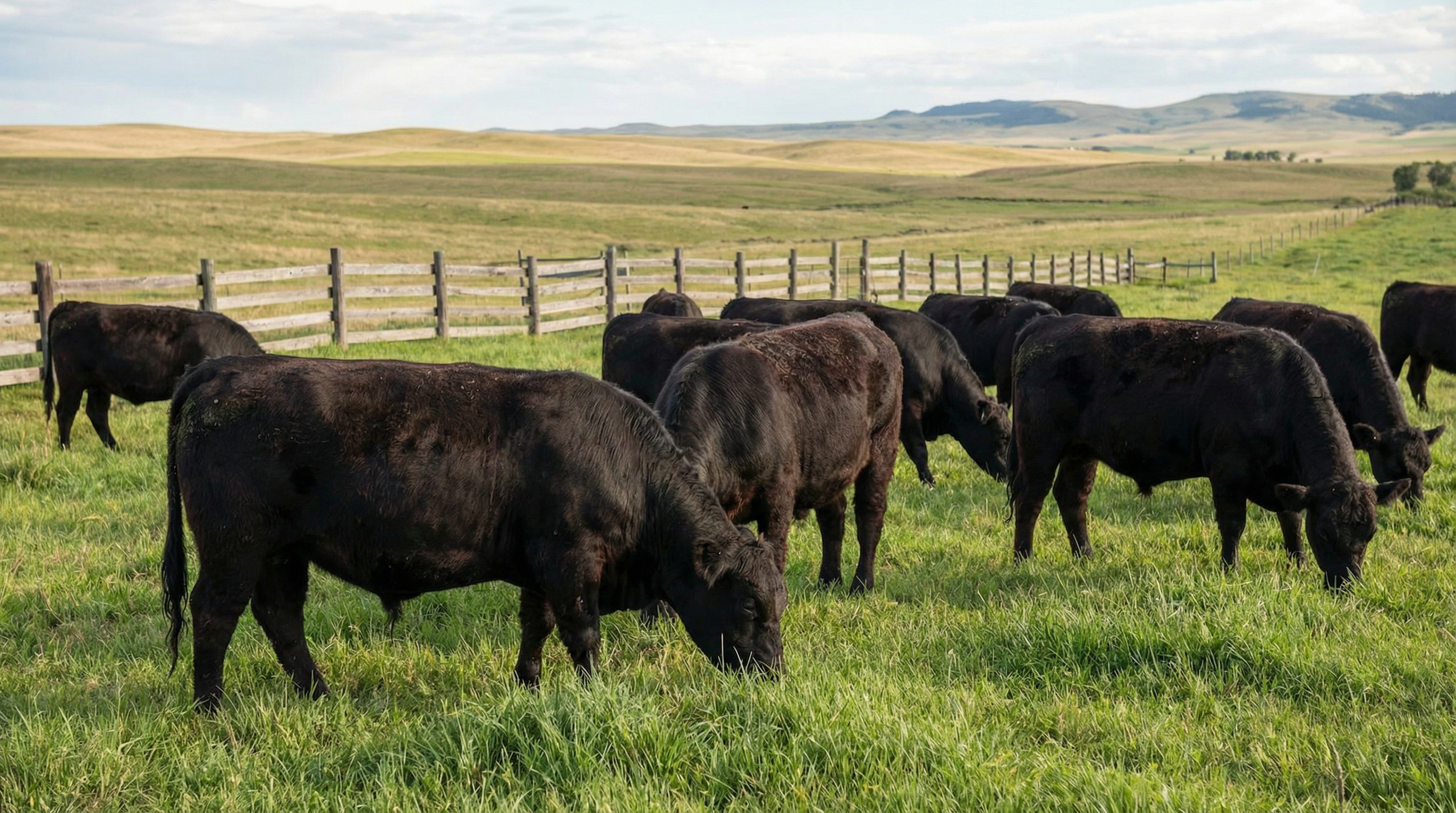
But here's the critical detail: USDA Prime is breed-agnostic. Any cattle breed that produces enough marbling can grade Prime. Most Prime beef in America comes from Angus-influenced cattle, not Wagyu.
What "Wagyu" Actually Means
Wagyu translates to "Japanese cattle" and refers to four specific breeds: Japanese Black (Kuroge), Japanese Brown (Akage), Japanese Shorthorn, and Japanese Polled. Japanese Black produces roughly 90% of all Wagyu beef and is responsible for the extraordinary marbling the name is famous for.
The genetics are the differentiator. Wagyu cattle have a unique predisposition to deposit fat within muscle tissue in fine, web-like patterns. This isn't something you can achieve through feeding alone—Angus cattle fed the same diet as Wagyu will never develop BMS 10+ marbling. It's hardwired into the breed.
Japanese Wagyu: The JMGA System
In Japan, beef is graded by the Japanese Meat Grading Association on a scale from C1 to A5. The "A" denotes yield grade, and the number (1-5) reflects quality based on four factors: marbling (BMS), meat color, fat color, and firmness. A5 requires a BMS of 8-12.
American Wagyu: A Hybrid Category
American Wagyu is typically a cross between Japanese Black Wagyu and Angus cattle. Fullblood (100% Wagyu genetics) animals exist in the U.S. but are rare. Most American Wagyu is F1 (50% Wagyu) or higher-percentage crosses. These animals are graded under the USDA system, and many reach Prime—but the best specimens exceed what the USDA scale can measure.
Marbling: The Numbers Tell the Story
This is where the comparison gets concrete. Both grading systems measure marbling, but on very different scales:
- USDA Prime: Roughly equivalent to BMS 4-5 on the Japanese scale
- Japanese A4: BMS 6-7
- Japanese A5: BMS 8-12
- American Wagyu (typical): BMS 5-8, depending on genetics and feeding
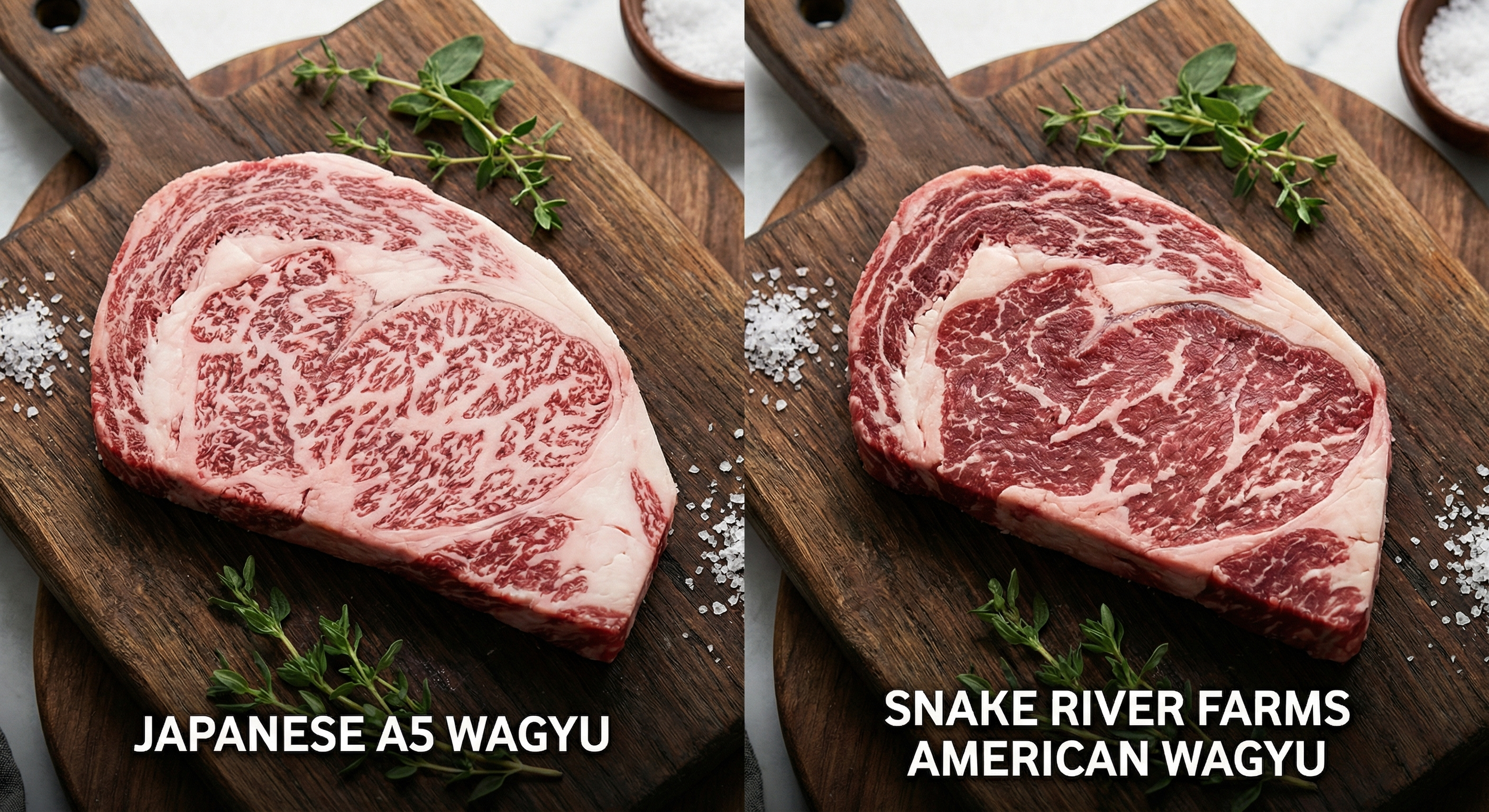
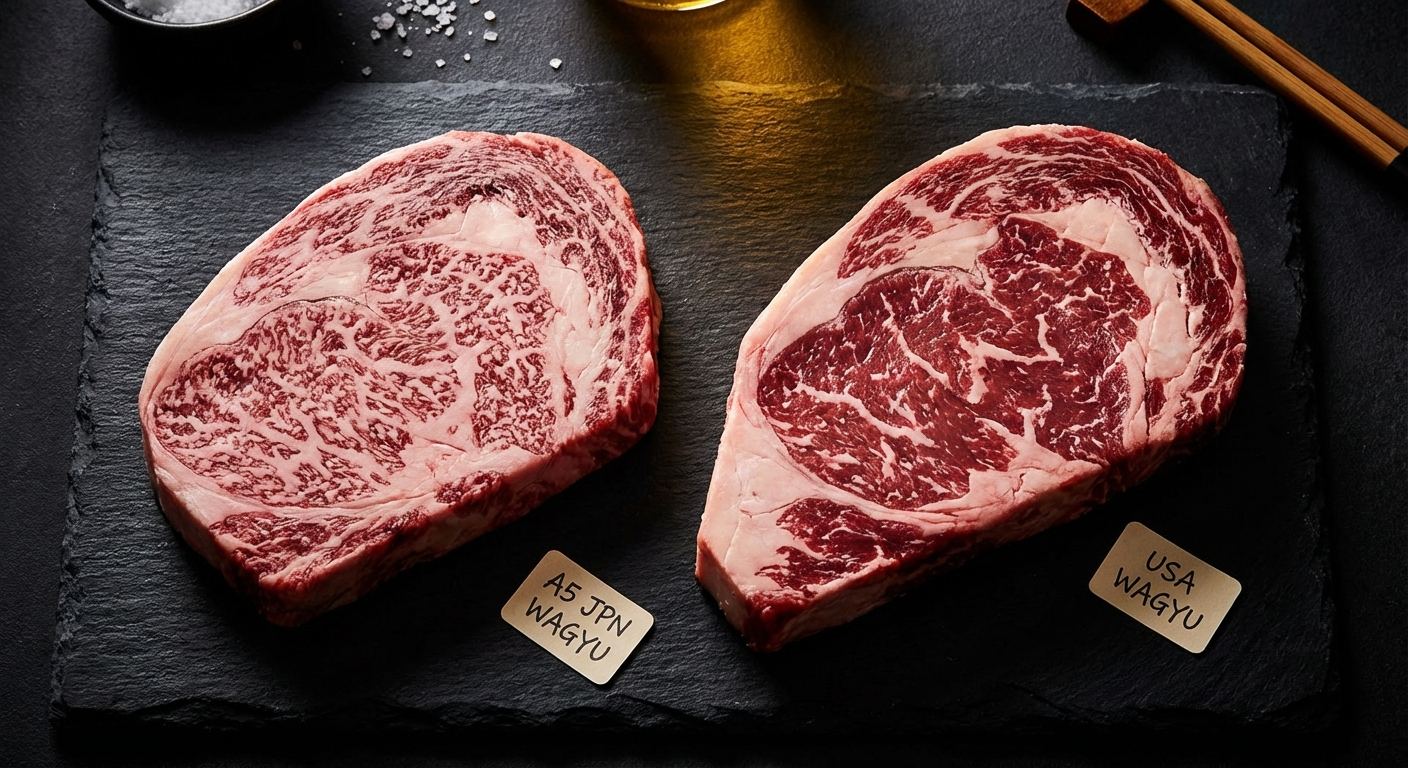
The gap between USDA Prime and Japanese A5 isn't incremental—it's categorical. A5 Wagyu can have two to three times the intramuscular fat of Prime beef. You can see it immediately: Prime has distinct white streaks within red meat, while A5 Wagyu's fat is so finely distributed the steak appears almost pink throughout.
Flavor and Texture: Different Experiences Entirely
USDA Prime
Prime steak delivers what most people picture when they think of a great steak: a well-seared crust, robust beefy flavor, satisfying chew with tenderness, and rich but not overwhelming fat. You can eat an 8-12 oz Prime steak comfortably. The marbling enhances the experience without dominating it. This is steak as a main course—substantial and satisfying.
Japanese A5 Wagyu
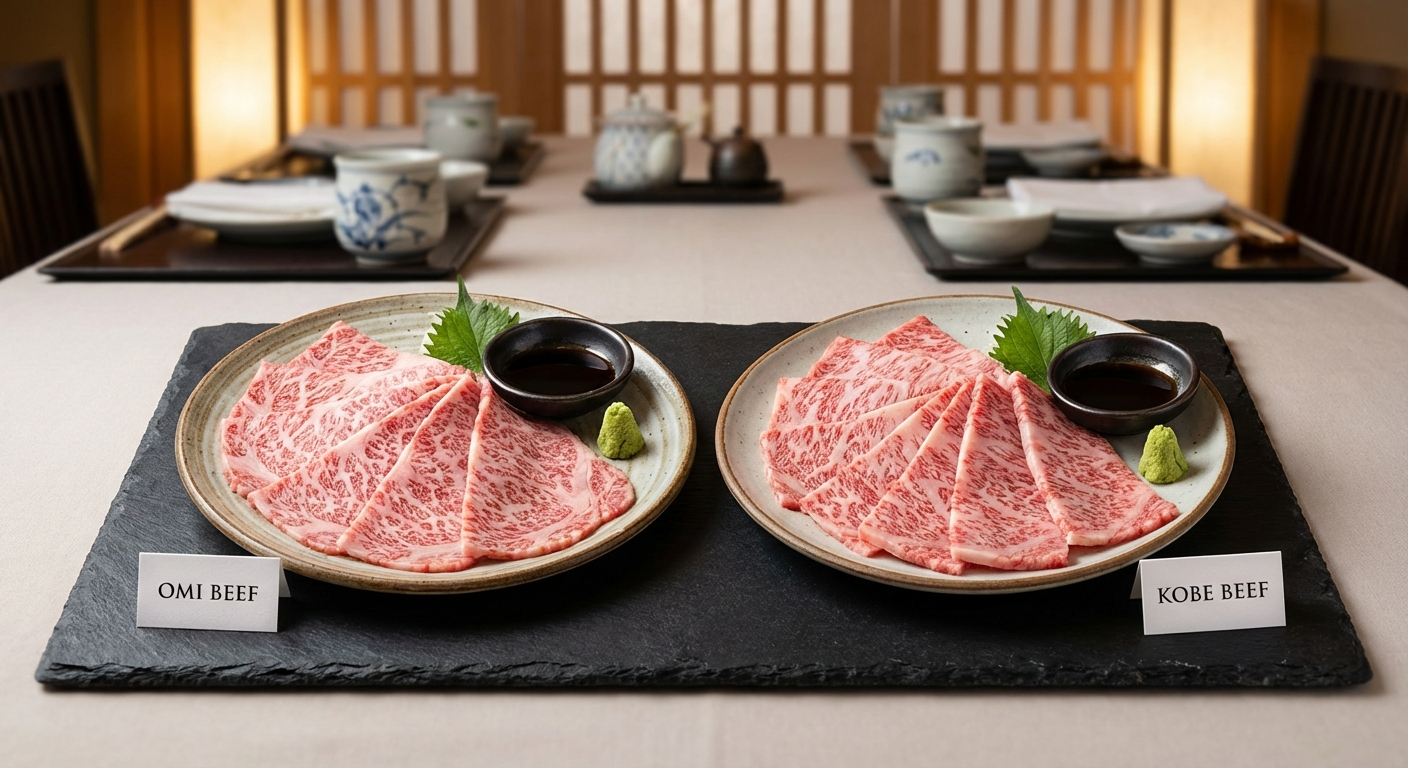
A5 Wagyu is a fundamentally different eating experience. The fat melts at a lower temperature than conventional beef fat, creating a buttery, almost custard-like texture. The flavor is sweeter, with umami notes that linger. But the richness is intense—most people find 2-4 ounces is a full serving. Eating 12 oz of A5 Wagyu would be like eating an entire stick of the world's best butter.
American Wagyu
American Wagyu splits the difference. You get enhanced marbling and tenderness beyond Prime, with that slight buttery quality, but enough beef structure to eat in traditional steak-sized portions. It's arguably the most versatile option—special enough to feel like an upgrade, approachable enough for a full dinner.
Price Comparison: What You'll Actually Spend
As of 2026, here's what you can expect to pay for a quality ribeye steak from a reputable source:
- USDA Prime (Angus): $25-45 per pound
- American Wagyu (F1 cross): $50-80 per pound
- American Wagyu (fullblood): $80-120 per pound
- Australian Wagyu (high BMS): $80-150 per pound
- Japanese A4: $100-180 per pound
- Japanese A5: $150-300+ per pound
But price per pound doesn't tell the full story. Because you serve A5 Wagyu in much smaller portions, the per-serving cost gap narrows. A 4 oz A5 Wagyu serving at $200/lb costs about $50—expensive, but not as astronomical as the per-pound price suggests.
Cooking Considerations
USDA Prime
Prime steak is forgiving and versatile. Grill it, pan-sear it, reverse-sear it, sous vide it—Prime handles every cooking method well. Season with salt and pepper, cook to your preferred doneness (medium-rare to medium recommended), and let it rest. The marbling provides a buffer against overcooking.
Japanese A5 Wagyu
A5 requires a different approach entirely. Slice it thin (¼ to ½ inch), sear it hard and fast in a screaming-hot pan—30 to 60 seconds per side. No oil needed; the beef renders its own fat immediately. Going beyond medium-rare wastes the delicate texture. Thick cuts don't work well because the high fat content needs quick, high-heat rendering.
American Wagyu
Cook American Wagyu like you would Prime, but pull it slightly earlier—the extra marbling means it continues cooking more aggressively during rest. Reverse sear is ideal for thicker cuts to manage the fat rendering evenly.
When to Choose USDA Prime
- Weeknight dinner or weekend grilling: Prime is exceptional everyday luxury
- Feeding a group: The economics make sense for larger portions
- Traditional steak experience: If you want beefy flavor with generous marbling
- Grilling: Prime handles open flame and high heat beautifully
- You prefer larger portions: An 8-12 oz Prime steak is a complete meal
When to Choose Wagyu
- Special occasions: Japanese A5 is a bucket-list food experience
- Tasting menus or small plates: The intensity suits small, focused bites
- You want the richest possible beef experience: Nothing matches A5 for sheer decadence
- American Wagyu as an upgrade: When Prime isn't special enough but A5 is too much
- Exploring beef at its extremes: Understanding the full spectrum of what beef can be
The Verdict: Different Tools for Different Jobs
Comparing Wagyu to USDA Prime is like comparing a hand-built sports car to a top-trim luxury sedan. Both are excellent. Both justify their price points. But they serve different purposes and deliver different experiences.
USDA Prime is the pinnacle of conventional American beef—flavorful, versatile, and satisfying in the portions we're used to eating. It's the best version of what most people want from a steak.
Japanese A5 Wagyu is something else entirely—a delicacy meant to be savored in small amounts, where the fat itself is the star. It's not a better steak; it's a different category of food.
American Wagyu bridges the gap thoughtfully, offering enhanced richness without leaving familiar territory. For many people, it's the sweet spot.
The smartest approach? Keep USDA Prime in your regular rotation, try American Wagyu when you want to elevate a meal, and save Japanese A5 for the moments that deserve something truly extraordinary.