What Is Angus Wagyu Beef? The Complete Buyer's Guide to American Wagyu Hybrids
Most "American wagyu" is angus wagyu beef — a cross between Black Angus and Japanese wagyu cattle. Here is what that label actually means, how quality varies dramatically between producers, and how to buy it without overpaying.
Walk into a high-end grocery store or browse any premium beef website and you will see "angus wagyu beef" everywhere. Restaurant menus feature angus wagyu burgers, steaks, and briskets at prices well above standard beef but below Japanese A5. The label sounds impressive — two of the most recognized names in beef, combined into one product. But what exactly is angus wagyu beef, and is it worth the premium?
The short answer: angus wagyu beef is meat from cattle that are a cross between Black Angus and Japanese wagyu breeds. It is the dominant form of what Americans call "wagyu" and represents over 95% of domestically produced wagyu beef. The long answer involves genetics, grading inconsistencies, massive quality variation between producers, and a marketplace where informed buyers get significantly better value.
Angus Wagyu Beef Defined: Genetics and Terminology
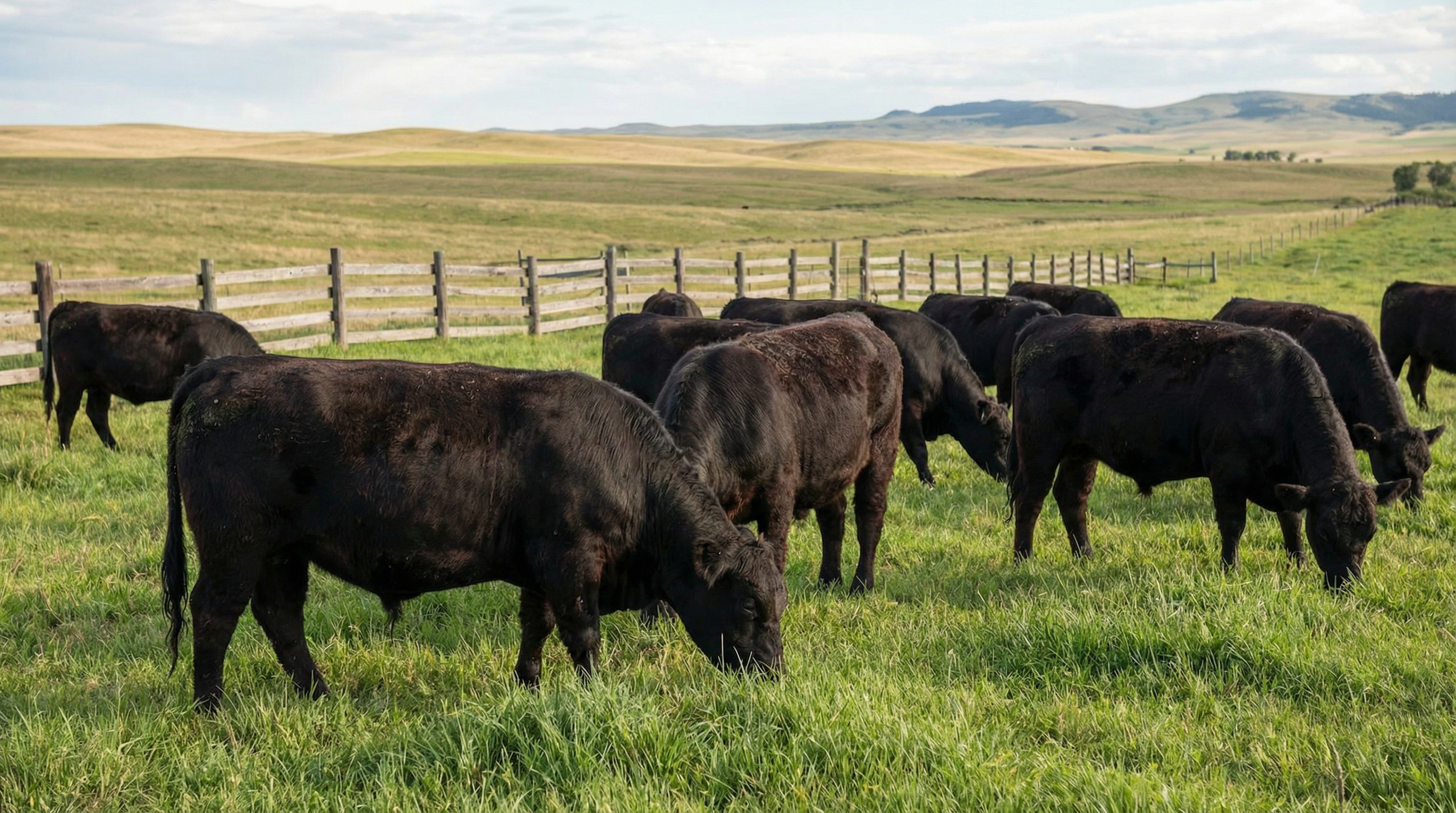
Angus wagyu beef comes from cattle that carry genetics from both Black Angus (Bos taurus, British origin) and Japanese wagyu (primarily Japanese Black or Kuroge Washu) breeds. The cross is typically achieved by breeding a Japanese wagyu bull with Black Angus cows, producing first-generation (F1) hybrid offspring that carry approximately 50% genetics from each breed.
The terminology matters because "angus wagyu" is not a single product — it describes a spectrum:
- F1 (50% wagyu / 50% Angus): The most common cross. One wagyu parent, one Angus parent. This is what most "American wagyu" labels represent.
- F2 (75% wagyu / 25% Angus): An F1 female bred back to a wagyu bull. Higher marbling potential but less common because it requires more wagyu genetics in the herd.
- F3 (87.5% wagyu): Third-generation backcross. Approaches purebred wagyu marbling but retains some Angus frame size.
- F4+ (93.75%+ wagyu): Registered as "purebred" by the American Wagyu Association. Not fullblood, but close.
The distinction between these generations is not academic — it directly affects marbling, flavor, texture, and price. An F1 angus wagyu ribeye and an F3 angus wagyu ribeye from the same producer can differ as dramatically as USDA Choice differs from Prime.
Why Angus Wagyu Exists: The Practical Economics
Japanese fullblood wagyu cattle are expensive, slow-growing, and produce smaller carcasses than American breeds. A fullblood wagyu steer might take 30-36 months to finish and yield a 700-pound carcass. A Black Angus steer finishes in 18-22 months with a 900-pound carcass. The economics are obvious.
Crossing wagyu with Angus captures the best commercial traits of both breeds:
- From wagyu: Enhanced intramuscular fat deposition (marbling), softer fat with higher monounsaturated fatty acid content, and more complex umami flavor
- From Angus: Larger frame size, faster growth rates, better feed conversion efficiency, and proven adaptability to American ranching conditions
The result is an animal that produces more beef per head than fullblood wagyu, reaches market weight faster, and still delivers marbling that significantly exceeds conventional cattle. For ranchers, the math works. For consumers, it means wagyu-influenced beef at prices that do not require a second mortgage.
How Angus Wagyu Beef Is Graded
This is where confusion — and consumer exploitation — runs rampant. There is no single, standardized grading system for angus wagyu beef in the United States. Instead, multiple overlapping systems create a patchwork that benefits sellers more than buyers.
USDA Grading
All beef sold in the U.S. can be USDA graded on the standard scale: Select, Choice, and Prime. The top end of Prime corresponds to a Beef Marbling Score (BMS) of roughly 8-9 on the Japanese scale. Quality angus wagyu beef routinely grades USDA Prime, but the USDA system has no grades above Prime — so an exceptional angus wagyu steak with BMS 7 and a barely-Prime conventional steak with BMS 5 receive the same "Prime" designation.
BMS and the Japanese Scale
Some American wagyu producers use the Japanese BMS scale (1-12) to differentiate their products beyond USDA Prime. Typical angus wagyu BMS ranges:
- F1 angus wagyu: BMS 4-7 (USDA high Choice to Prime)
- F2-F3 angus wagyu: BMS 6-9 (USDA Prime to beyond Prime)
- Top-tier producers (Snake River Farms Gold, Mishima Reserve): BMS 9-10+
- Japanese fullblood A5 (for comparison): BMS 8-12
The problem is that BMS scoring on American carcasses is not performed by JMGA-certified graders. Each producer or processor applies BMS scores using their own interpretation, which means a "BMS 8" from one brand may not equal a "BMS 8" from another.
Brand-Specific Grading
Major angus wagyu producers have created proprietary grading tiers to differentiate quality levels within their product lines:
- Snake River Farms: Black (BMS 6-8), Gold (BMS 9+)
- Mishima Reserve: Uses BMS with verified scoring
- Morgan Ranch: American wagyu with genetic verification
- Double 8 Cattle Company: Full wagyu pedigree tracking
These brand tiers are the most reliable indicator of what you are actually getting, because reputable producers stake their reputation on consistency.
Quality Tiers: What You Are Actually Buying
Not all angus wagyu beef is created equal. The market spans an enormous quality range, and price alone does not always correlate with eating experience. Here is how to think about the tiers:
Premium Tier ($40-80/lb for steaks)
This is angus wagyu from dedicated producers with verified genetics, controlled feeding programs (typically 350-500+ days on grain), and individual carcass grading. Brands like Snake River Farms Gold, Mishima Reserve, and similar specialty producers operate here. Expect BMS 7-10, rich marbling visible throughout the steak, and a buttery texture that clearly differentiates from conventional Prime beef.
Mid-Market Tier ($25-45/lb for steaks)
The largest segment. This includes Snake River Farms Black, many Costco and specialty retailer angus wagyu offerings, and restaurant-quality American wagyu. F1 crosses with BMS 5-7. Noticeably better marbling than conventional Prime but without the melt-in-your-mouth intensity of the premium tier. This is where most consumers first experience angus wagyu beef and where value is often strongest.
Entry Tier ($15-28/lb for steaks)
Grocery store "wagyu" labels, some online retailers, and bulk purchases. Genetics may be verified or may be loosely described as "wagyu-influenced." Marbling is present but not dramatically different from high USDA Choice. At this tier, you are often paying a premium for the wagyu label rather than a meaningfully different eating experience.
Ground and Processed ($8-18/lb)
Angus wagyu ground beef, burgers, sausages, and similar products. These use trim and less desirable cuts from wagyu-cross cattle. The higher fat content does produce noticeably juicier burgers and more flavorful ground beef compared to conventional. This is arguably the best value entry point for angus wagyu beef — the quality difference is perceptible and the price premium is modest.
How Angus Wagyu Tastes Different from Regular Beef
The eating experience of quality angus wagyu beef differs from conventional beef in several measurable ways:
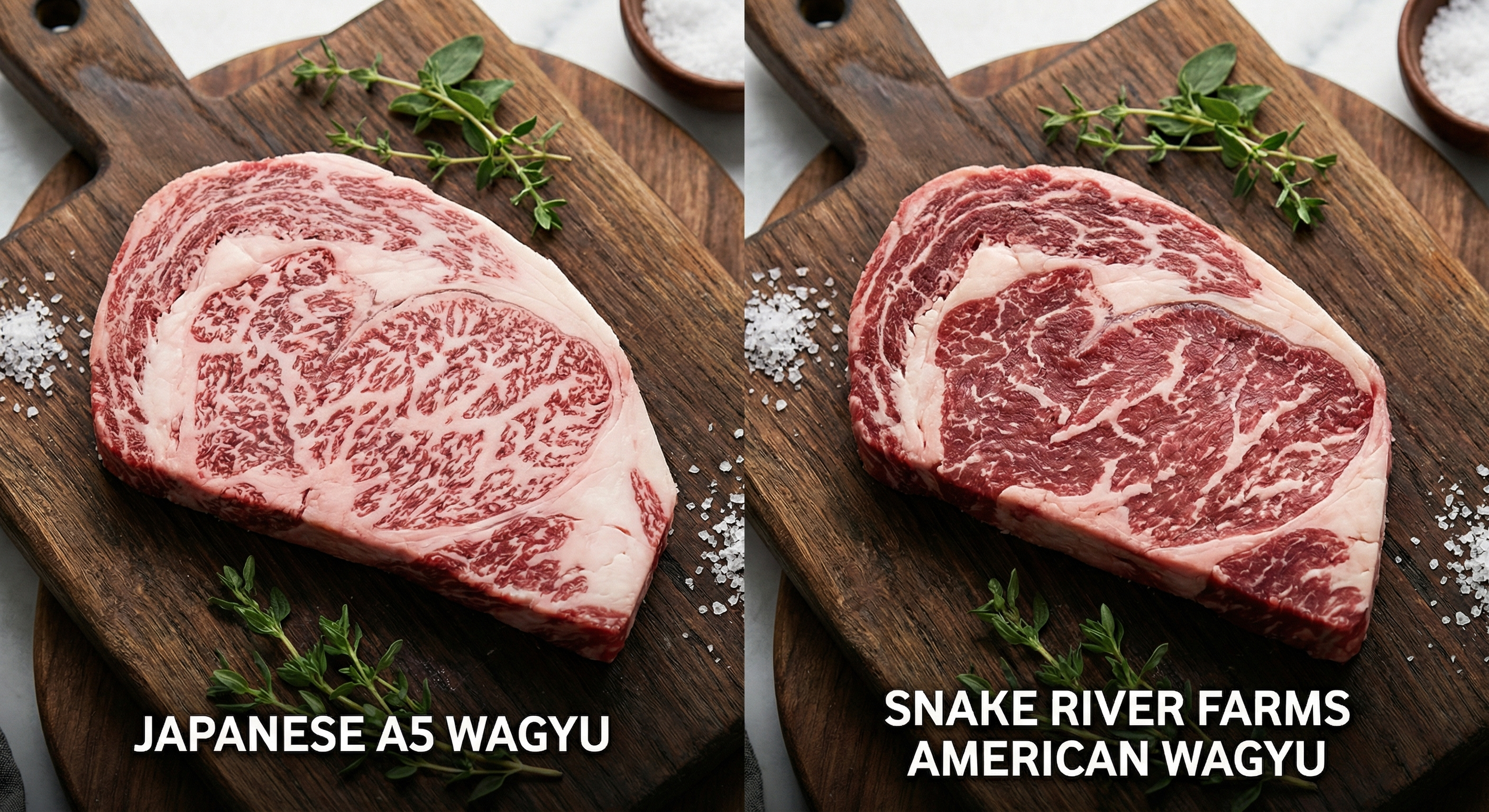
Marbling distribution: Wagyu genetics produce finer, more evenly distributed intramuscular fat compared to Angus. Where a conventional Prime steak might have distinct fat streaks, angus wagyu shows a more web-like marbling pattern that melts more uniformly during cooking.
Fat composition: Wagyu fat contains a higher percentage of monounsaturated fatty acids (particularly oleic acid) compared to conventional beef fat. This is the same type of fat found in olive oil, and it has a lower melting point — which is why wagyu fat literally melts at body temperature. The result is a buttery, almost creamy mouthfeel that conventional beef cannot replicate regardless of grade.
Flavor intensity: The combination of increased marbling and different fatty acid profiles creates a more complex umami flavor. Quality angus wagyu beef has a sweetness and depth that conventional beef lacks, though it is less intense than Japanese fullblood wagyu where the richness can be almost overwhelming in large portions.
Texture: Higher intramuscular fat makes the meat more tender. Even without dry aging or careful preparation, a well-marbled angus wagyu steak will be noticeably more tender than a comparable Angus cut.
How to Buy Angus Wagyu Beef: What to Look For
The angus wagyu market rewards informed buyers and punishes everyone else. Here are the specific things to evaluate before purchasing:
Genetic Verification
Reputable producers will state the percentage of wagyu genetics in their cattle. Look for specific claims like "F1 cross" or "50% Tajima wagyu genetics" rather than vague descriptors like "wagyu-style" or "wagyu-influenced." The American Wagyu Association maintains a registry, and products from AWA-registered herds carry more credibility.
Feeding Program
Marbling development in angus wagyu cattle depends heavily on the feeding program. Japanese wagyu are grain-fed for 400-600+ days. Quality American angus wagyu programs run 350-500 days. Conventional cattle typically finish in 120-180 days. Longer feeding means more marbling development and more expense — which is why it matters.
If a producer does not disclose feeding duration, the cattle were likely finished on a conventional timeline, and marbling will reflect that.
Visual Marbling
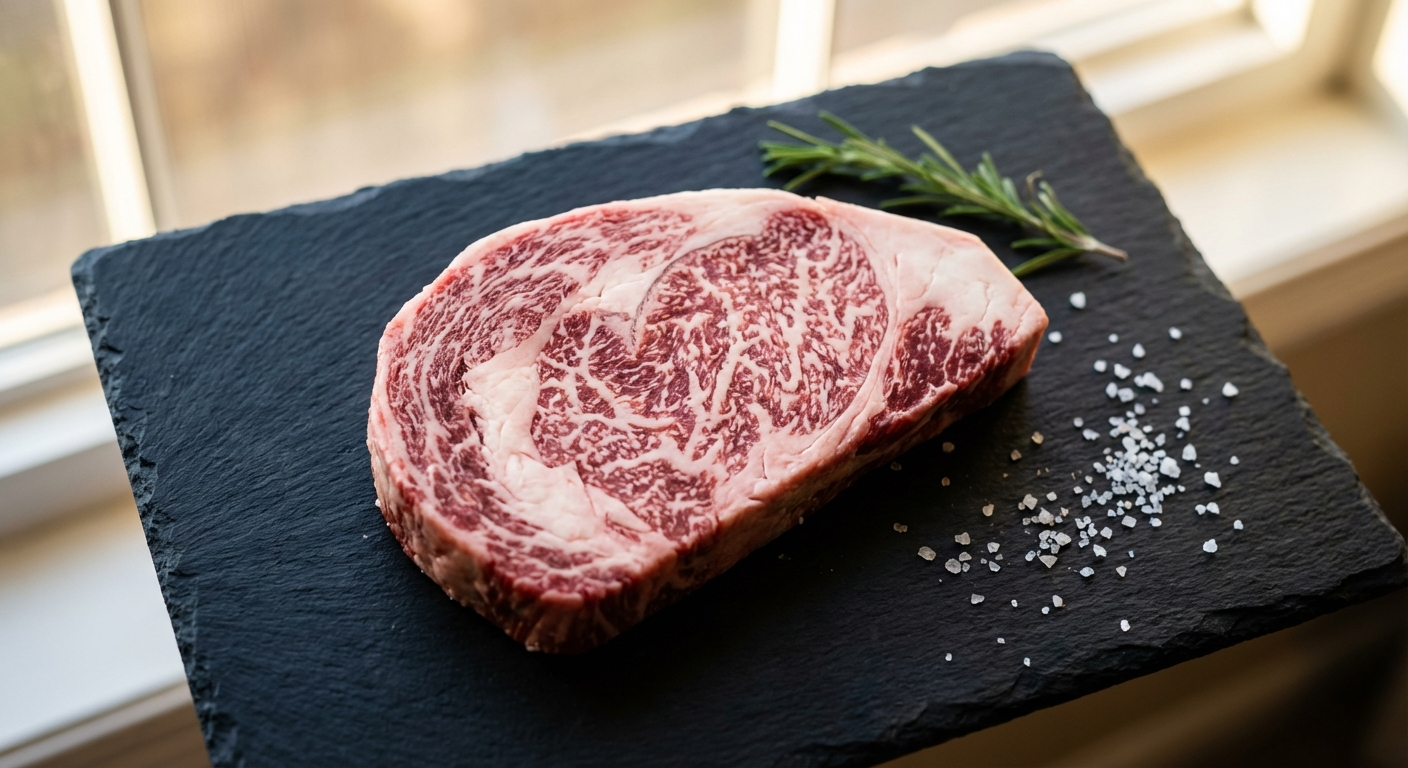
If buying in person or from a retailer with good photography, evaluate the visible marbling. Quality angus wagyu should show fine, distributed white fat lines throughout the muscle — not just along the fat cap or in a few large streaks. The marbling should look like a web or network, not isolated pockets.
Price Reality Check
If angus wagyu beef is priced similarly to conventional USDA Prime, either it is an exceptional deal or the wagyu genetics are minimal. Premium angus wagyu typically commands 1.5-3x the price of equivalent USDA Prime cuts. If someone is selling "wagyu ribeyes" for $22/lb, either they have found a remarkable supply chain efficiency or the wagyu component is marketing rather than meaningful genetics.
Angus Wagyu vs Japanese Wagyu: Setting Expectations
If you have tasted authentic Japanese A5 wagyu and expect angus wagyu to deliver the same experience, recalibrate. They are different products serving different purposes:
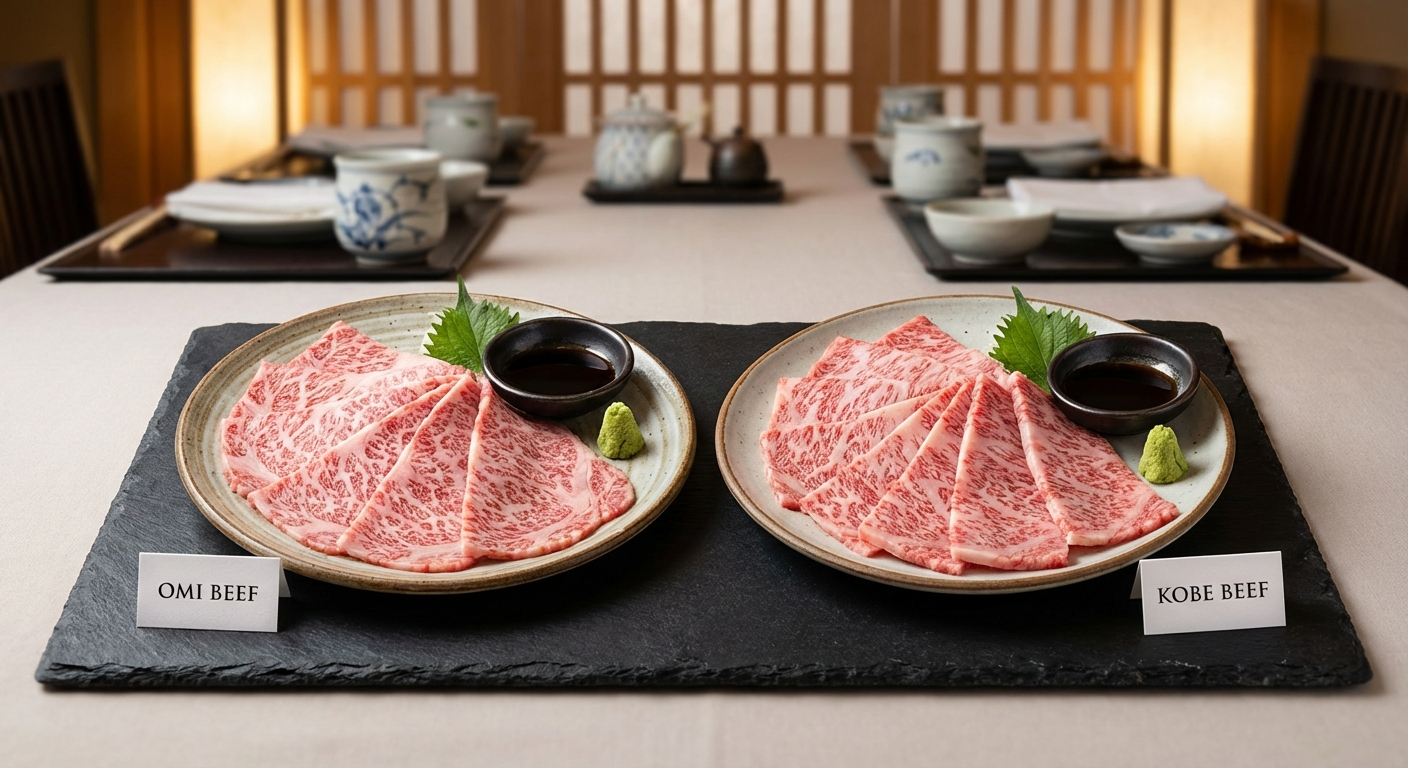
- Japanese A5 wagyu: Extreme marbling (BMS 8-12), served in small portions (3-5 oz), rich to the point of overwhelming, best as a special occasion indulgence. Priced $100-250+/lb.
- Premium angus wagyu: Heavy marbling (BMS 7-10), served in standard steak portions (8-16 oz), rich but not overwhelming, suitable for a complete meal. Priced $40-80/lb.
- Mid-market angus wagyu: Moderate-to-heavy marbling (BMS 5-7), standard portions, noticeably better than Prime, excellent everyday premium option. Priced $25-45/lb.
Angus wagyu beef is not a cheap substitute for Japanese wagyu. It is a distinct product category that delivers a different — and for many applications, more practical — eating experience. A 12-ounce angus wagyu ribeye makes a complete, satisfying dinner. A 12-ounce Japanese A5 ribeye would be uncomfortably rich for most people.
Where to Buy Angus Wagyu Beef
The most reliable sources, ranked by consistency and transparency:
- Direct from producers: Snake River Farms, Mishima Reserve, Double 8 Cattle Company, and similar operations sell direct-to-consumer online. Best selection, verified genetics, consistent quality.
- Specialty online retailers: Crowd Cow, Porter Road, and similar curated meat platforms partner with verified wagyu producers. Good selection with some quality curation.
- Costco and premium grocers: Costco regularly stocks angus wagyu from reputable suppliers. Whole Foods and similar retailers carry it seasonally. Quality is generally reliable but selection is limited.
- Local butcher shops: Increasingly, quality butcher shops source angus wagyu from regional producers. Ask about genetics and feeding program — a good butcher will know their supplier's practices.
Cooking Angus Wagyu Beef: Key Differences
Angus wagyu beef cooks somewhat differently from conventional beef due to its higher fat content:
- Lower heat, slightly longer sear: The intramuscular fat needs time to render. A screaming hot cast iron works, but reduce heat slightly compared to conventional steaks to avoid burning the exterior before the interior fat begins to melt.
- Simpler seasoning: Salt and pepper are sufficient. The beef's natural flavor and fat content provide complexity that heavy seasoning can mask.
- Rest longer: Higher fat content means more juice redistribution. Rest angus wagyu steaks 8-10 minutes for thick cuts.
- Watch internal temperature: Pull steaks 5°F before target temperature. The residual fat carries more thermal energy and will continue cooking further than lean beef. For medium-rare, pull at 120-125°F.
- Expect more rendered fat: Your pan will have significantly more rendered fat than conventional steaks. This is normal and desirable — save it for cooking vegetables or eggs.
Is Angus Wagyu Beef Worth It?
The honest answer depends on which angus wagyu beef and at what price. At the premium tier from reputable producers, angus wagyu delivers an eating experience that genuinely cannot be replicated by conventional beef at any grade. The marbling pattern, fat composition, and resulting flavor and texture represent real, measurable differences.
At the entry tier with unverified genetics and short feeding programs, the premium you pay for the "wagyu" label may not correspond to a meaningfully different steak on your plate. A well-sourced USDA Prime steak from a good butcher might deliver equivalent satisfaction at lower cost.
The sweet spot for most consumers is the mid-market tier: verified angus wagyu from established producers at prices that are premium but not absurd. This is where the value equation — dollars spent per unit of eating pleasure — tends to peak.
Angus wagyu beef is not marketing fiction. It is a legitimate product category backed by real genetics, real husbandry differences, and real flavor impact. But like any premium product, the gap between the best and worst versions is enormous. Buy informed, and you will not be disappointed.