Matsusaka Beef vs Kobe Beef: Japan's Two Most Legendary Wagyu Brands Compared
The ultimate showdown between Japan's two most prestigious and expensive wagyu brands — marbling, flavor, price, and which one is worth the premium.
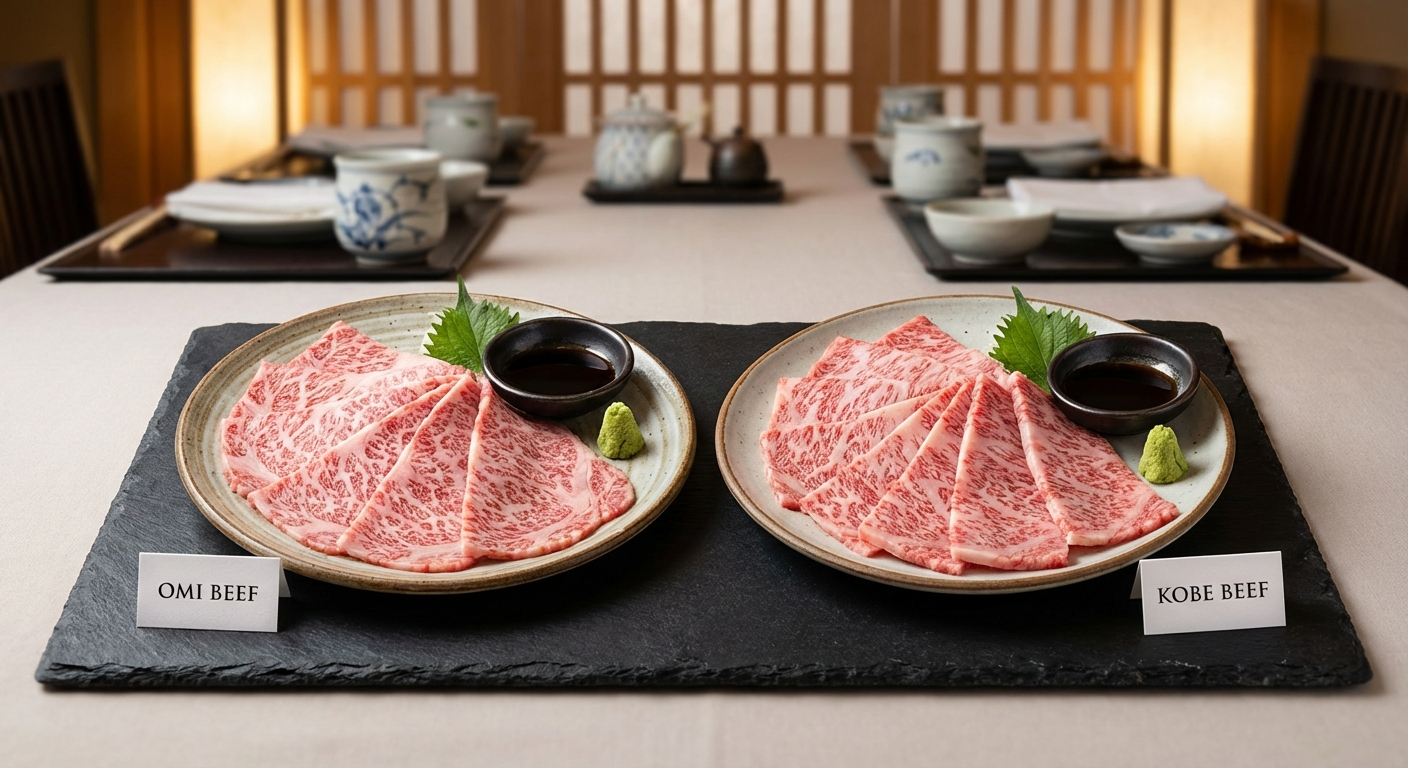
When people talk about the best beef in the world, two names dominate: Kobe beef and Matsusaka beef. Both are Japanese wagyu from specific regions, both command astronomical prices, and both are revered for otherworldly marbling and flavor. But which one is actually better?
The answer isn't simple. These are two different regional expressions of Japanese wagyu excellence, each with distinct characteristics, production methods, and philosophies. Understanding the differences helps you decide which one — if any — is worth the $300-500 per pound price tag.

Quick Comparison
| Factor | Matsusaka Beef | Kobe Beef |
| Origin | Matsusaka City, Mie Prefecture | Kobe City, Hyogo Prefecture |
| Cattle Breed | Japanese Black (Tajima bloodline) | Japanese Black (Tajima bloodline) |
| Selection | Virgin female cattle only | Steers and virgin heifers |
| Annual Production | ~3,000 head | ~3,000-6,000 head |
| BMS Range | Typically 10-12 | Typically 6+ (often 10-12) |
| Marbling Focus | Ultra-fine, web-like | Intense, snowflake pattern |
| Fat Melting Point | 15-17°C (59-63°F) | 20-25°C (68-77°F) |
| Flavor Profile | Sweet, delicate, buttery | Rich, umami-forward, beefy |
| Retail Price | $400-600/lb | $300-500/lb |
| Recognition | Revered in Japan, less known globally | Global icon, most recognized |
The Matsusaka Story
Matsusaka beef (松阪牛, Matsusaka-ushi) comes from Matsusaka City in Mie Prefecture, a small region with obsessive cattle-raising traditions dating back over 500 years. What makes Matsusaka unique is its virgin female-only policy — every single Matsusaka-branded cow must be an unmated female (tajima-gyu virgin heifer) raised in the designated region.
Why Virgin Females?
The reasoning is both traditional and practical. Virgin female cattle:
- Deposit fat more evenly — hormonal balance leads to finer marbling distribution
- Mature slower — longer feeding periods (900+ days) allow more intramuscular fat development
- Produce sweeter fat — lower melting point (15-17°C) creates a buttery, almost creamy texture
This obsessive focus on female cattle means Matsusaka production is extremely limited — only about 3,000 head per year qualify for the Matsusaka certification. By comparison, Kobe produces 3,000-6,000 head annually from both steers and virgin heifers.
The Feeding Regimen
Matsusaka cattle are pampered to an extraordinary degree:
- 900+ day feeding period (vs. 650-750 for most wagyu)
- Beer or sake mash feeding — claimed to stimulate appetite and improve digestion
- Hand massaging — traditional practice to distribute fat evenly (scientific evidence is mixed, but it's culturally significant)
- Classical music — some farms play music to reduce stress (again, anecdotal but part of the tradition)
The result? Matsusaka beef often achieves BMS 11-12 (the highest possible marbling scores) with fat so finely distributed it looks like a lace pattern under magnification.
The Kobe Legend
Kobe beef (神戸ビーフ, Kobe biifu) needs no introduction. It's the most recognized premium beef brand in the world, synonymous with luxury dining. But the global fame can obscure what Kobe beef actually is.
The Kobe Criteria
Authentic Kobe beef must meet strict requirements enforced by the Kobe Beef Marketing and Distribution Promotion Association:
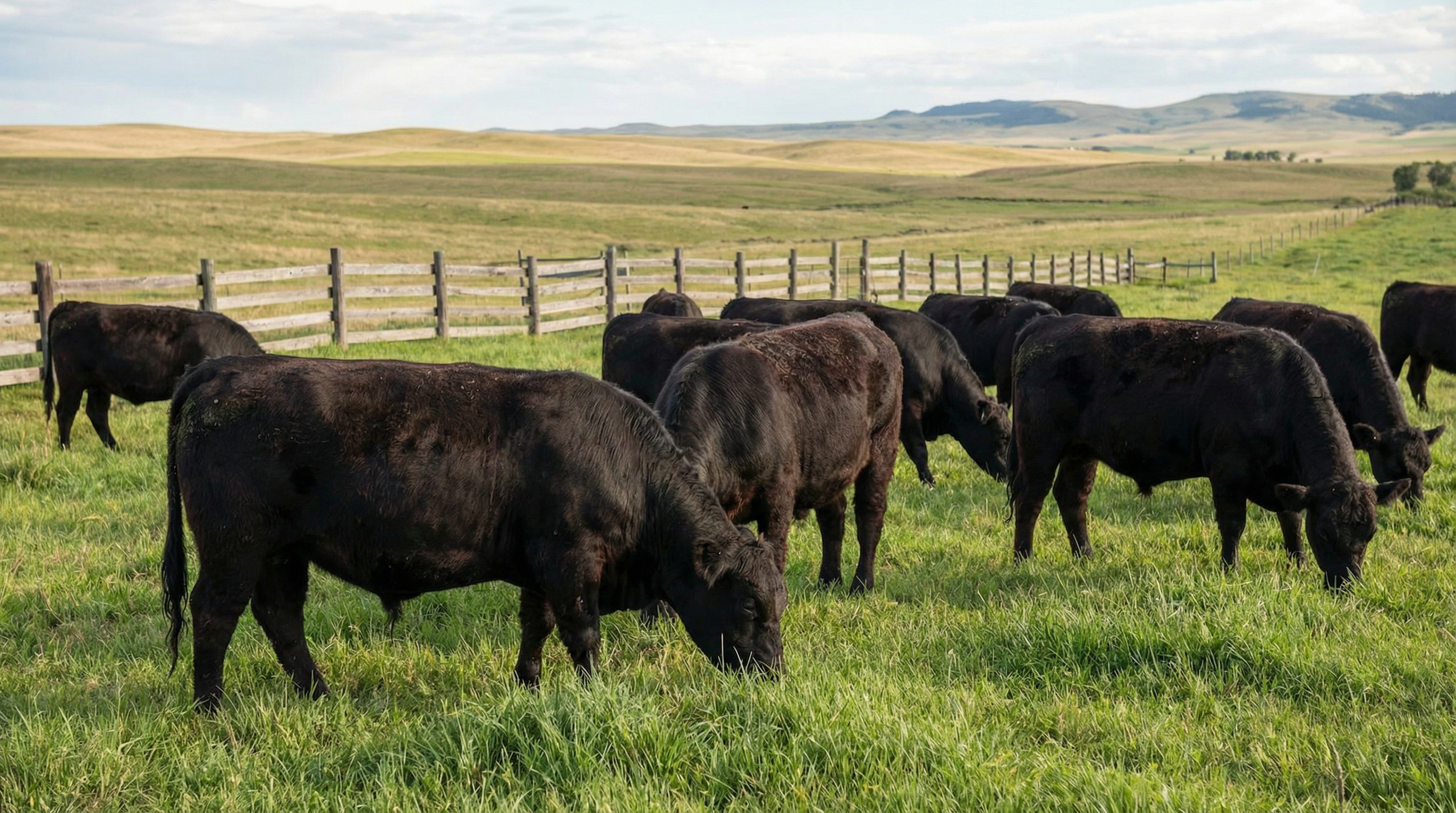
- Tajima cattle born, raised, and slaughtered in Hyogo Prefecture
- BMS 6 or higher (most Kobe scores 8-12)
- Yield grade A or B
- Carcass weight 470kg or less (ensures marbling over size)
- Marbling fineness score — fat distribution must be exceptionally even
Unlike Matsusaka, Kobe accepts both steers and virgin heifers. The larger production volume makes Kobe slightly more accessible globally, but it's still rare — only about 5,000-6,000 cattle qualify annually.
What Makes Kobe Special?
Kobe's uniqueness comes from the Tajima bloodline purity. Hyogo Prefecture has maintained closed herd genetics for over 150 years, creating cattle with unparalleled genetic predisposition for marbling. Every Kobe cow can trace its lineage back to a handful of foundation sires from the 1800s.
The fat in Kobe beef has a slightly higher melting point (20-25°C) than Matsusaka, giving it more structural integrity when raw but still melting instantly at body temperature. The flavor profile is richer and more umami-forward compared to Matsusaka's sweeter, more delicate character.
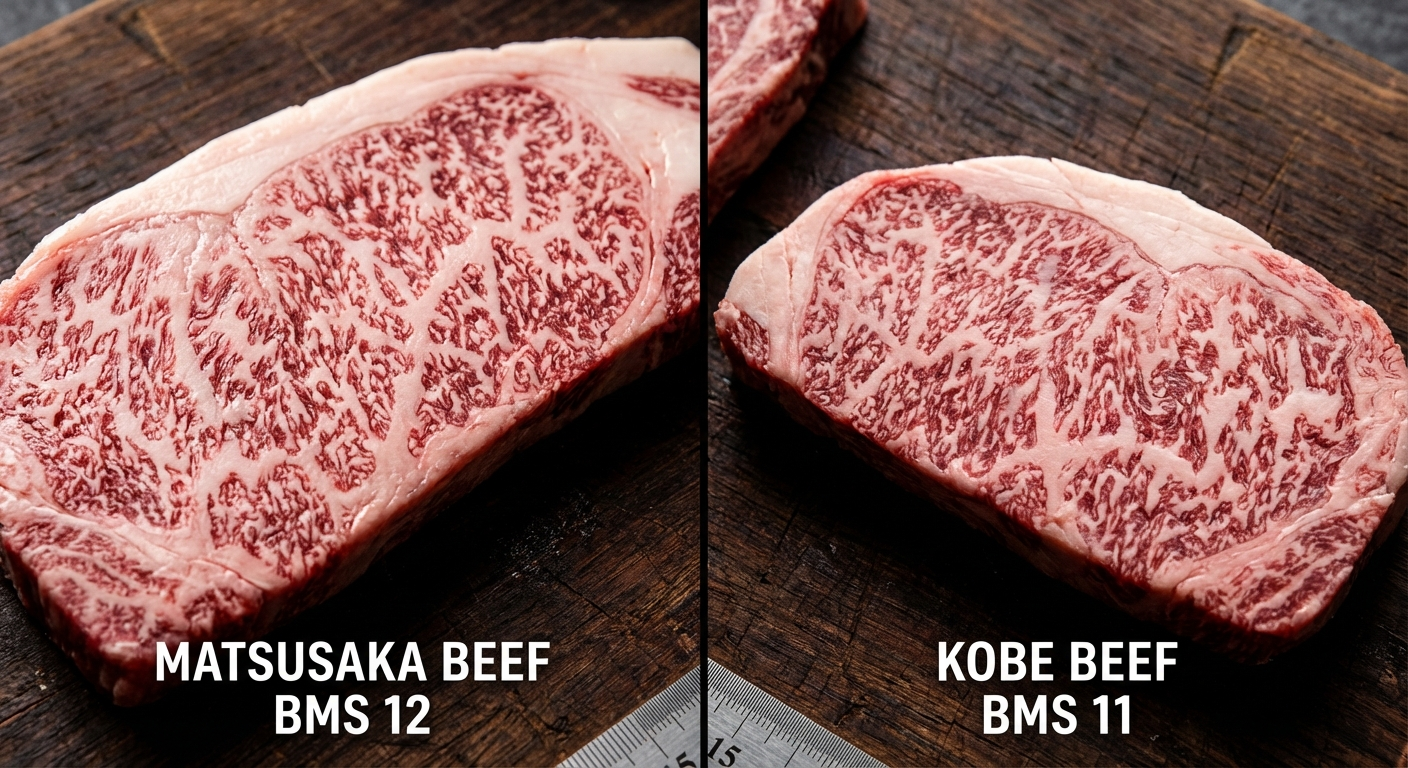
Marbling Differences
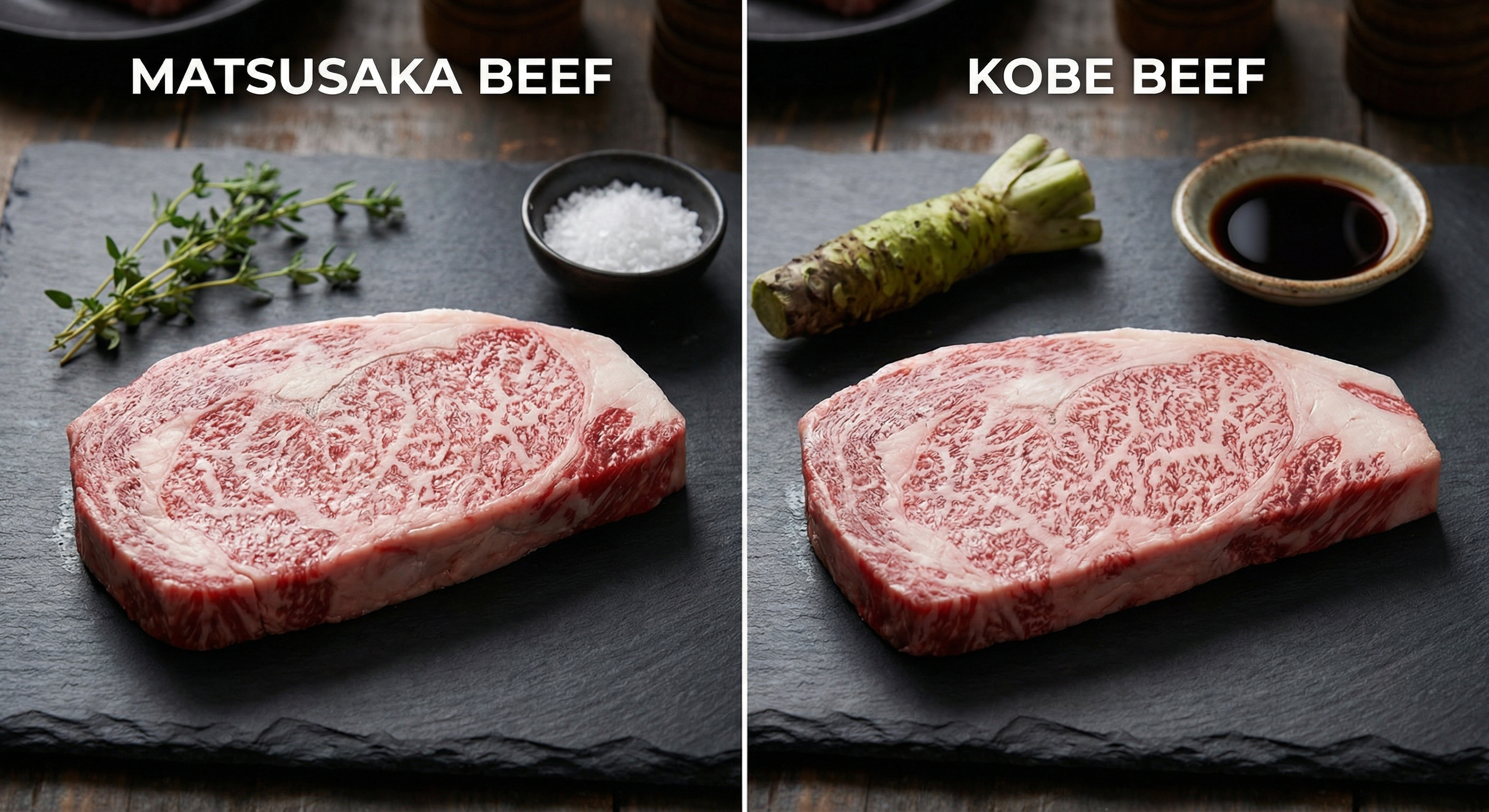
Both achieve BMS 10-12, but the marbling pattern differs:
Matsusaka Marbling
- Ultra-fine web — fat deposits are smaller and more evenly distributed
- Lace-like appearance — under magnification, looks like intricate lacework
- Softer texture — lower melting point means the fat is incredibly tender even when raw
Kobe Marbling
- Snowflake pattern — larger, more defined fat deposits creating a "snowfall" appearance
- Intense contrast — the white fat stands out dramatically against deep red muscle
- Firmer structure — slightly higher melting point gives the steak more structural integrity when slicing
Neither pattern is objectively "better" — it's personal preference. Matsusaka fans prize the delicate fineness; Kobe enthusiasts love the bold visual impact.
Flavor Profiles
Matsusaka Flavor
- Sweet and buttery — the low-melting-point fat has a creamy, almost dessert-like quality
- Delicate beef flavor — the muscle flavor is subtle, letting the fat shine
- Silky mouthfeel — melts completely on the tongue with minimal chewing
- Best cooking method: Sukiyaki, shabu-shabu, or very light searing — overcooking wastes the delicate fat
Kobe Flavor
- Rich umami bomb — deeper, more savory beef flavor with pronounced glutamates
- Balanced fat-to-meat — the beef flavor holds up against the intense marbling
- Luxurious chew — more texture than Matsusaka, but still incredibly tender
- Best cooking method: Teppanyaki, yakiniku, or rare-seared steak — can handle slightly higher heat
Think of it this way: Matsusaka is a symphony of fat. Kobe is a duet between fat and beef.
Price and Availability
Matsusaka Pricing
- Retail (Japan): ¥10,000-15,000 per 100g (~$600-900/lb)
- Retail (US/Export): $400-600/lb for certified cuts
- Restaurants: $300-600 for an 8oz steak, $150-300 for smaller teppanyaki portions
Matsusaka is harder to find internationally than Kobe. Most production stays in Japan, consumed by domestic luxury restaurants or sold at specialty butchers in Tokyo and Osaka. Export is limited and requires special certification.
Kobe Pricing
- Retail (Japan): ¥8,000-12,000 per 100g (~$480-720/lb)
- Retail (US/Export): $300-500/lb for certified cuts
- Restaurants: $200-500 for an 8-10oz steak, premium steakhouses often charge more
Kobe has better global distribution thanks to its brand recognition and slightly higher production volume. Licensed exporters ship certified Kobe to the US, EU, and Asia. If you see "Kobe beef" on a menu outside Japan, verify it's certified — fake Kobe is rampant.
Which One Should You Choose?
Choose Matsusaka If:
- You want the ultimate marbling experience — delicate, lace-like fat distribution
- You prefer sweet, buttery flavors over deep umami
- You're eating it Japanese-style (sukiyaki, shabu-shabu, light searing)
- You want exclusivity — fewer people have tried Matsusaka than Kobe
- You appreciate the virgin female tradition and hyper-limited production
Choose Kobe If:
- You want balanced richness — both incredible marbling and robust beef flavor
- You prefer umami-forward, savory profiles
- You're cooking it Western-style (seared steak, teppanyaki with higher heat)
- You want better availability — easier to source outside Japan
- You want the iconic brand — Kobe is globally recognized
Or Try Both
If you have the opportunity (and budget), try both side-by-side. The differences are subtle but real. A tasting flight at a high-end Japanese steakhouse is the best way to appreciate what makes each one special.
The Verdict
There's no clear winner. Matsusaka and Kobe represent two peaks of Japanese beef excellence, each with devoted followings.
- Matsusaka is the purist's choice — extreme marbling, virgin-only tradition, hyper-local production
- Kobe is the global icon — legendary brand, balanced flavor, better accessibility
Both will cost you $300-600 per pound. Both will deliver an experience you won't forget. The "better" one depends entirely on whether you want sweet delicacy (Matsusaka) or rich complexity (Kobe).
For most people trying Japanese A5 wagyu for the first time, start with Kobe — it's easier to find, slightly more affordable, and offers a more balanced introduction. Once you've experienced Kobe, seek out Matsusaka to appreciate the extreme end of the marbling spectrum.
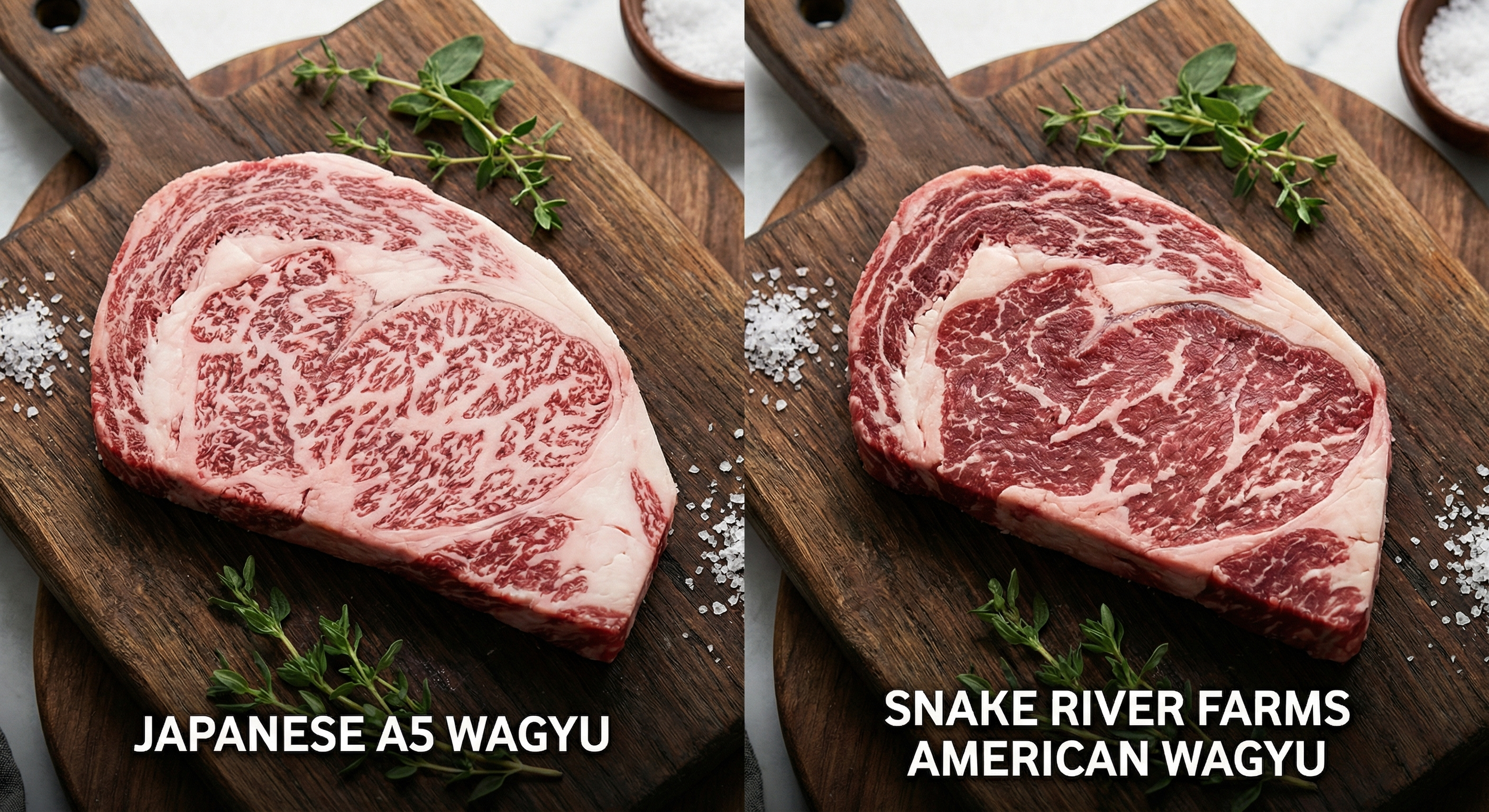
And if you're looking for premium wagyu without the $500/lb price tag, explore American wagyu or Australian wagyu — both offer incredible marbling at $80-150/lb.
Frequently Asked Questions
Q: Is Matsusaka beef better than Kobe beef?
Not objectively — they're different expressions of Japanese wagyu excellence. Matsusaka has finer marbling and sweeter fat due to the virgin female-only policy and longer feeding periods. Kobe offers richer umami flavor and better balance between fat and beef. Choose based on flavor preference: sweet and delicate (Matsusaka) or rich and savory (Kobe).
Q: Why is Matsusaka beef more expensive than Kobe?
Matsusaka commands higher prices ($400-600/lb vs. $300-500/lb for Kobe) due to extreme scarcity — only 3,000 head per year qualify, all virgin females with 900+ day feeding periods. Kobe produces 3,000-6,000 head annually from both steers and heifers. Matsusaka's hyper-limited supply and ultra-fine marbling justify the premium for collectors and purists.
Q: Can you buy real Matsusaka beef in the US?
Yes, but availability is very limited. A few licensed exporters ship certified Matsusaka beef to the US, primarily to high-end Japanese restaurants in major cities (NYC, LA, SF). Retail availability is rare — check specialty Japanese butchers or luxury online wagyu retailers. Always verify certification documentation, as fake "Matsusaka-style" beef is common.
Q: What's the difference between Matsusaka and Kobe marbling?
Matsusaka marbling is ultra-fine with a lace-like web pattern — fat deposits are smaller and more evenly distributed throughout the muscle. Kobe marbling shows a bold snowflake pattern with larger, more defined fat deposits creating dramatic visual contrast. Both achieve BMS 10-12, but Matsusaka's fat is finer and has a lower melting point (15-17°C vs. 20-25°C for Kobe), creating a softer, more delicate texture.
Q: Is Matsusaka beef only from female cows?
Yes — Matsusaka certification requires virgin female cattle (unmated heifers). This is unique among Japanese wagyu brands. The female-only policy is traditional, based on the belief that virgin heifers deposit fat more evenly and produce sweeter-tasting fat. Kobe beef, by contrast, accepts both steers and virgin heifers. The virgin female requirement is part of what makes Matsusaka so rare and expensive.