Omi Beef vs Kobe Beef: Japan's Oldest Wagyu Brand Against Its Most Famous
Omi beef has 400 years of history — longer than Kobe. How do these two legendary Japanese wagyu brands actually compare on marbling, flavor, price, and availability?
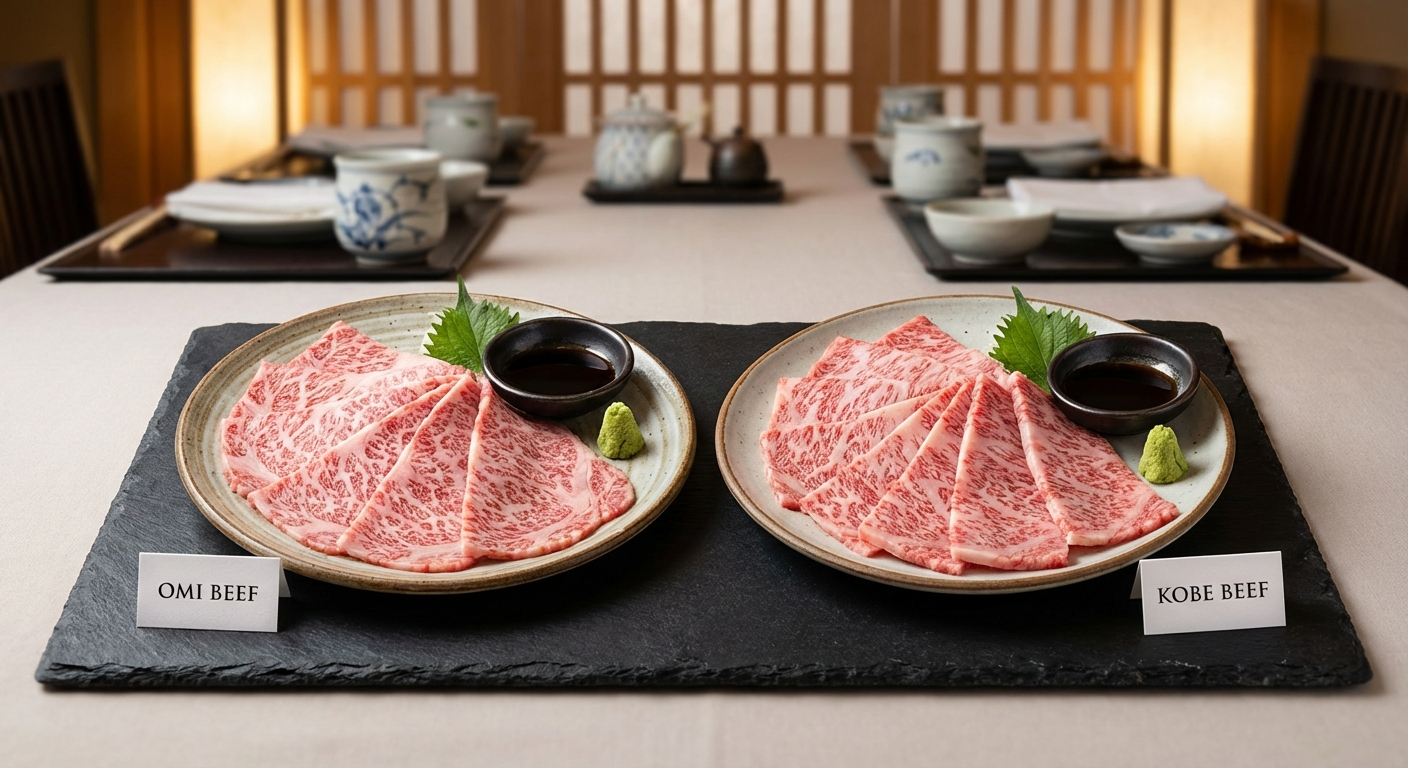
Omi beef (近江牛) is Japan's oldest branded wagyu, with documented trade stretching back to the 1590s. Kobe beef (神戸ビーフ) is the world's most recognizable luxury beef. Both come from Tajima-strain Japanese Black cattle. Both command premium prices. But they're distinctly different products shaped by geography, tradition, and philosophy.
Having tasted both side by side at specialty yakiniku restaurants in Japan, I can tell you the differences are real — not marketing. Omi has a sweetness and delicacy that surprises people who expect all premium wagyu to taste like Kobe. Understanding what separates them helps you decide which is worth seeking out.

How Do Omi and Kobe Beef Compare at a Glance?
| Factor | Omi Beef | Kobe Beef |
|---|
| Region | Shiga Prefecture (Lake Biwa area) | Hyogo Prefecture |
| History | ~400+ years (oldest branded beef in Japan) | ~150 years (Meiji era origins) |
| Cattle Breed | Japanese Black (Tajima bloodline) | Japanese Black (Tajima bloodline) |
| Eligible Cattle | Steers and heifers, 28+ months in Shiga | Steers and virgin heifers, born/raised/slaughtered in Hyogo |
| Annual Production | ~6,000 head | ~3,000–6,000 head |
| Min. BMS | No official BMS floor (typically 7–12) | BMS 6+ required |
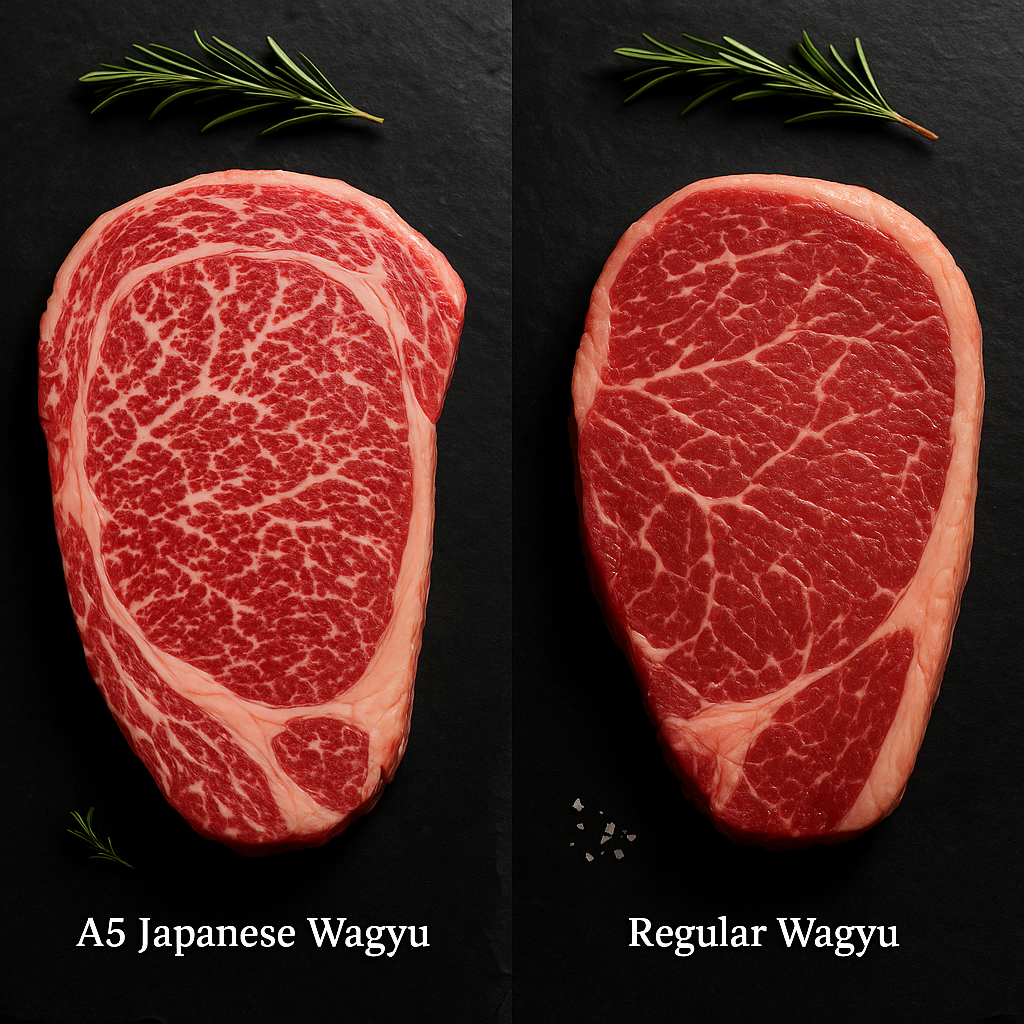
| Marbling Character | Fine, evenly dispersed, web-like | Intense snowflake pattern |
| Fat Texture | Low melting point; silky, almost creamy | Rich, coating, buttery |
| Flavor | Sweet, clean, gentle umami | Deep umami, beefy richness |
| Retail Price (Japan) | ¥8,000–15,000/100g ($200–400/lb) | ¥10,000–20,000/100g ($300–500/lb) |
| Global Availability | Very limited export | Limited but growing export |
The History Behind Omi Beef — Japan's First Branded Wagyu
Omi beef comes from Shiga Prefecture, the region surrounding Lake Biwa — Japan's largest freshwater lake. While most people associate Japanese wagyu with Kobe, Omi's documented history predates Kobe beef by centuries.
During the Edo period (1603–1868), when Japan's Buddhist-influenced government officially banned meat consumption, Shiga Province maintained a special exemption. Omi beef was classified as a "medicinal product" and traded under the name henpongan — dried, salt-cured beef strips given as gifts to the Tokugawa shoguns and feudal lords. According to research from Japan's Ministry of Agriculture, Forestry and Fisheries (MAFF), this unbroken lineage makes Omi the oldest continuously produced branded beef in Japan.
Kobe beef, by contrast, gained recognition in the 1860s when the port of Kobe opened to foreign trade and Western merchants tasted local Tajima cattle for the first time. Its global fame is largely a product of 20th-century export and marketing — impressive, but comparatively recent.
What the History Means for Quality
Four centuries of selective breeding in the Lake Biwa microclimate have produced cattle with specific characteristics:
- Softer fat composition — Omi cattle graze in a temperate lakeside climate with mineral-rich water, which some producers believe contributes to lower-melting-point intramuscular fat
- Consistent marbling genetics — centuries of closed-herd breeding within Shiga have refined the fat distribution patterns
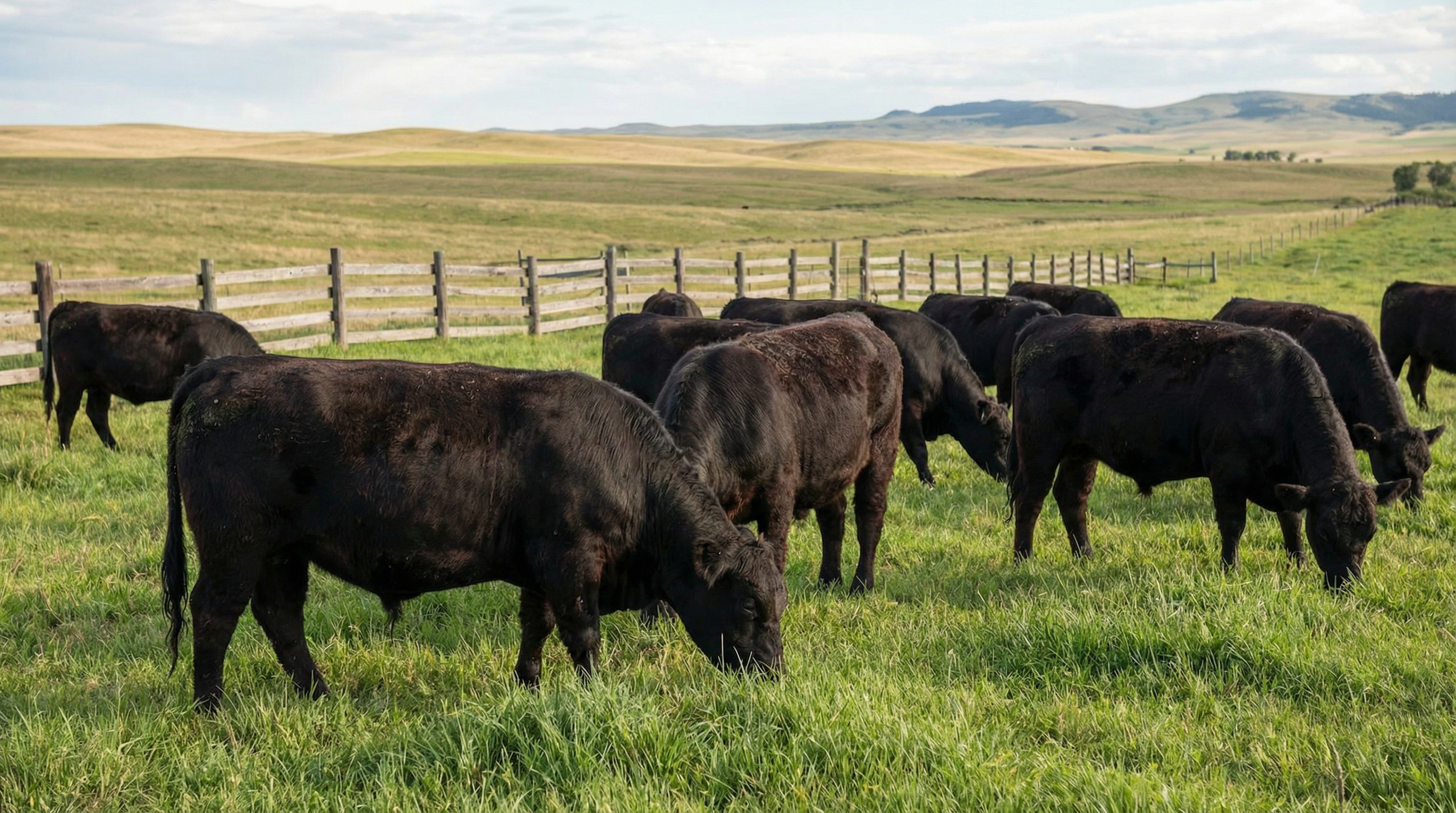
- Smaller production scale — the Omi brand has resisted mass expansion, keeping annual numbers around 6,000 head
What Actually Separates Kobe Beef From Other Premium Wagyu?
Kobe beef's certification requirements are among the strictest of any regional wagyu brand. The Kobe Beef Marketing and Distribution Promotion Association requires:
- Tajima cattle born, raised, and slaughtered exclusively within Hyogo Prefecture
- BMS (Beef Marbling Standard) score of 6 or higher
- Yield grade A or B
- Carcass weight under 470 kg — enforcing marbling density over sheer size
- Meat quality score of 4 or 5 (on JMGA's 1–5 scale)
The carcass weight cap is particularly important. According to the Kobe Beef Association's official standards, limiting carcass size ensures that fat-to-lean ratios remain high. Larger cattle tend to develop more lean muscle relative to fat, diluting marbling intensity.
In my experience judging these side by side, Kobe's strength is consistency at the high end. The strict BMS floor means you rarely get a mediocre piece of certified Kobe. With Omi — which lacks a formal BMS minimum — quality varies more between producers.
Flavor Profile Breakdown: Sweet Delicacy vs Rich Power
This is where the two brands diverge most noticeably on the plate.
Omi Beef Flavor
Omi beef's defining characteristic is sweetness. The fat has a clean, almost confectionery quality — think clarified butter with a hint of nuttiness. The beef flavor itself is present but gentle, never aggressive. When I've had Omi beef as thin-sliced shabu-shabu, the fat dissolves almost instantly on the tongue, leaving a sweet, lingering finish that's unlike any other wagyu I've tried.
This sweetness traces partly to fat composition. Research published in the Journal of Animal Science (Japan) has shown that intramuscular fat from cattle raised in moderate, humid climates (like Shiga's lakeside environment) tends to have higher concentrations of oleic acid — the same monounsaturated fatty acid that gives olive oil its smooth, sweet character.
Kobe Beef Flavor
Kobe hits harder. The umami is deeper, the beefy flavor more pronounced, and the fat — while still incredibly tender — has more richness and coating quality. A great piece of Kobe ribeye is almost overwhelming in its intensity. Where Omi whispers, Kobe announces itself.
For steaks and yakiniku, Kobe's boldness is an asset. For lighter preparations — shabu-shabu, sukiyaki, tataki — Omi's subtlety can actually be more appropriate and enjoyable.
The Practical Flavor Decision
- Choose Omi if you prefer delicate, sweet, clean-finishing wagyu and lighter cooking methods
- Choose Kobe if you want rich, umami-forward intensity and plan to sear or grill
- Neither is "better" — they're different expressions of the same breed, shaped by terroir and tradition
Production Methods: Lake Biwa vs Hyogo Mountains
Both Omi and Kobe cattle descend from the Tajima bloodline of Japanese Black cattle, but their raising environments and production philosophies differ:
Omi Production
- Environment: Temperate lakeside climate around Lake Biwa; humid summers, mild winters
- Water source: Lake Biwa watershed — mineral-rich freshwater that producers credit for fat quality
- Feeding period: Typically 28–32 months
- Feed mix: Rice straw, corn, barley, soybean meal — varies by farm
- Certification: Must be raised in Shiga Prefecture for the longest period of its life; processed at approved Shiga facilities
Kobe Production
- Environment: Mountainous terrain of Hyogo Prefecture; cooler, with significant elevation variation
- Water source: Mountain spring water
- Feeding period: Typically 26–32 months
- Feed mix: Standardized diet protocols; some farms use beer mash or sake lees as supplements
- Certification: Born, raised, AND slaughtered entirely within Hyogo Prefecture — the strictest geographic requirement of any Japanese wagyu brand
Kobe's "born, raised, and slaughtered in Hyogo" requirement is stricter than Omi's "raised for the longest period" rule. This means every Kobe cow has spent its entire life in one prefecture. Omi cattle can technically be born elsewhere as long as they spend most of their life in Shiga.
Price and Value: Is Omi Beef Worth the Premium Over Kobe?
Here's where things get interesting. In Japan, Omi beef is often less expensive than Kobe despite comparable (and sometimes superior) marbling scores. The price gap exists primarily because of brand recognition, not quality.
Why the Price Difference?
- Brand premium: Kobe's global name recognition commands a marketing premium of 20–40% over equally graded Omi beef
- Export infrastructure: Kobe has established export channels to the US, UK, Hong Kong, and other markets. Omi exports are minimal, keeping domestic supply relatively higher
- Tourism demand: Kobe City is a major tourist destination; Shiga Prefecture sees far fewer international visitors, reducing demand-side pressure
- Certification strictness: Kobe's BMS 6 floor and carcass weight cap reduce the qualifying pool, concentrating supply at the high end
For value-conscious buyers in Japan, Omi beef at BMS 10+ often represents the best quality-to-price ratio among Japan's "Big Three" wagyu brands (Kobe, Matsusaka, Omi). You're getting equivalent marbling with less brand tax.
Grading Comparison: Where Each Brand Excels
Both brands are graded under the Japan Meat Grading Association (JMGA) system, which evaluates yield (A/B/C) and meat quality (1–5) including BMS, color, firmness, and fat quality.
A Side-by-Side Grading Reality Check
- Kobe requires BMS 6+. In practice, most certified Kobe scores BMS 8–12. The floor ensures consistency.
- Omi has no official BMS minimum. This means Omi beef at BMS 4–5 exists — perfectly good wagyu, but not comparable to top-tier Kobe. However, premium Omi producers regularly achieve BMS 10–12.
- When comparing the top tier of both (BMS 10+), the marbling quality is comparable. The difference is in fat character and flavor profile, not quantity.
If you're buying Omi beef, always ask for the BMS score. Without a mandated floor, the range is wider. With Kobe, the certification itself guarantees a minimum standard.
The "Big Three" Context — How Does Matsusaka Fit In?
Japan's three most prestigious wagyu brands are Kobe, Matsusaka, and Omi — collectively called Nihon Sandai Wagyu (日本三大和牛). Each occupies a distinct position:
- Matsusaka beef: Ultra-exclusive (virgin females only), highest average marbling, most expensive, ~3,000 head/year
- Kobe beef: Best known globally, strict certification with BMS floor, consistent quality, ~3,000–6,000 head/year
- Omi beef: Oldest pedigree, best value at equivalent grades, sweetest flavor profile, ~6,000 head/year
If Matsusaka is the Rolls-Royce, Kobe is the Ferrari, and Omi is the Aston Martin — all extraordinary, each with a different character and appeal.
Can You Buy Omi Beef Outside Japan?
This is Omi beef's biggest practical limitation. While Kobe has expanded its export program to certified restaurants and retailers in the US, Hong Kong, Macau, Thailand, and Europe, Omi beef exports remain extremely limited.
Current Availability (2026)
- Japan: Available at specialty butchers and restaurants throughout Shiga Prefecture and select high-end venues in Tokyo, Osaka, and Kyoto
- United States: Occasionally available through specialty importers, but no established retail distribution
- Other markets: Very rare; some Hong Kong and Singapore fine-dining restaurants source it periodically
If you're outside Japan and want to experience Omi beef, your most reliable option is visiting Shiga Prefecture directly. The city of Omi-Hachiman has several restaurants specializing in Omi beef, and the experience is worth the trip from Kyoto (about 50 minutes by train).
How to Tell Authentic Omi and Kobe Beef Apart
Both brands use authentication systems to prevent fraud:
- Kobe: Chrysanthemum-shaped stamp on the carcass, 10-digit ID number traceable to individual animal, official certificate from the Kobe Beef Association
- Omi: Authentication certificate from the Omi Beef Producers Association, individual cattle ID traceable through Japan's national livestock tracking system
For more on spotting authentic wagyu from fakes, see our guide to verifying authentic wagyu.
When buying either brand, always request the certificate or individual cattle ID number. Any reputable seller will have this documentation. If they can't provide it, you're not getting the real thing.
Final Verdict: Which Should You Choose?
There's no universal winner. The right choice depends on what you value:
- For bold, umami-rich flavor and reliable quality: Kobe beef. The BMS floor and global infrastructure mean consistent excellence.
- For sweet, delicate flavor and better value: Omi beef. At equivalent BMS scores, you pay less for a distinctly refined eating experience.
- For the ultimate flex: Try both. A side-by-side tasting is the only way to truly appreciate how terroir and tradition shape two branches of the same breed into different products.
The fact that Omi beef remains underappreciated outside Japan is, in a way, part of its appeal. You're not paying for the brand — you're paying for four centuries of breeding expertise and a flavor profile that stands entirely on its own merits.