Wagyu Picanha vs Regular Picanha: Worth the Upgrade?
Picanha is already one of the best cuts of beef. Wagyu picanha takes it to another level—but is the dramatic price increase worth it? Here's how these two versions of the same cut really compare.
The Same Cut, Two Completely Different Experiences
Picanha—the top sirloin cap—is already legendary in Brazilian steakhouses and among grilling enthusiasts. It's got the perfect combination of a thick fat cap, tender grain, and concentrated beef flavor that makes it one of the most prized cuts on the cow. Now take that same cut from wagyu cattle, and you're entering a different category entirely.
Wagyu picanha isn't just "better picanha." The extreme marbling changes the texture, cooking behavior, flavor profile, and ideal preparation method. Here's what you're actually comparing when you decide between a $15/lb USDA Prime picanha and a $60/lb Australian wagyu picanha.
Understanding Picanha: The Cut Itself
Before diving into wagyu versus regular, let's establish what makes picanha special as a cut:
Anatomy of Picanha
Picanha comes from the top of the sirloin, specifically the biceps femoris muscle. In American butchery, it's often broken down into smaller sirloin steaks or roasts. In Brazilian tradition, it's left whole with the fat cap intact—a roughly 2-3 pound triangular roast.
The defining characteristic is the thick fat cap on one side. This layer of subcutaneous fat (exterior fat, not marbling) runs ¼ to 1 inch thick and bastes the meat as it cooks, keeping it juicy while adding rich flavor.
Why Picanha Works So Well
- Tender muscle group: The biceps femoris doesn't do heavy work, so the meat is naturally tender without aging
- Fat cap protection: Acts as a self-basting shield during high-heat cooking
- Bold flavor: Sirloin cuts tend toward a more pronounced beef taste than loin cuts
- Versatile size: Big enough to feed 4-6 people, small enough to handle on a grill
Marbling: The Critical Difference
Regular Picanha (USDA Prime and Choice)
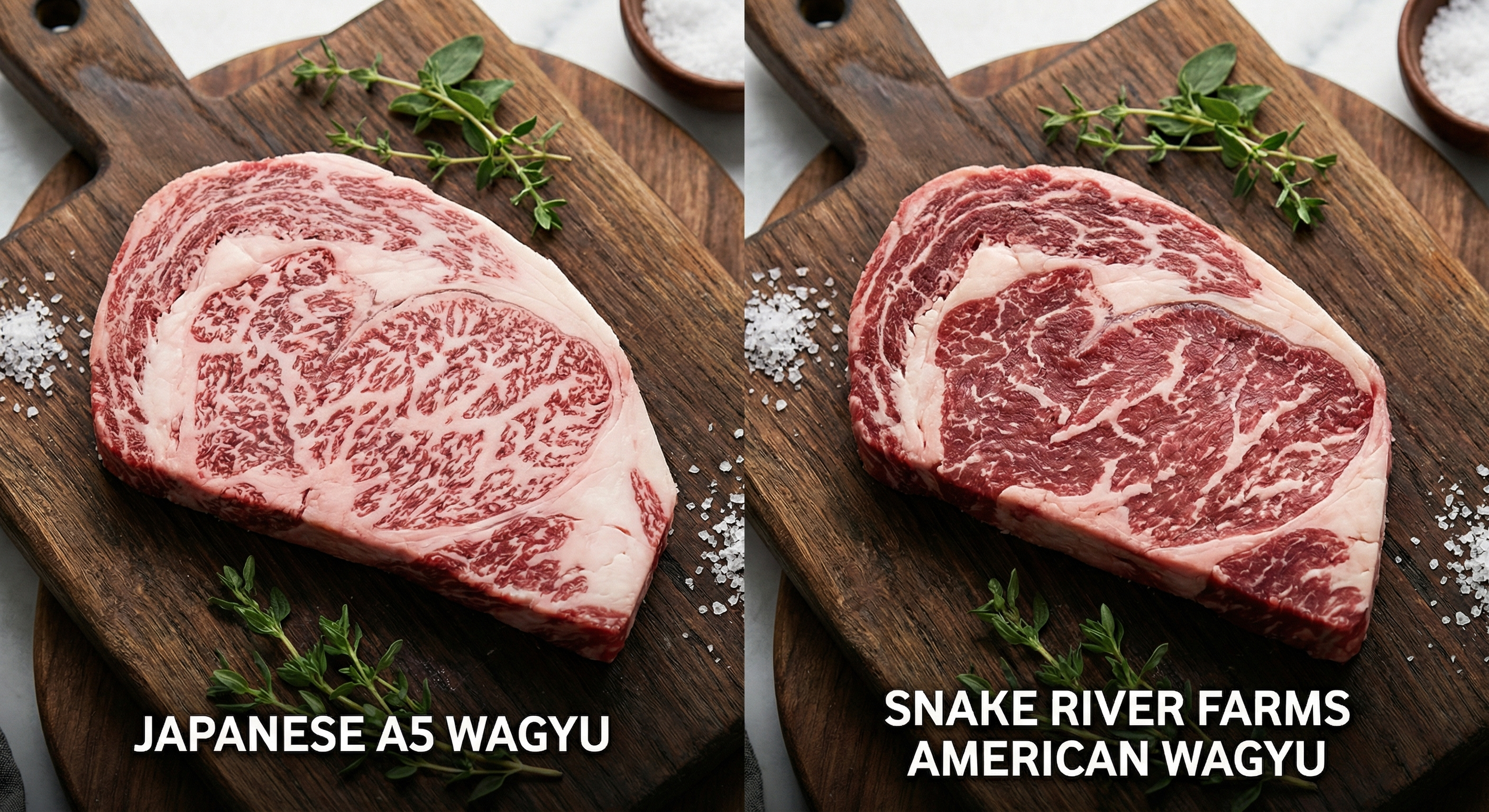
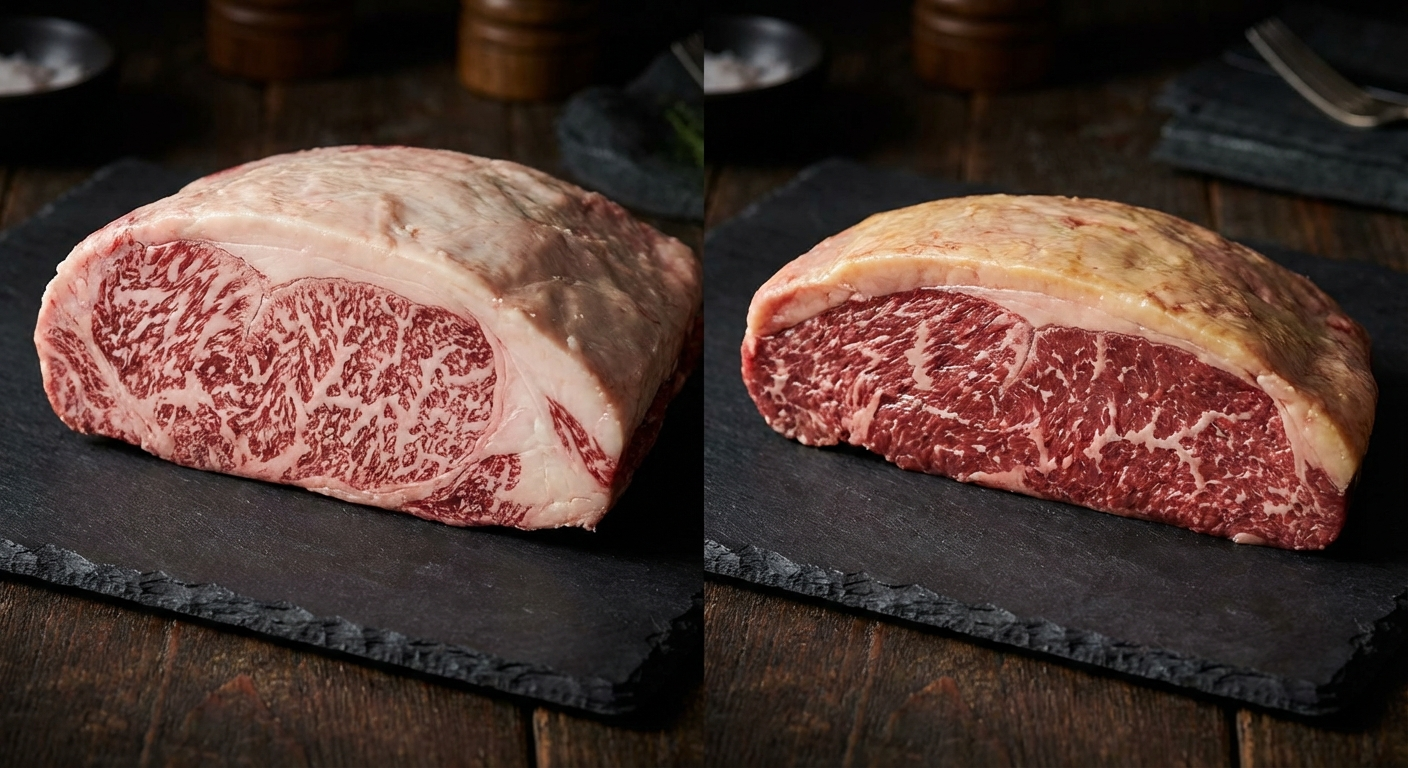
USDA Prime picanha (the highest American grade) typically shows BMS 3-4 marbling. You'll see thin threads of intramuscular fat distributed throughout the meat, enough to keep it moist and add flavor, but the muscle remains the dominant visual element. The meat is deep red, and the marbling appears as fine white flecks and thin streaks.
USDA Choice picanha has even less marbling (BMS 2-3 range), with the fat concentrated mostly in the cap rather than throughout the muscle. This is perfectly fine for traditional Brazilian-style grilling where the fat cap provides most of the richness.
Wagyu Picanha
Australian wagyu picanha (MS 6-8) shows extensive intramuscular marbling that creates a white webbing pattern through the red meat. At MS 8, the fat-to-lean ratio approaches 40:60, meaning nearly half of what you're looking at is fat distributed in fine threads throughout the muscle.
Japanese A4/A5 wagyu picanha (BMS 8-12) takes it even further. At BMS 9+, the meat looks more white than red, with marbling so dense that individual fat streaks blend into a continuous network. This is extremely rare to find as whole picanha—most Japanese wagyu is sold as individual steaks—but when you do encounter it, expect to pay $100+ per pound.
Flavor Profile: Beefy vs. Buttery
Regular Picanha: Bold Beef Character
Traditional picanha delivers a robust, savory beef flavor. The sirloin cut naturally leans toward a more pronounced, almost minerally taste compared to milder cuts like tenderloin or ribeye. The fat cap renders during cooking and adds richness, but the lean muscle itself remains the star.
When you bite into USDA Prime picanha, you taste:
- Savory depth: Strong beef umami
- Slight gaminess: Not unpleasant—just more assertive than loin cuts
- Fat cap richness: Exterior fat provides waves of flavor when rendered properly
- Clean finish: No lingering fattiness, just pure beef taste
Wagyu Picanha: Richness Meets Beef
Wagyu picanha is one of the few cuts where wagyu's richness doesn't overwhelm the beef's natural character. Because picanha already has a strong flavor profile, the added marbling enhances rather than replaces it.
When you bite into wagyu picanha, you taste:
- Buttery sweetness: From the intramuscular fat melting at mouth temperature
- Persistent beef flavor: The sirloin's natural savoriness still comes through
- Umami complexity: The combination of wagyu fat and sirloin muscle creates layered flavor
- Longer finish: The fat coats your palate, extending the eating experience
Many wagyu enthusiasts consider picanha one of the best wagyu cuts because it balances richness with beef flavor better than ribeye or striploin, which can be almost too buttery at high BMS levels.
Texture Comparison
Regular Picanha Texture
USDA Prime picanha is tender but has substance. There's a slight chew to it—not toughness, but enough texture to remind you that you're eating steak. The grain runs in one direction, and when sliced against the grain, each piece offers a satisfying bite that's tender but structured.
The fat cap, when properly rendered, becomes soft and almost creamy, contrasting nicely with the firmer muscle below it.
Wagyu Picanha Texture
Wagyu picanha is noticeably more tender, to the point where it almost melts. At MS 8+, the intramuscular fat renders during cooking and creates a butter-like quality. There's less chew, more immediate tenderness.
However, picanha's natural texture prevents it from becoming mushy—a problem with some high-marbling cuts like ribeye. Even at BMS 10, wagyu picanha retains structure. It's tender but not soft in a bad way.
Price Breakdown (2026 Market)
Regular Picanha Pricing
- USDA Choice: $8-12/lb whole, $12-16/lb pre-cut steaks
- USDA Prime: $12-18/lb whole, $18-24/lb pre-cut steaks
- Grass-fed Prime: $15-22/lb
For a typical 2.5 lb picanha roast, you're paying $20-45 total, serving 4-6 people. That's exceptionally affordable for a premium cut.
Wagyu Picanha Pricing
- American Wagyu (BMS 6-7): $35-50/lb
- Australian Wagyu (MS 6-8): $40-65/lb
- Australian Wagyu (MS 9+): $70-90/lb
- Japanese A4/A5 Wagyu (BMS 8-12): $80-120+/lb
For a 2.5 lb wagyu picanha roast at MS 8, you're paying $100-162 total—roughly 4× the cost of USDA Prime.
Value Analysis
The question isn't whether wagyu picanha is "worth it" in absolute terms—luxury food never is if you're optimizing for calories per dollar. The question is whether the experience justifies the premium for you.
Consider: you can buy 4 USDA Prime picanhas for the price of 1 Australian wagyu picanha. If you're grilling for a crowd and everyone's drinking beer, Prime probably makes more sense. If you're doing a special dinner for 4 and want to impress, wagyu delivers an undeniably elevated experience.
Cooking Methods: Same Cut, Different Strategies
Traditional Picanha: Brazilian-Style Rotisserie
The classic preparation for regular picanha is Brazilian churrasco:
- Season generously with coarse salt
- Skewer the whole roast fat-cap-side-up
- Grill over high heat, rotating until fat cap is golden and crispy
- Slice thin pieces off the outside as they cook, serving immediately
- Return the roast to the heat and repeat
This method works perfectly for USDA Prime picanha because:
- The leaner meat handles high heat without excessive flare-ups
- The fat cap renders slowly and bastes the meat from above
- The bold beef flavor stands up to aggressive charring
Wagyu Picanha: Modified Approach
Wagyu picanha requires more finesse:
- Season with fine sea salt (less is more—wagyu fat is naturally flavorful)
- Use lower, indirect heat (300-350°F vs 400-450°F for regular picanha)
- Score the fat cap in a crosshatch pattern to help it render without flare-ups
- Cook slowly, flipping more frequently to manage fat rendering
- Finish with a quick sear over high heat for crust
Why the changes?
- Wagyu's intramuscular fat needs time to render—rushing it leaves greasy pockets
- The thicker fat cap on wagyu picanha drips more aggressively, causing flare-ups
- Lower heat preserves the delicate, buttery fat texture instead of vaporizing it
- You're paying for richness, not char—let the meat speak
Alternative Methods for Both
Reverse sear (ideal for wagyu picanha): Roast at 250°F until internal temp hits 115°F, then sear all sides over high heat. This gives the intramuscular fat time to render while creating a perfect crust.
Sous vide (works for both): 129°F for 2-3 hours, then sear. Regular picanha benefits from the tenderizing effect; wagyu picanha emerges impossibly buttery.
Cast iron (good for steaks cut from either): If you've cut your picanha into individual steaks, high-heat cast iron works well. For wagyu, use a dry pan (no oil) and let the fat render out.
Serving Recommendations
Portion Sizes
Regular picanha: 6-8 oz per person as a main course. The leaner profile means people can comfortably eat a full steak portion.
Wagyu picanha: 4-6 oz per person. The richness leads to fat fatigue—most people tap out after a smaller portion. This isn't a bad thing; it means your wagyu roast serves more people than you'd expect.
Side Pairing
With regular picanha: Traditional Brazilian sides work great—farofa (toasted cassava flour), vinagrete (tomato-onion salsa), black beans, rice, and chimichurri. The bold beef flavor holds up to assertive accompaniments.
With wagyu picanha: Keep sides simple. The richness dominates, so you want clean, acidic, or bitter elements to cut through: arugula salad, grilled asparagus, pickled vegetables, or a squeeze of lemon. Skip heavy sauces.
Best Uses for Each
When Regular Picanha Is the Right Choice
- Brazilian churrasco experience: Traditional rotisserie grilling over high heat
- Large gatherings: Feeding 8+ people where cost-per-person matters
- Bold marinades: If you're using chimichurri or garlic-herb marinades, Prime picanha takes them well
- First-time picanha: Learn the cut without the pressure of expensive wagyu
- Casual backyard grilling: When the vibe is relaxed and you're grilling multiple items
When Wagyu Picanha Is Worth the Premium
- Special occasions: Birthdays, anniversaries, celebrations where food is the centerpiece
- Intimate dinners: 2-4 people who appreciate quality beef and want something memorable
- Wagyu enthusiasts: If you already love wagyu ribeye/striploin and want a cut with more beef character
- Reverse sear or sous vide: Controlled cooking methods that showcase wagyu's texture advantage
- Impressing guests: Wagyu picanha is visually stunning and undeniably luxurious
Common Mistakes to Avoid
With Regular Picanha
- Overcooking: Picanha's natural tenderness disappears past medium. Aim for medium-rare (130-135°F).
- Removing the fat cap: That's the whole point—leave it on and render it properly
- Under-seasoning: Leaner beef needs generous salt. Don't be shy.
- Cutting with the grain: Always slice against the grain for maximum tenderness
With Wagyu Picanha
- Cooking too hot: High heat causes flare-ups and burns the fat before the interior cooks
- Over-seasoning: Wagyu fat is naturally sweet and flavorful—salt and pepper are enough
- Serving too much: 4-6 oz portions prevent fat fatigue and make your roast go further
- Skipping rest time: Let wagyu rest 10+ minutes after cooking so the rendered fat redistributes
Which Should You Buy?
Choose Regular USDA Prime Picanha If:
- You want the authentic Brazilian churrasco experience
- You're feeding a crowd and need volume
- You prefer bold, beefy flavor over buttery richness
- Budget is a consideration (it should be—picanha already feels luxurious at $15/lb)
- You're new to picanha and want to learn the cut
Choose Wagyu Picanha If:
- You're celebrating something special and want a centerpiece protein
- You already love wagyu and want a cut with more beef character than ribeye
- You enjoy controlled cooking methods (reverse sear, sous vide) that showcase texture
- You're serving discerning guests who appreciate the difference
- You want an eating experience you'll remember months later
The Honest Bottom Line
Wagyu picanha is legitimately special. The combination of wagyu's marbling with picanha's natural beef flavor creates something unique—richer than regular picanha, but less overwhelmingly fatty than wagyu ribeye. It's one of the best examples of wagyu done right.
That said, regular USDA Prime picanha is already an exceptional cut of beef. It's affordable, forgiving to cook, feeds a crowd, and delivers bold flavor that most people absolutely love. Unless you're specifically seeking the wagyu experience, Prime picanha will satisfy 95% of steak dinners.
The 4× price difference is real. If that $100-150 difference matters to your budget, stick with Prime—you won't feel like you're settling. If you're in a position to splurge and you want to see what wagyu picanha brings to the table, it's worth experiencing at least once. Just know that after you try it, regular picanha might feel a little less exciting. That's the wagyu curse.
Ready to try wagyu picanha for yourself? Check out our Australian Wagyu Picanha selection, including MS 8-9 options. For traditional grilling, our USDA Prime Picanha delivers exceptional value.
Related Comparisons