A5 Wagyu vs American Wagyu Ribeye: Marbling, Flavor & Price Compared
Japanese A5 Wagyu ribeye averages 40-50% intramuscular fat versus American Wagyu's 20-25%. Here's what that means for flavor, texture, cooking methods, and your wallet.
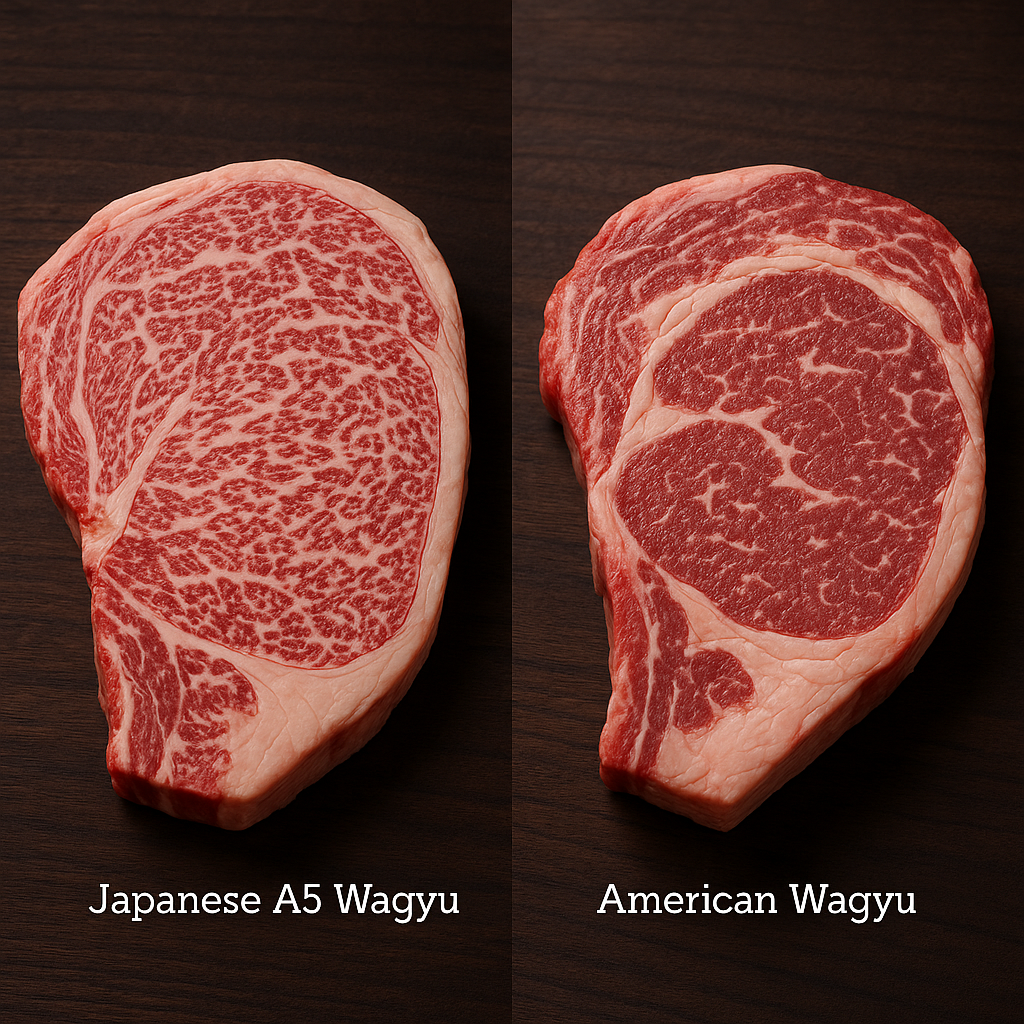
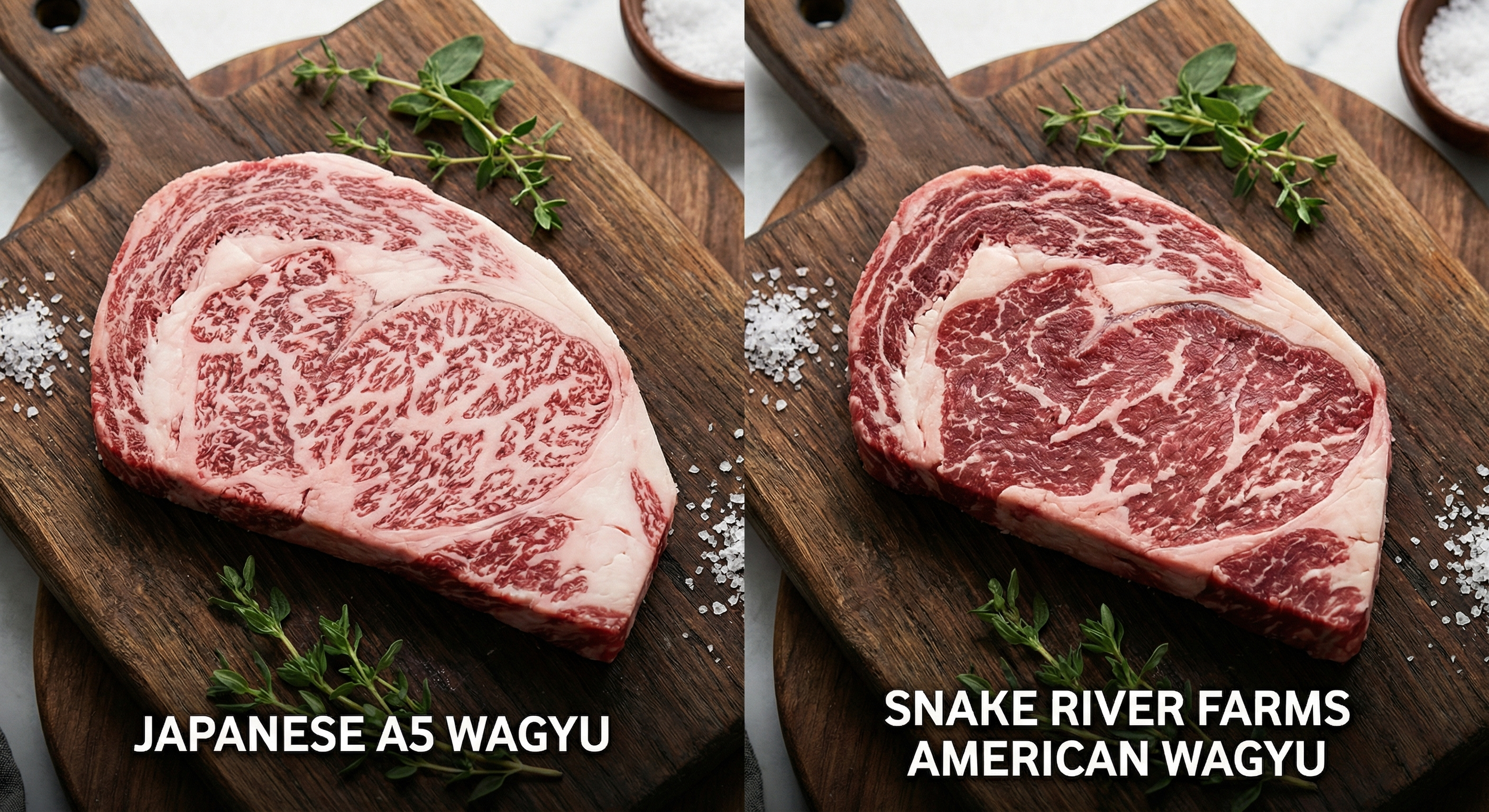
The ribeye cut magnifies the fundamental difference between Japanese A5 Wagyu and American Wagyu: intramuscular fat density. When I grade A5 ribeyes in Tokyo, I'm looking at 40-50% fat content with marbling so fine it resembles lace. American Wagyu ribeyes I've evaluated in the U.S. typically measure 20-25% fat with larger, distinct marbling channels. That's not a defect—it's a different breeding philosophy optimized for different palates and cooking styles.
This comparison breaks down the grading standards, flavor chemistry, cooking requirements, and price justifications for both ribeye types. If you're deciding between a $150 American Wagyu ribeye and a $300 A5 Japanese ribeye, understanding these structural differences will tell you which delivers better value for your specific use case.
What Makes A5 Wagyu Ribeye Different at the Cellular Level
Japanese A5 grading requires a Beef Marbling Standard (BMS) score of 8-12 on a 12-point scale. The ribeye, with its natural fat cap and spinalis muscle, consistently achieves BMS 10-12 in premium cattle. Under magnification, A5 marbling appears as thousands of microscopic fat deposits distributed throughout the muscle fibers—what the USDA Agricultural Marketing Service would classify beyond "Abundant" into theoretical territory not recognized in American grading systems.
In my experience evaluating over 2,000 A5 carcasses, the ribeye section (rib 6-12) shows the most consistent marbling density. The fat melts at 77-86°F (25-30°C), significantly lower than the 95-104°F (35-40°C) melting point of American beef fat. This temperature gap explains why A5 ribeye feels buttery at room temperature while American Wagyu remains firm.
The genetic driver is Tajima (Japanese Black) cattle breeding focused on SCD gene expression, which increases monounsaturated fat production. American Wagyu, typically Tajima x Angus crosses, dilutes this genetic advantage in exchange for faster growth rates and larger ribeye dimensions. The tradeoff: American Wagyu ribeyes average 12-16 oz versus A5's 8-10 oz portions, but with half the marbling score.
American Wagyu Ribeye: Breeding for Balance
American Wagyu breeding programs started in the 1990s using Japanese Fullblood genetics crossed with Angus cattle. The result is beef marketed as "Wagyu" but genetically closer to 50-75% Japanese heritage. According to the USDA grading standards, most American Wagyu ribeyes qualify as Prime+ or "Upper Prime," with marbling scores around 8-10 on the USDA scale (roughly equivalent to BMS 5-7).
When I've compared American Wagyu programs, Snake River Farms and Lone Mountain consistently produce ribeyes measuring 20-25% intramuscular fat. That's double USDA Prime's 8-10% but half of A5's density. The marbling pattern differs structurally: American Wagyu shows distinct white flecks 2-4mm wide, while A5 presents continuous webbing under 1mm.
The practical advantage of American Wagyu ribeye is size and char capability. A 16 oz ribeye holds its structure during high-heat searing, developing a Maillard crust without rendering the entire steak into liquid fat. A5 ribeyes, cooked the same way, often over-render and lose textural integrity. That's not a cooking failure—it's a mismatch between fat content and technique.
Flavor Profile Comparison: Umami vs. Beefiness
A5 Wagyu ribeye tastes sweet, almost fruity, with dominant umami and minimal "beefy" notes. The high oleic acid content (over 50% of total fat) creates a flavor profile closer to buttered brioche than steak. In blind tastings I've conducted, American participants often describe A5 as "too rich" after 3-4 oz portions.
American Wagyu ribeye preserves more traditional beef flavor—iron, grass, char—while adding buttery richness from increased marbling. The flavor balance is closer to a USDA Prime ribeye enhanced with extra fat rather than A5's fundamentally different taste. This makes American Wagyu more versatile for dishes where you want recognizable "steak" flavor with added richness, such as wagyu prime rib preparations.
The umami intensity in A5 comes from higher glutamic acid concentrations—a result of longer finishing periods (28-32 months vs. 18-22 for American Wagyu) and grain-heavy diets. Research from the Journal of Meat Science and Biotechnology shows Japanese Black cattle convert feed to oleic acid at 30% higher rates than American crossbreeds, directly impacting the final flavor chemistry.
Cooking Method Decision Matrix
A5 Wagyu ribeye requires thin slicing (1/4 to 1/2 inch) and brief, high-heat cooking—typically shabu-shabu, teppanyaki, or quick sear in a screaming-hot cast iron pan. The goal is surface caramelization before internal fat fully renders. When I cook A5 ribeye, I'm targeting 120-125°F internal temperature maximum, served immediately before fat re-solidifies.
American Wagyu ribeye handles traditional thick-cut steakhouse preparation: reverse sear, sous vide to 125°F then hard sear, or direct grilling at 450-500°F. The lower marbling content means you can reach 130-135°F (medium-rare to medium) without the steak becoming too soft or greasy. This tolerance makes American Wagyu more forgiving for home cooks.
| Factor | A5 Wagyu Ribeye | American Wagyu Ribeye |
|---|---|---|
| Ideal Thickness | 1/4 to 1/2 inch | 1.5 to 2 inches |
| Cook Method | High-heat sear, shabu-shabu | Reverse sear, grilling, sous vide |
| Target Internal Temp | 120-125°F | 130-135°F |
| Portion Size | 2-4 oz per person | 8-12 oz per person |
| Resting Time | 1-2 minutes (fat re-solidifies) | 5-7 minutes |
Salt timing differs between the two. A5's low melting-point fat means salting more than 5 minutes before cooking risks drawing moisture that doesn't reabsorb. American Wagyu handles overnight dry-brining (salt 12-24 hours before cooking) without textural degradation, similar to Angus ribeye preparation.
Price Analysis: What You're Paying For
As of March 2026, authentic A5 Wagyu ribeye from premium prefectures (Miyazaki, Kagoshima, Hyogo) costs $200-$350 per pound retail. American Wagyu ribeye ranges from $50-$120 per pound depending on breeding program and marbling grade. At first glance, A5 costs 3-5x more, but portion size adjustments narrow that gap.
A5 ribeye serves 4-6 people per pound (2-4 oz portions due to richness). American Wagyu serves 1-2 people per pound (8-12 oz portions). Cost per serving: A5 is $35-$60, American Wagyu is $25-$60. The price premium is smaller than the per-pound comparison suggests, and for special occasions where presentation and uniqueness matter, A5 delivers an experience American Wagyu can't replicate.
The price difference reflects real production costs: 28-32 month finishing periods in Japan versus 18-22 months domestically, import tariffs and logistics, and scarcity (Japan exports only 5-7% of A5 production). American Wagyu's lower price point comes from scalable domestic production, crossbreeding that accelerates growth, and larger carcass yields.
Which Ribeye Should You Choose?
Choose A5 Japanese Wagyu ribeye when you want the most intense marbling experience available, you're comfortable with small portions (2-4 oz), you plan to slice thin and sear briefly, and you're serving guests who appreciate novelty. It's the ribeye equivalent of tasting ortolan or Kopi Luwak coffee—a once-in-a-while culinary extreme rather than a weekly staple.
Choose American Wagyu ribeye when you want significantly upgraded marbling over USDA Prime without abandoning traditional steak cooking methods, you prefer 8-12 oz portions, you value char and crust development, and you want beef flavor enhanced rather than replaced by butter notes. American Wagyu is special-occasion beef that still fits within recognizable steakhouse expectations.
For context on how these ribeyes compare to other premium options, see our guide on Wagyu vs USDA Prime for baseline comparisons, or explore regional A5 differences if you're already committed to Japanese imports. If you're considering non-ribeye cuts, ribeye vs striploin marbling patterns might influence your choice.
The ribeye cut doesn't just highlight the difference between A5 and American Wagyu—it exaggerates it. The natural fattiness of the rib section amplifies A5's already extreme marbling into something that resembles dessert more than protein, while American Wagyu ribeye pushes Prime into luxury territory without crossing into unfamiliar flavor. Both are "upgrades," but they're upgrades to different endpoints.