Wagyu vs Hanwoo Beef: How Japan and Korea's Top Cattle Actually Compare
Japan has wagyu. Korea has Hanwoo. Both command premium prices and carry national pride, but they produce very different eating experiences. Here's what actually separates them.
Japan's wagyu and Korea's Hanwoo are Asia's two most celebrated beef traditions, each backed by centuries of selective breeding, strict national grading systems, and fierce cultural pride. Both can cost over $100 per pound at retail. Both are protected by export restrictions. And both deliver marbling levels that make USDA Prime look modest.
But they're not the same animal, the same flavor, or the same experience. Having worked with both Japanese A5 wagyu and Korean 1++ Hanwoo over the years, I can tell you the differences are more nuanced than most comparisons suggest. This guide breaks down the genetics, grading, flavor, nutrition, and value proposition of each — so you know exactly what you're paying for.
Breed Origins: Two Parallel Paths to Premium Beef
Wagyu and Hanwoo share ancient ancestry — both descended from draft cattle brought to East Asia centuries ago — but diverged dramatically through different breeding philosophies.
Japanese Wagyu (和牛)
The term "wagyu" literally means "Japanese cattle" and covers four breeds: Japanese Black (Kuroge Washu), Japanese Brown, Japanese Shorthorn, and Japanese Polled. When people say "wagyu," they almost always mean Japanese Black, which accounts for over 90% of wagyu production. These cattle were isolated on Japan's mountainous islands for centuries, then intensively selected for intramuscular fat deposition starting in the Meiji era.
Japan's wagyu genetics are a tightly controlled national resource. Live cattle exports were banned in 1997 after a small number of animals were exported to the U.S. and Australia in the 1970s-90s. The result: Japanese wagyu remains genetically distinct from "American wagyu" or "Australian wagyu" crossbreeds. According to the Japan Livestock Industry Association, approximately 1.7 million head of wagyu are raised annually under strict registry systems.
Korean Hanwoo (한우)
Hanwoo cattle — Korea's only native breed — were originally draft animals used for rice paddy cultivation. Systematic breeding for meat quality began in the 1960s when Korea's rapid industrialization displaced Hanwoo from farm work. The Korean government invested heavily in Hanwoo genetics, establishing the Korea Animal Improvement Association to manage breeding records and genetic improvement programs.
Like Japan, Korea restricts live Hanwoo exports. The breed has never left Korea in meaningful numbers, making it genuinely rare outside the Korean peninsula. In my experience sourcing premium beef, finding real Hanwoo outside Korea is nearly impossible — most "Korean beef" in Western markets is actually imported U.S. or Australian product.
How Each Country Grades Its Beef
This is where confusion runs rampant. Japan and Korea use completely different grading systems that don't map neatly onto each other.
Japan's Grading: Yield + Quality (BMS Focus)
The Japan Meat Grading Association (JMGA) grades carcasses on two axes:
- Yield grade: A (above average), B (average), C (below average) — measures usable meat percentage
- Quality grade: 1-5, based on four factors: marbling (BMS), meat color, fat color/quality, and firmness/texture
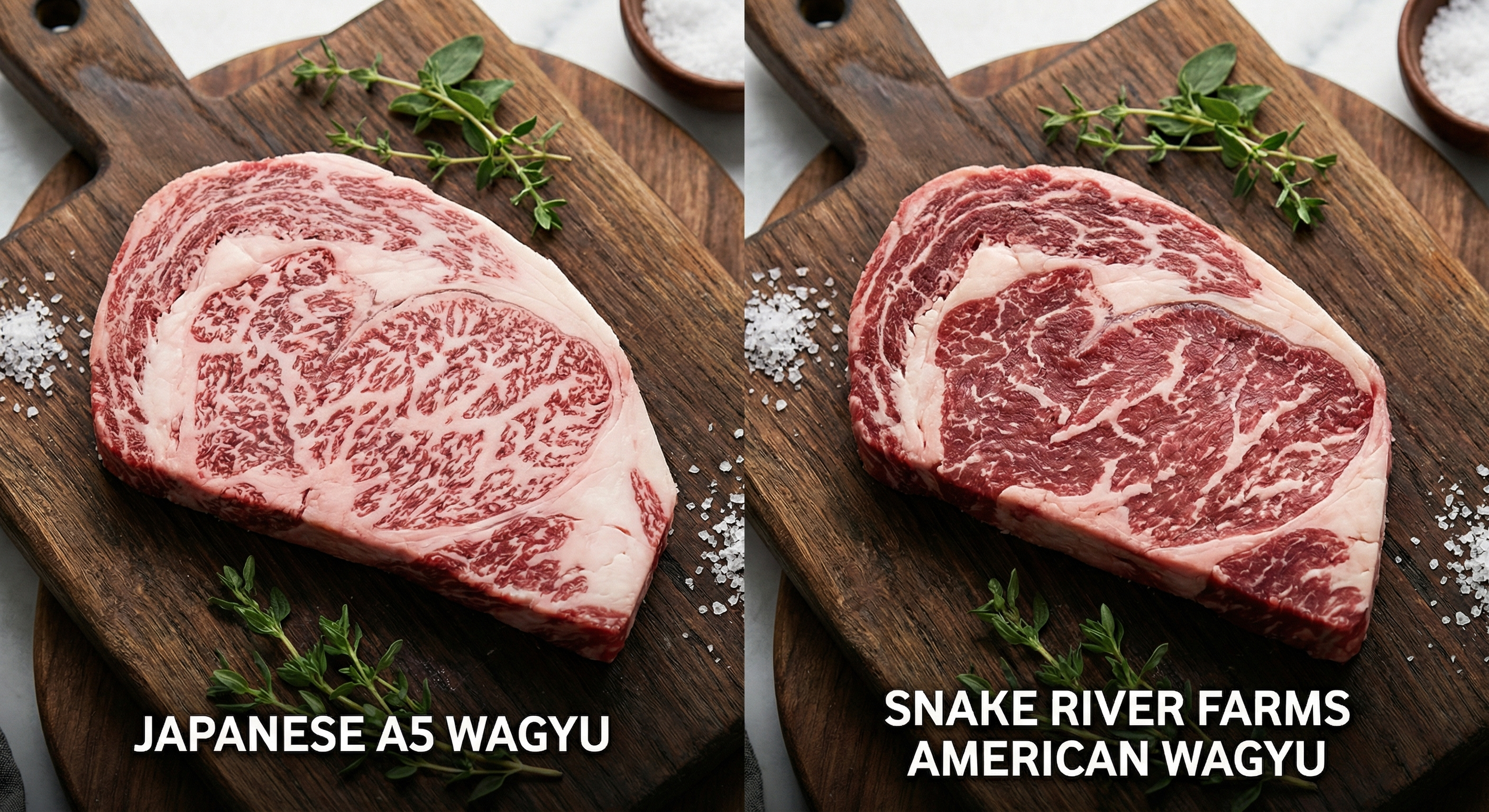
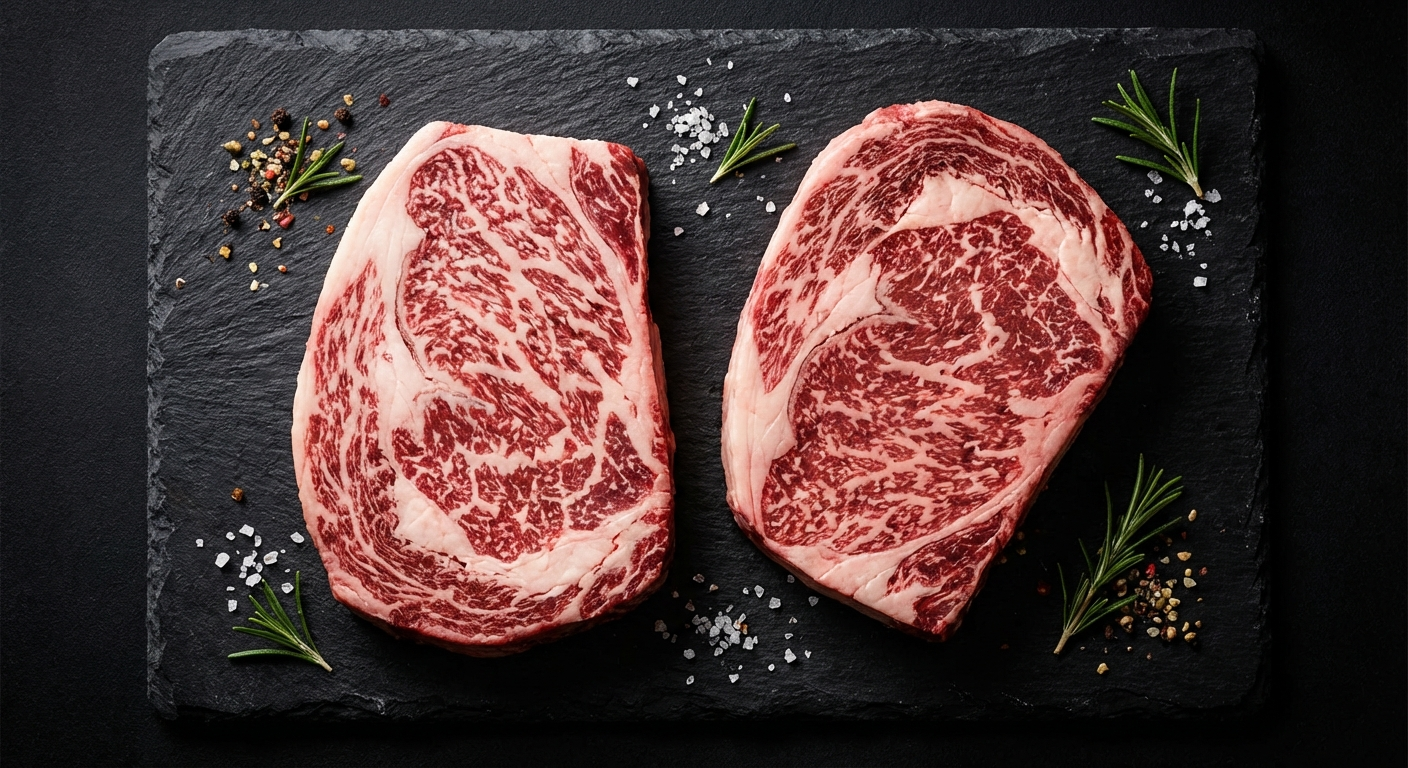
The Beef Marbling Standard (BMS) runs from 1-12. A5 requires BMS 8-12. The highest tier, BMS 12, shows such extreme marbling that the meat appears more white than red.
Korea's Grading: The 1++ System
Korea's grading system uses a different scale entirely:
| Korean Grade | Marbling Score | Approximate BMS Equivalent | Market Share |
|---|
| 1++ (최상) | 7-9 | BMS 7-10 | ~12% |
| 1+ (상) | 5-6 | BMS 5-7 | ~25% |
| 1 (보통) | 3-4 | BMS 3-5 | ~30% |
| 2 | 2 | BMS 2-3 | ~20% |
| 3 | 1 | BMS 1-2 | ~13% |
The critical nuance: Korea's top grade (1++) roughly overlaps with Japan's A4 to low A5 range. True BMS 10-12 wagyu — the stratospheric stuff — has no Korean equivalent because Hanwoo cattle simply don't reach those extreme marbling levels consistently.
The Flavor Question: Why They Taste Different
When I've served both side by side at tasting events, most people can distinguish them — but not always for the reasons they expect.
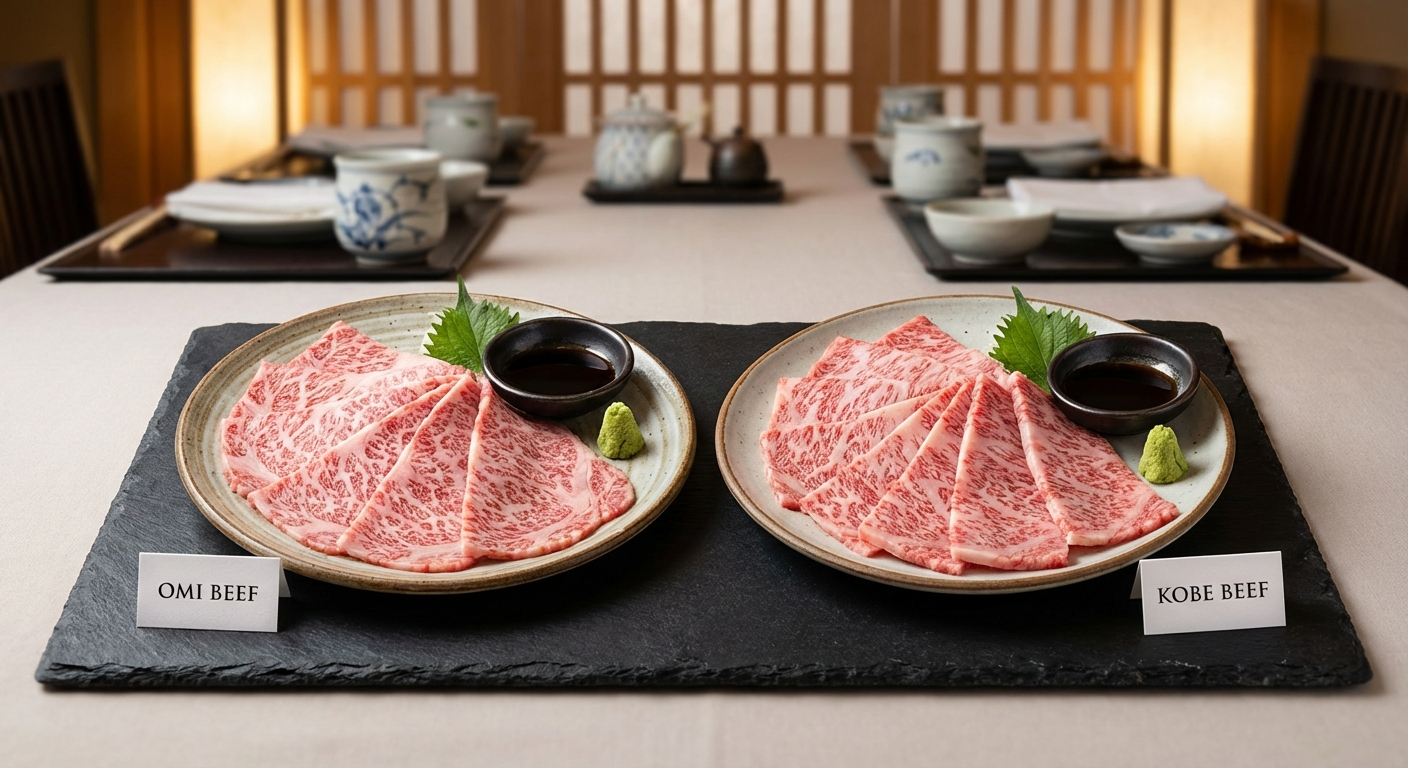
Japanese A5 Wagyu Flavor Profile
- Dominant note: Buttery, almost sweet umami richness
- Texture: Dissolves on the tongue — the fat melts at approximately 77°F (25°C)
- Aroma: Characteristic "wagyu aroma" (和牛香) attributed to lactones and volatile compounds in the fat
- Portion reality: 3-4 ounces is a full serving — the richness is overwhelming beyond that
Korean 1++ Hanwoo Flavor Profile
- Dominant note: Deep, savory beefiness with a nuttier fat character
- Texture: Tender and well-marbled but with more chew and structure than A5 wagyu
- Aroma: Cleaner, more traditionally "beefy" — less of the funky sweetness wagyu fans love
- Portion reality: 6-8 ounce portions are comfortable — the balance lets you eat more
The difference comes down to fat composition. Research published in the Korean Journal of Food Science of Animal Resources shows Hanwoo fat contains higher proportions of palmitic and stearic acids compared to wagyu, which skews heavily toward oleic acid (the same monounsaturated fat in olive oil). This gives wagyu its lower melting point and buttery quality, while Hanwoo fat has more body and a slightly higher melting point that provides more structure on the palate.
Raising Methods: Shared Philosophy, Different Details
Both countries take a patience-first approach to premium beef production, but the specifics diverge.
| Factor | Japanese Wagyu | Korean Hanwoo |
|---|
| Typical slaughter age | 28-32 months | 28-36 months |
| Primary feed | Rice straw + grain blend | Rice straw + concentrate feed |
| Farm size | Small (avg ~30 head) | Small-medium (avg ~40 head) |
| Stress management | Individual pens, brushing, calm environments | Group housing, less individual attention |
| Beer/sake feeding | Rare (mostly myth) | Not practiced |
| Genetic tracking | National ID for every animal | National ID for every animal |
Both systems trace every animal from birth to slaughter. In Japan, you can scan a QR code on wagyu packaging and see the animal's birthplace, lineage, and feeding history. Korea has an identical traceability system called the Livestock Traceability System — every Hanwoo animal gets a 12-digit ID at birth.
Price Comparison: What You'll Actually Pay
Both are expensive, but the pricing dynamics differ significantly based on where you're buying.
In Their Home Countries
- A5 Wagyu ribeye (Tokyo): ¥8,000-15,000/100g ($55-100/lb equivalent)
- 1++ Hanwoo ribeye (Seoul): ₩80,000-150,000/600g ($60-110/lb equivalent)
Surprisingly close in their home markets. Both are special-occasion purchases for most families.
International Markets
This is where they diverge dramatically. Japanese wagyu is exported to over 50 countries and has established international supply chains. Hanwoo essentially doesn't leave Korea — only small quantities reach a handful of markets. If you see "Hanwoo" on a menu outside Korea, verify carefully. Most is actually Korean-style prepared USDA beef.
Cost per Satisfying Serving
Here's an angle most comparisons miss:
- A5 Wagyu: 3-4 oz is a full serving = $40-60 per person
- 1++ Hanwoo: 6-8 oz is a full serving = $45-80 per person
The per-person cost ends up surprisingly similar despite different per-pound prices, because wagyu's extreme richness means you eat less.
Decision Guide: Seven Scenarios, Clear Winners
Rather than declaring one "better," here's when each makes sense:
- You want the most intense luxury experience possible → Japanese A5 Wagyu. Nothing else matches the melt-on-tongue factor.
- You want a full-portion premium steak dinner → 1++ Hanwoo. You can eat a real steak-sized portion without flavor fatigue.
- You're cooking Korean BBQ (galbi, bulgogi) → Hanwoo, if available. The flavor profile was literally developed alongside these preparations. Otherwise, American wagyu crossbreeds work well.
- You want to impress guests with something rare → In the West, A5 wagyu has name recognition. In Korea, 1++ Hanwoo carries more prestige.
- You're watching saturated fat intake → 1++ Hanwoo has meaningful marbling with lower total fat than A5. Also consider grass-fed beef comparisons.
- You want the best value in premium beef → American wagyu honestly beats both on value. But between these two, Hanwoo offers more protein per dollar.
- You want to learn about marbling grades → Explore our complete grading tier guide.
Frequently Asked Questions
Is Hanwoo beef the same as wagyu?
No. Hanwoo and wagyu are different breeds from different countries with distinct genetics, grading systems, and flavor profiles. They share distant ancestry but have been bred independently for centuries. Calling Hanwoo "Korean wagyu" is technically inaccurate, though some restaurants do this for marketing purposes.
Can you buy Hanwoo beef in the United States?
Rarely. Korea exports very limited quantities of Hanwoo, and most goes to Asian markets. Some specialty Korean restaurants in cities like Los Angeles or New York occasionally source genuine Hanwoo, but it's uncommon. The USDA-FSIS maintains import eligibility lists — as of 2025, Korean beef imports are permitted but volumes remain tiny.
Which has better marbling, wagyu or Hanwoo?
Japanese wagyu reaches higher peak marbling levels. A5 wagyu with BMS 10-12 exceeds anything Hanwoo consistently produces. However, top-grade 1++ Hanwoo still has exceptional marbling — comparable to A4 wagyu or upper-tier USDA Prime. The gap is at the extreme top end.
Why is Korean beef so expensive in Korea?
Limited supply (Korea is mountainous with little grazing land), high production costs, strong domestic demand, cultural significance (Hanwoo is a status gift during holidays), and import tariffs that make foreign beef relatively cheap by comparison. Hanwoo accounts for roughly 35-40% of beef consumed in Korea despite costing 2-3x more than imported alternatives.
Does Hanwoo taste better than wagyu?
It depends entirely on what you value. If you prioritize rich buttery melt-in-your-mouth texture, wagyu wins. If you prefer deep beefy flavor with more structure and the ability to eat a larger portion, Hanwoo may suit you better. When I've tested both with newcomers, preferences split roughly 50/50 — neither is objectively "better."
Takeshi Nakamura has spent over a decade comparing premium beef across Japanese, Korean, American, and Australian production systems. His tasting notes draw from direct sourcing relationships with producers in Kobe, Matsusaka, and Gangwon provinces.